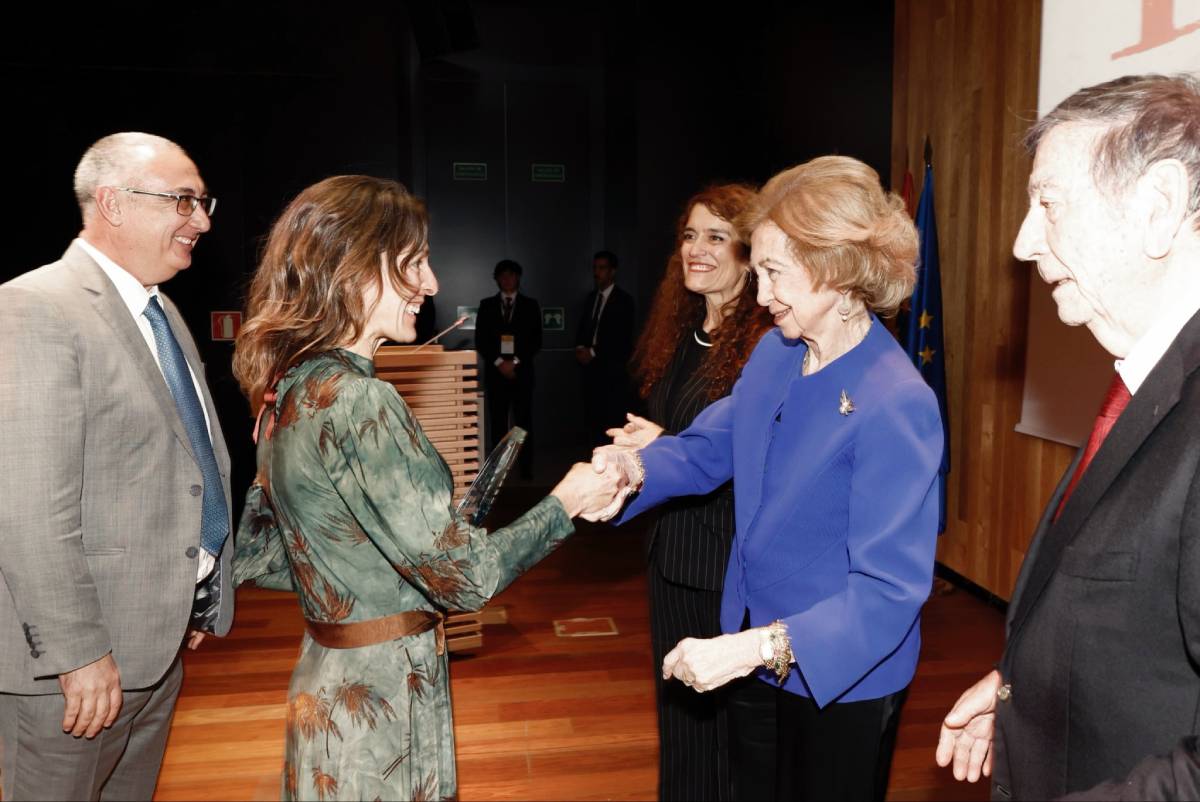
The project “Around Time. Interdisciplinary archaeological investigations at the Neanderthal sites of El Salt and Abric del Pastor”, led by researchers from the Department of Geography and History at the University of La Laguna Carolina Mallol Duque y Christ Hernandez Gomez He has been recognized with the IV Palarq National Prize for Archaeology and Paleontology, the highest private award in Spain dedicated to these disciplines.
The Palarq Foundation The decision was announced during a gala held yesterday afternoon, Thursday, December 4, at the National Archaeological Museum (MAN), which brought together representatives from the scientific, academic, and cultural communities. The event was attended by Queen Sofía, who presented the award; Eva Ortega-Paíno, from the General Secretariat for Research of the Ministry of Science, Innovation and Universities; Antonio Aparicio, Vice-Rector for Research and Transfer, and Roberto González Zalacaín, Director of the Secretariat of University Institutes and Publications, representing the University of La Laguna; as well as members of the award jury and various prominent figures in the fields of research and scientific outreach.
The jury consisted of Luis Monreal, Director General of the Aga Khan Foundation (Geneva); Eva-Maria Geigl, of the French National Centre for Scientific Research (CNRS); Dirce Marzoli, of the German Archaeological Institute; Erika Pastrana, Vice President of Nature Research; Pepe Serra, Director of the National Art Museum of Catalonia (MNAC); and Iñaki Gabilondo, journalist. They praised the methodological excellence, interdisciplinary approach, and international scope of the project, which, for almost four decades, has been investigating the Neanderthal sites of El Salt and Abric del Pastor (Alcoy, Alicante), key to understanding the Middle Paleolithic and the processes that led to the eventual disappearance of the Neanderthals.
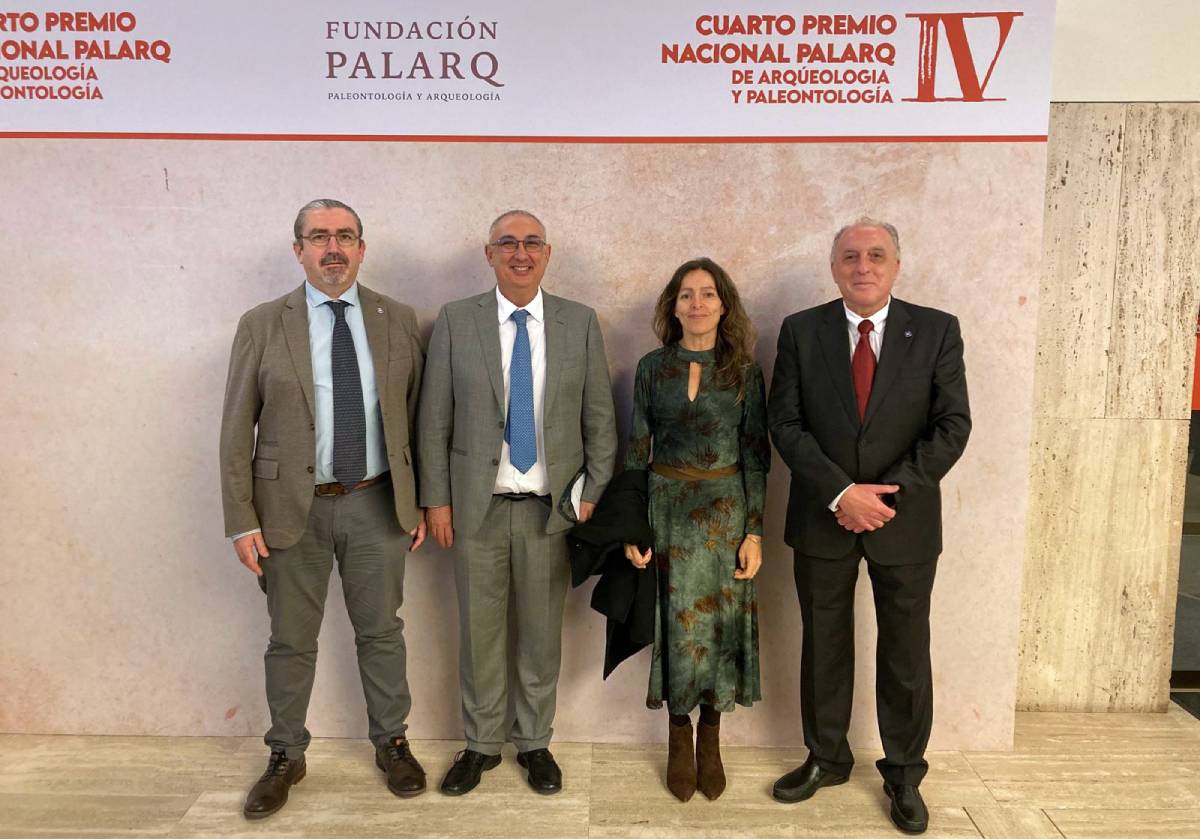
The vice-rector (right) and the director of secretariat (left) flank Cristo Hernández and Carolina Mallol.
Ratings
The Vice-Rector for Research and Transfer expressed the satisfaction and pride that this recognition represents for the entire University of La Laguna, and highlighted the commitment of both the project's initiator and the current coordinators to cutting-edge scientific and archaeological research. "The University of La Laguna should be deeply proud that projects of such significance and impact as the one awarded today have taken root within its research community," remarked Antonio Aparicio.
“This project exemplifies the combination of scientific rigor, technological innovation, and outreach that we aim to promote at the Foundation,” said Antonio Gallardo Ballart, president of the Palarq Foundation. “Recognizing research into our origins is also investing in a future that is more conscious and connected to science.”
The “Around Time” project applies a high-resolution scientific approach based on excavations and interdisciplinary analyses of archaeological remains and sediments. Through geoarchaeological techniques and molecular studies—such as the preservation of lipids, proteins, or fossil DNA in sediment—the team analyzes exceptionally well-preserved anthropogenic hearths and human occupation deposits, integrating methodologies that connect environmental, technological, and biological data to interpret Neanderthal behavior.
Furthermore, the combination of advanced dating techniques (thermoluminescence, optically stimulated luminescence, ESR, uranium series) and machine learning tools using convolutional neural networks (CNNs) allows for a highly accurate reconstruction of Neanderthal daily life, adaptability, and resilience in the face of climate change. Thanks to this methodology, the research overcomes the challenge of the archaeological palimpsest, offering unprecedented insight into the variability of Neanderthal behavior and their capacity to respond to environmental transformations.
At the same time, on a social level, the team also maintains an outstanding outreach and heritage education effort, with open days, school visits and educational materials that bring these findings closer to the public.
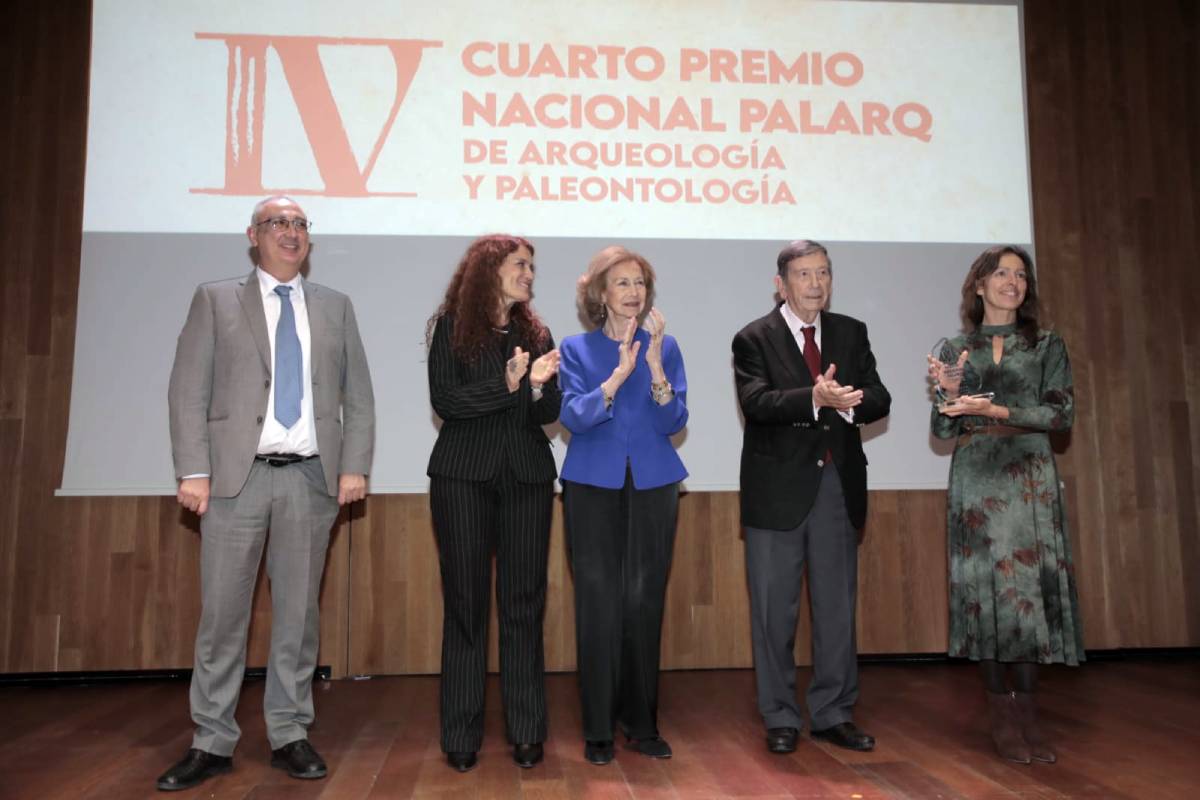
From left to right: Cristo Hernández, Eva Ortega-Paíno, HM Queen Sofía, Antonio Gallardo Ballart and Carolina Mallol.
Palarq Foundation Awards
The Secretary General for Research, Eva Ortega-Paíno, emphasizes: “Foundations carry out important work within the research ecosystem in Spain, and the Palarq Foundation is a prime example of this. The Ministry of Science, Innovation and Universities is committed to promoting and recognizing them, and that is why we wanted to be present at this event, which is a recognition not only of the award winners, but also of the Foundation's work.”.
With this distinction, the Palarq National Prize, endowed with 80,000 euros, reaffirms its role as the highest recognition of Spanish archaeology and paleontology, highlighting projects that combine scientific excellence, social impact and the ability to transfer knowledge to the public.
The fourth edition of the award has highlighted the exceptional level of research in Spain, represented by the six finalist projects: La Draga (Banyoles, Girona); the Valencina Mega-Site (Seville); Arqueomallornauta (Mallorca); the Bat Cave of Albuñol (Granada); Moneda Ibérica (MIB); and the winning project, Alrededor del tiempo (Alicante). All of them share the aim of bringing knowledge of the past closer to society and of placing Spanish science on the international map of human heritage research.
In this way, the Palarq Foundation consolidates its commitment to science, culture, and outreach, supporting the work of Spanish research teams worldwide and fostering dialogue between research, technology, and society. This spirit, which unites past and future, makes the Palarq Prize a benchmark for present and future generations of scientists and science communicators.
The Palarq Foundation is a private, non-profit organization established with a clear purpose: to support Spanish missions in archaeology and human paleontology, encompassing everything from the earliest traces of evolution to prehistoric and historical periods of monumental interest. Its commitment to culture and research translates into promoting projects that seek to connect the sciences of the past with contemporary society and celebrating their scientific achievements.

 Spanish
 English
 French