Micro-marketing and direct sales in agricultural projects

Micro-marketing and direct sales in agricultural projects

Overview

This micro-credential equips participants to develop basic marketing and communication strategies for agricultural projects, utilizing digital tools and social media. The program addresses direct sales orientation, market opportunity analysis, and the design of a differentiated value proposition tailored to the end customer.

Goals

  • Apply marketing and communication strategies for agricultural projects.
  • Analyze market opportunities and design an offer tailored to the end customer.
  • Understanding how to orient a farm towards direct sales to the consumer.

Access requirements

A university degree is not required to access this micro-credential. However, students wishing to access it must meet the following access requirements:
Students must be between 25 and 64 years old on the date the training begins.

Academic program

Contents

MODULE 1: MARKETING AND SALES IN AGRICULTURAL PROJECTS

  1. Introduction to marketing in the agricultural sector.
    • What is marketing and its importance in the primary sector?.
    • Difference between producing and selling.
    • The current consumer and their motivations.
  2. Value proposition and customer focus.
    • From agricultural product to value proposition.
    • Identifying customer needs.
    • Differentiation in local markets.
  3. Branding and communication in agricultural projects.
    • Identity, positioning and differentiation.
    • Importance of origin, history, and people.
    • Building trust.
  4. Social networks and content.
    • Platforms: Instagram, Facebook, TikTok and WhatsApp Business.
    • Content types and formats.
    • How to attract, connect, and sell.

MODULE 2: AGRICULTURAL PRODUCTION ORIENTED TOWARDS DIRECT SALES

  1. Design of the agricultural offer.
    • Product selection.
    • Loss leaders, differentiators and recurring products.
    • Crop diversification.
  2. Direct marketing channels.
    • Sales on farms, at markets and in physical stores.
    • Online sales, home delivery and WhatsApp.
    • Channel selection according to project type.
  3. Sales and planning formats.
    • Sales by units, baskets, packs or subscriptions.
    • Adapting production to demand.
    • Surplus management.
  4. Added value and product presentation.
    • Standard product vs. product with identity.
    • Freshness, closeness and trust.
    • Product preparation and presentation.

Methodology and activities

The training activities to be carried out during the delivery of the micro-credential will be:

  • Theoretical classes: expository, explanatory or demonstration sessions of the contents and knowledge.
  • Practical classes: sessions of practical application of the content developed in the theoretical classes, through the analysis of real cases, the design of proposals for agricultural projects and visits to farms and agricultural holdings, where production and direct marketing models will be observed, facilitating applied learning in real environments.

Regarding the way to organize the teaching to achieve the objectives set out in the micro-credential, the organizational modality summarized below will be followed:

  • Lectures / Expository method: presentation of key concepts
    related to direct marketing, marketing and the organization of agricultural production.
  • Seminars: carrying out exercises, analysis of real cases, including the study of successful agricultural projects in the Canary Islands, such as the one developed by Sergio Rodríguez (Frutas y Verduras Nito) and solving problems related to agricultural projects oriented towards direct sales.
  • Group work: preparation and development of agricultural project proposals, including the design of the offer, marketing channels and marketing actions.
  • Assessment: completion of practical tests and continuous assessment activities related to the course content.
  • Exhibitions, debates and presentation of works and projects: presentation of proposals developed by the students, promoting the exchange of ideas and collaborative learning.
  • Active methodologies: project-based learning, real case studies, cooperative learning and problem solving, aimed at enabling students to apply knowledge in real contexts.
  • Field trips and visits: training activities on farms that allow you to observe and analyze real models of production and direct marketing, reinforcing practical learning.

Evaluation criteria

The microcredential will have an evaluation system (ES) based on the following tests:

  • Objective tests (true/false, multiple choice, test type, etc.): assessment instruments aimed at verifying the acquisition of basic knowledge about agricultural marketing, marketing and production organization.
  • Case studies, exercises and problems: analysis and resolution of practical cases related to agricultural holdings, in which students must apply the knowledge acquired to propose solutions aimed at direct sales.
  • Works, memoirs, reports and projects: development of an applied project consisting of the design of an agricultural operation oriented towards direct marketing, integrating the definition of the offer, the sales channels and the marketing and communication strategies.
  • Oral presentation and defense of work: presentation of the developed project, justifying the decisions adopted and its viability, with subsequent debate with the teaching staff.

General information

Credits: 3 ECTS

Duration: 05/05/2026 – 20/05/2026

Teaching modality: Blended learning

Location:

  • Nito Market (Portezuelo las Toscas Road, 174. 38292 Tegueste).
  • Property/s located in Tegueste and/or San Cristóbal de La Laguna.
  • Faculty of Economics, Business and Tourism of the University of La Laguna.
  • Institutional Virtual Campus of the University of La Laguna.

Registration fee: €65.25

Valued at: €217.50

Registration
More info and registration help

The cost of tuition for this Microcredential will be subsidized by the 'Plan for the development of university microcredentials', investment 6 of component 21 of the Addendum to the 'Recovery, Transformation and Resilience Plan', financed by the European Union – Next Generation EU, year 2025.

Flexibility

Short courses available in various formats (in-person, online, or hybrid). Ideal for learning without interrupting your professional life.

Employability

Content created and delivered by professionals and experts in the field, designed for immediate application.

Certification

Endorsed by the University of La Laguna. You will receive an official ECTS certificate, valid in the European Higher Education Area.
Teaching staff

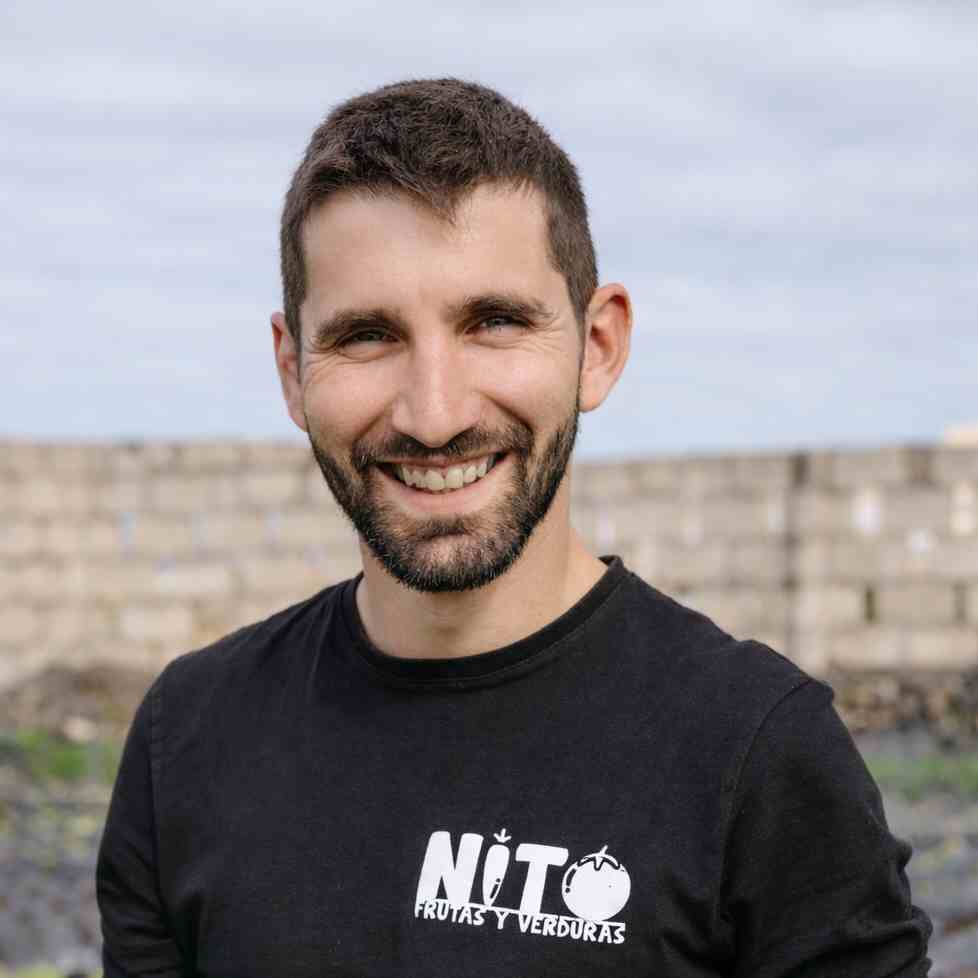
Sergio Rodríguez Gutiérrez

Businessman and leading figure in the agricultural sector in the Canary Islands. Founder of Frutas y Verduras (Fruits and Vegetables).
Nito promotes the direct marketing of local products, combining tradition, proximity and
a powerful digital strategy.

Edgar Javier Sabina del Castillo

Professor and researcher of Marketing at the University of La Laguna. His career combines academic activity, focused on consumer behavior.
of local products, with more than ten years of professional experience in marketing and
management in companies such as Danone, Siete Delicatessen or GMR Canarias.

Ricardo Jesús Díaz Armas

With a PhD in Business Administration from the University of La Laguna, he teaches at the
marketing area since 1998.
Currently, he has published over 70 scientific articles in internationally renowned journals and has participated in more than ten competitive research projects.

Share this microcredential