Podcast production for entrepreneurs

Podcast production for entrepreneurs

Overview

This content addresses podcasts as a strategic communication and marketing tool, highlighting their evolution as a digital medium and their value in creating clear, business-oriented corporate content. It also introduces basic production techniques, from planning to publishing, using accessible digital tools. Finally, it proposes the design and development of a business podcast episode that integrates narrative, technical, and strategic aspects, ready for professional distribution.

Goals

Upon completion of the microcredential, participants will be able to:

  • Produce a business podcast, applying basic audio recording and editing techniques, with criteria of technical quality, communicative clarity and critical sense in the use of digital tools.
  • Design scripts and narrative structures for podcasts, geared towards the creation of innovative, coherent and attractive content, aligned with communication, marketing or brand positioning objectives.
  • Publish and distribute a podcast on digital platforms, designing basic promotion and distribution strategies aimed at specific audiences in the business environment.

Access requirements

A university degree is not required to access this micro-credential. However, students wishing to access it must meet the following access requirements:

  • High School Diploma or equivalent Professional Certificate.
  • National Identity Document or similar that certifies that you have a residence permit in Spain, at least during the period in which you develop the microcredential.
  • Be between 25 and 64 years of age at the start date of training.

Academic program

Contents

  • What is a podcast?: definition and characteristics
  • Types of podcasts: interviews, analysis, reviews, narrative, etc.
  • The current podcast landscape: trends, platforms and successful examples; developing the idea and format: what do you want to communicate?, how are you going to do it?
  • Scriptwriting and episode structure: how to organize information and maintain interest. Music selection: legal and creative considerations.
  • Storytelling and presentation techniques: how to speak clearly and enthusiastically.
  • Interviews: how to prepare and conduct effective interviews. Basic equipment: microphones, headphones, audio interfaces. Recording and editing software: Audacity, Adobe Audition, etc.
  • Recording techniques: how to get a clean and professional sound.
  • Audio editing: how to cut, paste, mix, and master. Use of effects and background music: how to create the right atmosphere.
  • Sound quality improvement: noise reduction, equalization, and compression. Podcast hosting platforms: Ivoox, Spotify, Apple Podcasts, etc.
  • Creating the RSS feed: how to generate the link to distribute the podcast.
  • Podcast cover design and description: how to attract listeners.
  • Podcast promotion: social media, collaborations, and other strategies. Metrics analysis: how to measure podcast performance and growth.
  • How to get sponsors and advertisers.
  • How to obtain funding from listeners.

Methodology and activities

The training activities to be carried out during the delivery of the micro-credential will be:

  • Theoretical classes: expository, explanatory or demonstration sessions of the contents and knowledge.
    Practical classes in a computer lab or laboratory: hands-on sessions to understand and
    To reinforce the content of the subject, through laboratory experiments or applied exercises in the computer lab.
    Tutoring (individual, group…): activity in which the teaching staff attends to, facilitates and guides one or more students in the training process.

Regarding the way to organize the teaching to achieve the objectives set out in the micro-credential, the organizational modality summarized below will be followed:

  • Lectures/expository method: presentation or explanation by the teaching staff.
  • Practical classes: activities supervised by the teaching staff in the classroom, laboratories, clinics.
  • Seminars: completing exercises, solving problems or practical cases, others.
  • Individual work: individual preparation of assignments/projects/reports, portfolio
  • Group work: group preparation of assignments, projects/reports…

Evaluation criteria

The microcredential will have an evaluation system (ES) based on the following assessment tests:
Case studies, exercises, and problems: tests in which students must solve, in a reasoned manner, within a given time, and according to established criteria, the cases, exercises, or problems posed by the teaching staff, with the aim of applying their knowledge
acquired.
Portfolios, journals, notebooks, or practice materials, etc.: a compilation of student work that demonstrates their progress and achievements. This compilation also serves as evidence of self-reflection.

General information

Credits: 2 ECTS

Duration: 30/04/26 – 29/05/26

Teaching modality: In person

Location: Classroom Building and Audiovisual Studio of the General Foundation of the University of La Laguna

Registration fee: €43.50

Valued at: €145

Registration
More info and registration help

The cost of tuition for this Microcredential will be subsidized by the 'Plan for the development of university microcredentials', investment 6 of component 21 of the Addendum to the 'Recovery, Transformation and Resilience Plan', financed by the European Union – Next Generation EU, year 2025.

Flexibility

Short courses available in various formats (in-person, online, or hybrid). Ideal for learning without interrupting your professional life.

Employability

Content created and delivered by professionals and experts in the field, designed for immediate application.

Certification

Endorsed by the University of La Laguna. You will receive an official ECTS certificate, valid in the European Higher Education Area.

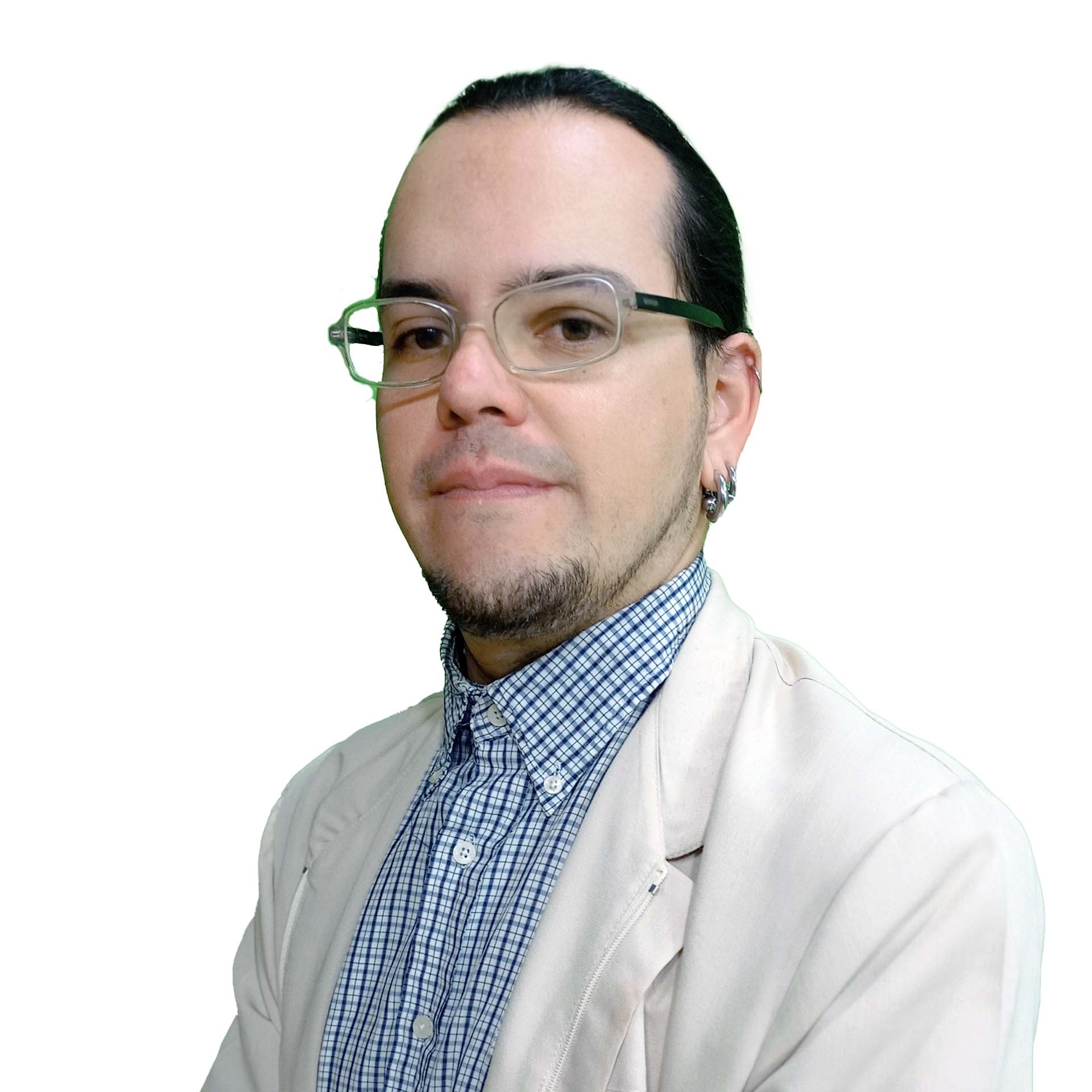
Teaching staff

Pompeyo Pérez Díaz

José Manuel López D' Jesús

Dennis Mateis

Share this microcredential