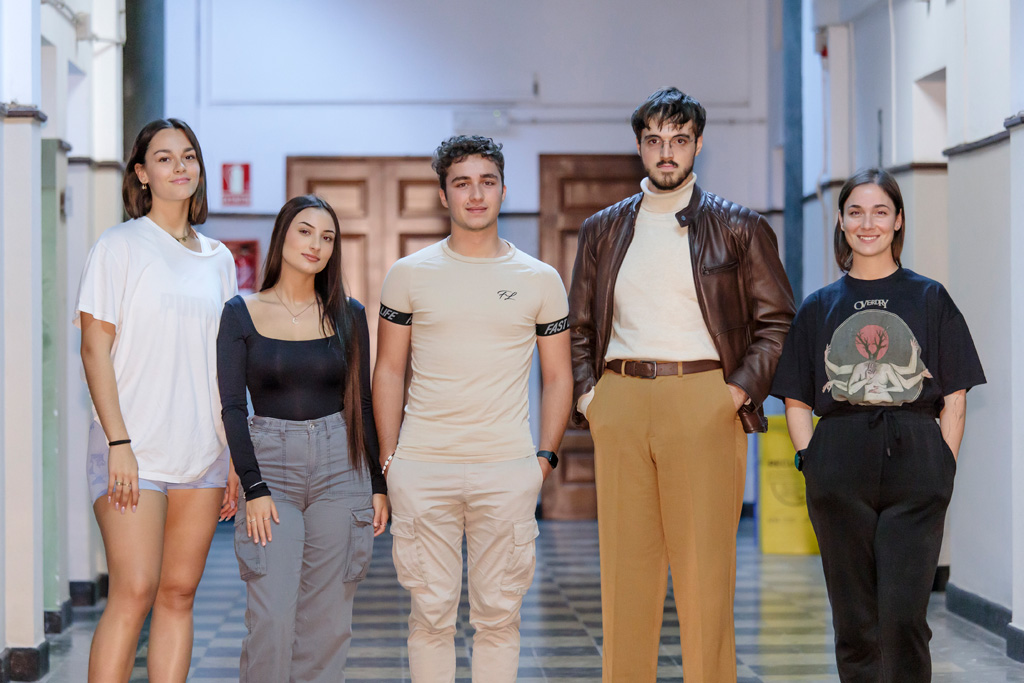
There's no set of commandments or Holy Grail for navigating the first year of what will be a new life at university. It's about facing new studies, habits, classmates, disciplines… managing fears and time, failures and successes. Ultimately, it's about reaching your destination and not letting frustration lurk around every corner and shatter the dreams of so many young people who, like Rocío, José Luis, Paula, Antonio, and Silvia, harbor different concerns and goals, but share the same starting and finishing point: carrying their university degree in hand so they can aspire to a better future, like the one Rocío Moreno Pérez envisions.
When she was in her second year of high school (last year), her teachers told her that the university entrance exams (EBAU) were going to be tough, but that she shouldn't be afraid of the tests that bring together more than 200,000 students each year who want to take the big leap and enter Spanish universities. And that's exactly what happened. After the first exam, she relaxed, calmed her nerves, and everything went as planned. So well, in fact, that to this day, this Tenerife native, a former student of the IES San Matías and a fan of sports and healthy living, she is in her first year of Sciences of Physical Activity and Sport (CAFID) at the University of La Laguna.
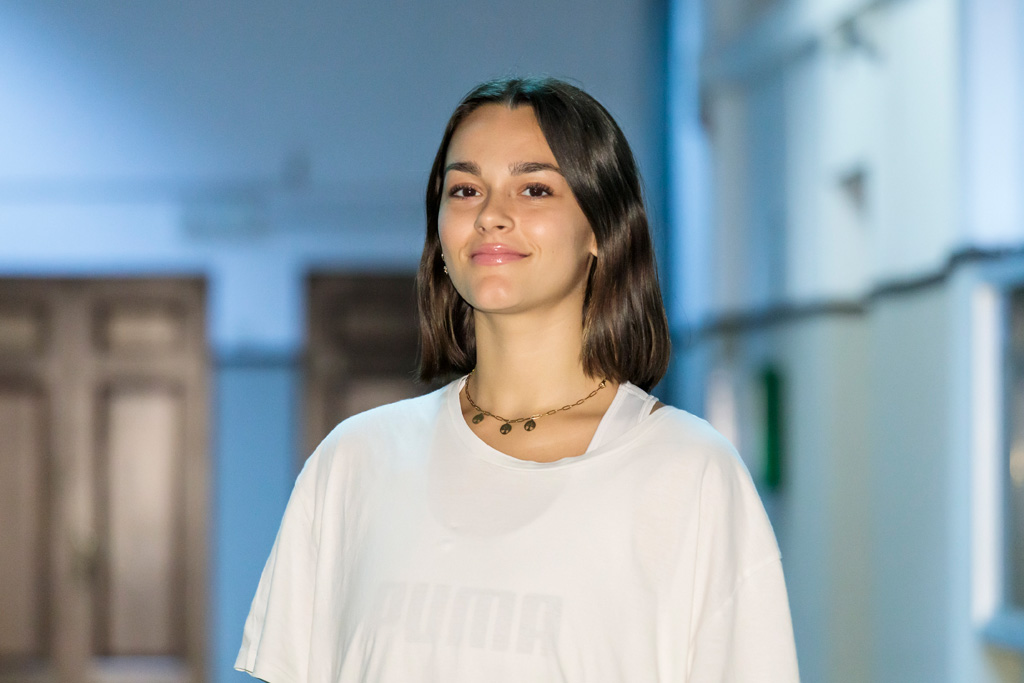
Rocío Moreno.
With her excellent grade of 12, she had no problem surpassing the 10.3 (cut-off score) required for the former INEF degree. “I always knew I wanted to be a Physical Education teacher, although now there are other options that also appeal to me a lot, such as joining the police academy or working as a personal trainer.” Rocío has been hooked on basketball since she was six years old, a passion that lasted a little over a decade, until she gave it up to dedicate more time to her studies and herself.
Now, this first-year CAFID student's day begins at eight in the morning and ends around two-thirty in the afternoon, with a few free hours in between, depending on the day. Her new, small but close-knit family consists of the 60 people who, like her, attend classes each morning. There's no doubt that Rocío is in her element, especially during this semester, with the gymnastics circuits. Even so, she questions the fact that there are only 17 girls in her class.
“I think sports have always been more associated with boys than girls, and that implies inequality, not in treatment, but in the categories. It's certainly wrong, and I hope it will change, but I don't know why, it seems girls have internalized it.” However, this deep gender gap, which remains a reality in the choice of studies and professions (especially in STEM fields) despite the majority presence of women in universities, as the [reference to a specific expert] emphasizes, persists. CYD Report 2023, This doesn't affect Rocío's decision. In her class, everyone is on the same page.
She's very happy. While acknowledging the sometimes "too theoretical" course content, she understands that the real value lies in the practical experience. "I've had wonderful professors who try to help you in every way they can, something all my classmates agree on. In other degrees, the first-year subjects are very general, and ours is no exception, but they're focused on sports, and that's what we really love," says Rocío.
“So far, it hasn’t seemed too complicated, even though I combine my studies with a weekend job to earn some money. You have to study, obviously, but less so now because the degree requires a lot of practical experience.” Whether in the pool or the gym, in gymnastics or body expression, this first-year CAFID student has been able to act as a teacher with the guidance and approval of her own professors, and alongside her classmates, with whom she says she gets along great, both in and out of class.
University dropout
However, even though Rocío Moreno's profile aligns with that of many students who enthusiastically embark on their first year of university, a significant percentage of Spanish university students do not feel the same way. And the figures speak for themselves: 2.21% of students in Spain drop out during their first year, and 8.81% decide to change their studies. These figures are taken from... Study on the Dropout Rate from Undergraduate Studies in the Spanish University System.
The reason for such a revealing dropout rate in the first year, with barely enough time to enjoy all the good and diverse aspects of university life, is a matter that few academic institutions have attempted to address in depth. And it is at this point that other factors, difficult to measure but vitally important, come into play: insecurities, unrealistic expectations, fears, anxiety, frustration, or maladjustment. The reasons are not known for certain. There can be many reasons why someone might want to throw in the towel.
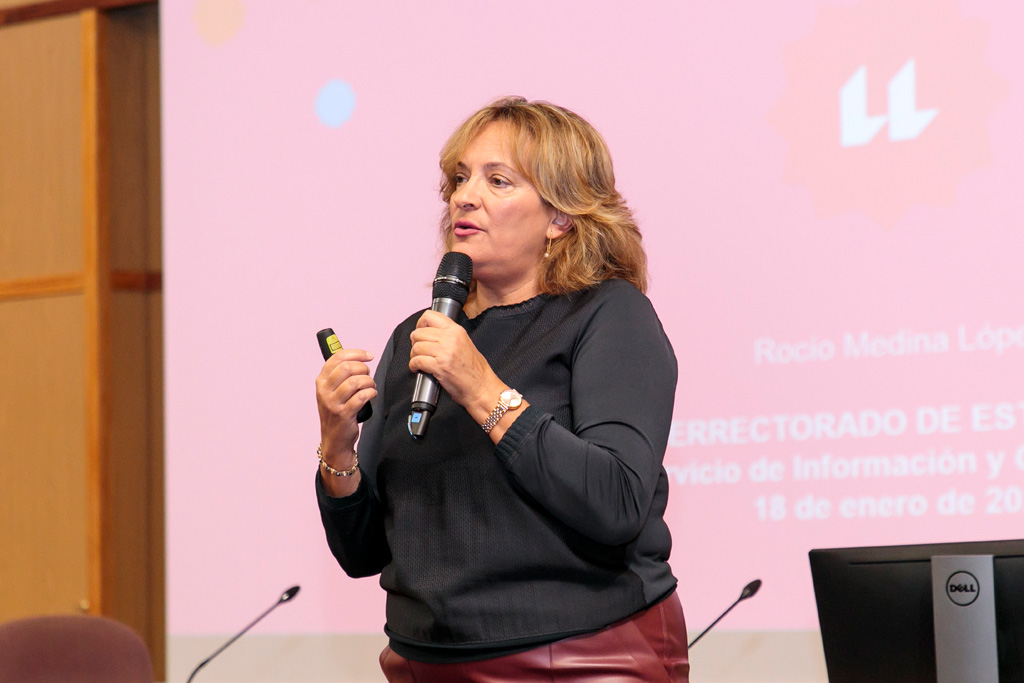
Rocío Medina, during the 2024 Open Days.
“Deciding to pursue a career they don't like isn't a failure; it's a process of self-reflection. To enjoy it and not feel pressured, it requires maturity, emotional intelligence, and critical thinking. They need to be told that they can adjust their thinking and change their minds if they feel uncomfortable and have made a mistake,” explains Rocío Medina, legal advisor at Information and Guidance Service (SIO) from the University of La Laguna.
For the staff of the Student Information Service (SIO), which not only informs but also provides ongoing support to students in their new academic phase, it is essential to convey that vocation is not something that is simply innate; it must be cultivated gradually. It takes time to build it. Therefore, each student must find an area where they feel comfortable, and from there, explore career paths they may not be aware of. This message is conveyed in the various talks organized at the University of La Laguna (ULL), both before enrollment and during the first year of university.
At this crucial stage, the role of the family is essential. This is because students, when faced with disappointment or setbacks, "feel they haven't succeeded, they feel guilty," which is why the SIO emphasizes the true importance of family members during this vital period of their lives: "The family is fundamental; sometimes it's enough to simply listen to their sons and daughters, to listen to them when making decisions about their studies, to be there for them so they don't feel so alone, so they don't feel like they've let their parents down.".
José Luis or the love for words
That emotional support is what José Luis Saorín Ferrer, a first-year student of the Degree in Spanish: Language and Literature, He loves to read and write. This former student of Colegio Nuryana (La Laguna, Tenerife), a programming enthusiast and devotee of Asian literature, Jon Fosse, Cortázar, Unamuno, and Borges, could have studied any other degree thanks to his incredible grade point average, a brilliant 13.81, which led him to where he is today. A decision supported and celebrated by his family, who know how happy he is with his choice.
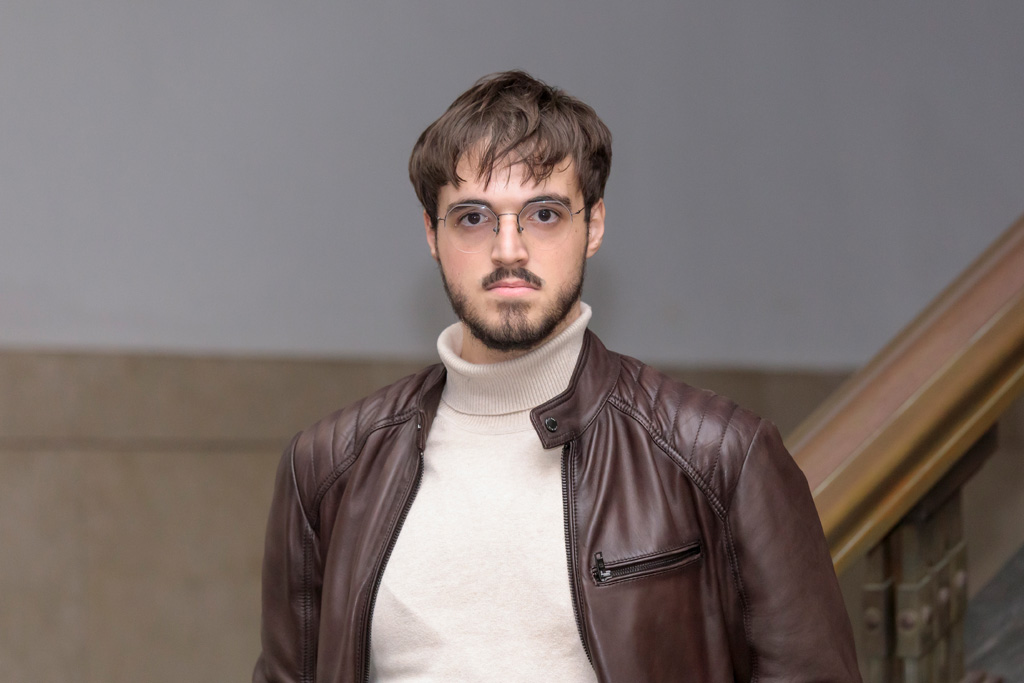
José Luis Saorín.
“I love literature and linguistics, especially Spanish literature and the Spanish language, but I’m also interested in computational linguistics, and in the future I’d like to specialize in that field,” says José Luis, adding that his fascination extends to all things artistic. He’s not only happy among words, written expressions, and computer applications. “What I really enjoy is studying, and I retain what I learn in class.” Proof of this is that a simple visual review before the exam is more than enough for him to ace it. An advantage only a select few possess.
This aptitude for studies is the reason why she hasn't noticed the transition from high school to university. In addition, her father is a professor at the University of La Laguna, so she already knew a little about the inner workings of the academic institution. So far, the subjects that have overwhelmingly topped the list of favorites in her first year are Introduction to Art History and Comparative Literature, an infallible duo that has earned its place on the winner's podium with all due honors.
José Luis admits to having adapted seamlessly to the academic routine he had envisioned, which he now experiences daily as he commutes by tram from Santa Cruz to the Guajara Campus. From 8:30 a.m., when his classes begin, until 2:00 p.m., he focuses all his enthusiasm, interest, and skills on an experience that, if anything, is even better than he expected. “I anticipated that the first year of university would be more difficult, but the truth is, it hasn't been. I'm finding the material more interesting than I had imagined.”.
José Luis is completely satisfied with his choice: “I love the subjects and the professors. I have to admit that everything is really fun and interesting, and I'm having a great time with my classmates.” There are between 60 and 65 people in his class, and he gets along famously with them, although he doesn't go out much on weekends. “I prefer leisurely walks and spending my afternoons programming different applications.” And it's proving fruitful: he recently designed one that can take any length of text, format it, and summarize it.
It's no surprise, then, that her future interests lean towards computational linguistics, a field of study that uses uncontrolled machine learning techniques to train models capable of generating highly effective human-like language. This is quite a challenge, adding to her desire to go on an Erasmus exchange in her third year and her ultimate aspiration: to obtain a Gates Cambridge scholarship, funded by the Bill and Melinda Gates Foundation, which is awarded to only a select few each year.
Adapting to the first year
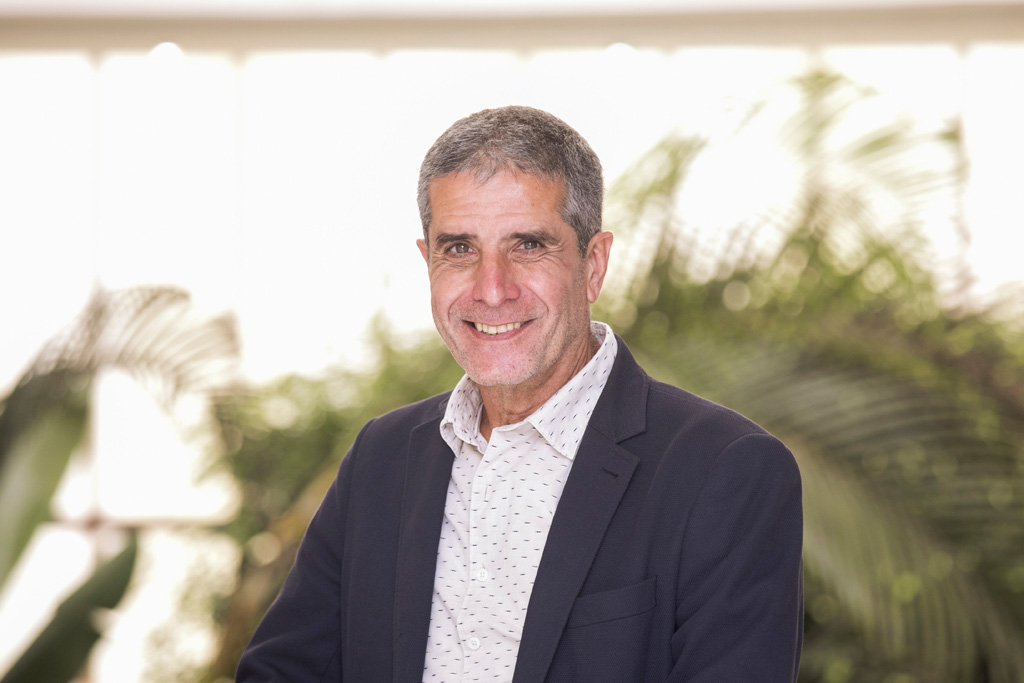
Wenceslao Peñate.
Ideally, all students would adapt to their first year of university without any major setbacks or changes, but reality is quite different. The first year is a somewhat abrupt, though also eagerly anticipated, landing into a new life that often doesn't go as planned, frustrating students, sometimes right from the start. It's in the first semester that students want to drop out due to "adjustment problems, new interpersonal relationships, or simply because they feel they can't perform as expected.", as he explained In an interview, the professor of Clinical Psychology and director of the Unit of Psychological and Speech Therapy Services from the University of La Laguna, Wenceslao Peñate Castro.
The expert points out that, despite this being a critical and pivotal moment for them, in many cases these are misconceptions that amount to nothing more than setbacks or specific discouragements, and because of this, we lose groups of very valuable young men and women to the university and to society, who simply need a little help, a little support. This support in the first year is fundamental so that they don't drop out of their studies and understand that failing the first exams is not a failure, just a bump in the road.
In this regard, Rocío Medina points out that when a student begins a degree program and doesn't know anyone else, “those first few months in which friendships are formed are fundamental so that they don't feel alone. And it is at that moment that students begin to experience a fulfilling stage, to grow in knowledge, and all on their own.” In the case of the Canary Islands, the Spanish region with the highest university dropout rate – 20.51% recorded in the archipelago, followed by the Balearic Islands at 20.41%, despite the demographic and economic differences between the two regions – insularity has a “significant” influence, according to Medina.
“It’s important to keep in mind that the non-capital islands face triple isolation. Moving from one island to another requires a level of adaptation, not only physical but also emotional. In many cases, the students are happy to be away. It’s worth noting that an 18-year-old today is more immature than an 18-year-old from 30 years ago, but their decision-making process is the same, which is why we take such good care of them and try to protect them so they don’t notice the change.”.
Paula or the passion for social issues
Knowing exactly what you want to study at 18 isn't easy, but that wasn't the case for Paula Gil Padrón. Her indecision between choosing a Law degree or a Business Administration degree wisely led her to... Bachelor's Degree in Social Work. “This is my career. I think I chose the career I love, the one I was destined for, even though many people told me that Social Work has no job prospects. People have to follow their heart, what they truly love, when choosing their studies. It's true that you have to work hard, but you shouldn't be afraid.”.

Paula Gil.
This former student of IES Tacoronte-Óscar Domínguez, She, who would like to work in the field of domestic violence and immigration in the future, gives a positive assessment of her first year at the University of La Laguna. “I can say that, so far, most things have gone quite well. I find some subjects too theoretical and I would like them to be more practical, especially because I suppose there are many things that we won't even see in the workplace, but in general, apart from a few subjects that I didn't like and didn't enjoy, I'm very satisfied.”.
One of the subjects she has enjoyed is Introduction to Social Work, because it accurately reflects what she will encounter in her profession and also because it was taught by a “very motivating” professor. “We don’t have much contact with the professors, but a professor of Basic Psychosocial Processes has spoken with us more and told us that, unfortunately, there are always inequalities, and ultimately, that is our field of work. We are driven by helping others.”.
Paula works toward that goal every day. She's up at six in the morning to catch the bus from her home (Ravelo, El Sauzal) to the transport hub, and from there to the Guajara Campus, where she shares a classroom with about 125 other students. She never misses a class and always takes notes so she can have some free time in the afternoon to spend with her family and friends. "I want to go on Erasmus to Germany, that's why I'm working so hard, to get everything done and submit my application to the second round.".
Aware that subjects become more complex in the second year, she has organized herself as best as possible, just as she did in high school. “Time management is important because otherwise I get overwhelmed, as happened to me with some subjects in the first semester, but if you organize yourself well, you can do it. That's why I usually keep up with things, I make my own notes from the slides the professors give us, from notes from previous years, and from the applications we have.”.
Paula's daily life in Social Work doesn't just take place in the classroom. It also happens outside of it. In the Law School library or the lecture hall library, where she sometimes studies, and in the cafeteria, a place she (sometimes) enjoys visiting with her group of friends from the faculty. "I have a really great group of friends, actually. We've already gone out together and even gone shopping... And when we have free time, we like to hang out at a bar off campus.".
When asked about the changes she's noticed, Paula is clear: "Here you have to be more resourceful, although I was already doing that in high school." Regarding whether she's made the right decision about her future, she has no doubts: "I'm happy with my choice, but if I had gone into another degree program and hadn't liked it, I would have changed without hesitation," a point that the SIO (Student Information Service) emphasizes to its students. "In the talks we give, we stress that it's the student who should decide what degree they want to pursue. Everyone finds their path, sooner or later," explains Rocío Medina.
It's important for students to feel supported by their parents, but so is the support of their professors and the institution. To this end, the POAT (University Academic Support Program) provides them with help and guidance through individual and group talks involving various services from the University of La Laguna, in addition to the crucial role of the tutor, who is essential throughout their studies. “I meet students who tell me they wish they had discovered certain services to help them make decisions. It's normal to make mistakes when choosing their studies, but we should try to minimize those mistakes and give them the option to change degrees,” which is why it's so important that they come to us,” explains the SIO (University Guidance Service) expert.
Antonio or the passion for automobiles
Antonio José Sáiz Arderéis made the right choice in his studies. This former student of IES Cabrera Pinto has gone from manipulating electronic systems with his hands in the Higher Vocational Training Center César Manrique He's receiving far more theoretical instruction than he would have liked, but that hasn't deterred him from his goal: to become an automotive electronics engineer. He told his parents this when he decided that a higher-level vocational training certificate wasn't enough. Now, at 21, he's in his first year of university. Bachelor's Degree in Industrial Electronics and Automation Engineering, He is a class representative and is proud to have successfully navigated his first semester.
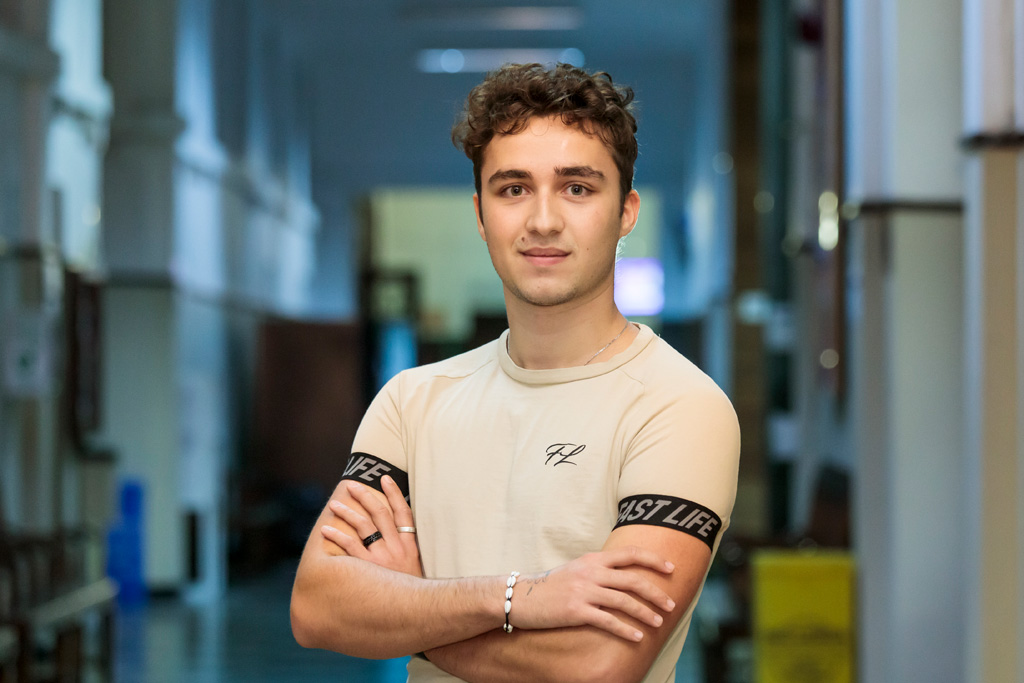
Antonio José Sáiz.
To achieve this, he had to dedicate many hours of his time, especially to the subject of Graphic Expression, one of the most demanding, not to mention the Computer Science exam, which caught them “by surprise.” “The professor combined two exercises that we always do separately and put them together into one, so it threw us off. The exam was much more advanced than what we had seen in class, but I know we have to face these kinds of challenges.”.
So far, his assessment of his new academic life is positive, reflective, and, at the very least, conscientious: “I think university, especially engineering, is portrayed as nonstop, impossible, incredibly difficult, and not for everyone, but if you really want to learn and dedicate the time, anyone can succeed. It's like an extension of high school, but at a faster pace,” says Antonio, while acknowledging his inability to take notes in class. “If I do, I get lost in the explanations, so I prefer to take photos with the professors' permission, organize the notes into folders, and then rewrite them neatly.”.
She admits that from the outside, university had been portrayed to her “almost like a prison, but without being completely complacent, and with planning and good organization, it's compatible with everything.” In fact, “there are many people who have a job and are also studying for a degree.“ However, she wants to point out that, in her experience, vocational training (FP) studies focus more on the workplace, ”they are much more practical, something that has helped me a lot to understand the content taught at university, which is much more theoretical and dense.”.
Like Antonio, several of his classmates, who come from a class of about 120 students, have a Vocational Training (FP) background, a very different path from that of José Luis and Paula, and somewhat similar to the one chosen by Silvia. It's also an option that shouldn't be ruled out, according to Rocío Medina. “We are aware of the choice of what we call 'sweeper courses,' which accommodate people who couldn't get in initially, but it's important to know that they can access university in other ways, that there are legal measures to prevent them from dropping out, measures we can put in place to allow them to progress more slowly. The important thing is to finish, not to give up.”.
Despite student complaints gathered by the SIO, which point to a colder university education system that keeps professors and students at a distance, Antonio is very happy with his professors. “They’re not hovering over you like in high school. Here, you’re the one who has to tell the professor things; it’s not such a direct relationship, that’s true, but they care about you, they tell you they’ll explain things as many times as necessary, and that’s something to be grateful for.”.
As would be the case with reviewing the downtime between classes, a demand that, as a first-year student representative, he has made it his mission to bring to fruition. “During the first semester, we were leaving at seven in the evening two days a week, after many hours of waiting between classes, since it's not worth going home, especially for those who travel from the north or south of Tenerife,” which is why he has forwarded the requests for a schedule change made by his classmates to the school administration, a demand they hope will be resolved as soon as possible.
Silvia or the dream of improving the environment
Silvia González Díaz's, a first-year student of Bachelor's Degree in Environmental Sciences, The story of her class representative and yoga instructor—a passion she has turned into her profession—is a tale of two journeys. This 31-year-old from Tenerife was already familiar with the first year of university. She learned this after finishing high school at the IES Doctor Antonio González González From Tejina (La Laguna), he entered the Mathematics Degree at the University of La Laguna, where, despite doing quite well, he was unable to continue.
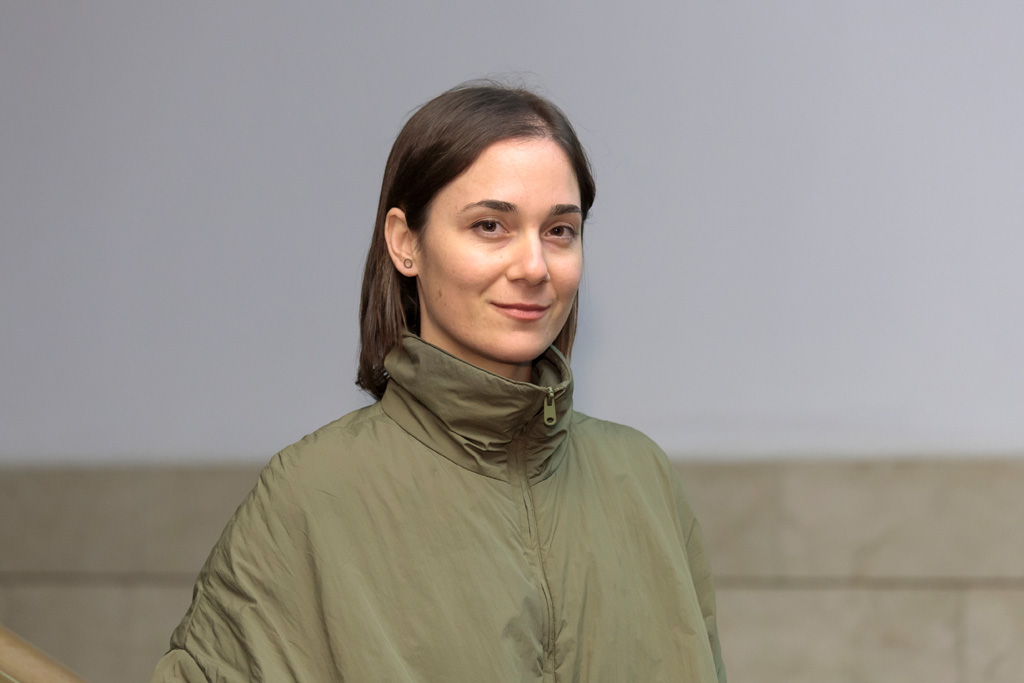
Silvia González.
It was her recent enrollment at the International University of Valencia to study Psychology online that rekindled her passion. “I really enjoy learning things; it’s something I do simply for pleasure. But it was the transition from distance learning to in-person classes that made me seriously consider pursuing a degree, completing it, and dedicating myself to it, which is what I want to do.”.
Her decision and firm commitment to Environmental Sciences stemmed from a desire to remain connected to nature, understand life cycles, comprehend the environment she lives in, and contribute to the survival of the human species and the preservation of a better planet. She has taken this commitment so seriously that she has moved back in with her parents to have more time, has restricted her yoga classes to weekends, and is determined to attend university regularly, in the mornings, alongside the 50 classmates who share her choice and vocation.
“I’m delighted with my decision. Not only because of the subjects, which I really enjoy, but also because of the passion shown by both teachers and students. Comparing it to other experiences, I do notice that the professors are more humane, more calm. They help us and make it easier for us to organize our studies, and this support they provide prepares us for learning. We’ve definitely evolved for the better.”.
In this regard, Silvia points to the “advantages” of continuous assessment compared to single assessment because it fosters learning. “You make better use of your time and we can accomplish the same amount of work; it’s easier to connect our existing knowledge with new information. From my point of view, it’s very positive because with the other method you just memorize, while with continuous assessment you can increase your knowledge and memory, which further helps to solidify the learning process.”.
After successfully completing the first semester and enjoying face-to-face teaching because it allows her to ask questions in situ, Having rediscovered a joy she had forgotten after her online experience, Silvia is starting to consider what she will do for a living. “I really like ecology and everything related to water resource management, and my intention is to go in that direction, although I remain constantly attentive and aware that specialization is necessary.”.
For Silvia, studying makes her very happy, which is why she doesn't understand why there has to be a time for studying and another for working. “You can organize your life and not stop doing things. Age isn't a problem. I wish there were more people like me at university,” a place to “enjoy yourself, acquire knowledge, and grow personally and professionally. A unique, enriching, and unrepeatable experience,” as the Information and Guidance Service at the University of La Laguna points out.
Communications Office

 Spanish
 English
 French