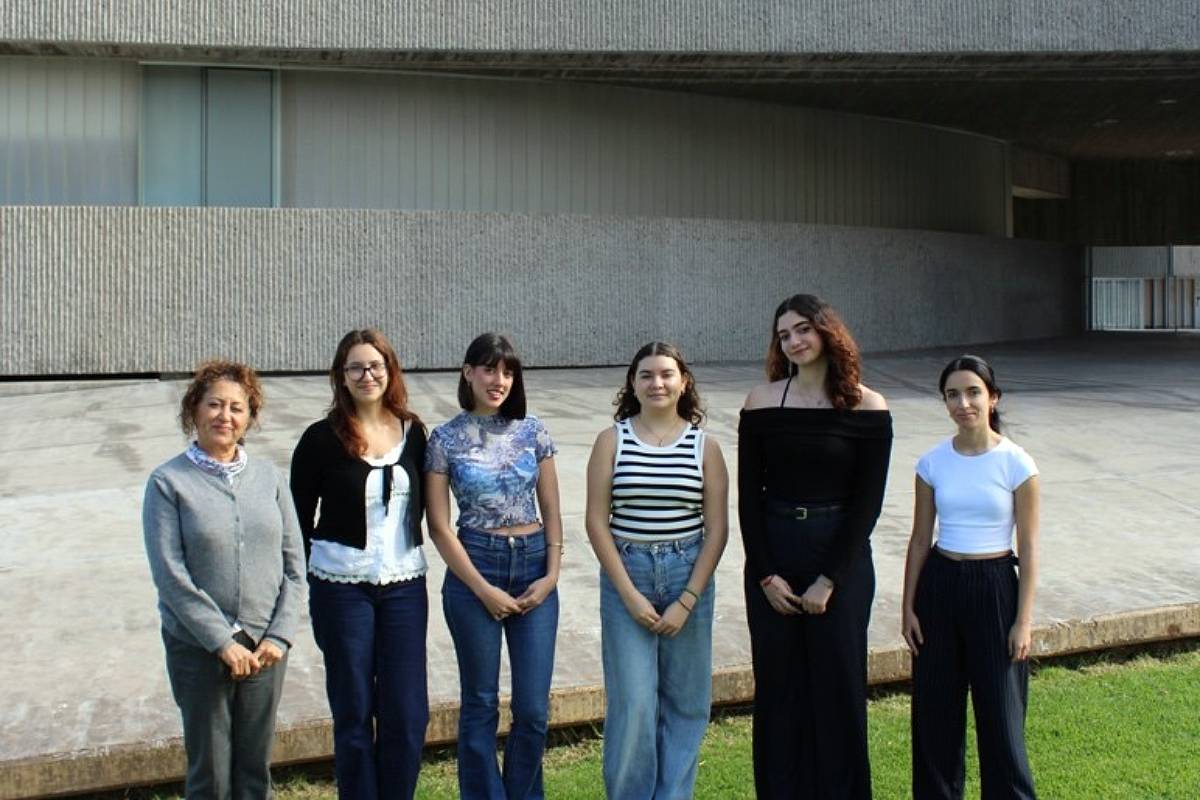
Students of the Degree in Design at the University of La Laguna Silvia Hernández, Haridian Pérez, Dana Crespo, Paula Santana and Cathaysa Armas have developed under the supervision of the professor Soheila Pirasteh, This innovative signage system aims to improve safety and information comprehension on beaches and bathing areas in the Canary Islands. Developed as part of the "Signage" course, this proposal outlines a set of standardized signs intended to establish consistent visual criteria across the Canary Islands' coastal environments.
Natural pools and beaches are essential spaces for leisure, recreation, and tourism, but their safe and sustainable use requires effective visual communication that guides visitors, prevents risks, and fosters respect for the natural environment. In this context, the project proposes a comprehensive signage system for the Mesa del Mar pools in Tenerife, aiming to enhance the user experience through clear, accessible information that harmonizes with the landscape.
The system's design not only addresses the specific needs of Mesa del Mar, but has also been conceived with a modular and adaptable structure that allows for its implementation on other beaches and natural pools throughout the archipelago. The proposal considers key aspects such as safety, universal accessibility, local identity, sustainability, and aesthetic integration with the surrounding environment.
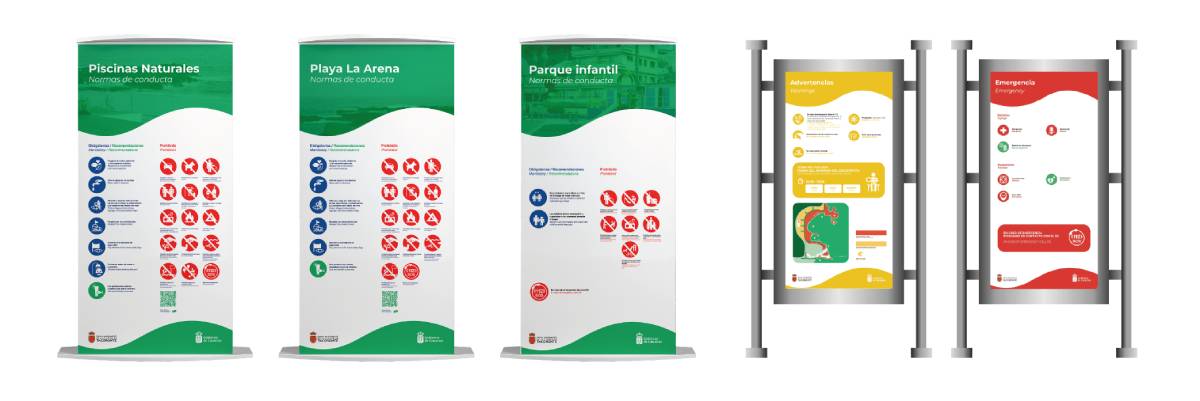
Final totems of this project.
Project development
Before beginning the development of the proposal, a study of background information and references from other related projects was conducted. The work highlights the importance of standardized visual communication that allows any user, whether resident or visitor, to quickly identify the risks, permitted uses, and basic rules of bathing areas. To achieve this, accessible iconography, regulated colors, and modular systems adaptable to different media are combined.
According to the students in charge, the main objective is "to facilitate user orientation and help reduce accidents, especially in natural areas where signage is often scarce or inconsistent." The system includes informational signs, warnings, safety recommendations, and graphic elements that promote intuitive reading in various environmental conditions.
The project integrates field research, regulatory analysis, and visual development, incorporating universal accessibility criteria to ensure that the information can be interpreted regardless of language or cultural background. Among its most notable contributions is a flexible modular system that allows signage to be adapted to different coastal landscapes without losing coherence.
The University of La Laguna highlights this initiative as an example of the potential of design applied to safety and public communication in the Canary Islands. The proposal could serve as a basis for future collaborations with administrations interested in standardizing coastal signage. As the creators point out, this type of initiative would contribute to unifying visual criteria, improving user safety, facilitating the understanding of information in coastal areas, and promoting responsible use of the environment.
Furthermore, the team has studied other cases of interest, such as Drago Park, a natural and tourist area with high botanical, cultural, and scenic value. This example highlights the importance of signage not only regulating visitor behavior but also respectfully integrating into the landscape. Therefore, the signs were designed to meet environmental integration criteria, adapting to the surroundings without altering their natural character.

 Spanish
 English
 French