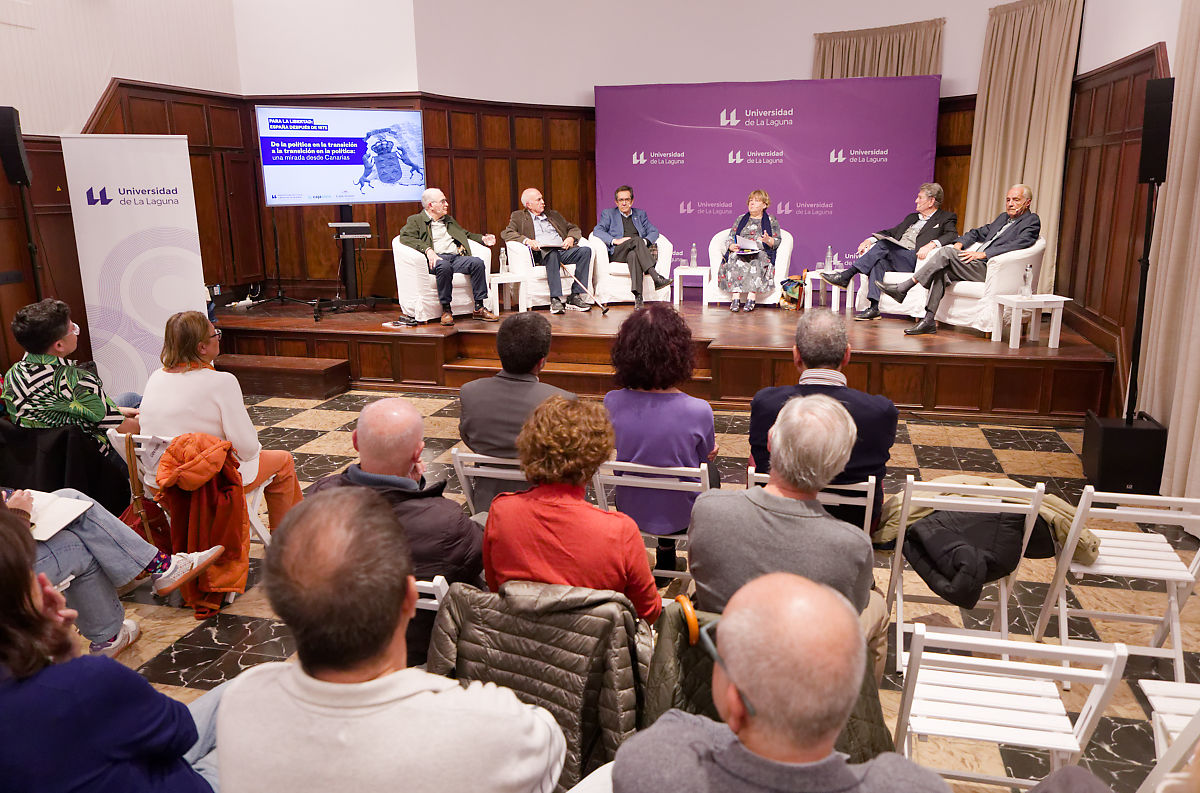
Five prominent figures from the political and social life of the Canary Islands greeted each other warmly yesterday afternoon, November 27th, as part of the program “For Freedom: Spain after 1975,” organized by the University of La Laguna to commemorate the fiftieth anniversary of the start of Spain’s democratic transition. The meeting, entitled “From Politics in the Transition to Transition in Politics: A View from the Canary Islands,” held in the Rectors’ Hall of the Central Building, had a dual purpose: to reclaim the political significance of this historical moment and to highlight the Canary Islands’ unique contribution to Spanish democratization.
Those present included Pablo Ródenas Utray, professor in the Department of Philosophy of Science, Education and Language at the University of La Laguna and a leader in Canarian left-wing organizations in the years following 1975; José Carlos Mauricio, journalist and key figure in contemporary Canarian nationalism who held political positions at the regional and national levels; Isidoro Sánchez García, representative of ATI-Canarian Coalition and with extensive institutional experience through various positions in local, regional, national and European politics; Alfonso Soriano Benítez de Lugo, first president of the Canary Islands Government and a prominent figure in the UCD who later joined the People's Party; and Antonio Martinón Cejas, Professor of Mathematics and former rector of the University of La Laguna, a political leader in multiple regional and state institutions during the Transition and the first governments of the Canary Islands, initially as part of the Canarian PSP which later merged into the PSOE.
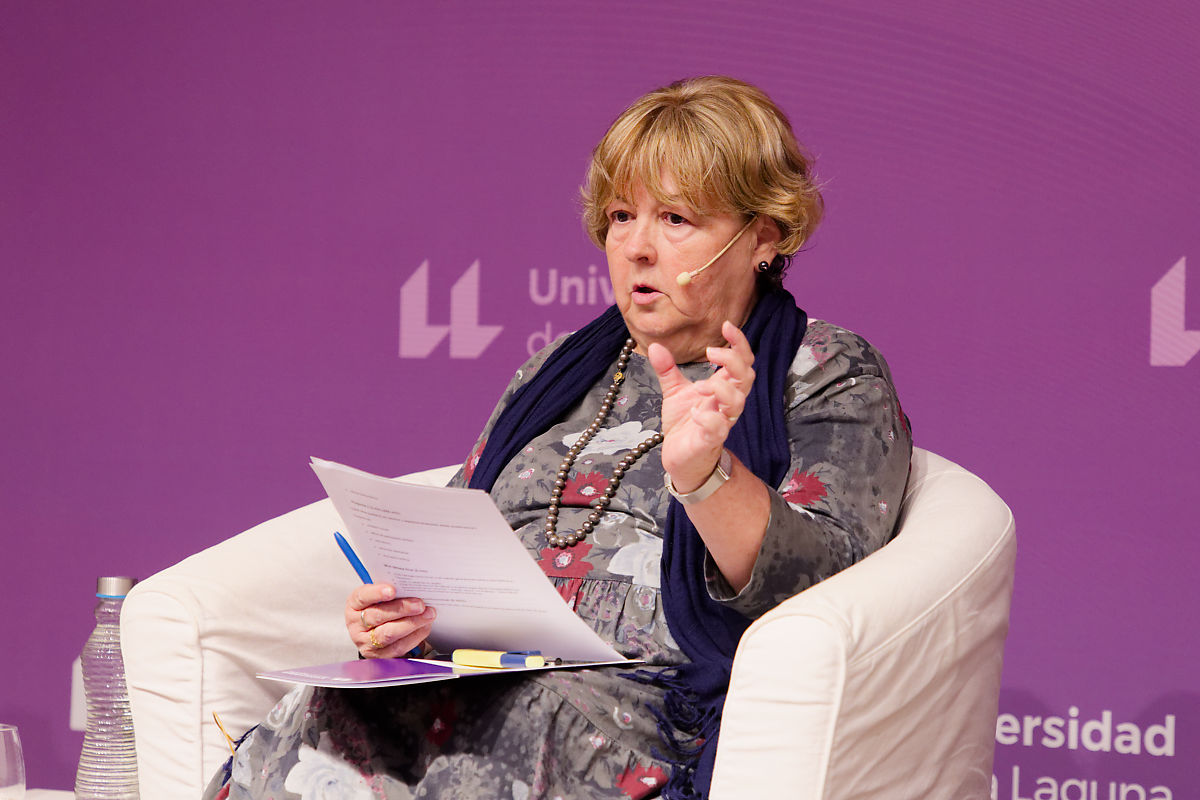
María Luisa Arozarena.
The event, organized by Antonio Adelfo Delgado, Professor of Constitutional Law, Political Science, and Philosophy of Law at the University of La Laguna, was introduced by the university's rector, Francisco García. “This dialogue is a space to bring together five perspectives from five key figures of that unforgettable, unique era in our history—five perspectives viewed from the Canary Islands.” García then gave the floor to the moderator, María Luisa Arozarena Marrero, a journalist and former director of Radio Nacional de España in the Canary Islands, to introduce the participants.
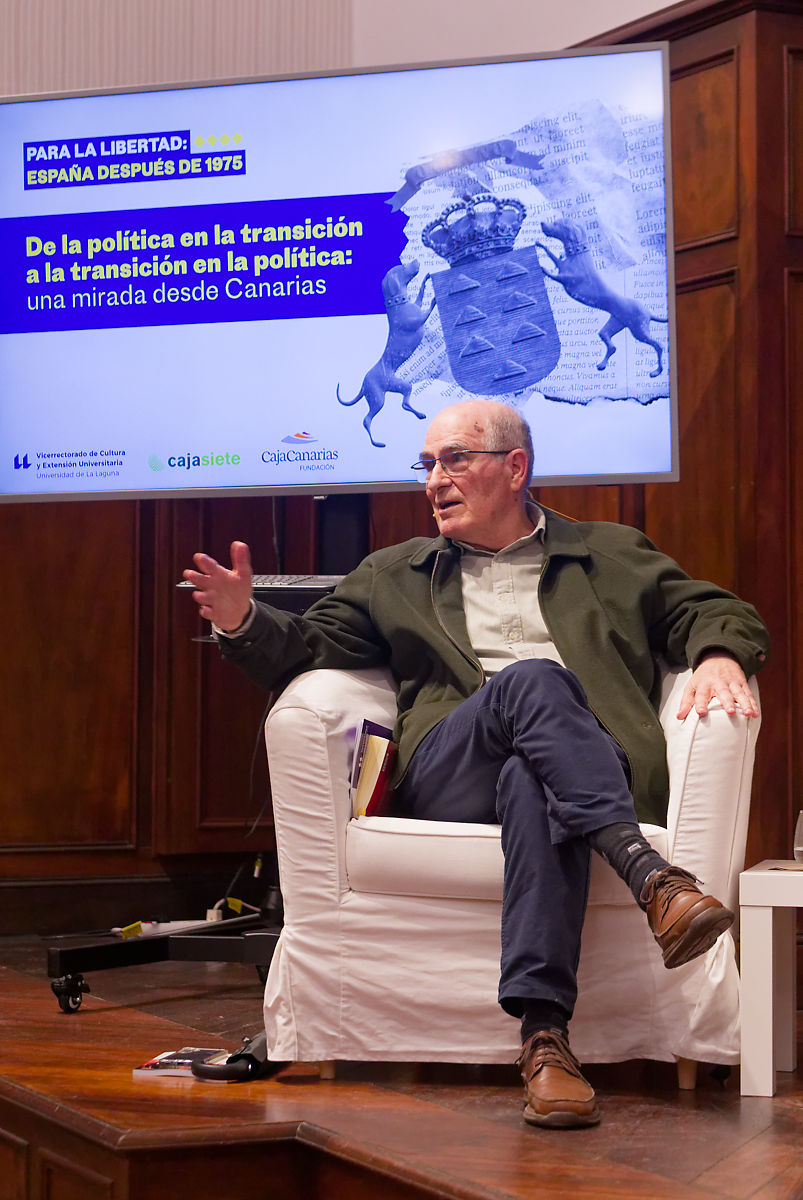
Pablo Ródenas.
The dialogue began with Pablo Ródenas, who defined his role as a political and academic figure as an “anomaly,” given that he was one of the forerunners of Spanish political theory at the time. He described the Transition through two contrasting perspectives. On the one hand, there was the intensification of violence, which began during the Franco regime in 1973, following the assassinations of then-Prime Minister Luis Carrero Blanco by ETA and of Antonio González Ramos, a left-wing activist and trade unionist from La Laguna, by the regime's police. On the other hand, there was “an impressive popular enthusiasm,” marked by numerous demonstrations that showed the Spanish people desired change toward democracy. From his perspective, the Canary Islands were the most distinct historical nationality in Spain, yet this distinction was not recognized in the 1978 Constitution, unlike Catalonia or the Basque Country, due to the support of regional nationalist parties.
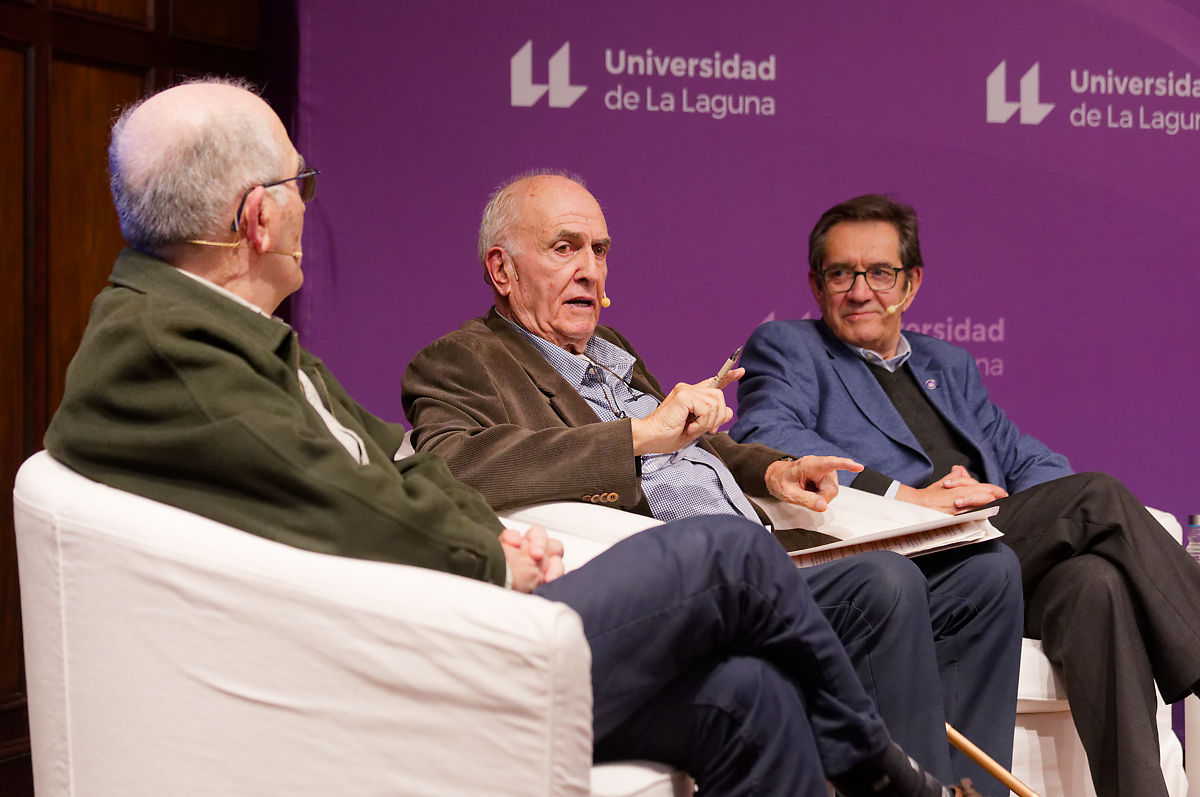
Isidoro Sánchez (center)
Isidoro Sánchez recalled the Spanish government's abandonment of Western Sahara in 1975, when he was coordinator of the university union in Madrid, and his active participation in the political life of his native Orotava in the first democratic elections in 1979, when his brother Francisco Sánchez was elected mayor and he himself was elected councilman twice. He remembered the demonstrations in the midlands of La Orotava, a rural area that still lacked electricity at that time, which led him to become even more involved in the political decisions of the valley.
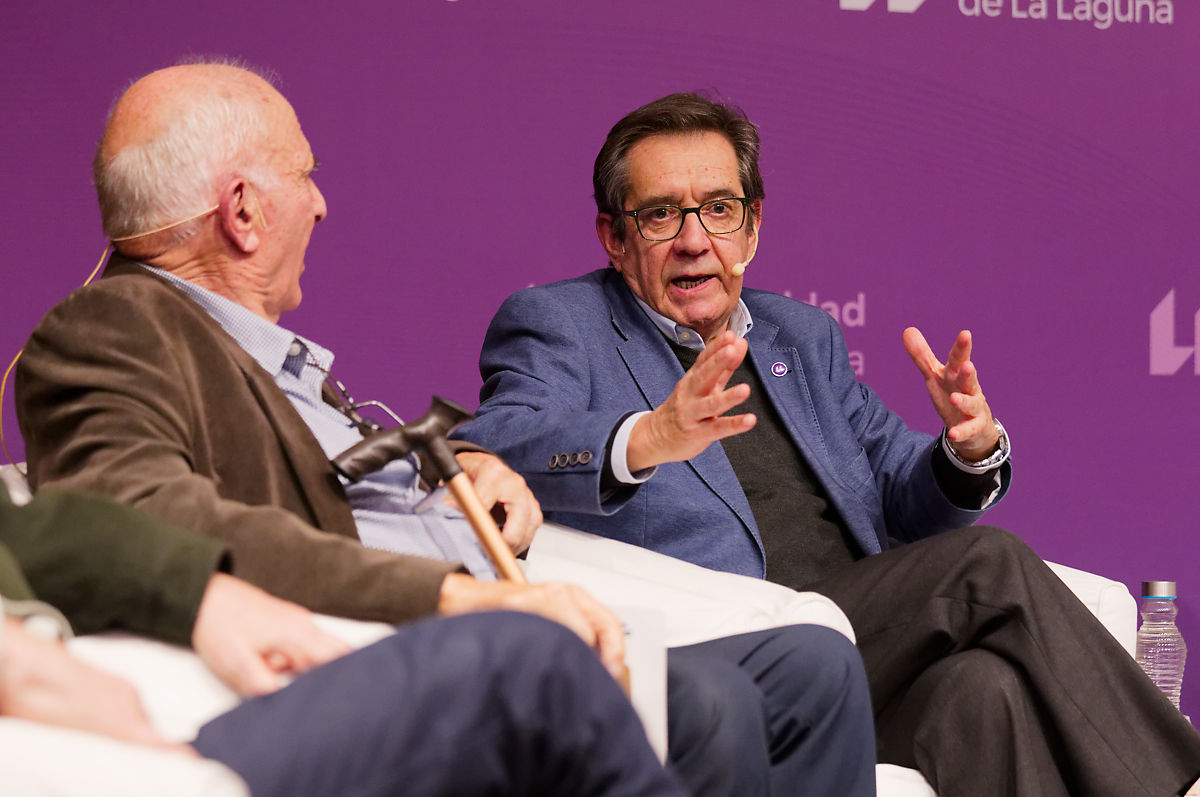
Antonio Martinón (d)
Antonio Martinón highlighted the hope of the Transition, a time when there was “more desire for democracy than for the continuation of Francoism. Even for those who suffered through the Civil War and imprisonment, an agreement was sought by any means necessary, despite the Regime's reluctance.” He emphasized that what united different political movements in the opposition was anti-Francoism. Although he lamented that the right wing didn't lose until 1982, with the majority support for the UCD in the Canary Islands, he proudly acknowledged that democracy was brought back by all the political forces of that time. Regarding the Sahara, he added that it had become a strategic problem, since the Spanish Legion had been stationed in Fuerteventura while the independence movement, led by Antonio Cubillo from Algeria, was also growing.
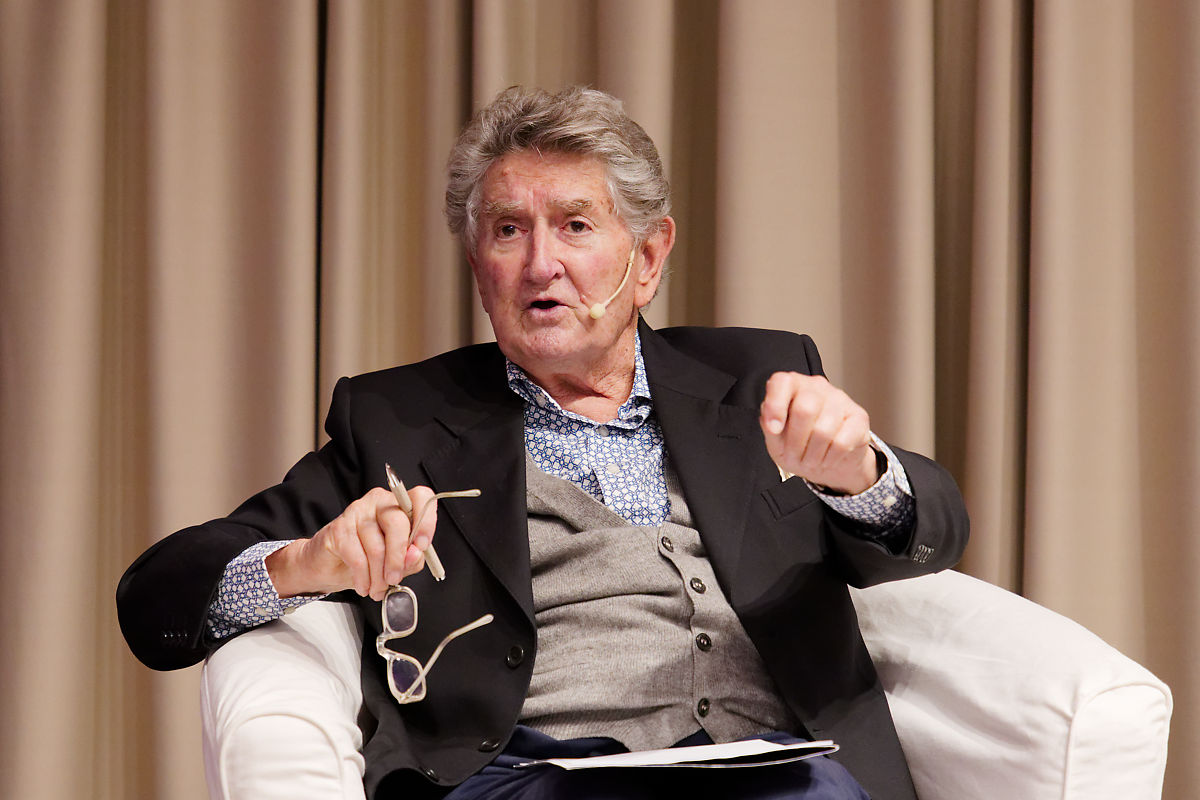
Alfonso Soriano.
Alfonso Soriano stated that what was achieved in Spain during the Transition would be very difficult to replicate with the current political figures, whom he said he was ashamed of "for what has happened at the regional and national levels." From his perspective, the political change was possible because "there was a middle class that represented 60% of the Spanish population." A milestone of the era that he highlighted was the progress in the debate on political prisoners, aiming to have them considered equal to common prisoners, while lamenting the case of Antonio González.
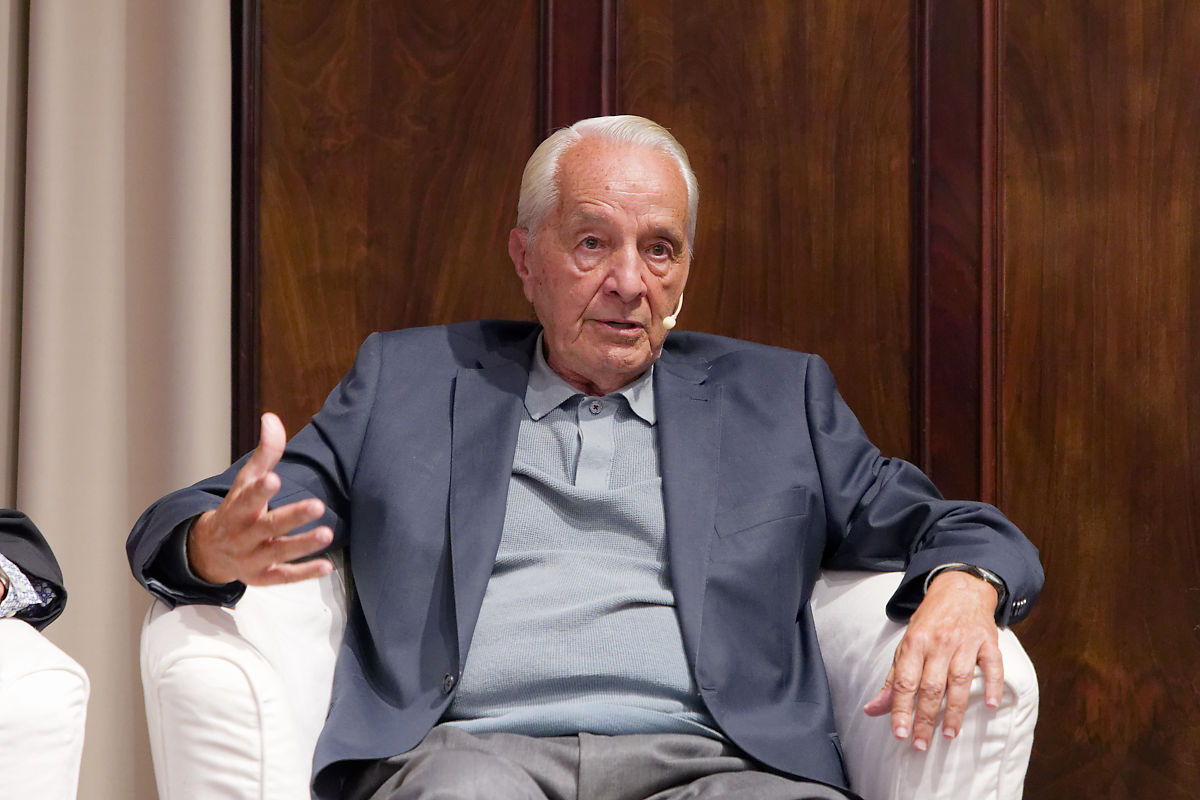
José Carlos Mauricio.
Finally, José Carlos Mauricio revealed that being a journalist and a politician at that time was not a distinction: “We used journalism to do politics; we experienced the politicization of newspapers, as was the case with La Provincia in Las Palmas, Gran Canaria, and El Día in Tenerife, which organized clandestine meetings.” He described several key elements of the history of Spain and the Canary Islands during the Transition, such as the fact that social mobilization had prevented the Francoist sector from surviving after Franco's death, and that there was also a significant workers' movement at the University of La Laguna. “Spanish society was tearing the Francoist suit apart; there was no longer room for it,” he concluded.
In closing, María Luisa Arozarena took the floor to summarize the dialogue's conclusions, highlighting the following: the political culture of dialogue as "non-negotiable," political stability, the strengthening of self-government, political pluralism, changes in the media, and identity tensions. She also added, as a message to new generations, the shared responsibility of all political voices and the need to listen to those who made the decisions that led to the current democracy. Furthermore, she invited the University of La Laguna to host another dialogue to provide a forum for discussing the democratic future of the Canary Islands and Spain in greater detail.

 Spanish
 English
 French