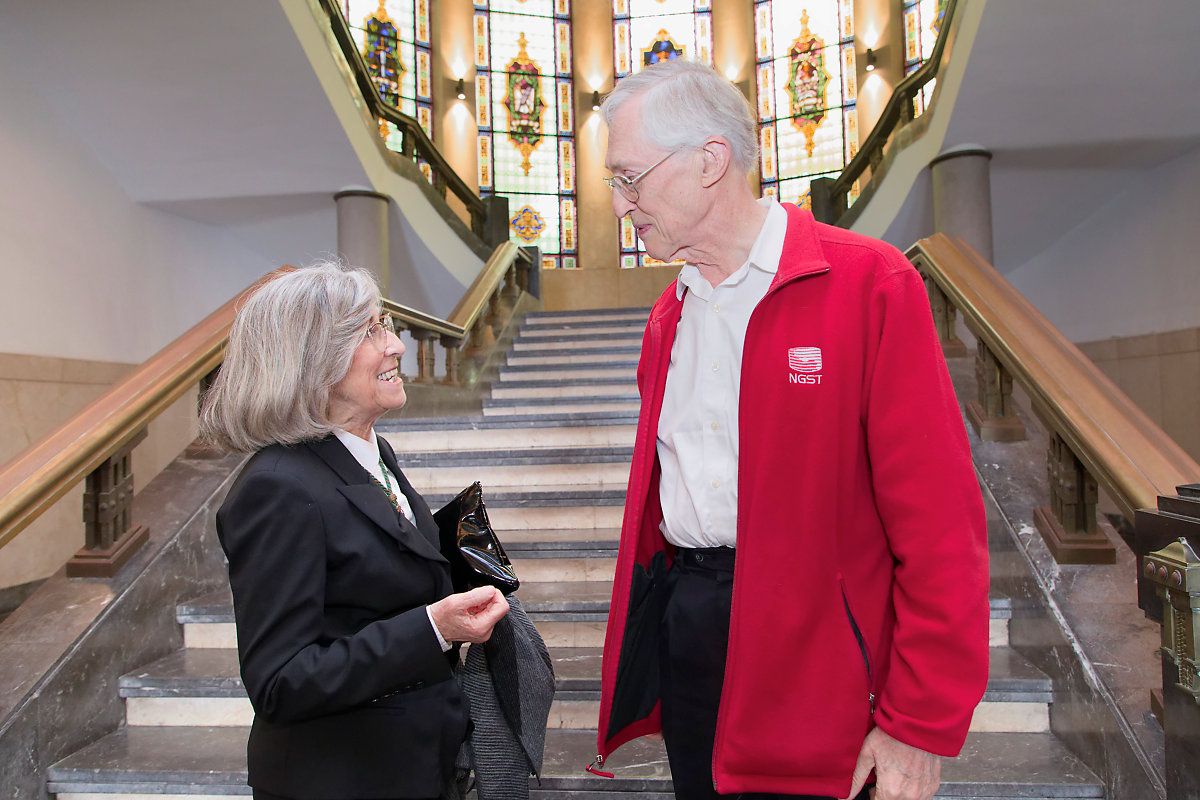
Ana María Crespo and John Mather have left an indelible mark on their respective fields. Crespo, a pioneer in the study of lichen symbiosis, has championed a patient science, attentive to the invisible and profoundly human. Mather, Nobel laureate in Physics, has led discoveries that have redefined our understanding of the cosmos and continues to lead some of NASA's most ambitious projects, such as the James Webb Space Telescope.
To mark this academic distinction, we spoke with both of them about science, vocation, public universities, and the profound meaning of observing what has always been there. From roots to stars, their stories remind us that research is, above all, a way of being in the world.
Pulling the thread: science as a way of life
There are scientific careers that, beyond their discoveries, tell a story of vocation, identity, and return. Ana María Crespo de las Casas's is one of them. An internationally renowned biologist, the first woman to preside over the Royal Academy of Exact, Physical and Natural Sciences of Spain, and a specialist in a microscopic world that very few know, but on which we all depend: the world of lichens. Her history with the University of La Laguna symbolically comes full circle with her investiture as an honorary doctorate, a recognition that connects with that moment when, as a young teenager from Tenerife, she had to leave for Madrid to study Biology, a degree that did not yet exist on her island.
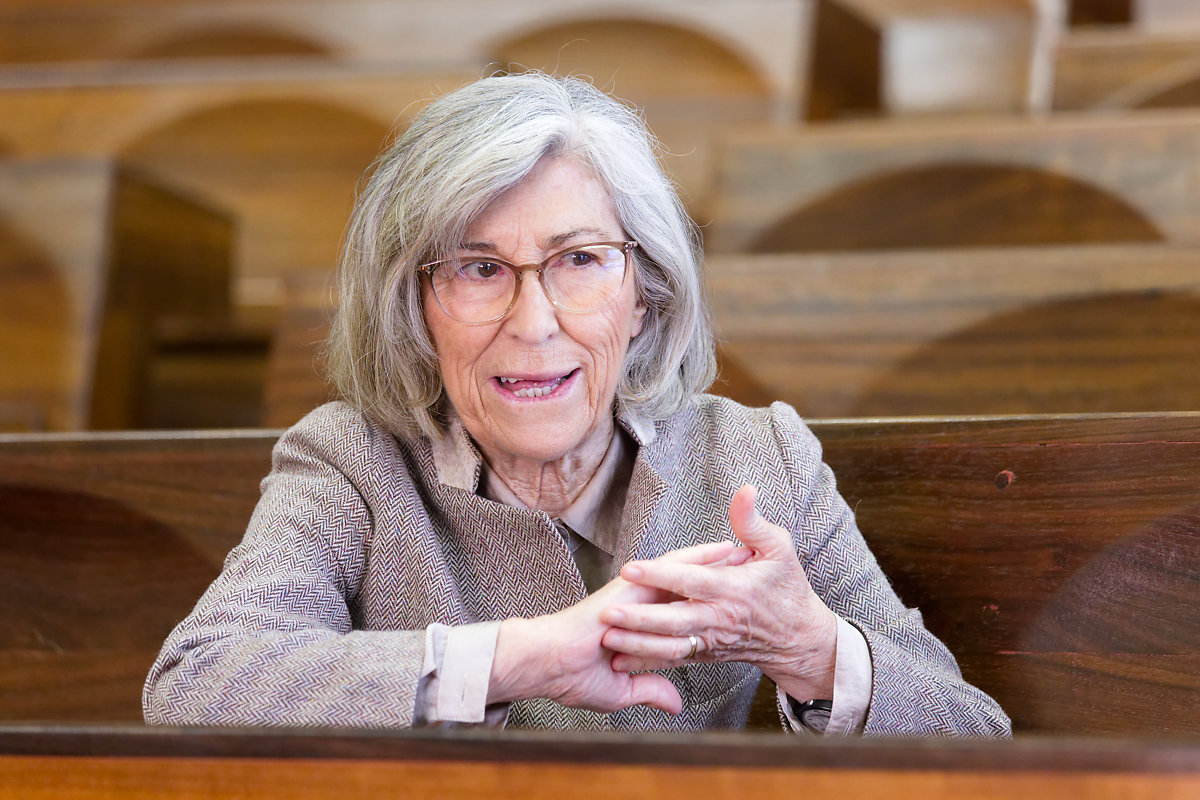 Hers is a story of science, yes, but also of affection. It's a story of a childhood marked by admiration for a scientist grandfather, of a vocation that took shape in the everyday, and of a gaze that, from a very early age, focused on the small, the seemingly insignificant. Crespo was always drawn to detail: the insects in the garden, the threads of her grandmother's embroidery, the texture of a tree's bark. All of this unknowingly led her to a field of study that demands patience, precision, and an uncommon sensitivity to discover universes where others only see blemishes.
As a child, Ana would glance at the University of La Laguna building. It awe-inspiring. It fascinated her. That building, which she could only imagine from the inside, became for her a symbol of something greater: knowledge, the future, possibility. Science has been for her a fine, invisible thread, one she began to follow from a very young age. From those first stirrings of curiosity, she has followed that thread with unwavering dedication, weaving with it a whole life devoted to observing, thinking, and sharing.
A sense of wonder at the natural world awakened in her from a very young age. “It must have been my grandfather’s fault,” she admits, recalling the figure who instilled in her the value of knowledge. By the age of seven or eight, she was already lost in musings about Mars and other “rather outlandish” ideas, she remembers with a laugh. She observed, read, and imagined. From the stones on the path to the stars, everything could spark her questions. That restless child felt that the world was whispering mysteries in her ear, and she wanted to hear them all.
She grew up surrounded by intellectual and emotional stimulation. In her family, study and curiosity were a natural part of daily life: her mother had studied in La Laguna, and her sister would follow in her footsteps. Books, conversations at home, the example of her elders—everything prepared the ground for science to take root in her. Although, upon finishing school, she still considered other options. She was drawn to architecture—"I still love it"—and thought about pursuing it. But during her pre-university studies, something decisive happened: biology classes ignited a new spark. The life that pulsed in the minuscule, in the invisible, began to pull at her inner thread more strongly than blueprints or structures. Ana felt that this was her path. And she decided to follow it.
Studying Biology meant moving to mainland Spain. In the late 1960s, the University of La Laguna didn't offer that degree. For a 17-year-old, leaving the island was no small decision. With a suitcase full of dreams, she set off for Madrid. The initial excitement soon gave way to a sense of unease. "The break, when I left, was terrible," she confesses. The young woman who longed to explore new horizons also discovered the weight of displacement and the sharp pain of homesickness.
Despite everything, those ties were never broken. Ana returned to Tenerife as soon as her schedule allowed. She needed the embrace of the Atlantic, the voices of her parents, the conversations with her siblings. “I feel absolutely from here,” she affirms. Over time, she understood that “one’s homeland is childhood”—and also, she says, adolescence. For many years, home was her parents“ house, then her sister’s. Only when she became a mother did she begin to feel that her center gravitated elsewhere: ”My home is where my son is.” But she always knew that a part of her remained anchored in the Canary Islands.
With that serene resolve, Ana forged her own path in a world where women were scarcely represented in science classrooms. Whether there were prejudices or glass ceilings, she chose to keep going. “I didn’t consider anything else: if someone else can do it, so can I,” she simply summarizes. Of course, she noticed the condescension, the discouraging glances. “All the girls noticed it, and they still do,” she affirms. But she didn’t let it stop her. Sometimes she confronted the obstacles head-on; other times, she sidestepped them. The important thing was not to give up.
This determination was complemented by a solid research career recognized both within and outside of Spain. Ana Crespo has published over 200 scientific papers, more than 150 of them in high-impact international journals, and has supervised 13 doctoral theses. She has been awarded five six-year research periods, the most recent in 2012. Her h-index—which measures the impact of her publications—reaches outstanding levels in the main scientific databases, and she has been a key figure in the training of new generations of specialists in botany and mycology. Her contributions have been essential in redefining taxonomic concepts in the study of lichens, incorporating molecular and genetic techniques into the evolutionary analysis of these symbiotic organisms.
Decades later, in 2024, she became the first woman to preside over the Royal Academy of Exact, Physical and Natural Sciences of Spain, of which she had been a full member since 2010. When she received the appointment, she felt pride and emotion. “You think of your parents,” she says, moved. She was struck by the fact that top-level scientists trusted her to lead the institution. And she doesn't forget a detail that fills her with island pride: before her, only one other Canarian—the physicist Blas Cabrera Felipe—had presided over the Academy. Her name thus joins that of one of the most brilliant minds of the 20th century in Spain.
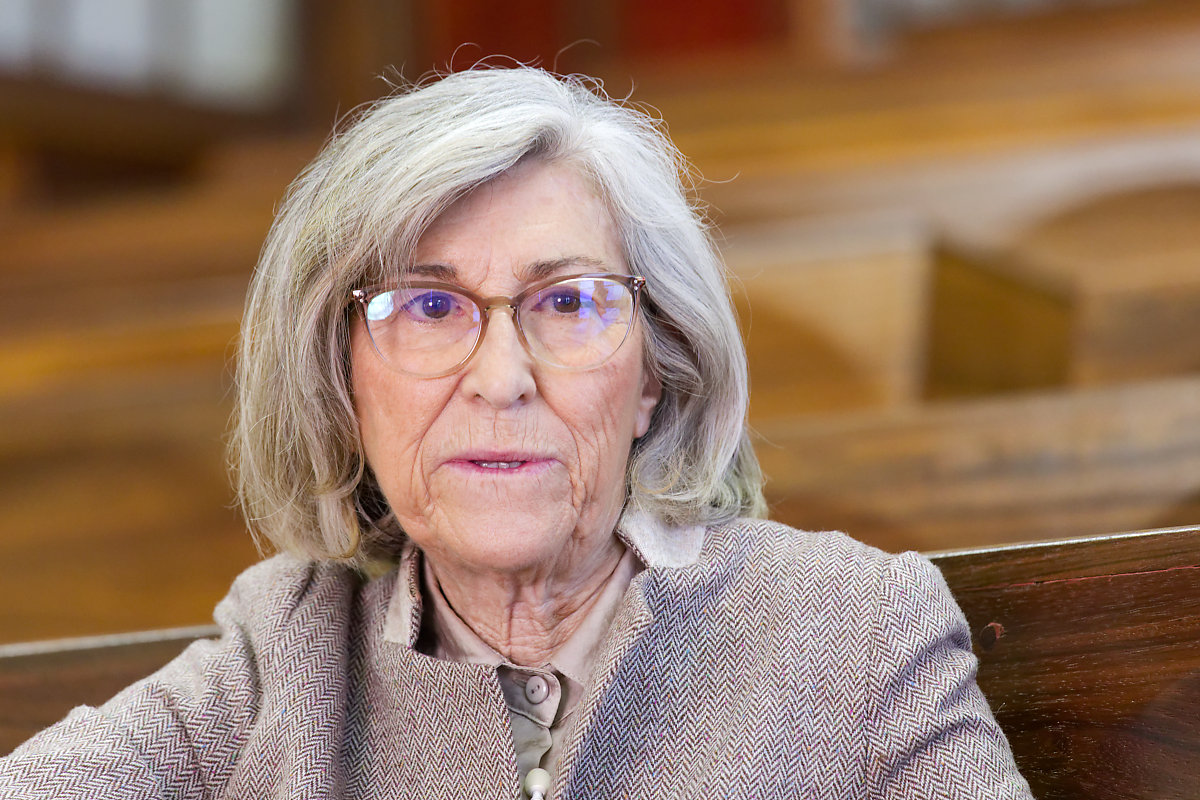 Her approach to science has always been linked to patience, passion, and wonder. She spent decades studying minuscule yet vital organisms. Where others saw a rock, she discovered an ecosystem. “There’s something extraordinary about observation,” she explains. The more you know, the more you enjoy it. On her field trips, shared with her son and husband, she experienced each walk as an immersion in the invisible. “To know is to increase the capacity for wonder,” she affirms. And that capacity has only continued to grow.
But observation isn't enough. Science also demands asking questions, making mistakes, and trying again. Ana has a deep love for research, for that almost detective-like process of following a clue until a discovery is made. "What I've enjoyed most is research, following a thread," she says with a smile that lights up her face. Pulling on that thread often means moving forward blindly, stumbling—"you fall and make mistakes," she admits with a shrug—but also getting back up with more questions. She's passionate about this path full of unknowns. A passion that has accompanied her since the beginning.
Alongside research, teaching has been another of her great passions. For her, teaching and discovery have always gone hand in hand. For years she was a teacher as well as a researcher, finding in the classroom another source of meaning. She finds it difficult to decide what has given her more satisfaction: a well-taught class or an unexpected discovery. “As soon as something comes up, you want to tell others,” she says, laughing, with the natural generosity of someone who enjoys sharing knowledge.
In his experience, the classroom and the laboratory feed off each other. Students' questions open up unexpected lines of research; findings in the lab inspire new explanations in class. The roles of teacher and student, he says, are blurring. "They're constantly changing." Science today is, more than ever, teamwork. The figure of the solitary scholar is a thing of the past. This network of interconnected minds seems to him one of the most positive changes he has seen in the scientific world: greater openness and respect among colleagues, where every idea—whether it comes from an eminent professor or a novice student—is heard for its merit. "An idea is equally respectable no matter who it comes from," he emphasizes. Experience will tell which ones flourish, but all deserve to be heard.
She considers this climate of respect essential. That's why she avoids environments where there's a lack of humility in recognizing others' merit. For her, science isn't an exercise in personal aggrandizement, but a collective project. A dialogue that demands openness, generosity, and teamwork. This collaborative way of understanding knowledge has guided her entire career. The relevance of her work has been widely recognized: she has received distinctions such as the Acharius Medal from the International Association of Lichenology, the Charter 100 Award for her advocacy of scientific knowledge from a female perspective, and the Medal of Honor from the Menéndez Pelayo International University. Furthermore, her legacy has been immortalized in scientific nomenclature: seven species, one subgenus, and two genera of lichens have been named in her honor, reflecting her international impact on evolutionary botany.
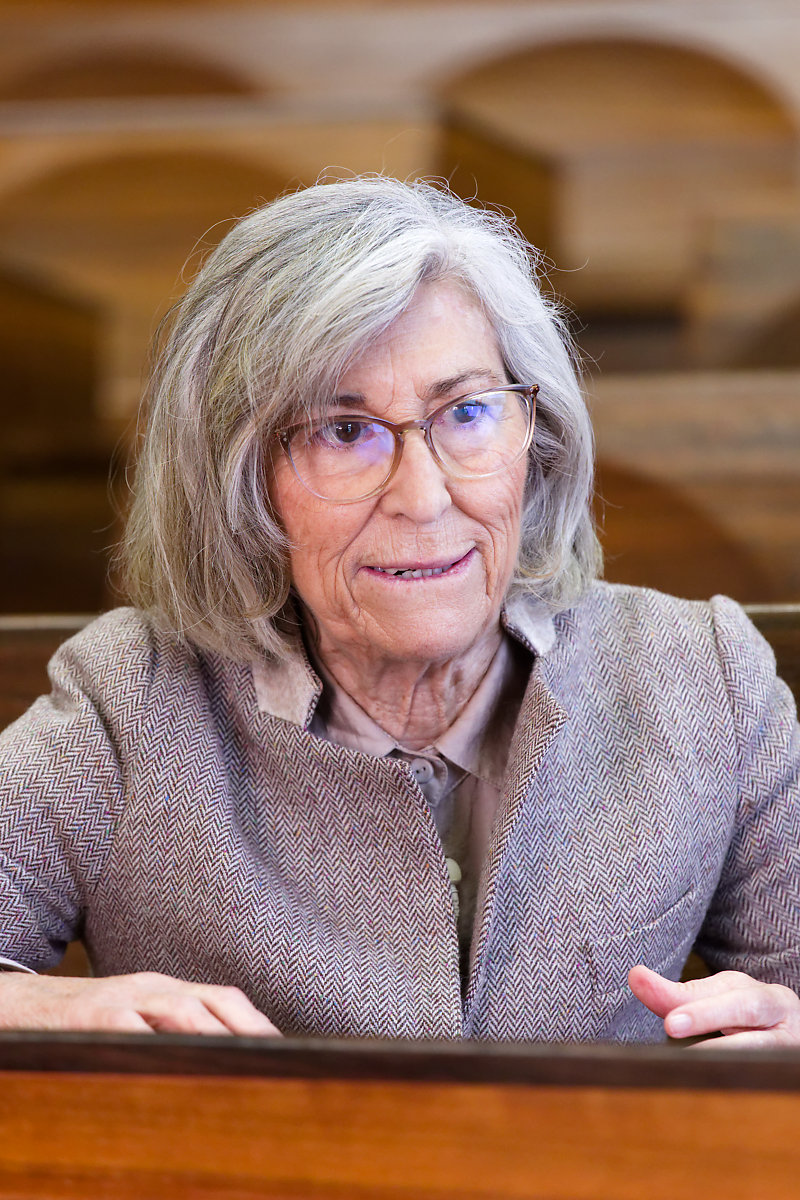 Therefore, receiving an honorary doctorate from the University of La Laguna transcends the academic for her. It is a meaningful return: coming back, with maturity and experience, to the institution that for years was a symbol of aspiration and possibility. That young woman who used to cross the plaza and gaze longingly at the façade of the Central Building is today an established scientist who has not forgotten her roots or what that university represents on the emotional and social map of the Canary Islands.
“Universities have to be good, but of course, public universities have a special significance,” he states with conviction. Even more so in places historically distant from centers of power, like the Canary Islands. The University of La Laguna has been a true elevator of social mobility. Generations have passed through its classrooms, finding in it a path to transformation not only professionally, but also civically and culturally.
Crespo states it clearly: public universities must be protected. Not out of nostalgia, but for the sake of intergenerational justice. Because their history is made up of many others: the history of teachers who believed in their vocation, the history of families who invested in education as a legacy, the history of students who forged paths where none existed.
Her journey proves it: knowledge is not a destination, but a shared journey. Hers has been guided by curiosity, perseverance, and a commitment to the common good. Today, that invisible thread she began to follow as a child is firmly rooted in her homeland. And it remains stretched out, firm, for other hands to continue weaving the future upon it.
Effort to understand the origin of life in the universe
Science does not follow a linear or predetermined path; discoveries are composed of multiple perspectives that may be analyzing the same event simultaneously. John Mather adds to this the lens of causality: he was advised that, if he wasn't rich, he shouldn't dedicate himself to theoretical physics. The effects of heeding this advice marked a milestone in scientific history, following the successful completion of the Cosmic Microwave Background Explorer in 1989.
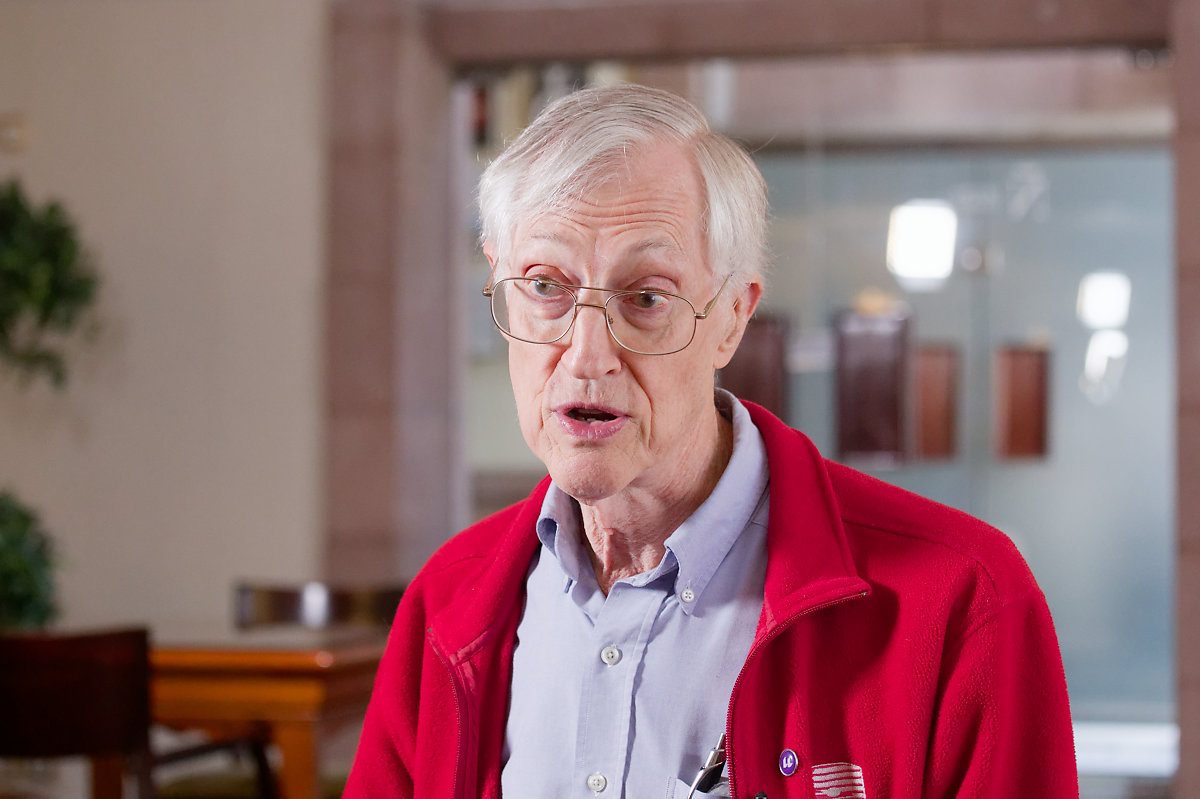 The data obtained from this space satellite confirmed the theory of the universe's expansion since the Big Bang. This groundbreaking cosmological discovery, his first major professional project, earned Mather, along with his colleague George Smoot, the Nobel Prize in Physics in 2006. Currently, the University of La Laguna has awarded him an honorary doctorate in recognition of his vital contributions to advancing our understanding of space.
The American astrophysicist recalls how his attraction to studying the cosmic microwave background radiation, the heat that emerged in those first seconds of the universe's life, wasn't immediate. It had been discovered by Arno Penzias and Robert Wilson in 1965, while he was studying physics at Swarthmore College in Pennsylvania. So he had heard about it and had read about the expansion of the universe during this period.
Later, while pursuing postgraduate studies at the University of Berkeley, she chose a doctoral project to measure this initial radiation using ground-based instruments. The team she was working with then began constructing a device to launch a pilot balloon 40 kilometers into space to obtain more accurate measurements. This experiment, though unsuccessful, became the subject of her dissertation. Despite this, he was hired by NASA and learned from the failure to propose something much more ambitious in 1974 as a satellite project: the Cosmic Background Explorer (COBE).
Given his limited experience at the time, this success seemed somewhat random, but he was surrounded by specialists who “knew at the time that it was a very valuable research project; we just didn't know how to do it at first,” the cosmologist humbly admits, who views each new quest as an adventure of knowledge. Thus, he defines each discovery as a “surprise.”.
This visit to the Canary Islands was not his first. He gave a lecture during the second edition of the Starmus International Festival in 2014, where he shared the stage with other Nobel Prize winners in Physics, the renowned astrophysicist Stephen Hawking, and well-known astronauts. He reprised this role at Starmus VII in La Palma at the beginning of May. Although he is not fully familiar with the astronomical work being done at the University of La Laguna and the Canary Islands Institute of Astrophysics (IAC), he notes that "there is a very powerful team here" dedicated to measuring the cosmic microwave background radiation "even better" than he did in the past.
Mather expresses his admiration for the collaborative work of the engineering and science teams in creating important telescopes and instruments, both at Izaña and at Roque de los Muchachos, home to the Gran Telescopio Canarias (GTC). “Volcanoes provide us with the ideal location to place a large telescope, above a significant portion of Earth's atmosphere, above the clouds, and high enough to provide a clear view,” he explains. The cosmologist emphasizes that the Canary Islands' peaks are among the world's prime locations for observing space.
His closest connection to the Canary Islands is closely tied to the academic award: “For me, this honorary doctorate is a celebration of my friendship with Dr. John Beckman,” says the expert, referring to the emeritus professor at the IAC (Canary Islands Institute of Astrophysics) who served as his sponsor for the honorary doctorate. They met in their early careers and have remained friends ever since. In fact, Beckman preceded him from Oxford and, like Mather, worked on satellite mission proposals at that time, “so he could have been the first to make the discovery,” he explains. In the autumn of 1984, while the American researcher was overseeing the construction of COBE, the Tenerife experiment, which included the participation of the Canary Islands research center, was launched at the Teide Observatory.
Mather is thrilled to receive this recognition for his career. “It means to me that we not only did a good job, but that we made a difference for you here at the University of La Laguna.” The astrophysicist sees it as “a celebration of the global connection between researchers and the importance of our work for everyone.”.
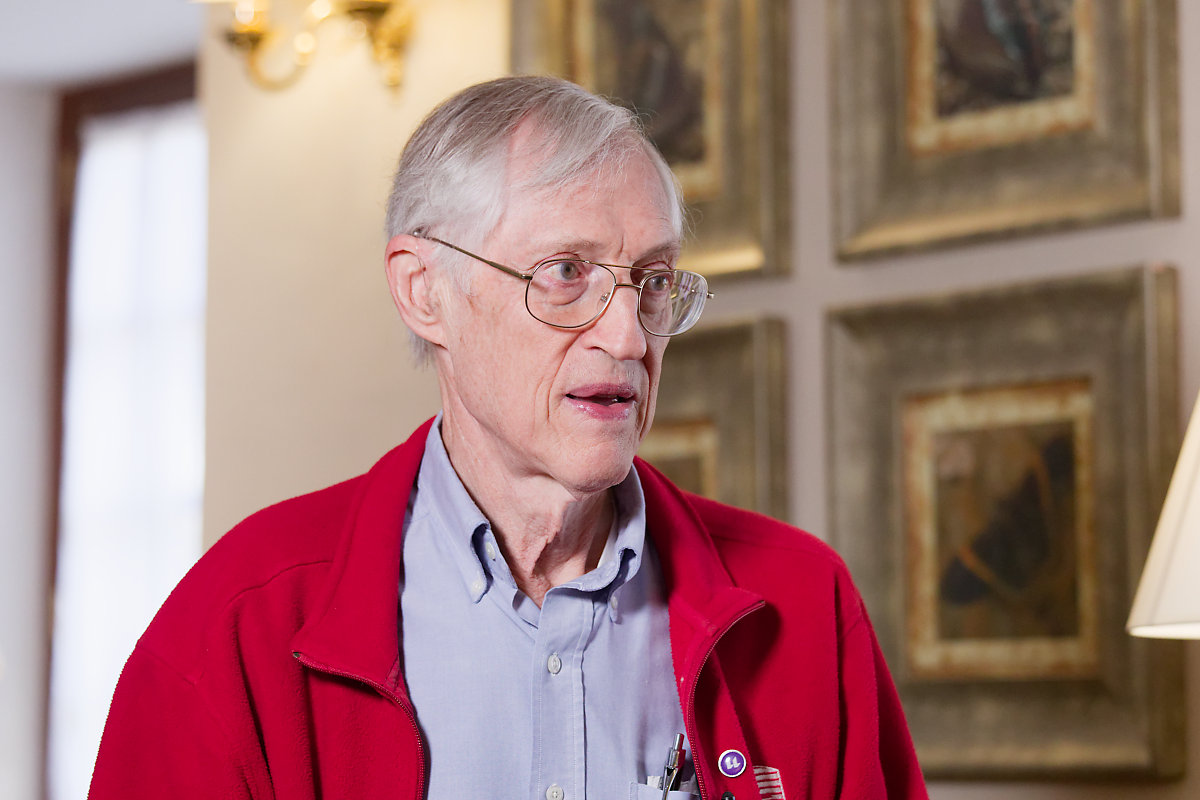 He likes to recall that behind the project that earned him the Nobel Prize were “1,500 people (who) built, operated, and analyzed the data,” and goes on to say that “it was recognition for all the people involved, and two of us accepted the prize.” At the moment of the announcement, he knew immediately that his role would change drastically, in fact, forever. “I became the spokesperson for our project worldwide.”.
For the researcher, it couldn't have been easy to bear this enormous weight on his shoulders, which turned out to be the first achievement of his career. However, from the outset, he proved capable of leading what he considers "a very personal creation." As the lead scientist for the COBE satellite, he participated in all the equipment analysis and all the scientific results. "It was very exciting for me to see something that was my own idea become a satellite and be launched," he recounts enthusiastically.
With this, they ushered in a new field: “the era of precision cosmology,” as the Nobel Prize Committee stated. When they analyzed the satellite's initial measurements, they were able to discard existing theories and begin to develop what we now call the Standard Model of the Expanding Universe. This data from COBE allowed scientists to calculate numerous mysteries of the cosmos with extreme precision. Today we know its temperature, its age, the rate at which it expands, how much matter there is, how much of it is ordinary matter and dark matter, as well as the amount of dark energy that exists.
His passion for finding answers to the universe's most important mysteries, combined with his meticulous attention to instrumental precision, led Mather to also head the James Webb Space Telescope (JWST) project. Launched on Christmas morning in 2021, after 20 years of preparation, this instrument is an ambitious joint initiative of NASA, the European Space Agency, and the Canadian Space Agency, with the collaboration of 18 other countries.
One of its main objectives has been to observe some of the most distant events and objects in the universe, such as the formation of the first galaxies, beyond the reach of ground-based and space-based instruments until then. Before putting it into operation, they didn't know how far back in time and space they could go. "Now we've been able to see a galaxy that formed 290 million years after the Big Bang, or we see it as it was at that time; perhaps it had even formed before then," Mather infers. And he states with admiration the finding that "early galaxies are bigger, brighter, and hotter than we thought they would be.".
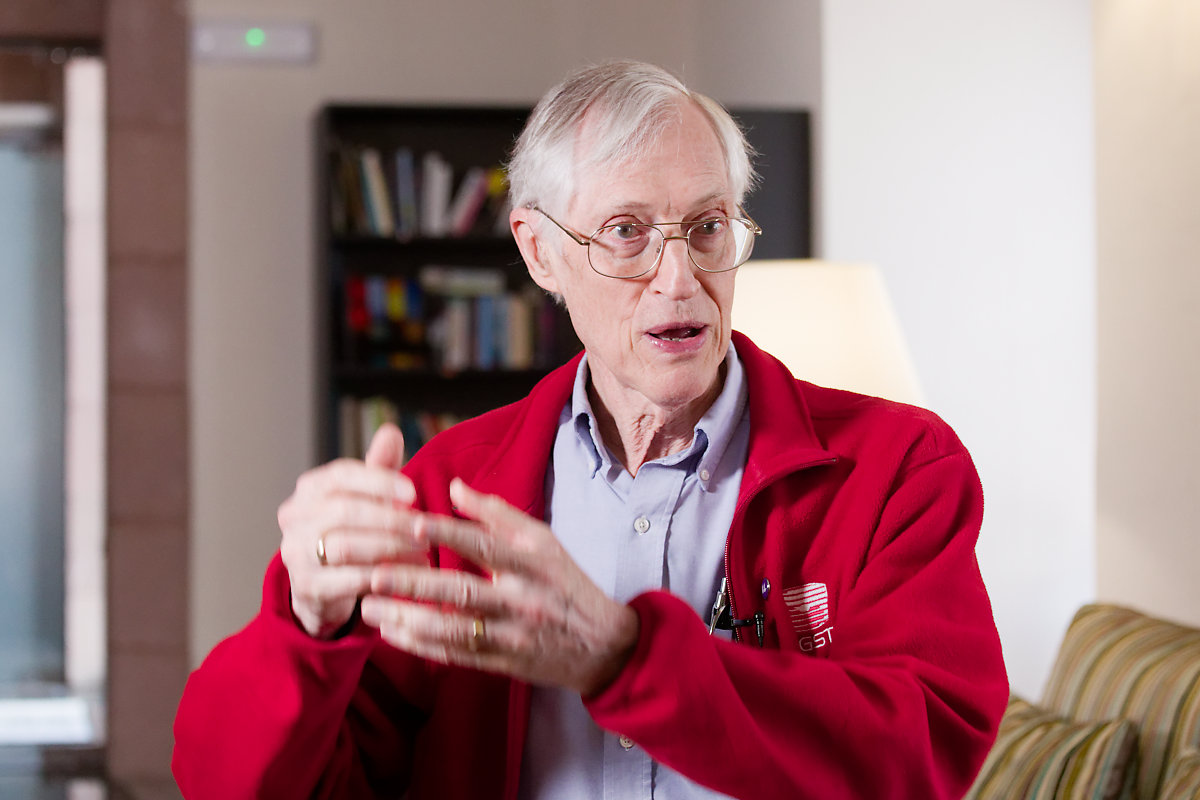 Closer to home, and thanks to the infrared technology incorporated into the telescope, they are studying the formation of stars and planets, which are born in clouds of dust and gas, allowing them to observe objects colder than what is detectable in visible light. "We can see objects that are much colder than you and I," reveals the cosmologist. It also allows them to see the debris of exploded stars, which contains the chemical elements that surround us, such as carbon, oxygen, and nitrogen, at the beginning of the periodic table. "We wouldn't be here without them, so you and I are stars that exploded," Mather concludes, with a smile.
Another of the JWST's purposes has been to obtain direct images of exoplanets—planets around other stars—and satellites in the solar system, with the aim of finding life elsewhere in space. To this end, the atmospheres of other planets are analyzed, looking for traces of oxygen, even though their composition may be very different from Earth's. "Honestly, we don't know. It seems that either life will never occur here, only happening exactly as it does here on Earth, or life exists in many places," the scientist states.
It is worth noting that astrophysicists from the University of La Laguna and the Canary Islands Institute of Astrophysics are using this space telescope to observe in various fields, such as those already mentioned and others, such as supermassive black holes in the nuclei of galaxies, the properties of planetary nebulae, or the physics of asteroids and other minor bodies in the solar system.
Mather currently works as a senior astrophysicist at NASA's Goddard Space Flight Center (GSFC) in Maryland, working on a project to build a space umbrella. This would block the light from each star being studied, facilitating detailed analysis of the planets orbiting it.
The budget cuts planned for 2026 for American scientific and educational institutions cast a shadow of uncertainty over current and future initiatives. Despite the turbulent political climate in his country, John Mather looks to the future with hope, believing that bridges will continue to be built within the international scientific community. He is optimistic about future generations of science students. “Not all of us will become scientific researchers; we help build engineering projects, we work in the financial sector, we do all sorts of different things. That's why a student with a background in scientific research will always have a job,” the astrophysicist asserts.
Communications Office

 Spanish
 English
 French