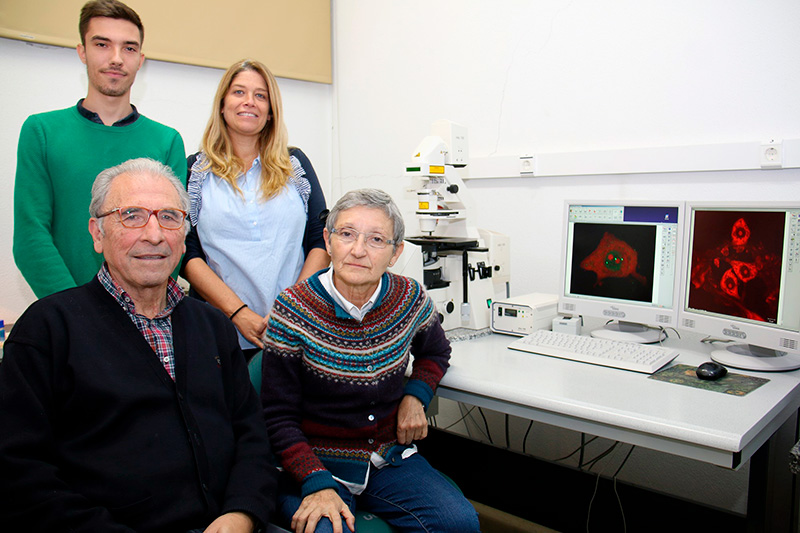
A study involving the University of La Laguna has reviewed the organization of the neuronal nucleus described by the physician Santiago Ramón y Cajal in 1910. Using modern microscopy techniques, researchers have identified the current equivalents and functional importance of the nuclear structures originally studied by the Spanish Nobel laureate at the beginning of the 20th century.
Ramón y Cajal is considered the father of modern neuroscience for his work on neuronal architecture and synaptic connectivity in the nervous system, a contribution recognized with the Nobel Prize in Physiology or Medicine in 1906. A few years later, in 1910, Cajal published the article "The Nucleus of Pyramidal Cells of the Human Brain and Some Mammals," in which he provided a highly accurate and reliable description of key nuclear structures. All of this has been fundamental to the development of this research.
He article, “Cajal's organization of neuronal nucleus revisited”, published in the journal Frontiers in Neuroanatomy and in which the tenured professor of the Department of Basic Medical Sciences participates Olga Tapia Martínez, This article updates the importance of Cajal's legacy in his studies on the neuronal nucleus, using the reduced silver nitrate staining procedure, which he discovered in 1903. In particular, the article focuses on four nuclear structures: the "Fibrillar Centers (FC) and the Dense Fibrillar Component (DFC)" of the nucleolus, the "splicing factor areas" ("nuclear speckles"), the "transcription factories" and the "Cajal body".
This article points out that most of the nuclear structures observed by Cajal are membrane-less organelles. These are now commonly referred to as “nuclear condensates” because of their ability to concentrate proteins and nucleic acids within defined nuclear domains. The formation of nuclear condensates represents a fundamental mechanism of nuclear organization, as they participate in essential cellular functions such as RNA metabolism, signal transduction, gene regulation, and the response to DNA damage.
Of particular note is the direct connection between one of the structures discovered by Cajal, the Cajal body, and a very severe form of neurodegenerative disease, spinal muscular atrophy (SMA). In this disease, a deficiency in motor neuron survival factor (SMN), a protein essential for the functioning of the Cajal body, prevents its formation, affecting the processing of messenger RNA and its translation into proteins. Dysfunction of the Cajal body contributes to the degeneration and death of motor neurons. This relationship between nuclear structure, RNA metabolism, and neurodegeneration forms the core of the research led by Professor Olga Tapia, conducted in the Histology Area of the Department of Basic Medical Sciences and at the Institute of Biomedical Technologies, with significant contributions to the understanding of the nuclear pathophysiology of SMA and its implications in the current therapeutic context.
According to the authors of the article, the nuclear structures that Cajal described at the beginning of the 20th century are now recognized as key components in the functional organization of the nucleus and in the maintenance of cellular homeostasis. The group of researchers also emphasizes that the precision and reliability of his observations, more than a century later, remain astonishing and inspiring. In fact, such is the recognition of his pioneering contributions to the study of the cell nucleus that his name has become forever associated with one of his structures: the “Cajal nuclear body” in international literature.

 Spanish
 English
 French