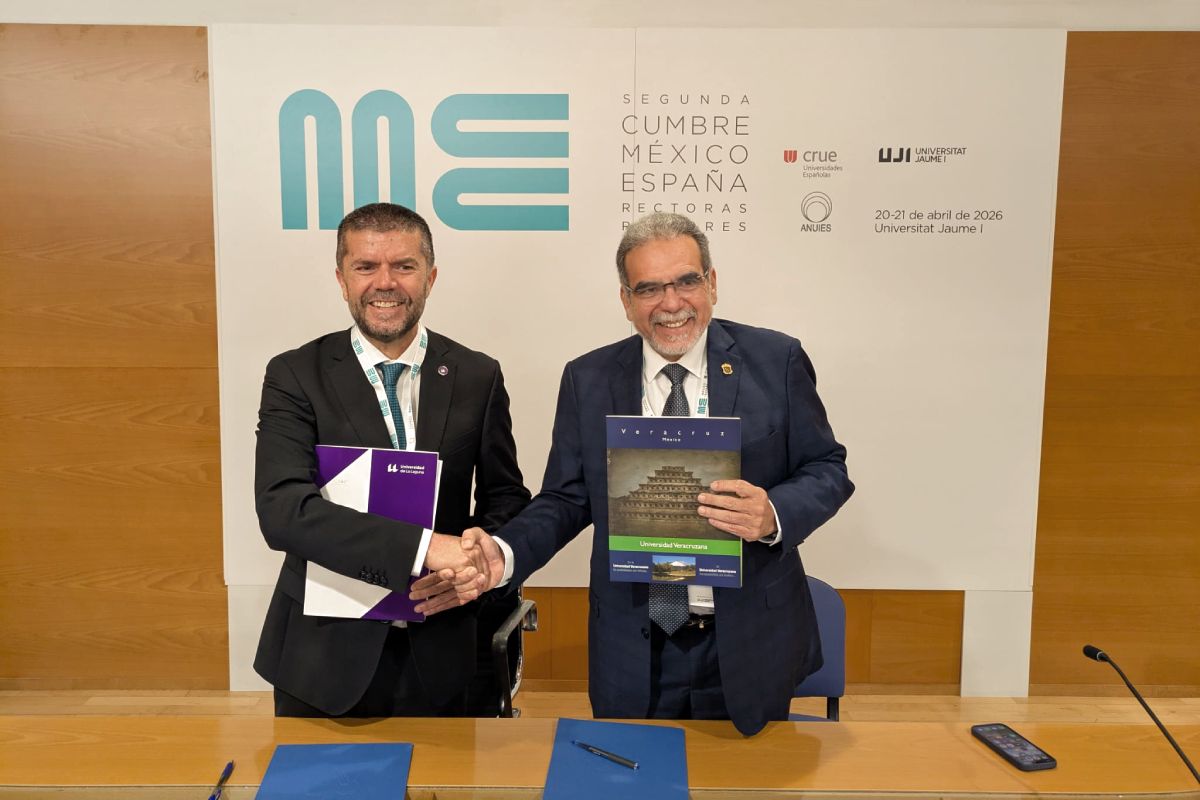
The Conference of Rectors of Spanish Universities convened on April 20 and 21 the II Summit of Rectors and Rectors Mexico–Spain 2026, The event, held at Jaume I University in Castellón, brought together over one hundred representatives from institutions in both countries. More than 60 higher education institutions participated, represented by 39 university presidents, including Francisco J. García Rodríguez, president of the University of La Laguna, who participated in one of the scheduled roundtables and also strengthened relations with the United States by signing three agreements with the University of Veracruz.
The three agreements were signed by García Rodríguez, representing the University of La Laguna, and by his counterpart from the University of Veracruz, Martín Gerardo Aguilar Sánchez. They focus on joint research projects to be carried out at the Antonio González Institute of Bio-Organic Chemistry at the Canary Islands university. Relations with this Mexican institution date back to 2009, when the first agreement was signed.
The University of La Laguna has maintained a continuous and intensive collaboration with various research teams and institutes at the University of Veracruz, including the co-supervision of several doctoral theses. As a continuation of this joint work, Professors Javier Fernández Castro and José M. Padrón have promoted these agreements, which encompass the training of new doctoral students, the organization of joint events, working visits, and the development of research within two projects.
In general, the University of La Laguna maintains a strong institutional relationship with Mexican universities, with which there are mobility agreements with 16 institutions and 21 agreements currently in force on a wide variety of fields: agriculture, water use, education, cognitive psychology, neuroscience, journalism and social communication, in addition to these last three on bioactive principles.
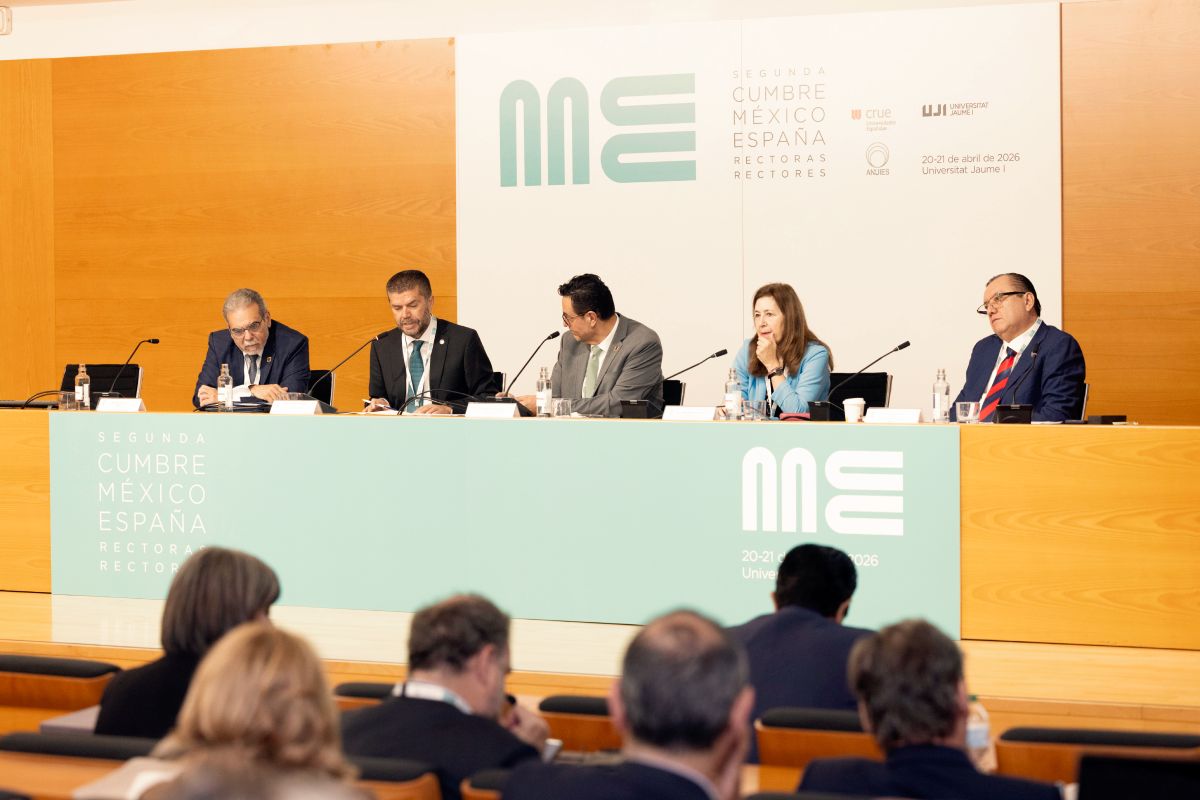
Round table on university governance and strategic alliances.
Round table
The rector of the University of La Laguna was also one of the speakers at the round table “University Governance and Strategic Alliances”, moderated by Luis Alberto Fierro Ramírez, general coordinator of Academic and Institutional Strengthening of ANUIES (Mexican entity equivalent to the Spanish CRUE), and in which the rector of the Autonomous University of Madrid, Amaya Mendikoetxea Pelayo; the rector of the Veracruzana University, Martín Gerardo Aguilar Sánchez; and the rector of the Autonomous University of Guerrero, Javier Saldaña Almazán, also participated.
The panel argued that in this era of rapid change, financial constraints, and growing social demands, universities play a fundamental role. In this context, García Rodríguez cited economist Mas-Colell's reflection on the importance of having "truth-accrediting entities," such as public universities and independent, pluralistic media outlets.
Within this framework, the need to establish strategic alliances with local stakeholders to strengthen the university and increase its effectiveness was raised. But, the rector posed the question: alliances with whom and how? First and foremost, with entities within the region itself, such as regional governments, which are important not only financially but also for their social impact: “Universities can contribute valid, rigorous, and verified knowledge that facilitates government action. For example, at the University of La Laguna, we are collaborating on issues such as climate change and migration strategy in our region.”.
Alliances with other regional, national, and international universities would also be important. Regarding this last point, García highlighted, on the one hand, the relationship between the Spanish institutions integrated into the CRUE (Conference of Rectors of Spanish Universities) and the Mexican institutions that are members of ANUIS (National Association of Universities and Institutions of Higher Education). “In the specific case of the CRUE, we play an interlocutor role with the state government, both in terms of legislative changes and financial matters. It is also a forum for sharing best practices and, in some cases, for defending ourselves against potential attacks on our university autonomy.”.
Continuing with the international theme, García also valued the importance of alliances between European universities, such as STARS EU, to which the University of La Laguna belongs, and also the search for alliances with Latin America, with which it is "very easy to establish them from the Canary Islands because of a common cultural and historical link".
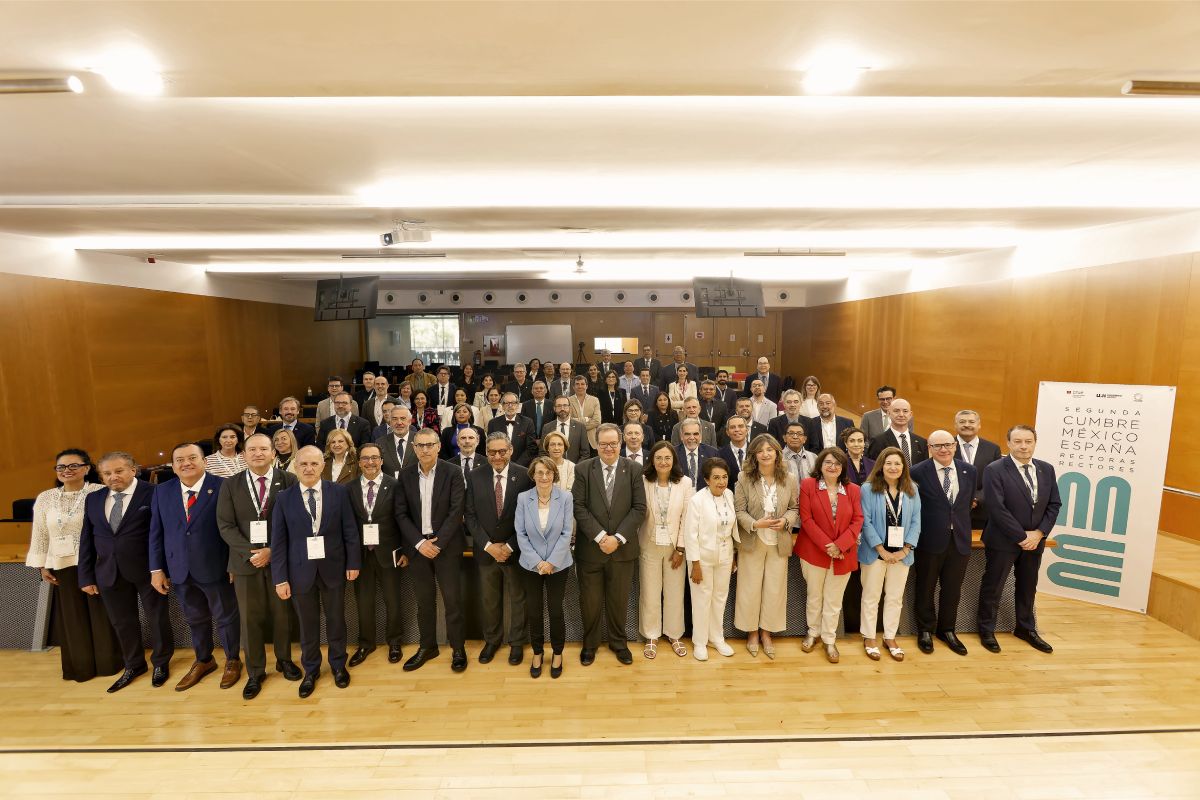
Group photo of all participants in the II Summit of Rectors and Rectors Mexico-Spain 2026.
Final statement
The Second Summit of Rectors and Rectors of Mexico and Spain concluded with the approval of a joint declaration This document consolidates the forum as a strategic space for academic cooperation and projects a shared agenda with an impact across Ibero-America. It reaffirms the role of universities as key actors for sustainable development, social cohesion, and economic progress. The document establishes an ambitious roadmap structured around strategic pillars such as higher education, science, academic mobility, inclusion, and sustainability. Notably, it positions the Mexico-Spain Binational Chairs as one of the main instruments of structural cooperation for promoting high-impact joint projects.

 Spanish
 English
 French