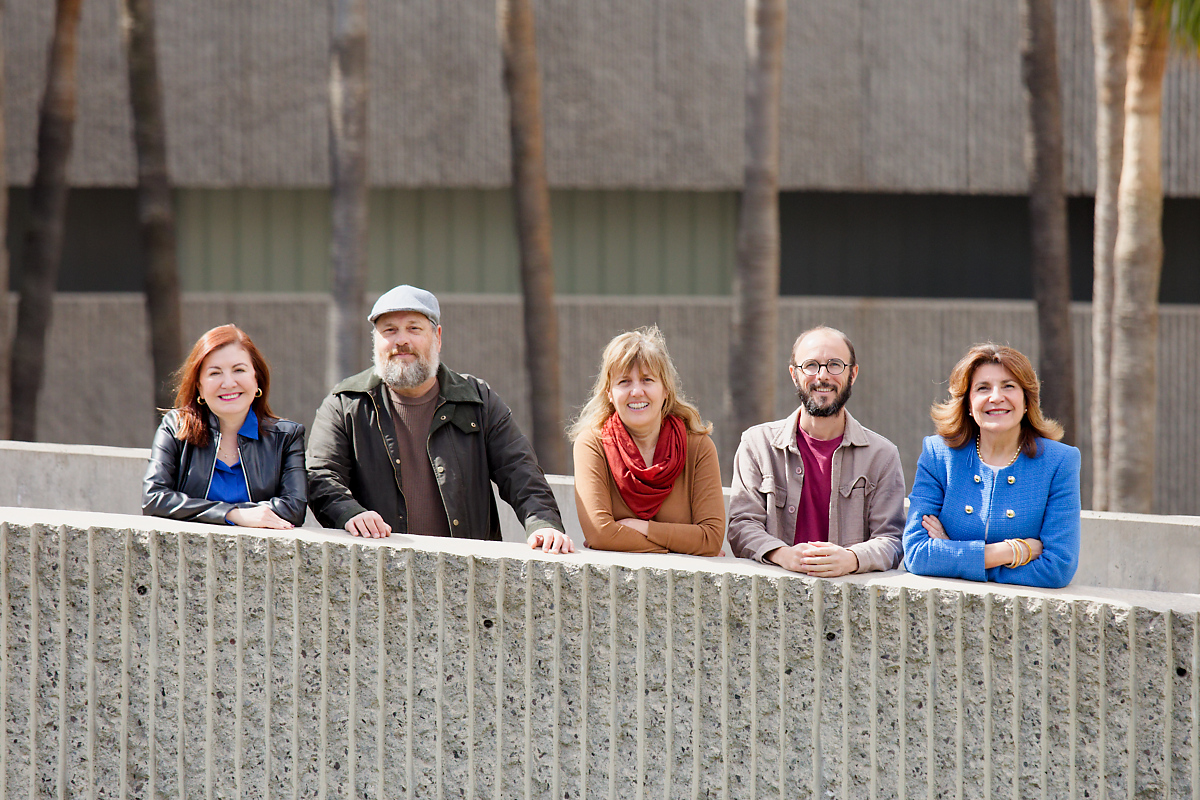
Each person may understand creativity and innovation differently. The United Nations is celebrating a day dedicated to these concepts, aiming to highlight the importance of creating and implementing new ideas. Following the 2005 Convention on the Diversity of Cultural Expressions, UNESCO is encouraging countries to strengthen their creative industries, which range from fine arts to film, design, and publishing, as well as promoting artistic freedom.
In this sense, Atilio Doreste, Professor [Name], head of the Painting Department and leader of the Creative Actions Workshop research group at the University of La Laguna, explains that his team seeks a coherent interrelation between theory and practice in art. He points out that their work is based on action, although he clarifies that he does not understand artistic practice as something individualistic, but rather as a shared dynamic that articulates the field of knowledge and gives it meaning. In this way, he maintains that art is not only about creating objects, but also about generating interpretations, discussions, reflections, and critical judgments. "We believe that this fosters creativity in the search for solutions.".
It also emphasizes the importance of a perspective that goes beyond pre-established aesthetic codes to obtain new visions of space through a sensitive and critical experience of the territory. From this standpoint, it champions landscape, nature, and place as sources of creativity and solutions.
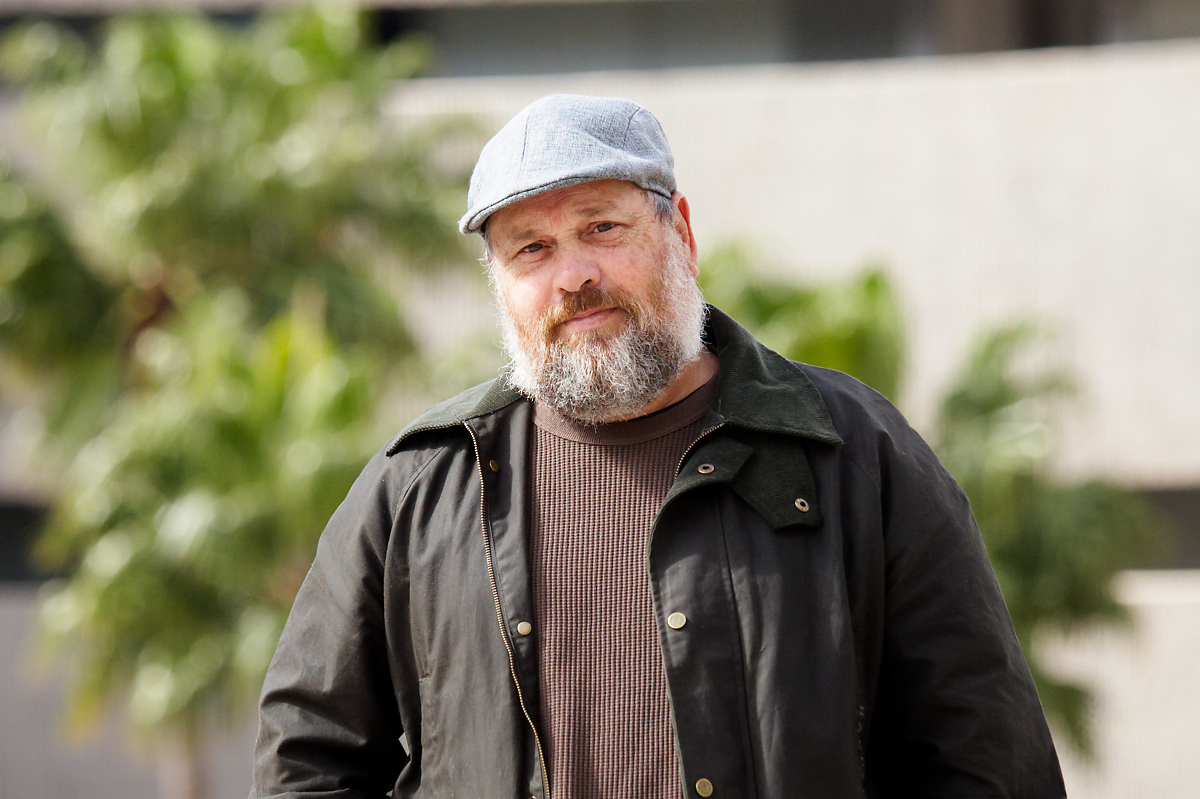
Atilio Doreste
Doreste, who combines teaching and research with artistic practice, has projects like 'Canary Sound Map,' which aims to influence intangible cultural heritage: ‘The interpretation of the landscape from a sonic perspective has always been much less considered.’ From there, this heritage can be activated through recording, geolocating, and sharing these archives so they become part of a collection dedicated to creation. Furthermore, the professor is the creator of the sound art laboratory Auriculab, a space where experimentation takes place and projects related to this field are promoted.
Regarding the art market, Atilio Doreste asserts that there is still a lack of awareness about the value involved in producing artwork: “How many times have people asked me the price of a painting and been surprised?” Furthermore, the artist states that materials are very expensive and that there is a very exclusive commercial circuit: “There’s no taste for acquiring original works,” he laments. In the Canary Islands, artists also face territorial limitations and tend to look to external references: “We have a bad habit of not valuing what we have here.”.
The art world looks bleak: “Making a living from art is difficult; those who manage it can be counted on one hand, and even then, not consistently.” Even so, Doreste emphasizes that art has great cultural, reflective, and critical value.
However, not all creativity translates into reality. For an idea to work, it needs to be developed, implemented, and have an impact. That's where innovation comes in—the step that transforms ideas into real solutions.
Design as a strategic tool
Design has become a key element in transforming creativity into concrete solutions. Bernardo Antonio Candela, a contracted professor with a doctorate in the Drawing area of the University of La Laguna, comments that, in the business field, strategic design is increasingly recognized as a fundamental tool to improve products and services, as well as boost profits.
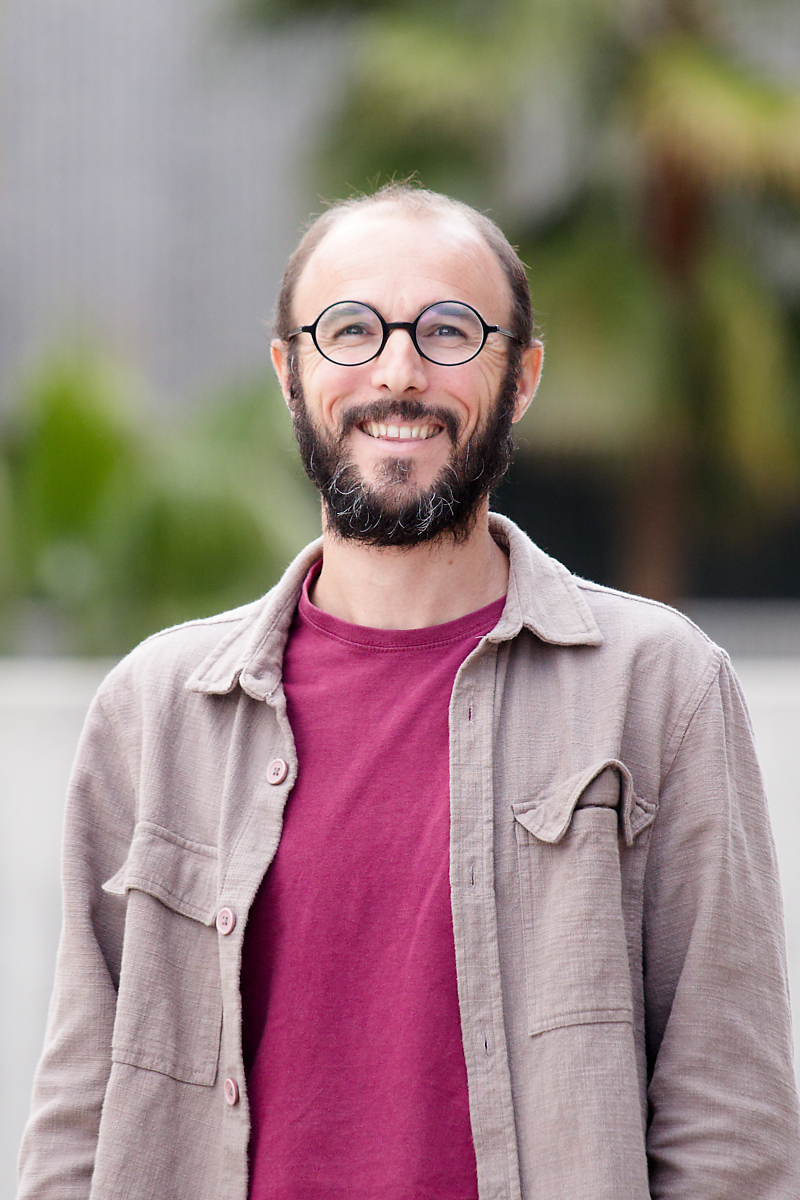
Bernardo Antonio Candela
“In design, being an intangible asset, it’s difficult to measure the return on investment for companies, but studies show that those who invest in it achieve better results,” he says. He also indicates that it’s proven that when design is introduced in earlier stages of conceptualization or when creative profiles are incorporated into positions of responsibility, the benefits are greater.
The same cannot be said of the public system. Candela points out that there is a growing effort to extend this conceptualization to governance and public administration, because it has been shown to improve the functioning of those administrations that integrate creative profiles into their public policy development processes.
In this sense, design not only improves communication but also proposes a different way of addressing problems. From a social design perspective, people are at the center: “It’s about identifying their needs and problems in order to solve them,” Candela points out. This involves bottom-up processes, although she notes that the presence of institutions isn't always necessary, as many problems can be resolved by civil society itself.
Design also plays a key role in the transition to a circular economy. Strategies such as regenerative design, circular design, and ecodesign allow us to analyze the entire life cycle of a product or service and identify which stages can be addressed to reduce material consumption and waste generation.
“Artificial intelligence (AI) is here to revolutionize design,” says Candela. The key is knowing how to integrate it ethically. “It’s true that it democratizes access, but design isn’t just the final result: it’s strategy, research, and conceptualization,” she explains.
For their part, Carina Soledad González, Professor in the area of Computer Architecture and Technology at the University of La Laguna and head of the University Institute for Women's Studies, González warns that generative AI must be understood from a critical and complex perspective. “Following Seymour Papert, we can think of AI as a kind of cognitive prosthesis: a technology that expands our capabilities, but also transforms the way we think,” he explains. He adds, “When we delegate certain functions to technology, there is a risk that those capabilities will be weakened.” However, González insists that the debate should not be framed in terms of replacement. AI, he points out, demonstrates that there are multiple ways to learn, understand, and solve problems.
Bernardo Antonio Candela, who also belongs to the University Institute for Women's Studies, says he is working on a project that seeks to redefine the role of women in design in the Canary Islands. “We have held an exhibition called 'They Design Here Too' to highlight the work of female designers, since there is a lack of recognition despite them representing nearly 50% of the sector,‘ he explains.
Educational technology and entrepreneurship
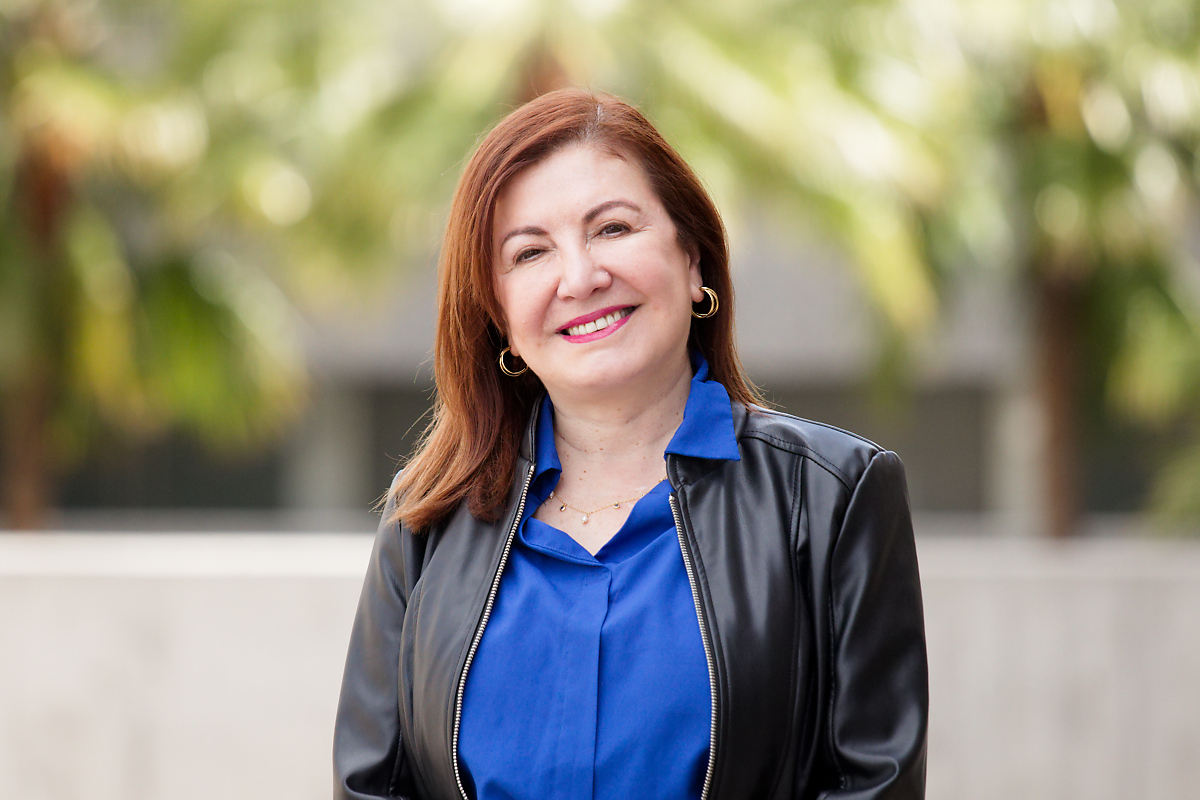
Carina González
Carina González's work integrates technology, design, and education from a gender and inclusion perspective. Her research focuses on the development of human-centered digital systems, addressing areas such as AI, social robotics, and user experience in educational contexts.
“I work from a human-centered design approach, but a broad one: we don’t just think about usability or efficiency, but also about aspects such as ethics, equity, transparency, and the social impact of technology,” she explains. In this process, she incorporates methodologies such as co-design, speculative design, and approaches human-centered AI, The goal is for students not only to use technology, but also to be able to critically question and design it. This is reflected in engineering education: “We want students to think about the technology of tomorrow, but from a place of responsibility. It’s not just about innovating, but about doing so thoughtfully, understanding its social and human implications.”.
Gamification and playful elements constitute another of their main lines of work. “Play is not something superficial; it is a powerful tool for learning,” they state. Through these dynamics, both intrinsic and extrinsic student motivation are activated, which translates into improvements in engagement, attendance, and the quality of work. Addressing criticisms about potential infantilization, they emphasize that play is a fundamental dimension of human development and, when well-designed, allows for deeper and more meaningful learning.
“Innovation helps us identify opportunities or needs and try to solve them,” he says. Inés Ruiz, Professor of Financial Economics and Accounting at the University of La Laguna. For the researcher, it is also the basis of entrepreneurship: “José Manuel Pérez Díaz (Pericles), promoter of the Valnalóneduca project in Asturias, points out that entrepreneurship and innovation go hand in hand,” she says.
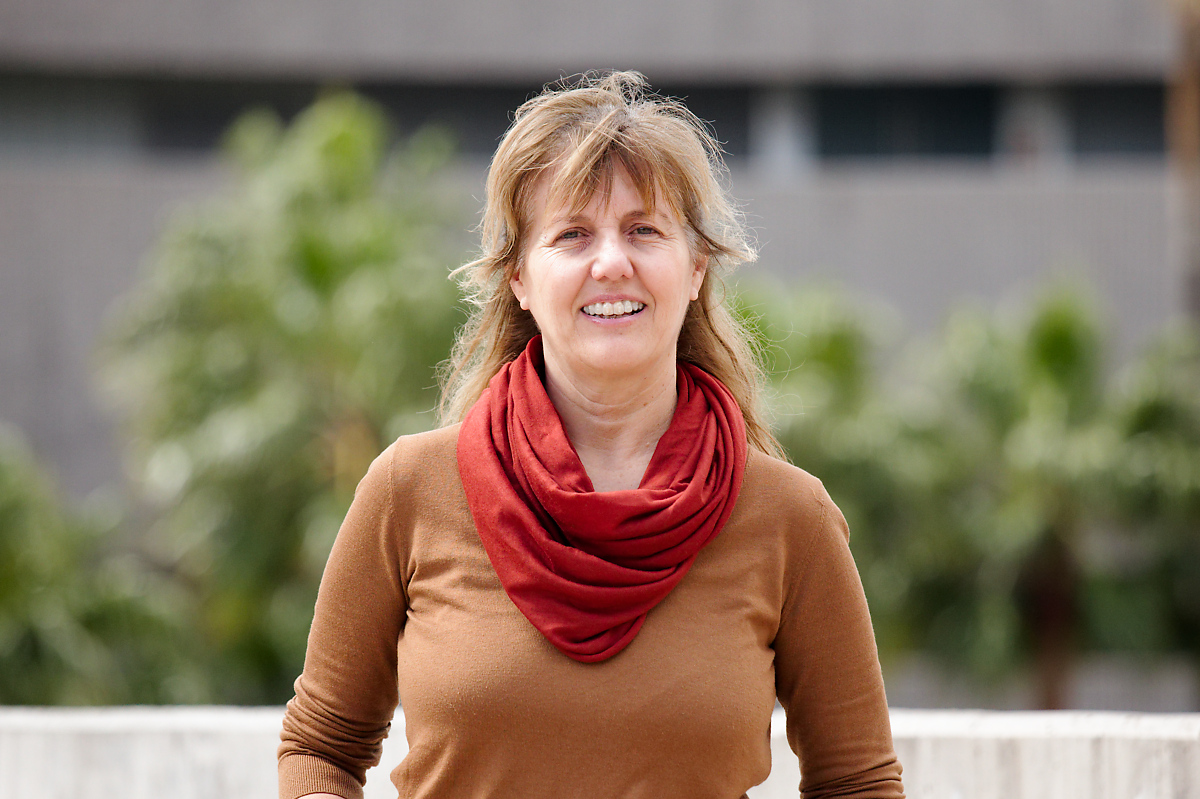
Inés Ruiz
Many factors influence the development of entrepreneurial projects. The initial trigger is the intention to start a business, which is linked to creativity. From there, two types can be distinguished: those driven by necessity and those driven by opportunity. "The latter generates the greatest impact and sustainability," he states. Between intention and implementation, there is a process influenced by multiple variables. "In the Canary Islands, there is a high level of entrepreneurial intention, higher than the Spanish average, but then the actual implementation decreases," he explains. Therefore, it is necessary to analyze the process where creativity acts as the initial driving force, but factors such as financing, training, and personal circumstances also play a role.
In this regard, a study in which Inés Ruiz participated observed that those who did not start businesses cited funding as a barrier, while those who did highlighted networking opportunities. Universities play a fundamental role in creating networks for project development.
Innovation also applies to resource management and sustainable tourism. AI and machine learning They allow learning from previous data and improving efficiency. Ruiz recounts that a hotel company developed an automated system to analyze food waste: “It made it possible to identify which foods are wasted the most and optimize production,” he explains.
The Economic and Fiscal Regime in the Canary Islands is a powerful tool for businesses, but it is often underutilized due to a lack of information. Ruiz analyzes the extent to which some companies fail to fully take advantage of the tax benefits associated with sustainability investments and quantifies this opportunity cost: "The results show that the losses are significant," he states.
Innovation in public policies
Rocío Peña, Peña, a tenured professor in the Department of Applied Economics at the University of La Laguna, points out that attractive taxation and early financing are key elements. According to the researcher, reducing bureaucracy and specializing in sectors where the Canary Islands can compete (smart tourism, renewable energy, or the blue economy) would encourage the creation of new businesses. Peña also believes that training policies are effective., mentoring and the connection with universities, since they help transform local talent into viable projects. “This is essential to retain young talent and prevent it from leaving the country,” he says.
But innovation shouldn't just transform the business landscape, but also the spaces we inhabit. For Peña, creativity is the driving force behind the paradigm shift that sustainable cities need. "It shouldn't be understood merely as an aesthetic exercise, but as a strategic tool from the initial phase of urban design," he emphasizes. This creative approach allows for the incorporation of Nature-Based Solutions, such as urban forests or green roofs, which help capture carbon dioxide (CO₂), reduce the urban heat island effect, and improve climate resilience. Furthermore, this approach aligns with the New European Bauhaus, which seeks to integrate sustainability, inclusion, and beauty.

Rocío Peña
Regarding construction, Peña insists that the key lies in changing the way buildings are thought about, designed, and worked on. She believes that a commitment to digitalization and the circular economy is essential. The economist highlights some innovations, such as the methodology Building Information Modeling (BIM), which allows for the digital management of the entire lifecycle of an infrastructure; nearly zero-energy or zero-emission buildings; and the development of materials that leave a smaller carbon footprint. “Currently, the use of volcanic ash as a partial substitute for cement is being investigated with promising results, as it allows for significant CO₂ reductions without losing technical performance,” he notes.
Educational economics
Another line of research for Rocío Peña is related to the economics of education. She points out that digital innovation and creativity can transform university education into a more personalized model. Tools such as artificial intelligence and hybrid classrooms allow students to learn at their own pace and develop skills such as critical thinking.
Creativity changes the traditional approach: “It shifts from memorizing content to designing solutions and working on projects,” he explains. It is also key to combating university dropout rates. “Our research shows that at-risk students tend to have low satisfaction and little commitment to their studies,” he adds. In this sense, more motivating methodologies strengthen their emotional connection to their degree and improve their perception of the usefulness of their studies.
Furthermore, more personalized academic guidance, especially during the first year, allows for better support: "When students feel motivated and able to visualize their professional future, the risk of dropping out decreases," he argues.
Rocío Peña's ideas on innovation, training, and knowledge transfer are not just theoretical. At the University of La Laguna, some scientific projects are already demonstrating how this knowledge can be transformed into technological development and new jobs.
Adaptive optics
An example of this is the research of José Manuel Rodríguez, Professor of Electronic Technology at the University of La Laguna, specializing in adaptive optics and wavefront phase sensors, essential for distance detection. “We work on detecting the distance to objects or the size of surfaces on the order of nanometers,” he explains.
To achieve this, they use graphics processing units (GPUs) and field-programmable gate arrays (FPGAs). “We were pioneers in their use in adaptive optics,” he asserts. He adds, “Today, all large telescope designs incorporate GPUs and FPGAs.” Rodríguez emphasizes that, thanks to their work on phase sensors, they have achieved a leap of several orders of magnitude in resolution: from 40×40 pixels to 4000×4000. “This allows for the precise observation of transparent objects, such as the aqueous humor in the human eye, brain tissue in microscopy, or silicon wafers in semiconductors, the field in which we founded the company Wooptix,” he explains.
The spin-off Wooptix It's an example of how research translates into production. Its creation has provided employment for 85 highly qualified people. To found a technology company, Rodríguez explains that the first step is to have a disruptive technology protected by patents. From there, you talk to investors who require prototypes and a business plan. “Innovation is essential. There can be no technological entrepreneurship without substantial technological advancement,” he emphasizes.
“The technology we’ve developed is profound; it allows us to access what we might consider the other half of light,” says Rodríguez. Until now, intensity was captured with high resolution, while phase was measured at very low resolutions: “We’ve managed to capture it with equivalent resolution,” he asserts. This allows us to obtain the complete electromagnetic field of light and perform precise mathematical propagations: “We work with a form of precise holography.” The applications are wide-ranging: semiconductors, ophthalmology, microscopy, and three-dimensional imaging.
Some of these lines remain under controlled development due to their strategic importance in semiconductors. “The goal is to be recognized primarily in that area, although we hope to create new ones. spin-offs "in other sectors," Rodríguez argues.
“High-level R&D is fundamental, but knowledge transfer is also essential,” says Rodríguez, who emphasizes that transforming that knowledge into real products is what generates impact. That leap from idea to reality is what makes the difference.
(This report is part of the InvestigaULL Commemorations Calendar, a science outreach project promoted by the University of La Laguna)
Scientific Culture and Innovation Unit (Cienci@ULL)

 Spanish
 English
 French