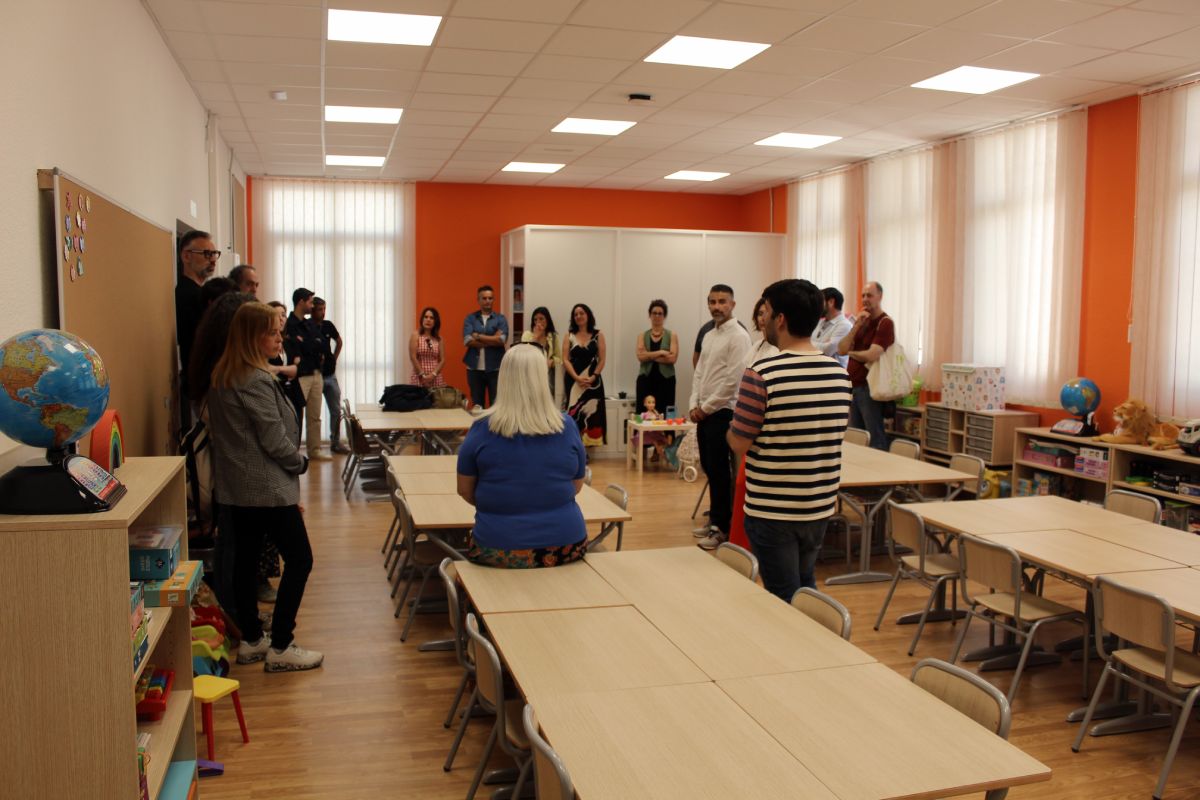
The Faculty of Education The Faculty of Arts at the University of La Laguna inaugurated two new classrooms yesterday, Monday, May 25th, designed to promote innovative teaching and student learning. Specifically, these are a "Little Visitors" space, aimed at fostering foreign language learning for children, especially those in early childhood education; and a "Future Classroom," a multipurpose space equipped with educational technologies such as robotics, 3D printers, virtual reality, and audiovisual recording equipment with chroma keying, among others. Both are now operational and available for the 2026-27 academic year.
The inauguration was attended by the Vice-Rector for Sustainability and Infrastructure, Marta Domínguez Herrera; the Vice-Rector for Teaching, José Manuel García Fraga; and the center's management team, headed by its dean., Esperanza Ceballos Vacas. It also brought together a large group of teachers interested in learning about these new facilities that will improve their professional practice.
The creation of these classrooms has not only involved providing them with equipment, but also a major renovation to adapt spaces formerly used by the Scholarship Office before its relocation to the Main Building. For example, the electrical outlets have been raised to comply with safety regulations for young students. The work has been funded through projects voted on in the Participatory Budgeting process promoted by the Administration, as well as budget allocations from the Vice-Rectorate for Infrastructure and Sustainability and the Faculty of Education itself.
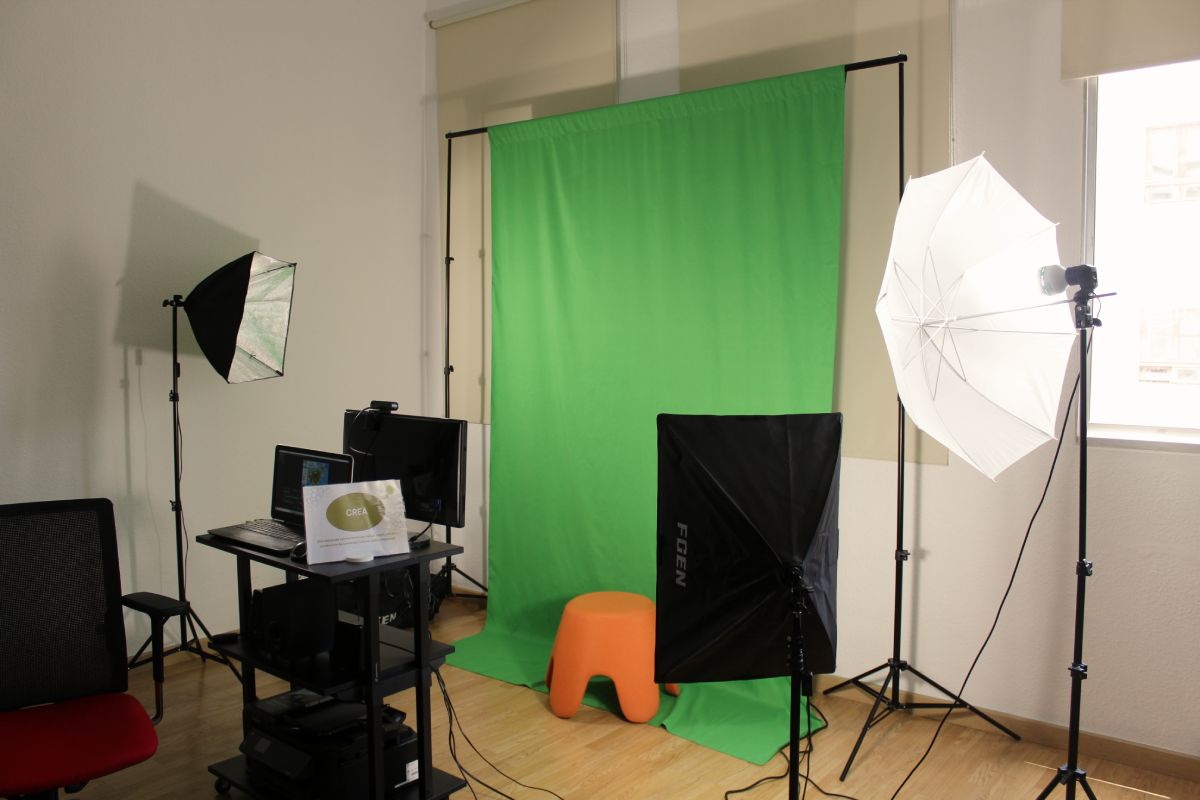 Classroom of the future
The first project has created a “classroom of the future” to foster advanced learning focused on active methodologies, and is therefore equipped with cutting-edge technology. The initiative stemmed from Alejandro Bonnet de León, from the Department of Fine Arts, and Inmaculada Fernández Esteban, from the Department of Specific Didactics. “We have tried to replicate the Classrooms of the Future program of the National Institute of Educational and Information Technology, to train future teachers of early childhood, primary and secondary education in the use of the possibilities that these spaces and the technological resources linked to them have.”.
The focus of these spaces is to foster interdisciplinary work with a STEAM approach, meaning to promote learning in science, technology, engineering, art, and mathematics. As the expert explains, it's possible to establish contact with technology from an early age: “It's quite surprising, but children in the second cycle of preschool can already work with robotics. Even if they haven't yet developed laterality, they can use the color codes on these small robots to configure small steps,” he explains.
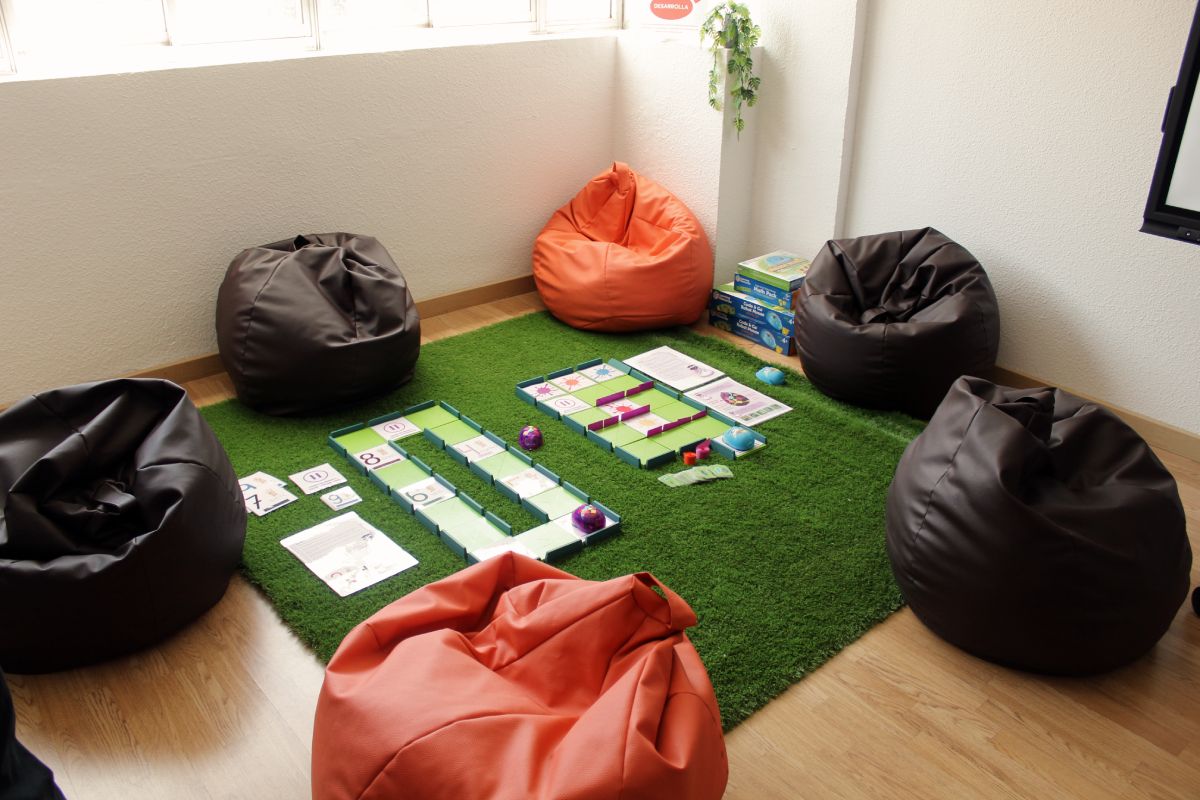 The classroom is designed to be mobile, adaptable to the activity taking place. “But the idea of the classroom of the future is always to have divided spaces: a space for creation, another for research, another for presenting and sharing ideas, and a space for prototyping as well. Students rotate through each of these spaces, developing different parts of the project. It's a space closely linked to project-based learning.”.
Little visitors
The second project faithfully replicates an early childhood education classroom within the faculty itself, allowing students to gain practical experience in a realistic environment. It is fully accessible and equipped with specific teaching materials for English language instruction. This initiative was made possible thanks to Juana Herrera Cubas y Zeus Plasencia Carballo, both teachers from the Department of Specific Didactics.
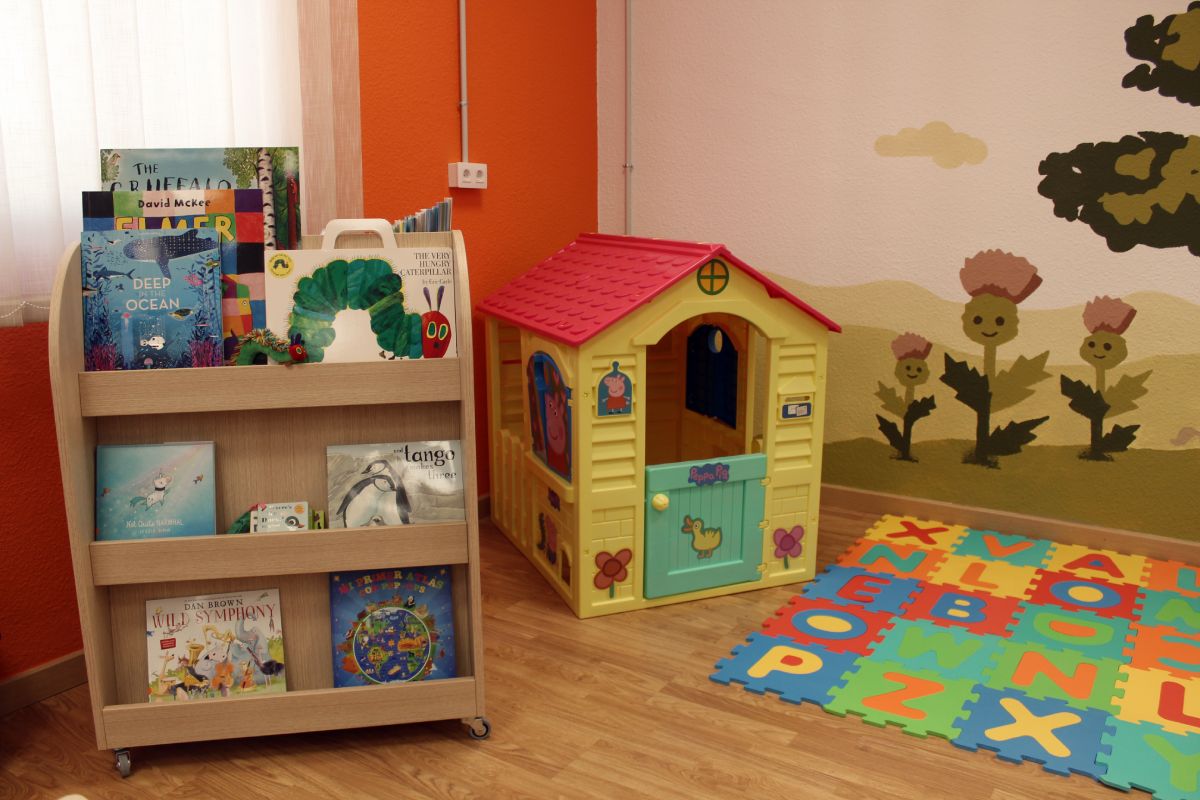 Plasencia explains that this classroom was born from a pilot project of educational innovation and educational transfer (PITE), entitled "Small visitors for big projects", whose premise was to bring preschool children to the faculty so that the third-year students of Early Childhood Education could do some storytelling in English to apply all the theory of teaching the foreign language in English in those stories.
“That experience made us realize that the university has a significant lack of pedagogical space where students can work directly with preschool children. My colleague Juana Herrera, who has truly been the driving force behind this entire project, motivated this whole search, because at first we didn't have space, but we did have money; then we had money, but no space… And finally, the dean provided tremendous support to make the classroom a reality.” Plasencia also highlights the contribution of José Medina, currently at the University of Las Palmas de Gran Canaria, who, when he was at La Laguna, was instrumental in conceptualizing the space.

 Spanish
 English
 French