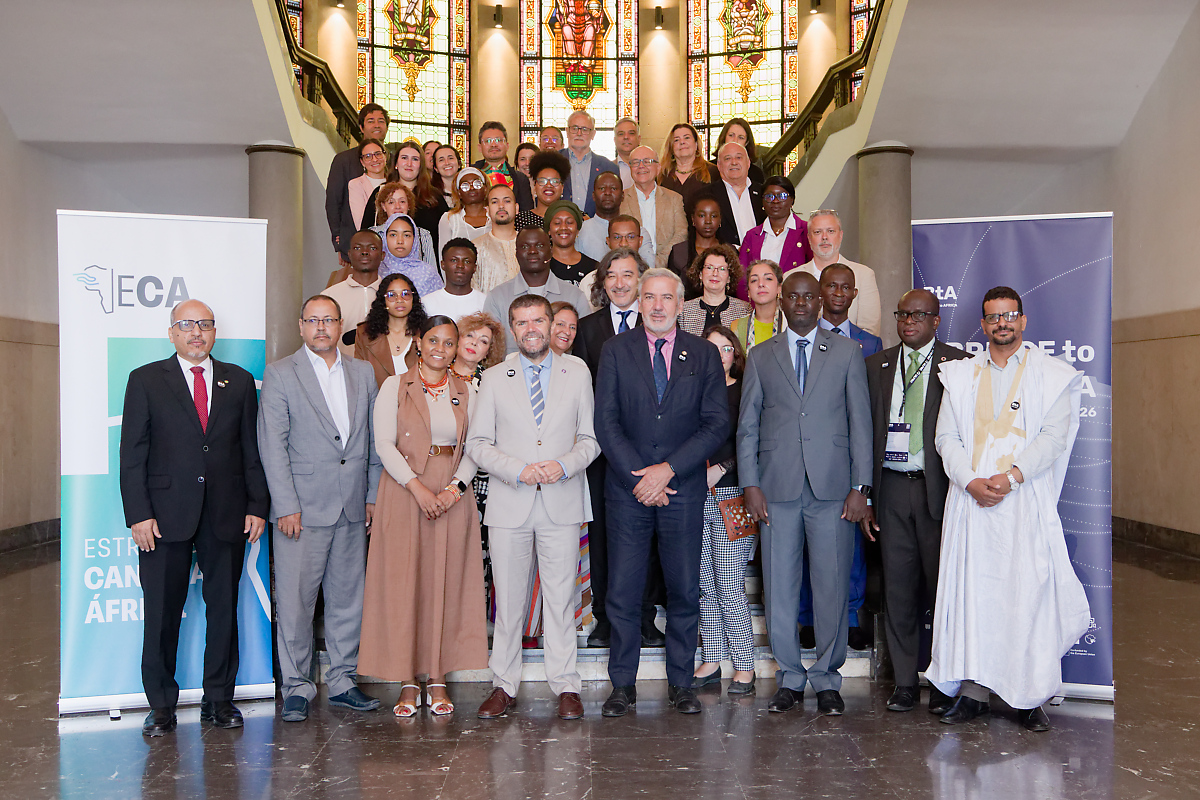
The program Bridge to AfricaThe initiative, created jointly by the two public universities of the Canary Islands, continued its sessions today in La Laguna, addressing cooperation and collaboration with the aim of establishing a shared workspace in the academic field of West Africa. The objective is to create a joint and sustainable teaching and research platform, which will require profound transformations in all participating institutions and a new governance system.
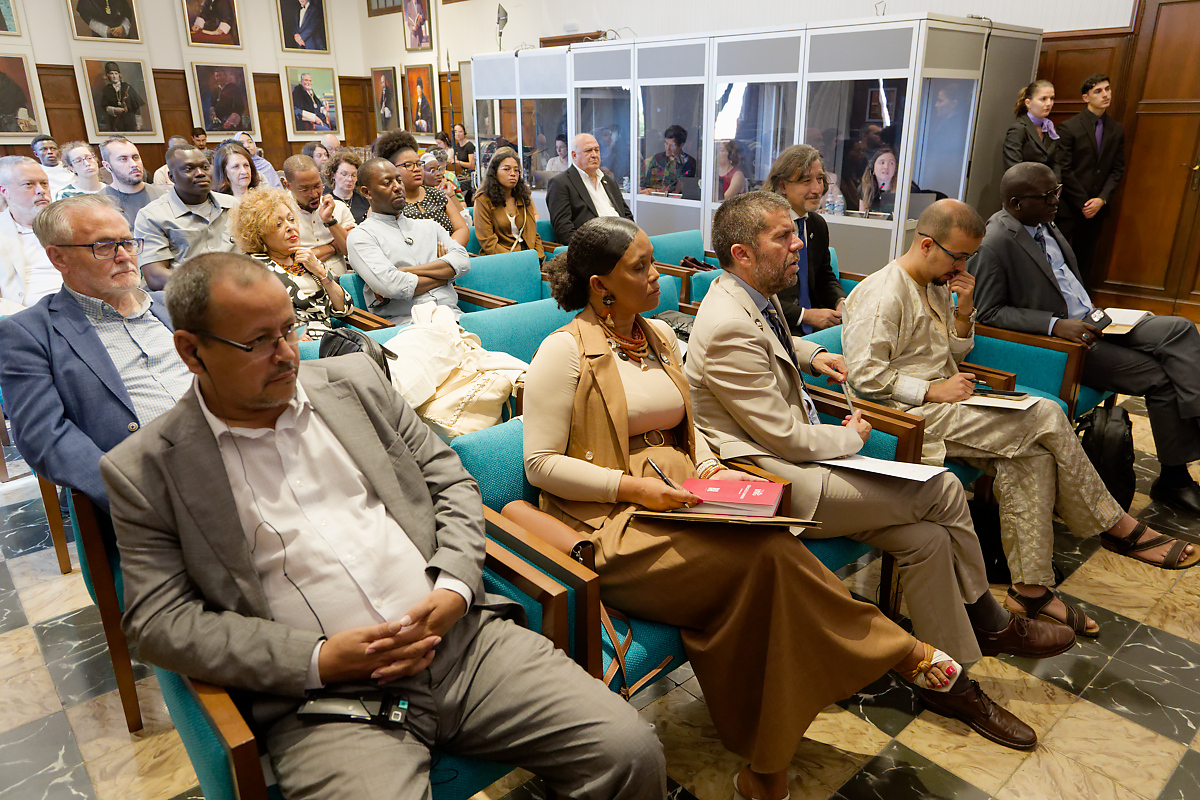
A dozen rectors from African academic institutions and the academic community met today in the Aula Magna of the Central Building, first to talk about student exchange, second to address the field of cooperation and finally to analyze the governance of universities.
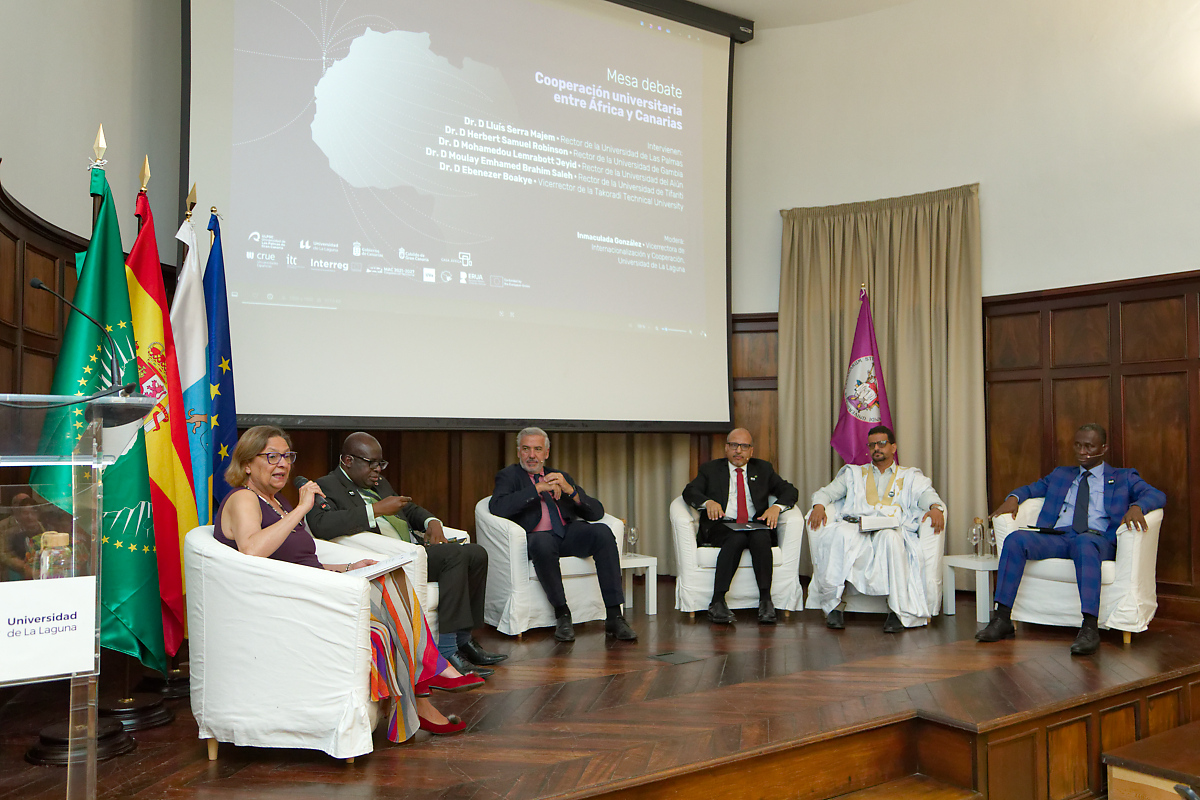
Second table: From the left. From right to right, Inmaculada González, Samuel Robinson, Lluìs Serra, Mohamedou Lemrtabott, Moulay Brahim Saleh and Ebenezer Boakye.
Thus, the second roundtable of the morning brought together the rectors of the universities of Las Palmas de Gran Canaria, Ghana, Sahara, Mauritania, and Gambia, who explored possibilities for joint collaboration in West Africa. Moderated by the Vice-Rector for Internationalization and Cooperation, Inmaculada González, the discussion highlighted the importance of continuing the academic relationship. Despite their different realities and contexts, all participants emphasized the value of the Bridge to Africa initiative for working together. The energy transition, the mobility of the academic community, training programs, and the creation of a shared collaborative space were among the topics highlighted by the speakers.
Takarodi Technical University in Ghana emphasized its commitment to attracting international students through international internships and innovative projects aimed at transforming the economy. "We want to offer staff training programs and implement projects that have a positive impact on the community, such as addressing the country's energy challenges," stated Rector Ebenezer Boakye.
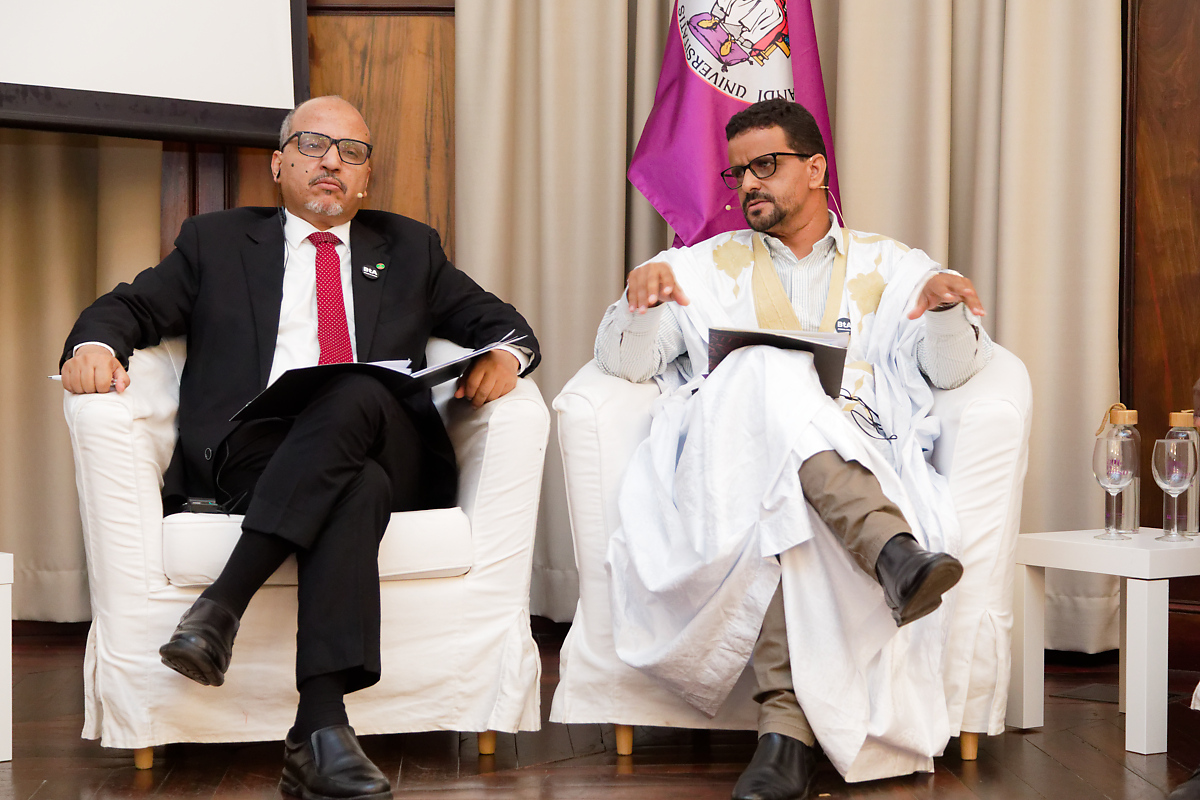
The University of Tifariti, a young institution founded in the Sahrawi refugee camps, was also present at the session. Its rector, Moulay Brahim Saleh, explained that this institution cannot be compared to other universities. “We depend on international cooperation and operate thanks to more than 30 agreements of this kind with Spanish universities,” he said. “We want to promote the use of Spanish in Western Sahara. We have a historical relationship and want to preserve education in this language, which is part of the Sahrawi people's identity.” He added, “This program is an opportunity to overcome academic isolation, while also strengthening the presence of Canary Island universities on our continent.”.
The University of Aaiún, located in the interior of Mauritania, integrates Muslim religious studies with secular studies, with the study of Arabic as a key component. Its rector, Mohamedou Jeyid, affirms that he sees higher education as a link between rural Mauritania and development, and as a connection to the outside world. “We want to create a platform for cooperation between West Africa and the Canary Islands, with the launch of an annual mobility program, the establishment of a joint fund to support research, and the development of joint degree programs,” were some of the goals he highlighted at the event.
 For the University of Las Palmas de Gran Canaria, today's activity is the perfect culmination of "an extraordinary week that is opening many doors." Its rector, Lluís Serra, indicated that they must not forget that polytechnic studies are part of their DNA, in addition to teaching in the health and tourism sectors, among other subjects. "We are a university of the sea, working for our community. We lead regional development, and this is the hallmark we want to bring to Bridge to Africa. This project is the missing piece, which will help complete our mission in this geopolitical context," he added.
The Rector of the University of The Gambia, Samuel Robinson, highlighted the linguistic studies offered by his institution during the presentation, emphasizing his desire to expand Spanish language programs alongside tourism initiatives. “We want to have a greater impact on exchange programs. We are a country with an economy based on the primary sector, and we place great importance on agronomic studies, but from an environmental perspective, which is crucial given the need for profound transformations in this field.” He also highlighted health as another area where they are seeking university cooperation, particularly in a country with a very young population and a high prevalence of tropical diseases.
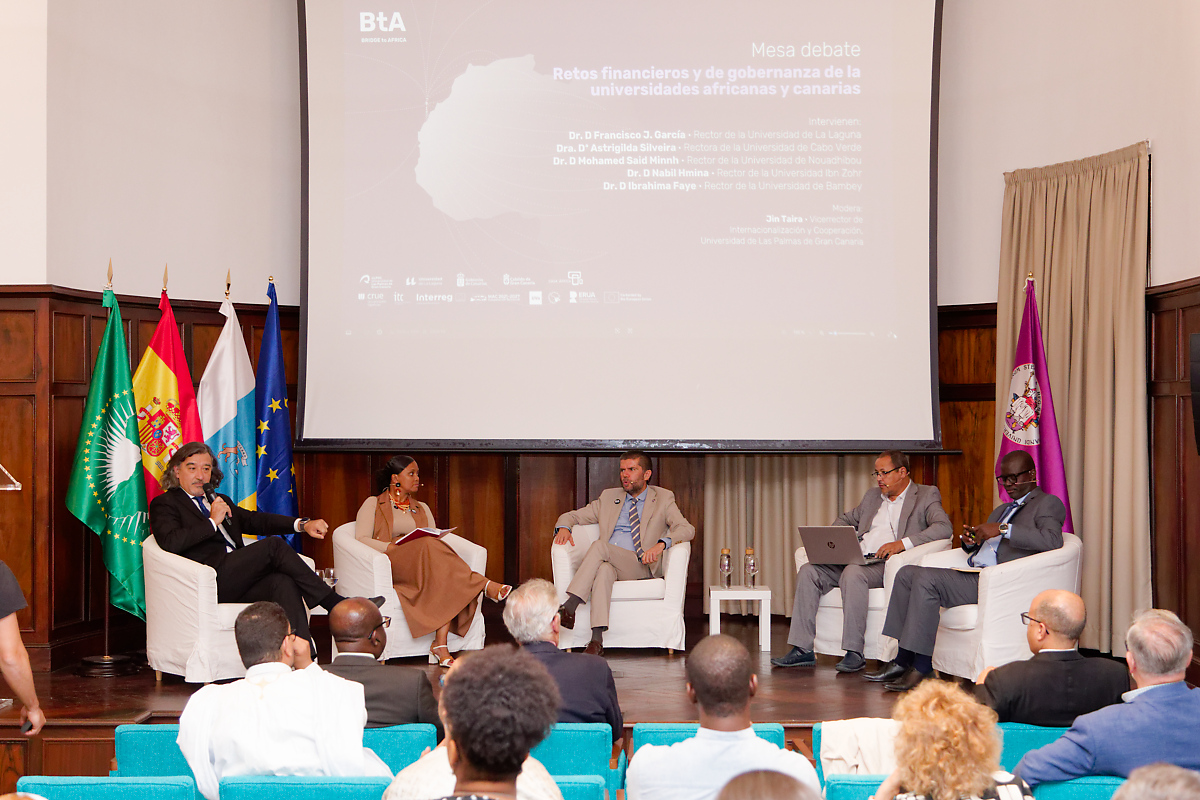
Table 3: From the left. From right, Jin Taira, Astrigilda Silveira, Francisco García, Mohamed Minnie and Ibrahima Faye.
Financial challenges and governance
The session at the University of La Laguna concluded with a final panel featuring four rectors from La Laguna, Cape Verde, Nouadhibou, and Bambey. Chaired by the host rector, Francisco García, and dedicated to financial challenges and governance, the panel was moderated by Jin Taira, Vice-Rector for Internationalization and Cooperation at the University of Las Palmas de Gran Canaria.
The rector of the University of La Laguna, Francisco García, said he was very satisfied with this meeting, which demonstrates the strength of the Canary Islands public universities, "fully aligned and dedicated to what they have to do, strengthening their union with their African counterparts in the geopolitical environment.".
Astrigilda Silveira, rector of the University of Cape Verde, addressed the complexities of governance in an island system. She stated that improved digital transformation would contribute to the university's consolidation, adding that they receive only 331% of the funding from the regional government, which increases tuition costs and restricts access. The creation of an academic platform like Bridge to Africa would significantly influence the university's vision, she added.
Francisco García added that, while Spanish universities are better funded and public funding is clear, Canary Island universities have lost spending capacity over the last decade due to relentless inflation. “We are working on the challenge of securing not only more substantial funding, but also more stable funding,” he affirmed.
He also noted their commitment to improving management through greater agility, increased digitalization, and staff renewal to inject more young talent while retaining the expertise of leading researchers. Bridge to Africa will enable collaborative, networked work and encourage the rethinking of organizational structures.
Mohamed Minhn, rector of the newly established University of Nouadhibou in Mauritania, presented his institution as closely aligned with the social interests of the surrounding community, offering studies with maximum practical application. He maintained that a lack of funding undermines the independence of universities. “We need to strengthen our structures to have a greater impact and work collaboratively,” he said.
 For his part, Ibrahima Faye, rector of the University of Bambey in Senegal, said that his institution is part of the third generation of Senegalese universities. It is a community-based institution, almost entirely funded by the state, which does not preclude the need to seek partnerships with private entities. He also expressed his hope for European funding through Bridge to Africa, a tool that would help address many of the challenges faced by these institutions.
At the closing ceremony, the first to speak was Lluís Serra, Rector of the University of Las Palmas de Gran Canaria, who stated that this project aims to build real bridges between institutions. “Universities must be open spaces to the world to help our students understand the complexity of societies. A network of human and academic collaborations is beginning, one that must continue to grow.”.
“Africa is the future, due to its potential for economic growth and its geographic dynamism,” added Francisco García, rector of the University of La Laguna. “Africa and universities must come together and work collaboratively.”.

 Spanish
 English
 French