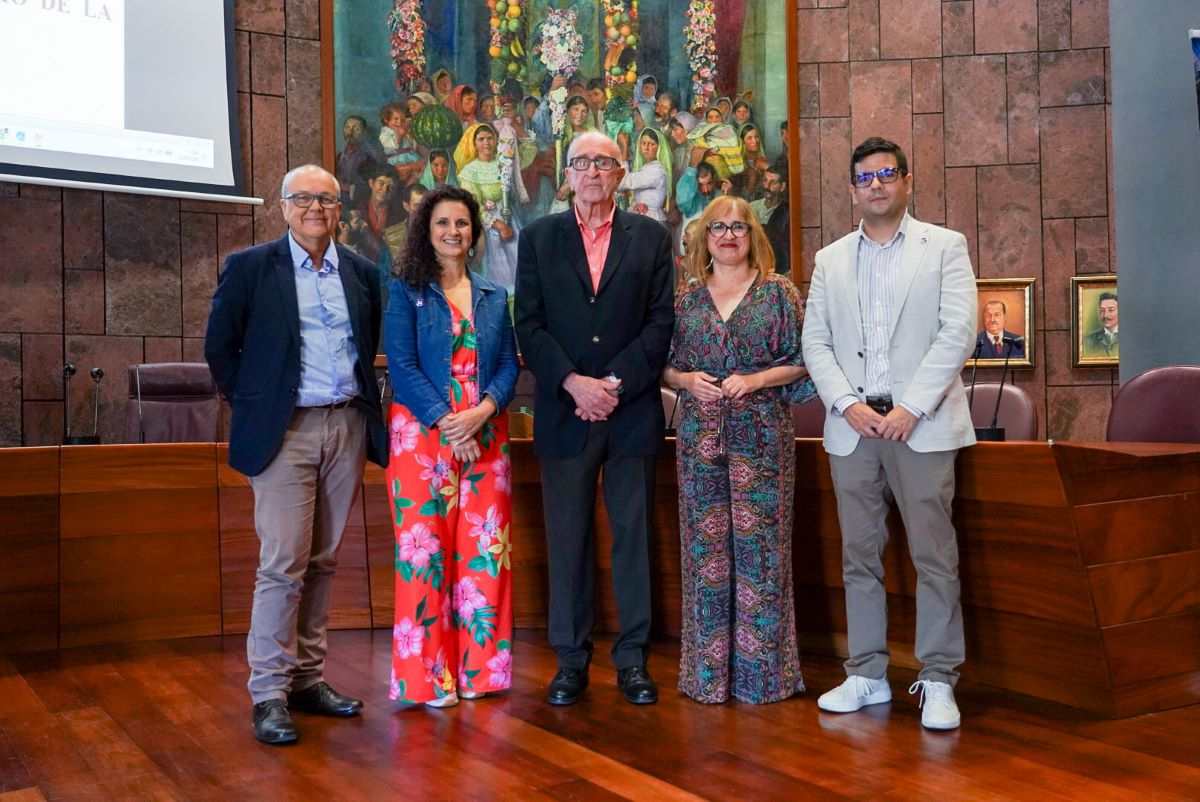
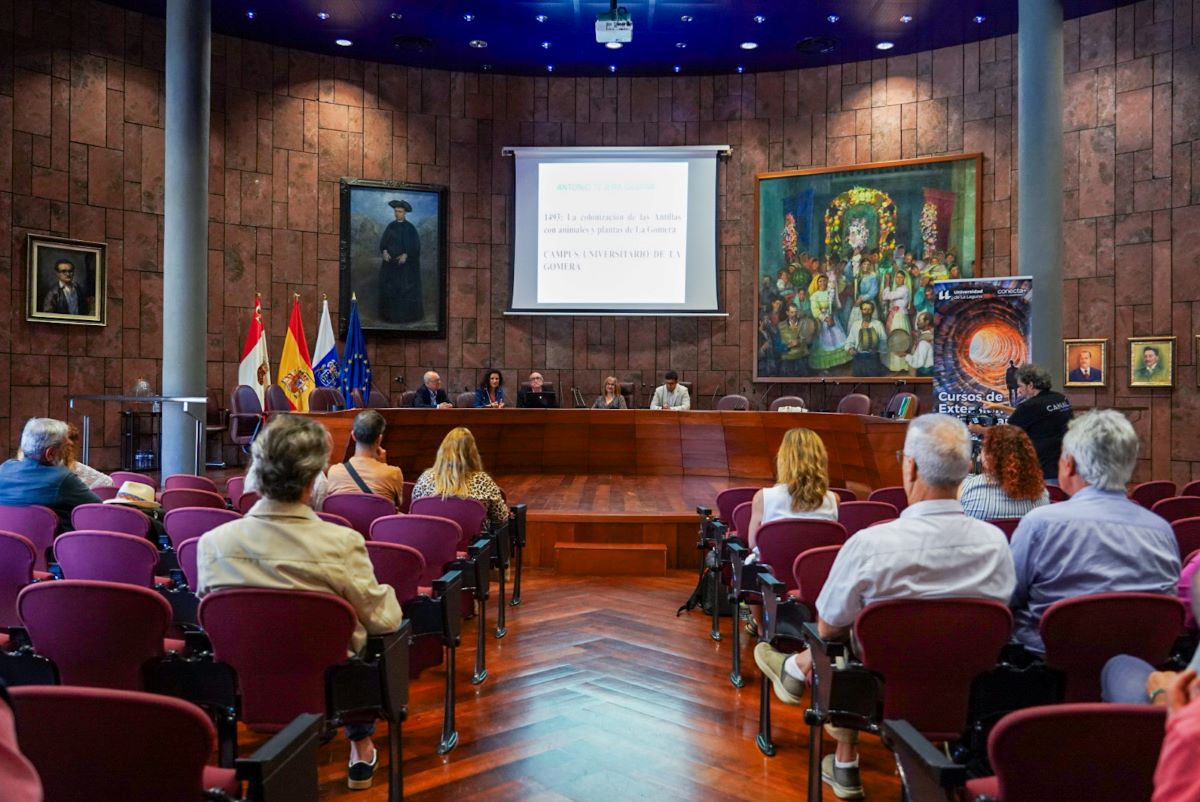
Professor of Archaeology Antonio Tejera Gaspar inaugurated today, Thursday, May 28, the La Gomera Campus 2026 with the conference “1493: The colonization of the Antilles with animals and plants from La Gomera”The lecture, held in the plenary hall of the Island Council, addressed the island's strategic role in the Atlantic routes following Columbus's first voyage and delved into the biological and cultural exchanges that connected the Canary Islands, Africa, and America from the late 15th century onwards.
The opening was preceded by a musical performance by the choir of the Arena y Jable Musical Education Center of San Sebastián de La Gomera, focused on the traditional Canarian repertoire, with guitar and choral voices performing several popular pieces, including the Arrorró, one of the most representative lullabies of the archipelago's folklore.
The Vice-Rector for Culture and University Extension at the University of La Laguna, Isabel León, expressed her gratitude for the collaboration of the La Gomera Island Council and the joint work carried out between the two institutions to consolidate a university extension model with a presence on the island for much of the year. During her remarks, she emphasized the importance of bringing education closer to the various municipalities and territories, and particularly valued Antonio Tejera Gaspar's participation in the opening conference.
He also highlighted the involvement of the University Extension team and the General Foundation of the University of La Laguna in the implementation of this program and recalled that 2027 will be a particularly significant year for university extension, coinciding with the centenary of the academic institution.
Similarly, the director of the University Extension Secretariat, Abel López, pointed out that the transformation of the former summer university into a campus with activities between May and November responds to the objective of consolidating a more stable program that is more closely linked to the local community. López expressed his gratitude for the involvement of the La Gomera Island Council and the team at the Vice-Rectorate for Culture and University Extension, as well as the participation of Antonio Tejera Gaspar, a professor in his department and faculty, whose lecture he described as “one of the most important milestones” of this year's program.
The manager of the General Foundation of the University of La Laguna, Julio Brito, defended the role of the public university as a useful and committed agent for the region, and affirmed that strengthening the institution's presence on islands like La Gomera is among the priorities of the current rector's team. Brito emphasized that the collaboration with the Island Council has strengthened ties between the two entities in recent years and underscored the General Foundation's commitment to putting knowledge and training at the service of institutions and society.
For her part, Rosa Elena García Meneses, Third Vice President and Councilor for Social Services, Culture, and Education of the La Gomera Island Council, defined Campus La Gomera 2026 as “an evolution of the traditional summer university towards a broader and more cross-cutting model.” She explained that the program moves beyond the format concentrated in a single season, instead offering courses, workshops, field trips, micro-credentials, and parallel activities between May and November in all six municipalities of the island.
The island councilor emphasized that the intention is for "training to go out into the territories, to travel and adapt to the realities of each municipality," with an offering open to both professionals and anyone interested in continuing to learn. She also praised the thematic diversity of the program and affirmed that it addresses current issues and the real needs of the people of La Gomera.
García Meneses also emphasized the symbolic value of having Antonio Tejera Gaspar as the opening speaker, describing him as “an eminent figure” whose research career has contributed to expanding knowledge about the role of the Canary Islands in the Atlantic and modern world. In this regard, he stated that Campus La Gomera 2026 was created “with the aim of opening up knowledge and opportunities on the island” and as a meeting point for science, heritage, innovation, and society.
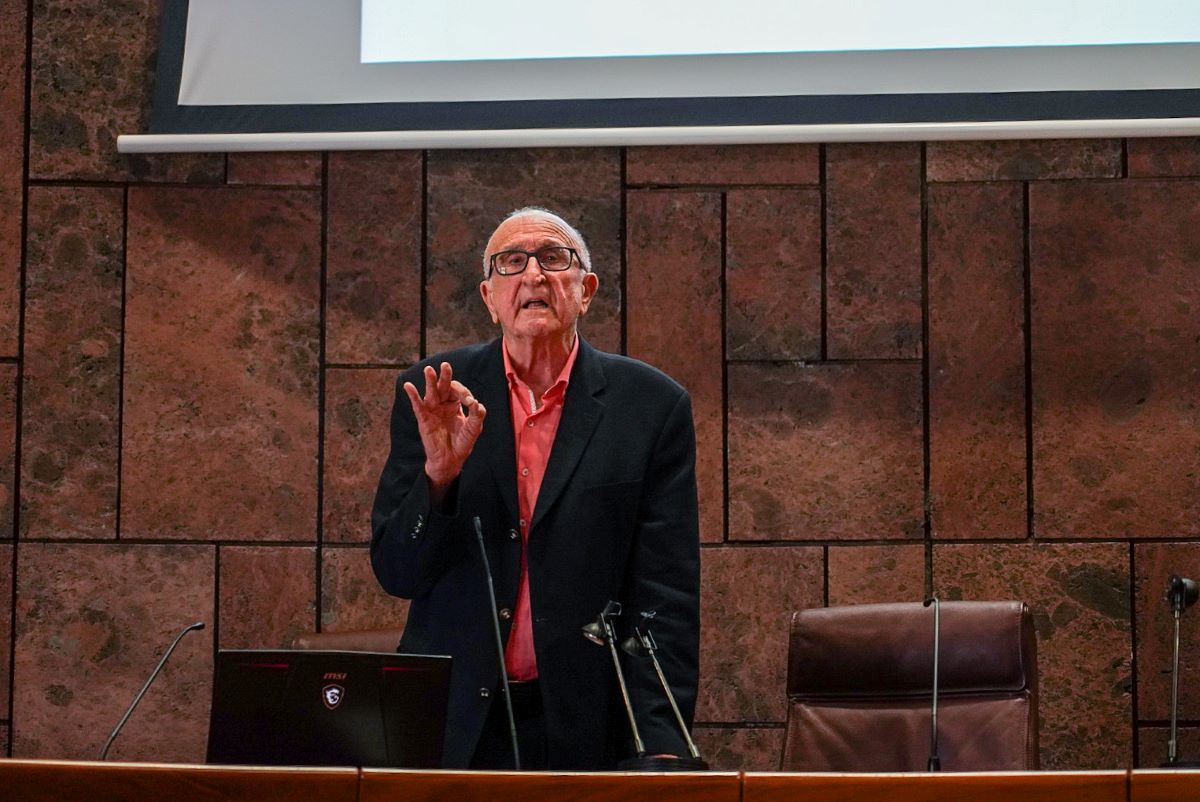
Antonio Tejera Gaspar.
La Gomera as a key point on Atlantic routes
Antonio Tejera Gaspar's inaugural lecture positioned La Gomera as one of the key locations in the processes of connection between Europe, Africa, and America following Columbus's first voyage. The professor argued that, although 1492 occupies a central place in historical memory, it was 1493 that truly marked the beginning of the colonization of the Antilles and an intense process of biological and cultural exchange between both sides of the Atlantic.
During his speech, he explained that La Gomera then became one of the most important Atlantic ports of the Crown of Castile due to its strategic location and the conditions it offered for supplying expeditions. From this connection, animals, seeds, and agricultural products began to circulate to America, ultimately transforming both the diet and production systems of the continent.
Tejera Gaspar noted that many foods now commonplace in Europe, such as potatoes, corn, tomatoes, and cacao, arrived from the Americas as a result of these exchanges. Similarly, he pointed out that American cuisine could not be understood without products and animals brought from Andalusia and the Canary Islands, such as pork, chicken, and rice.
One of the aspects she emphasized most was the role of animals from the Canary Islands that traveled to the Antilles during the first colonial expeditions. She explained that recent genetic research links these species to North Africa and, later, to the Americas, establishing a historical connection between the three regions.
The lecture combined historical, archaeological, and ethnographic references to explain how the Canary Islands actively participated in shaping the modern Atlantic world. Throughout the presentation, Tejera Gaspar also emphasized the need to consult original historical sources to more accurately understand the processes linked to European expansion and the role played by the islands in that context.
 Training for a good part of the year
Campus La Gomera 2026 will take place between May and November, offering courses recognized for ECTS credits, workshops, parallel activities, and university micro-credentials. The program will be held in various municipalities across the island and also online, with the aim of facilitating citizen participation from different parts of the territory.
The training offer includes proposals linked to the aboriginal archaeology of La Gomera, digital communication through blogs, podcasts and videoblogs, geoheritage, traditional fruit varieties and grafting, artificial intelligence tools, mental health in youth, Spanish Sign Language or deductive sensory analysis and regenerative viticulture.
The program is complemented by workshops and outreach activities aimed at strengthening the connection between the university, the region, and society. Registration remains open, and all information can be found at [website address missing]. Web page from Campus La Gomera 2026.

 Spanish
 English
 French