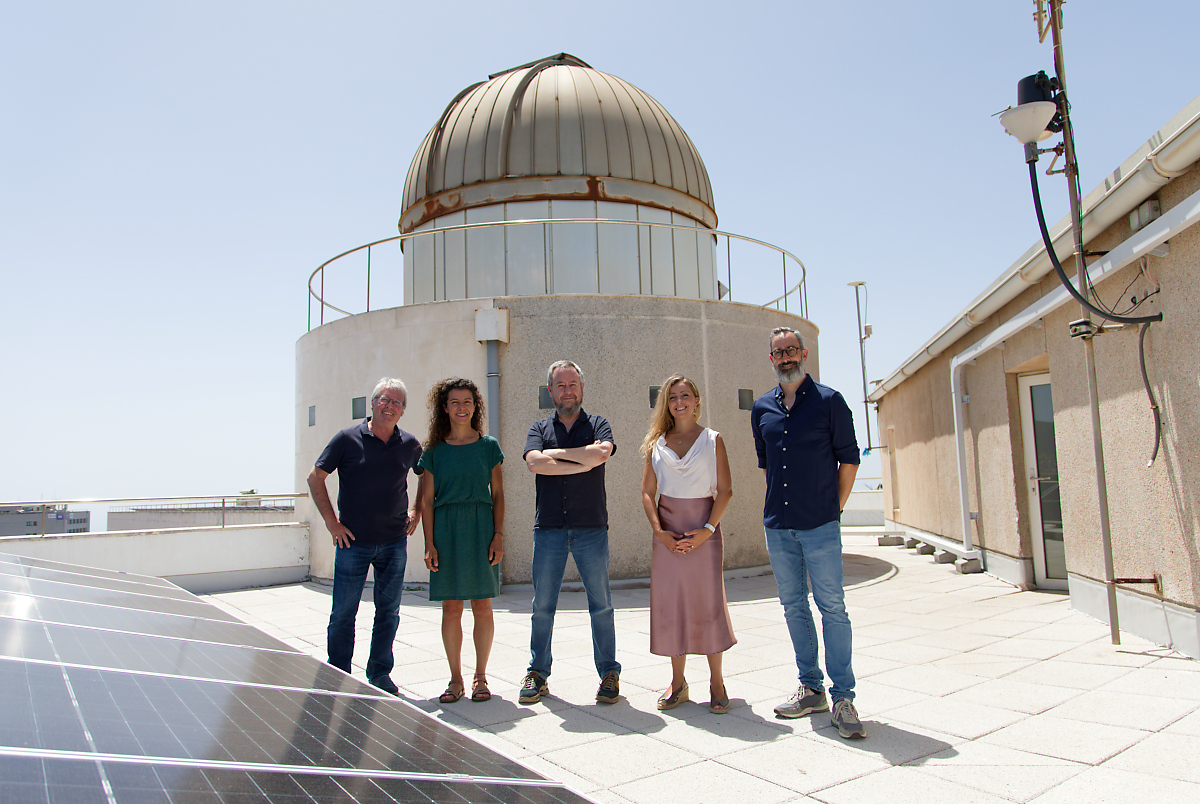
The presence of the University of La Laguna in the Starmus Festival, the bet of Tenerife Island Council The promotion of the aerospace sector through the Tenerife Space Horizon initiative and the international recognition that the Astrophysics department of the academic institution receives year after year for the quality of its research and teaching reflect the current prominence of this discipline on the island. This leadership is based on the close collaboration between the University of La Laguna and the Institute of Astrophysics of the Canary Islands (IAC) and access to first-rate infrastructure and privileged skies for astronomical observation.
Researchers from Department of Astrophysics Students from the University of Laguna, at different stages of their academic careers, analyze the main challenges facing this area of knowledge today and the new study opportunities opened up by advances in computing and the constant improvement of observation instruments.
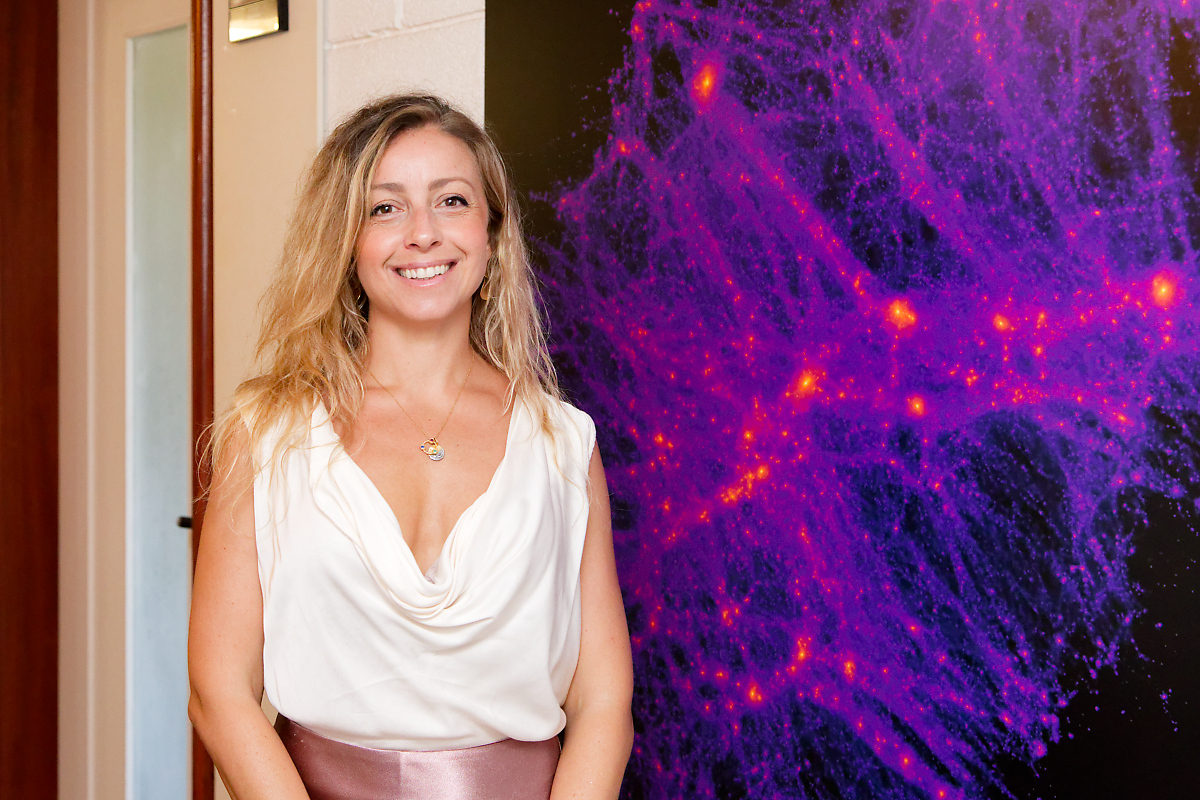
Arianna di Cintio.
Influence of black holes on galaxy formation
The researcher Arianna di Cintio She leads the research line dedicated to the study of galaxy formation using theory and numerical simulations. Her work is carried out within the group of Astrophysics and Theoretical Cosmology (ACT), He leads the research group, which also investigates the structure and evolution of the universe on a large scale. His research focuses on analyzing cosmological simulations of galaxies, both systems similar to the Milky Way and smaller galaxies known as dwarf galaxies. These simulations are based on different theoretical models and are then compared with astronomical observations of real galaxies to determine which models most accurately reproduce the observed properties.
In this area of research, Di Cintio leads two projects funded by the Ministry of Science, Innovation and Universities. The first, “Numerical simulations of dwarf galaxies to investigate current problems in galaxy formation (TINY)”, was awarded under the Research Consolidation call and has recently concluded. The second, “Numerical Investigation of Dwarf Galaxies in Our Cosmic Neighborhood (INGENIO)”, received funding in the latest call for proposals from the State Plan for the Generation of Knowledge. Both share the same objective: to understand the role that black hole feedback plays in the evolution of dwarf galaxies.
“This is a cutting-edge line of research because until a few years ago it wasn't known that active galactic nuclei (AGN) could also be found at the center of small galaxies, in addition to larger galaxies like ellipticals or spirals,” he explains. This makes it particularly interesting to better understand how this feedback influences the evolution of the dwarf galaxies analyzed. The initial results have already shown that the presence of an active central black hole can reduce the formation of new stars in a dwarf galaxy.
The recently launched INGENIO project focuses on the detailed study of galaxies that are part of the so-called cosmic neighborhood, the local group environment closest to the Milky Way. “This research will analyze the group of galaxies surrounding the Milky Way and Andromeda to study how the presence of black holes or active galactic nuclei can reduce star formation,” explains Di Cintio.
Both INGENIO and TINY originated from the researcher's participation as co-principal investigator of the international project CLUES (Constrained Local UniversE Simulations), A consortium is developing simulations of the local group based on restricted initial conditions, "which for the first time allow us to stimulate our own cosmic neighborhood with the correct initial conditions," he points out. Based on this, his team incorporates the effect of active galactic nuclei and black holes to investigate how they influence the evolution of dwarf galaxies.
“The collaboration with this international project has provided us with the necessary initial conditions to develop our simulations and study the properties of these galaxies in greater detail,” he adds. The close collaboration with the international consortium was evident last June, when the IAC hosted the annual CLUES project conference, which brought together more than 40 specialists in this field from countries such as China, Germany, Italy, and the United Kingdom.
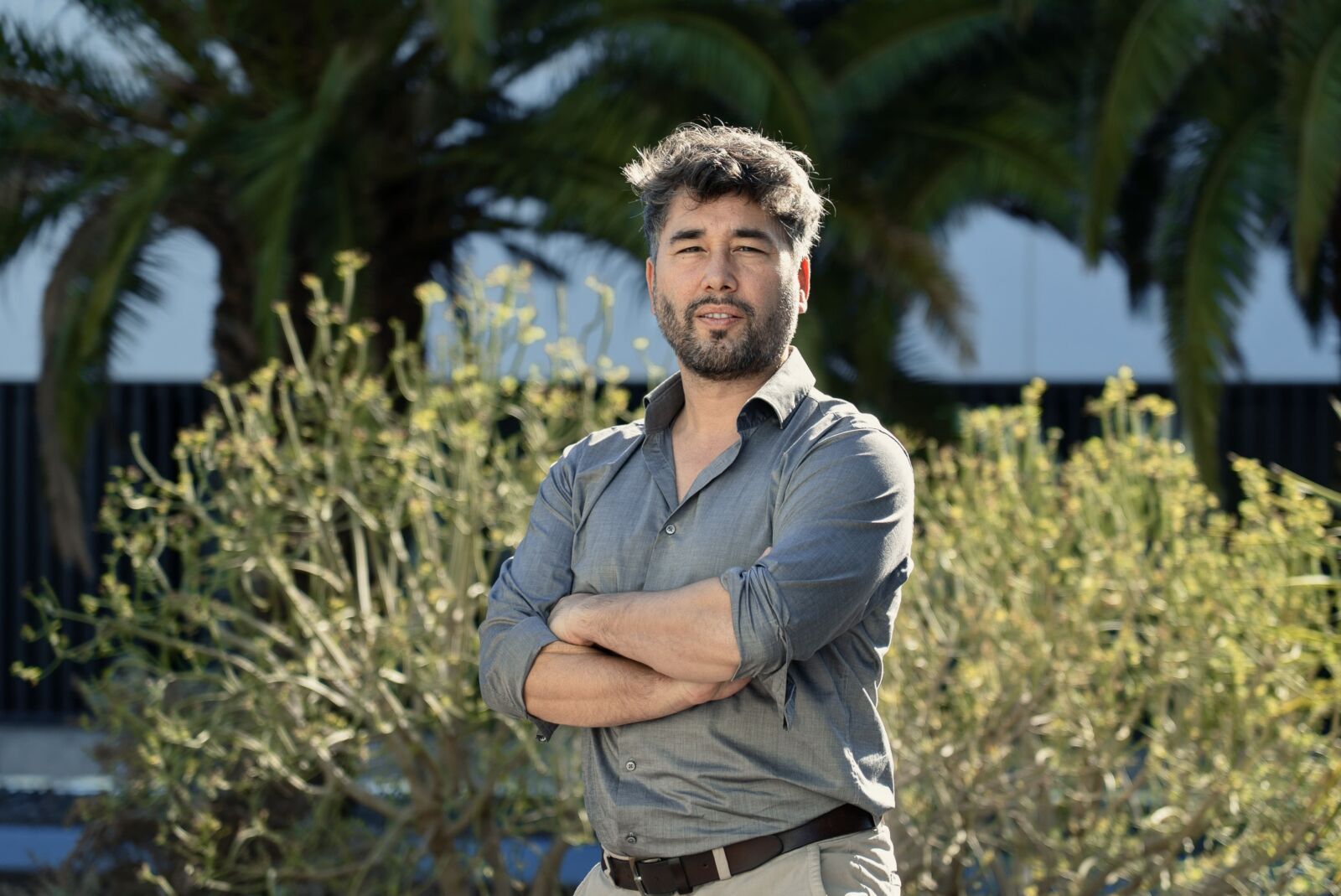
Francisco Shu Kitaura Joyanes
Large-scale evolution of the universe
The researcher Ginevra Favole develops, together with the researcher Francisco Shu Kitaura Joyanes, A parallel line of research within the ACT group focuses on studying the large-scale structure of the universe. “Our goal is to understand and model how the universe transitioned from the tiny quantum fluctuations that arose moments after the Big Bang to the complex network of structures we observe in the cosmos today,” he explains. To achieve this, the team uses cosmological simulations that allow them to model the different regions that make up the so-called cosmic web. In this context, Favole's research focuses on developing models that describe the relationship between dark matter halos and the galaxies they contain.
Dark matter halos are enormous, invisible structures that surround galaxies. Although dark matter cannot be directly observed, it constitutes the majority of the matter in the universe and exerts the gravitational force necessary for galaxies to form and evolve within it. In this sense, halos act as the invisible framework upon which the visible structure of the cosmos is built.
“We use data from different telescopes on galaxies with very diverse properties to develop theoretical models that allow us to relate them to the dark matter halos we need to simulate,” explains Favole. Since dark matter neither emits nor absorbs light, these halos cannot be observed directly and must be reconstructed through numerical simulations of the evolution of the universe. The research led by Favole consists precisely of establishing this link between observed galaxies and their corresponding dark matter halos. To do this, the team combines physical models, large volumes of astronomical data, and the computing power of supercomputers, with the aim of faithfully reproducing the properties of the large-scale structure of the universe.
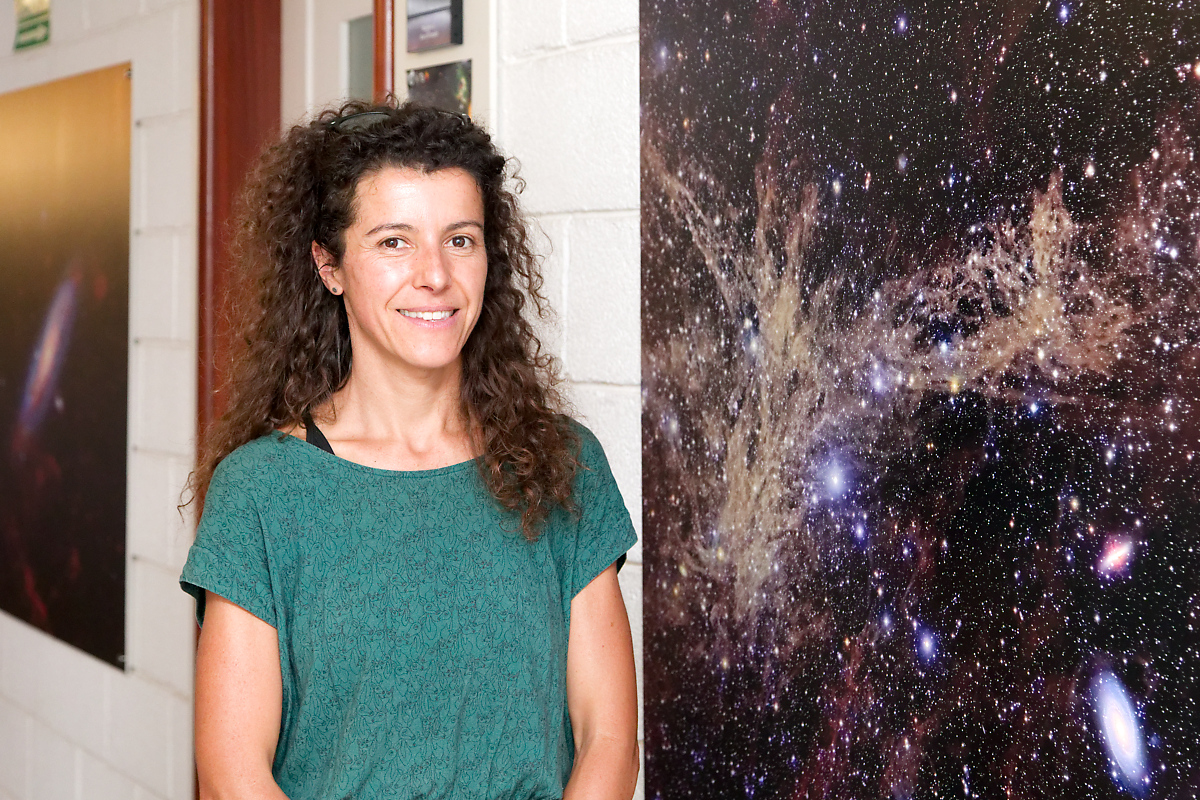
Ginevra Favole.
Although his research relies on data collected by large international projects, such as the Dark Energy Spectroscopic Instrument (DESI) and the Euclid Space Telescope, Favole clarifies that his work is primarily theoretical. “We focus on developing the theory necessary to understand this data,” he states.
In recent years, one of the group's major achievements has been reaching an unprecedented level of precision in modeling the large-scale structure of the universe. This progress has been made possible by the development of increasingly sophisticated mathematical models and the use of advanced Bayesian inference techniques, a statistical approach that reduces the uncertainty associated with observations and allows for more reliable estimation of the parameters that describe the universe. "This allows us to be extremely precise when modeling what we see in the cosmos, something that was unattainable just a few years ago and that we can now do much more quickly," Favole points out.
This line of research materializes in “Field-Level Bayesian Inference to Reconstruct the Universe (FIRE)”,” a project jointly led by Favole and Kitaura and funded by the State Plan for the Generation of Knowledge. Its objective is to develop a complete analytical chain capable of processing data from next-generation cosmological surveys with greater speed and accuracy. To achieve this, the project will integrate multiple tracers of the cosmic web, such as different populations of galaxies and quasars, and will incorporate both the effects introduced by the observational instruments themselves and the physical processes that govern the evolution of the universe.
According to Favole, FIRE represents a significant advance in cosmological analysis, which will provide essential knowledge that will impact future cosmological mapping and the understanding of the evolution of the universe.
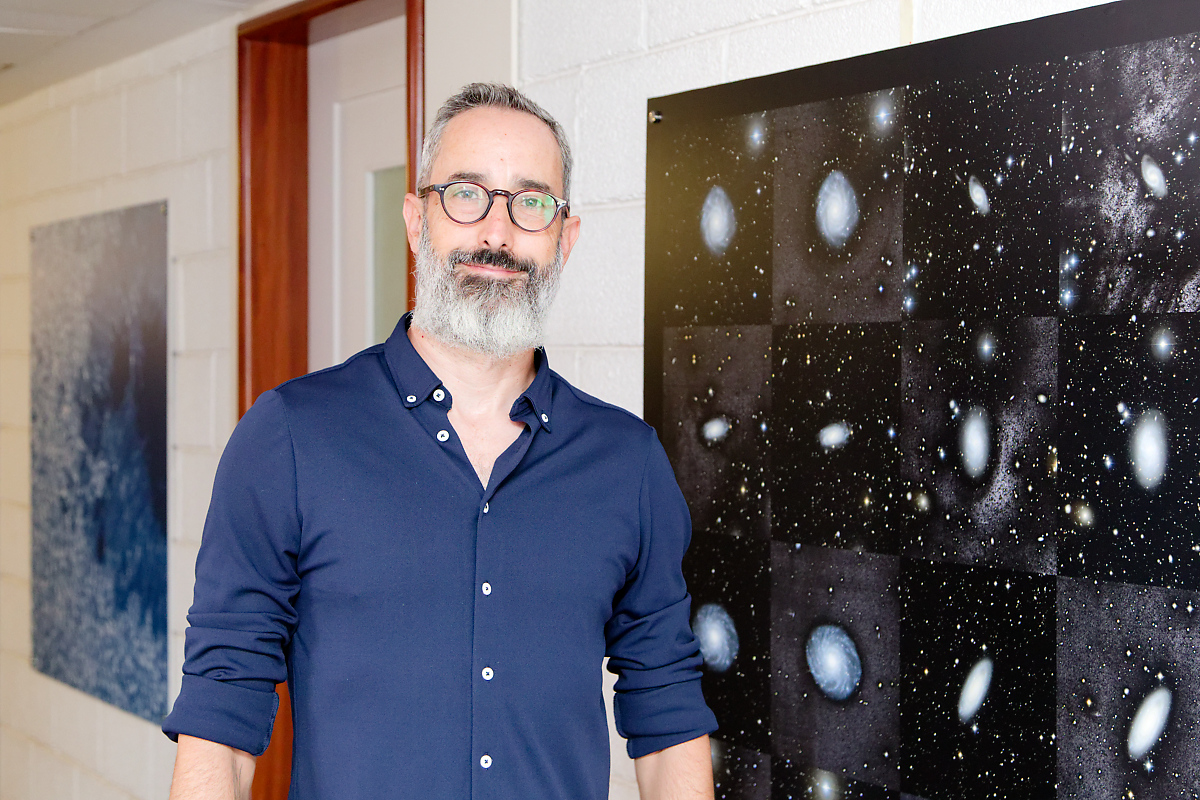
Jairo Méndez Abreu.
The survival of bulge-less galaxies
The researcher Jairo Méndez Abreu leads the research group Cosmic Evolution of Galaxies Analogous to the Milky Way (CEMWAY) and is the principal investigator of the international project BEARD (Bulgeless Evolution and the Rise of Discs), coordinated by the IAC and the University of La Laguna. The team has combined observations obtained with several telescopes at the Roque de los Muchachos Observatory and numerical simulations to explain how galaxies analogous to the Milky Way have managed to evolve to the present day without developing large bulges in their central regions.
These luminous spheroids, common in the centers of spiral galaxies, play a key role in their stability and promote their survival during galaxy mergers. The project arose with the aim of understanding how such fragile structures as the thin disks of spiral galaxies have managed to remain intact throughout cosmic evolution, through the study of galaxies similar to the Milky Way and the use of numerical simulations.
The research team used over 600 hours of observation time with several telescopes at the Roque de los Muchachos Observatory to study a sample of galaxies analogous to the Milky Way. From this data, they applied advanced analysis techniques and developed numerical simulations that allowed them to interpret the results from a solid theoretical foundation. However, Méndez Abreu emphasizes that BEARD is a project with a strong international focus, co-directed by Ramón y Cajal researcher Adriana de Lorenzo-Cáceres, in which 13 institutions from Spain, Italy, the Netherlands, Mexico, Chile and the United Kingdom have participated.
Among the main results of the project, the researcher highlights the recent publication of three articles in high-impact scientific journals that offer a first explanation of how Milky Way analogous galaxies without a bulge have managed to survive throughout the history of the Universe.
The research team has demonstrated that, although many of these galaxies underwent mergers during their evolution, these collisions occurred while they were "in the same plane and with similar rotation." This configuration makes the mergers much less destructive and allows for the preservation of fragile structures such as the thin disks characteristic of spiral galaxies. According to Méndez Abreu, this hypothesis, supported by numerical simulations, provides a plausible explanation for the survival of bulge-less galaxies during the period of major mergers that marked the evolution of the Universe.
Méndez Abreu states that the team is currently continuing to analyze the remaining observations obtained during the project to explore other aspects of the evolution of these galaxies, including the number of stars they incorporated from other systems throughout their history. Furthermore, the project has yielded the largest catalog of Milky Way-like galaxies compiled to date. A new research project, funded by the latest call for proposals from the Knowledge Generation Projects program of the Ministry of Science, Innovation and Universities, falls within this line of work. The project, entitled Time-Resolved Analysis of Milky Way-Like Galaxies (TRAMWAYS), will be led by Méndez Abreu and Adriana de Lorenzo-Cáceres and will begin in September.
The researcher also emphasizes the importance of the feedback loop between data obtained from astronomical observations and numerical simulations. While the former provide empirical evidence, the latter allow for the interpretation of these results and an understanding of the physical processes that have determined the evolution of these galaxies.
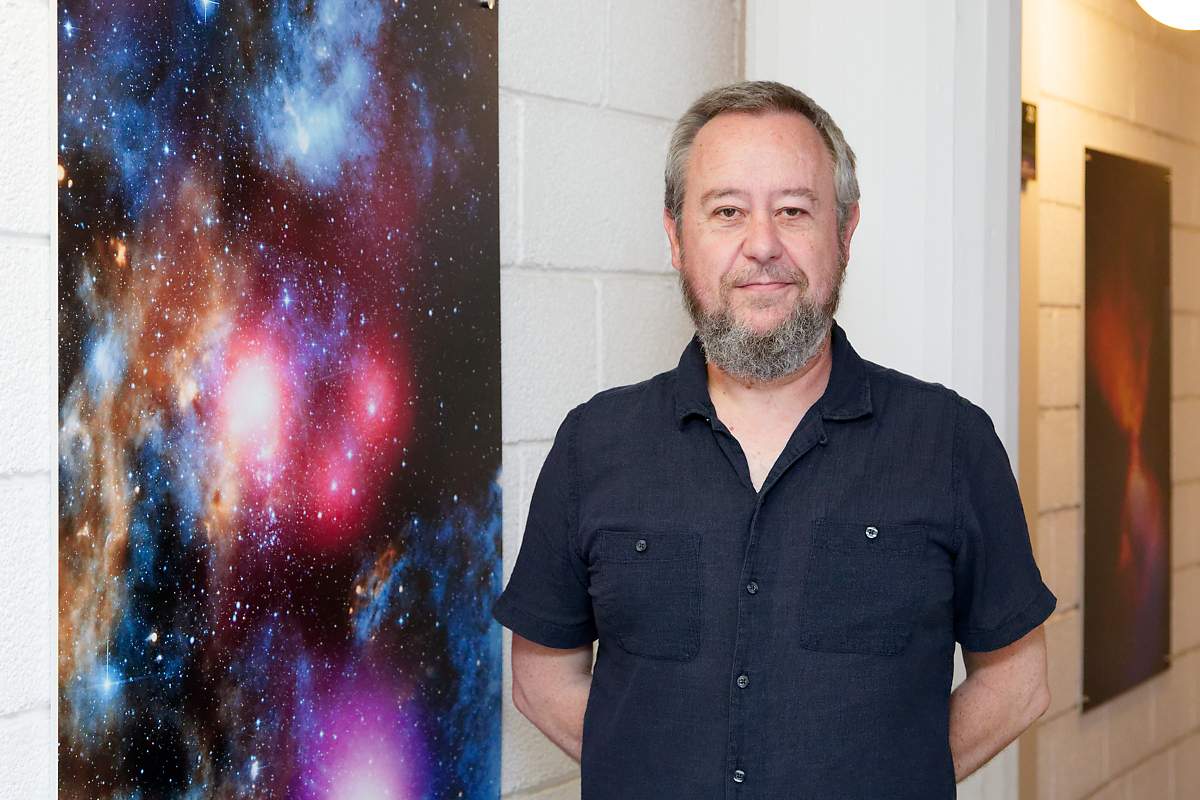
Pablo Rodríguez Gil.
Deciphering the accretion disks
“Everyone knows that the Sun has bodies orbiting around it,” he exemplifies. Pablo Rodríguez Gil, researcher of the group BINACOMP Binary stars From the University of La Laguna, to present her lines of research. Before the planets existed, she recalls, the Solar System was an enormous disk of dust and gas. Little by little, this material clumped together to form the planets, which ended up clearing the disk as they grew. This process gives its name to one of the main objects of study in her research: accretion disks. "It's a structure that appears in many places in the universe," she points out.
His work focuses on understanding how these disks evolve when they surround compact objects. He particularly studies compact binaries, systems formed by two stars in which one of them can be a white dwarf, a neutron star, or a black hole. The intense gravity of this object attracts material from its companion, which eventually forms an accretion disk.
Although he also studies systems with neutron stars and black holes, much of his research focuses on cataclysmic variables, binaries whose compact object is a white dwarf. “We know of a few dozen black holes. We know of a few more neutron stars. But we know of thousands of white dwarfs,” he says. This abundance allows him to compare a large number of systems and better understand the behavior of accretion disks.
Another of his lines of research analyzes what happens to planetary systems when stars similar to the Sun reach the end of their lives. “Most likely, the Sun will engulf all the inner planets, probably even Mars,” he explains. The remnants of these bodies end up forming a new accretion disk around the white dwarf and leave a chemical signature in its atmosphere. By analyzing their spectra, researchers can reconstruct the composition of those former planets. To answer these questions, Rodríguez Gil combines astronomical observations with theoretical models. “Normally, both approaches reinforce each other,” he states.
That process involves constantly revising what is thought to be known. “You get some data with the best telescopes available and you think you’ve got it all figured out,” he points out. However, the arrival of telescopes like the James Webb Space Telescope or the future Extremely Large Telescope It allows us to observe the universe with an unprecedented level of detail and discover phenomena that force us to rethink previous explanations. "And that's how science advances: by continually correcting itself," he says.
A significant portion of these observations are carried out with HiPERCAM, a high-speed camera installed on the Gran Telescopio Canarias (GTC), in whose scientific development he participated from the outset. The instrument obtains simultaneous images in five bands of the visible spectrum with extremely high temporal resolution, allowing the study of objects whose brightness changes in a matter of seconds. “The idea was to create a camera that could observe in the greatest number of colors possible at the same time,” he explains. Today, HiPERCAM is one of the GTC's most in-demand instruments because it is used for research on compact binaries, exoplanets, galaxies, and variable stars, among other astrophysical objects.
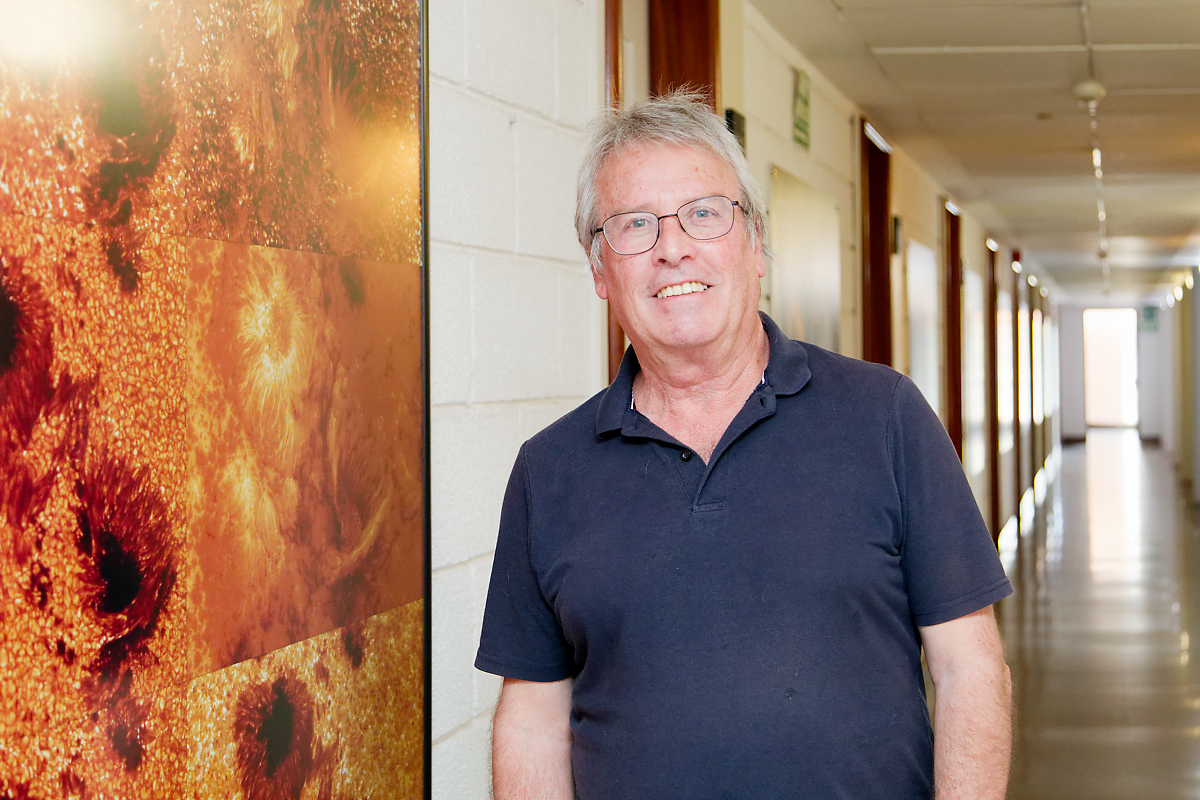
Manuel Arturo Collados.
Understanding the Sun's magnetic field
Predicting the Sun's behavior with the same precision as we currently forecast the weather is one of the great challenges of solar physics. That is one of the group's objectives. ESPSOL (Solar Spectropolarimetry) from the University of La Laguna, directed by Manuel Arturo Collados. “Meteorology studies how the Earth’s atmosphere behaves: masses of cold and hot air, fronts, atmospheric movements… We do something very similar, only we add one more ingredient: the magnetic field,” he says.
To advance this predictive capability, the group studies the Sun's magnetic field. "The Sun generates its own magnetic fields; it's full of small, and not so small, magnets that appear and disappear," Collados explains. "Our group is dedicated to studying the properties of these magnetic fields: how they appear and disappear, how they interact with matter, whether they heat it up or cool it down, and how they amplify or diminish as they evolve," he states.
Collados explains that his work seeks to understand the origin of the Sun's magnetic fields. “We believe they are generated within the Sun. Under certain conditions, this magnetic field rises from the interior to the surface, and when it reaches the surface, we observe phenomena such as solar prominences or ejections of matter into interplanetary space,” he explains. Furthermore, it is crucial for the group to understand what conditions cause one of these magnetic structures to become unstable and how the energy it releases propagates.
To this end, they have three lines of research. The first is the development of specialized scientific instrumentation. The group has an instrument installed at the Teide Observatory and participates as the principal investigator at the European level in the development of the European Solar Telescope, an infrastructure that will allow for a more detailed study of solar magnetic fields and the prediction of when eruptions will occur. “All we can do is look at the Sun and identify the regions where we think there is a higher probability of such a phenomenon occurring. But we don't know how to predict exactly when it will happen or how much energy it will release,” he explains.
The second line of research focuses on numerical simulations. “We run numerical simulations, based on the equations that describe plasma, to understand what we can expect from the behavior of these magnetic fields when they are in an environment similar to that of the Sun,” he explains. “When things fit together, we are very pleased because it means that our theory and our observations agree. And when they don't fit together, that's where the interesting part comes in,” he states. In those cases, the differences between the model and reality indicate that there are still physical processes to be understood.
The third line of research involves solar observations. The team gathers data using its instruments, analyzes it, and compares it with simulation predictions. “When all these pieces come together—better simulations, better instruments, better telescopes, better analysis methods, and new algorithms—that’s when our ability to understand the Sun truly increases, and in the future, we can predict these phenomena with greater accuracy,” he explains.
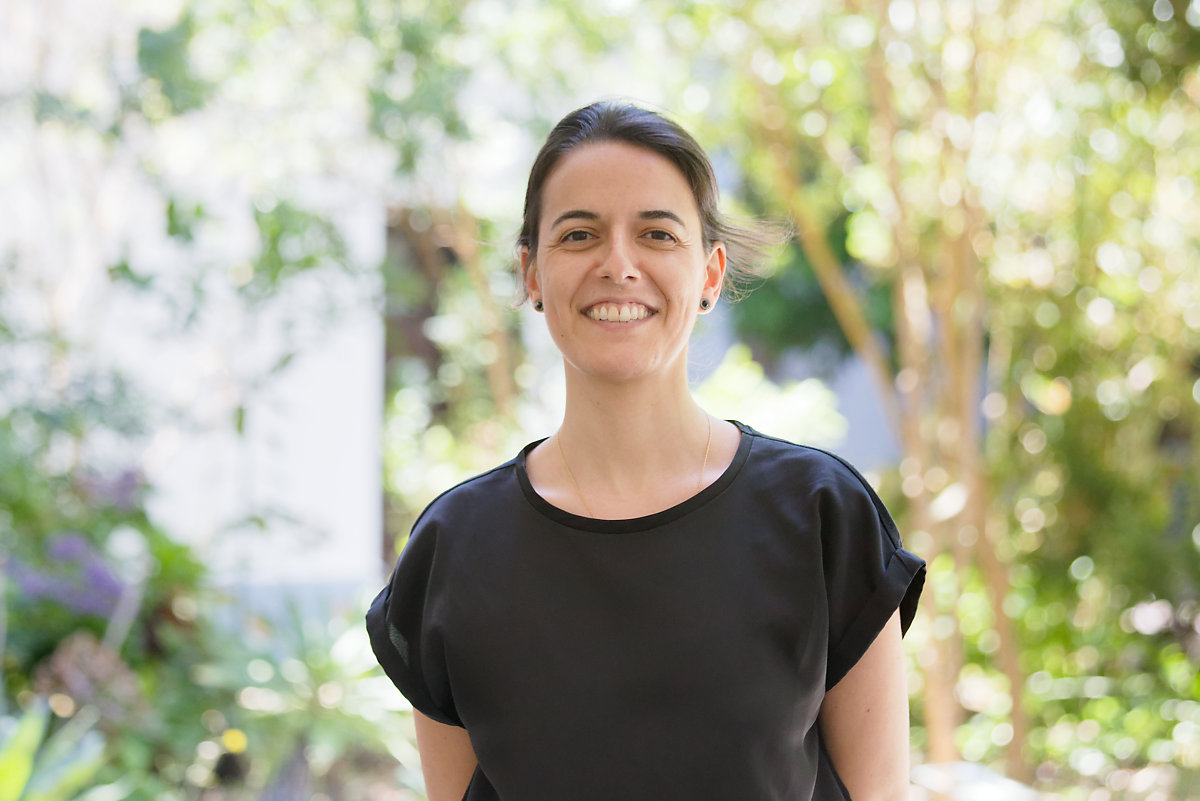
Emma Fernández.
Reconstructing the history of the Milky Way
“By identifying stellar populations within our galaxy, we try to reconstruct their formation history,” he explains. Emma Fernández, researcher of the groups PEG Stellar populations in galaxies y CEMWAY Cosmic Evolution of Galaxies Analogous to the Milky Way from the University of La Laguna. Her work focuses on the study of stellar populations that are part of the Milky Way to reconstruct the formation history of our galaxy.
The differences in their chemical properties, dynamics, and age indicate that some of these populations formed in different environments and even outside the Milky Way before being absorbed by it. "All of this tells us about the complexities of galaxy formation in the universe," he notes.
The researcher specializes in studying the chemical composition of stars. Her work falls within the field of galactic archaeology, a discipline that studies the properties of stars to reconstruct the past. Because galaxies evolve over billions of years, it is impossible to observe this process directly. “Our fossil remains are the stars,” she says.
The first stars formed from hydrogen, helium, and a little lithium. As they died, they enriched the interstellar medium with more complex elements, from which new generations of stars were born. This chemical signature, along with their movements and ages, allows us to reconstruct the history of the Milky Way and identify phenomena such as the merging of other galaxies with our own over time.
However, chemical composition alone is not enough to reconstruct the history of the galaxy: dating the moment of star formation is essential. For years, researchers used models to infer the age of stars and assumed that those poorest in chemical elements were also the oldest, while those most enriched were the youngest. However, this relationship is not always straightforward. Two stars can have a similar chemical composition and have formed at completely different times or even in other galaxies before being incorporated into the Milky Way.
The European Space Agency's Gaia mission has marked a turning point by multiplying the number of stars studied and improving the precision of observations. "While the previous project, Hipparcos, provided distances for around 100,000 stars, Gaia is giving us information on approximately 2 billion," he explains. This advance has allowed the Milky Way to be reconstructed with an unprecedented level of detail. "Gaia has been like putting on glasses with a much stronger prescription: the somewhat blurry image we had of the galaxy is now much clearer," he compares.
Fernández was part of the TEMPOS project, which advanced the precise determination of stellar ages thanks to observations from Gaia. Specifically, her study revealed previously unknown details about the formation history of the thin and thick disks in which our galaxy is distributed. She currently leads FOGALERA-Chem, a project that applies advanced methodologies to analyze large databases of stellar observations. The goal is to study the chemical properties, along with the dynamics and ages of stars, with much greater completeness, thus advancing our understanding of the history of the galaxy we inhabit.
Twenty years of cutting-edge teaching in Spain
The 2026-2027 academic year Master's Degree in Astrophysics The Master's program at the University of La Laguna will celebrate its 20th anniversary. It has become a national and international benchmark for cutting-edge specialized training. Researcher Jairo Méndez Abreu, the program's current director, states that "we offer the best Astrophysics training in Spain right now, not only thanks to the high quality of our teaching, but also to our direct collaboration with the IAC (Instituto de Astrofísica de Canarias), which enhances practical training." Researcher Arianna Di Cintio, who served as the program's director for the past two years, agrees: "This training is at the forefront not only in Spain but also in Europe, and it further benefits from its proximity to the IAC and all the infrastructure and resources shared with IACTEC (Instituto de Astrofísica de Canarias).".
Both researchers also highlight the high caliber of graduates from this program, most of whom choose to pursue research careers through doctoral studies at the University of La Laguna (ULL) or the Institute of Astrophysics of Cantabria (IAC), as well as at leading research institutions and centers worldwide. Di Cinto adds that a percentage of students also choose to dedicate themselves to other related fields, such as computing or instrumentation. For this reason, the Master's program director is currently working on a reformulation of the academic program to adapt it to the new training and internationalization needs that specialists have identified in recent years.
“We are not resting on our laurels, and we want to continue being pioneers, having been the first master's program offered at the University of La Laguna,” says Méndez Abreu. He explains that the new master's program is designed to be taught entirely in English, opening more doors to collaboration and the possibility of establishing more international agreements that will enhance the quality of research resulting from these exchanges. Furthermore, they are working on redesigning the master's program structure to strengthen areas of research such as artificial intelligence and the development of instruments for the space sector.
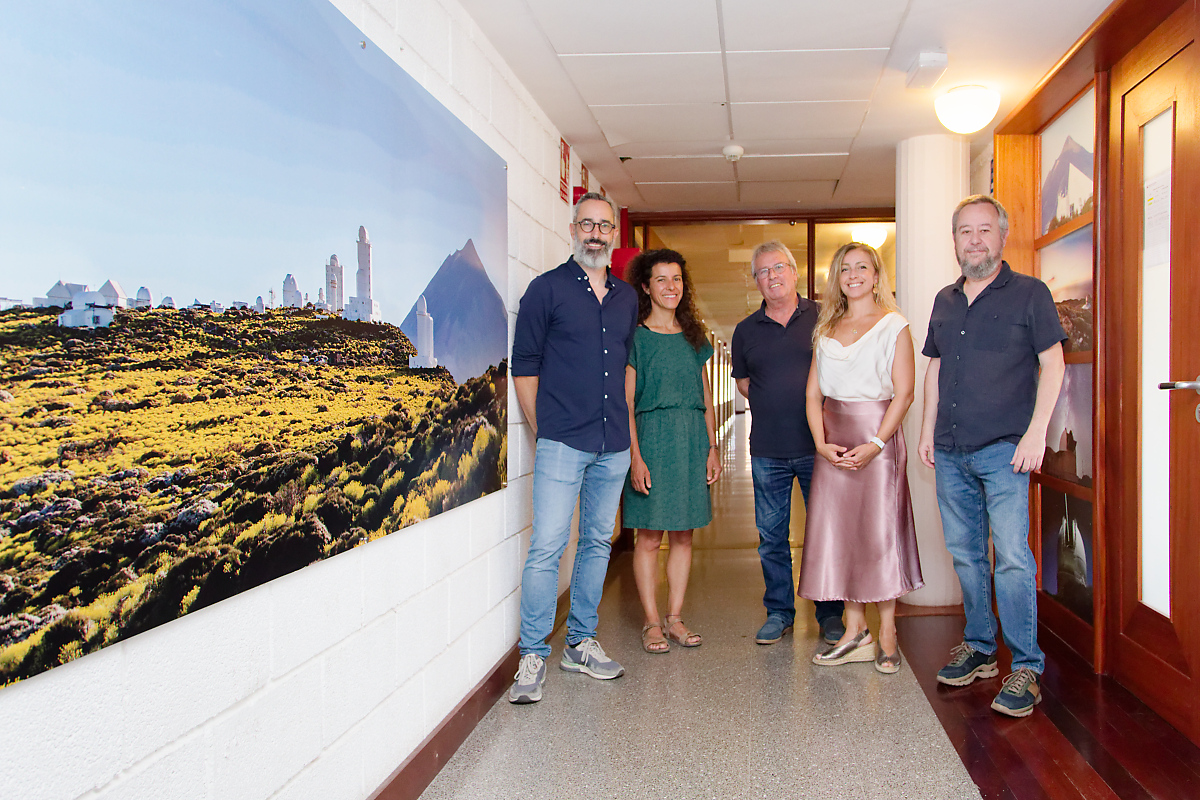 Collaboration with the IAC
The University of La Laguna and the IAC (Canary Islands Astrophysics Institute) have maintained a collaboration agreement for years, which, according to Pablo Rodríguez Gil, director of the Department of Astrophysics, has just been extended. “We extended it at the end of May and are now working on an addendum to continue adapting it to the changing times,” he explains. The agreement allows researchers from both institutions to be part of both the Department and the Institute and strengthens a collaboration that extends to teaching in the Physics and Mathematics degrees, final year projects, the Master's in Astrophysics, and the University of La Laguna's doctoral program, which is closely coordinated with the IAC's internal program. Furthermore, the Institute considers the University of La Laguna a reference university, as is the case with other major scientific institutions and their universities in other countries.
Jairo Méndez Abreu adds that this alliance allows students and researchers access to leading observatories, as well as top-tier instrumentation and computing services. However, he emphasizes that “the main benefit of this collaboration is the shared human capital and the commitment to working on joint research projects.” This commitment is reflected in the strength of a department that stands out for the quality of its scientific output, its position in major international rankings, and its ability to secure funding in national and European calls for proposals. This ecosystem of excellence consolidates the Canary Islands as one of the major international centers for astrophysical research and places it at the forefront of scientific advances in this field.
This report is an initiative framed within the InvestigaULL Commemorations Calendar, a scientific dissemination project promoted by the University of La Laguna.
Scientific Culture and Innovation Unit (Cienci@ULL)

 Spanish
 English
 French