Government Pavilion, C/ Padre Herrera s/n
P.O. Box 456
38200, San Cristóbal de La Laguna
Santa Cruz de Tenerife - Spain
Switchboard Tel.: (+34) 922 31 90 00
Hours: Mon-Fri, 8:00 a.m. to 9:00 p.m.

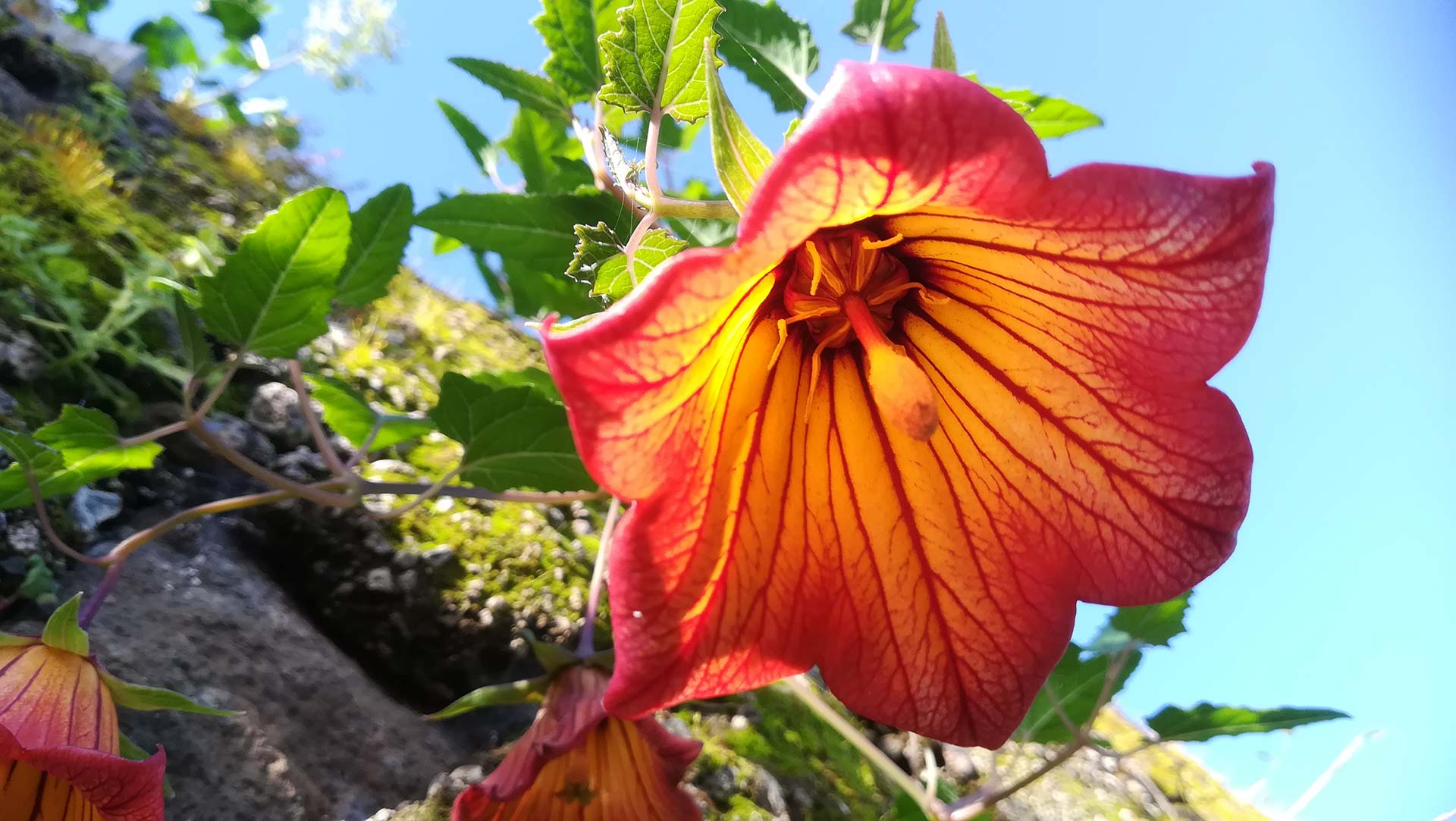
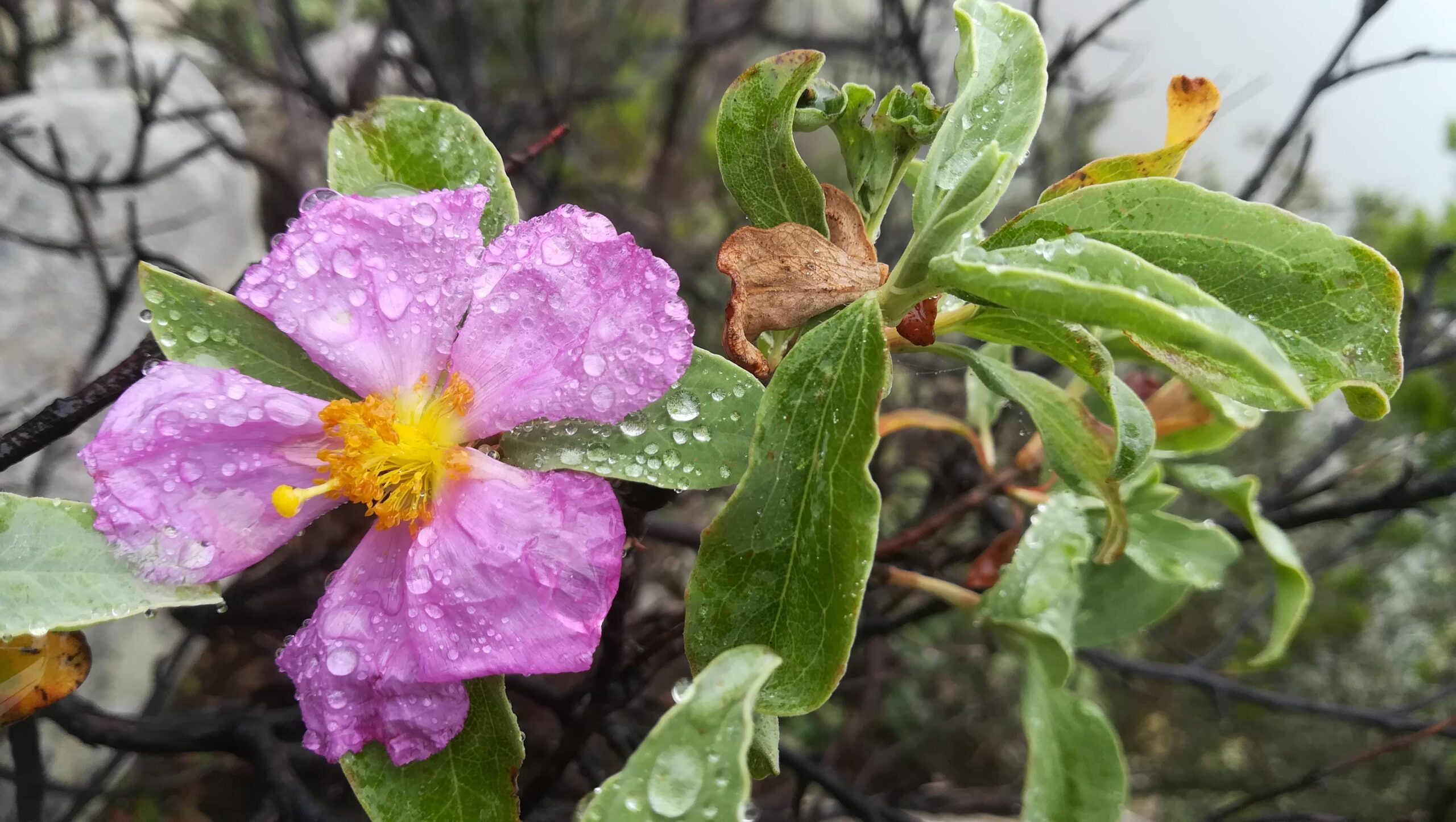
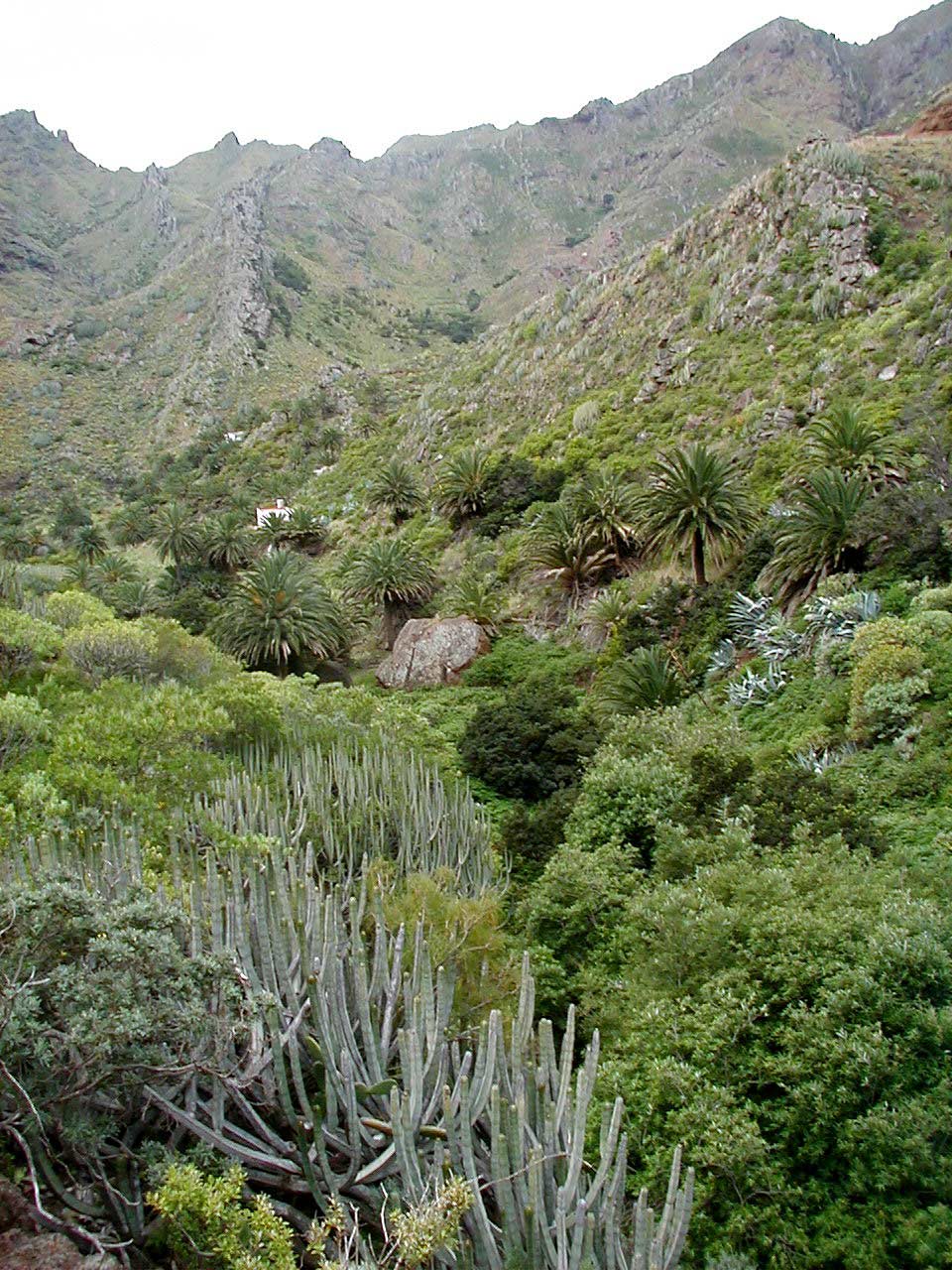
From the coast up to 350 meters in the north and from 500 to 900 meters in the south of the islands lies one of the most degraded and human-modified ecosystems in the Canary Islands: the thermophilic forest. The average annual temperature ranges between 15 and 19°C, and rainfall is highly concentrated, with long periods of drought predominating (annual precipitation does not exceed 400 mm). The soils are considered neutral, not excessively moist, and very clayey. The plants of this open forest often exhibit drought adaptations similar to those found in the cardonal-tabaibal scrubland.


Currently, there are some remnants of this forest, where numerous tree species coexist, such as mastic trees, lentisks, small pear trees, wild olive trees, junipers, dragon trees, palm trees, etc., with the assemblage of shrubby, subshrub and herbaceous plants being extraordinarily rich in species.
Furthermore, this diverse array is further enriched in the ecotone zones (transition or contact zones between two plant communities) with the cardonal-tabaibal at its lower altitudinal limit and the monteverde (in the north, influenced by the sea of clouds) and the pine forest (in the south), at its upper limit.
Government Pavilion, C/ Padre Herrera s/n
P.O. Box 456
38200, San Cristóbal de La Laguna
Santa Cruz de Tenerife - Spain
Switchboard Tel.: (+34) 922 31 90 00
Hours: Mon-Fri, 8:00 a.m. to 9:00 p.m.
