Heritage Carpentry

Carpentry is the craft of working with wood, focusing on the characteristics and properties of each species or variety, and on its workability, which allows for the application of different techniques such as cutting, turning, carving, or assembling to create tools and products that are useful in human life.
Although carpentry in general has not been declared an Intangible Cultural Heritage of Humanity, UNESCO has recognized some specific practices, such as traditional laying out in French carpentry construction.
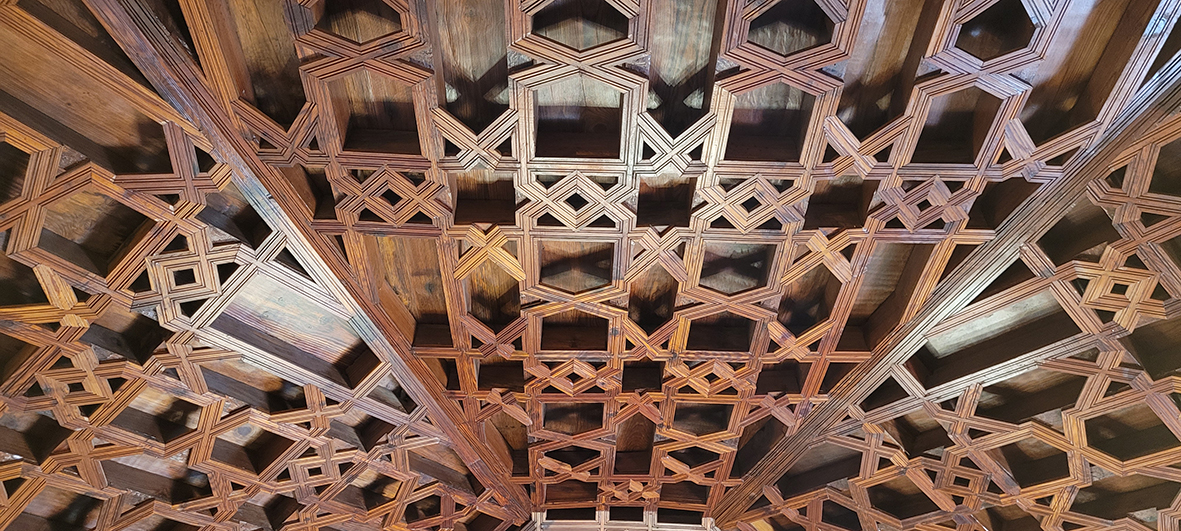
In our country, UNESCO has recognized the importance of medieval Spanish Mudéjar architecture, declaring the architecture of Aragon a World Heritage Site. One of the key elements of this architecture recognized by UNESCO is its coffered ceilings. These combine structural and ornamental aspects, resulting in pieces of extraordinary beauty. These structures emerge from the fusion of Visigothic carpentry techniques with Islamic decorative arts in the context of the Iberian Peninsula, giving rise to unique styles such as Mudéjar art. These elements spread to many other places on the peninsula, such as Castile and León, Andalusia, and others, reaching the Canary Islands and the rest of the territories colonized by the Crown of Castile.
One of the most striking aspects of the heritage woodwork produced in the Canary Islands is its profusion of quantity, detail, design, and ornamental composition, both in the frame and workshop carpentry elements. Doors, windows, patio galleries, bay windows, balconies, mullioned windows, roof trusses, coffered ceilings, staircases, etc., demonstrate the skill, technical prowess, and compositional expertise of artisans who understand and apply ancient carpentry techniques such as those of the Visigothic and Mudejar styles, combining them in ways that respond to housing needs and climatic conditions.
Traditional carpentry is an ancient craft that has evolved from the origins of human societies to the present day, through the development and evolution of techniques and tools that have been adapted to the needs of each civilization.
Following the incorporation of the Canary Islands into the Crown of Castile in the 15th century, carpentry became a fundamental and deeply rooted trade in the nascent Canarian society. Deriving from the existence of enormous forest resources, primarily in the western islands, wood became an essential raw material, enabling the development of countless economic activities, from early agriculture, with the introduction of sugar mills, to the construction industry necessary for the colonization and urbanization of the new territories.
The islands' geographical, climatic, and historical specificities favored the evolution and specialization of certain carpentry techniques originally originating from the European continent, which over time acquired a somewhat unique and distinct character, that is, a "Canarian way of making and interpreting carpentry."

The traditional architectural and construction model in the Canary Islands is based on wood. Let's not forget that traditional island architecture is an architecture of wood, and not just any wood, but one with extraordinary characteristics: that of the Pinus canariensis. Other endemic species from the Canary Islands' Monteverde and laurel forests are also present.
When these resources began to become scarce due to overexploitation and regulation, resulting from the significant restrictions imposed by the island councils, carpentry work using export-grade wood, especially from Africa or Europe, and even from the Americas, began to be detected.
Wood from endemic species of the Canary Islands: Characterization
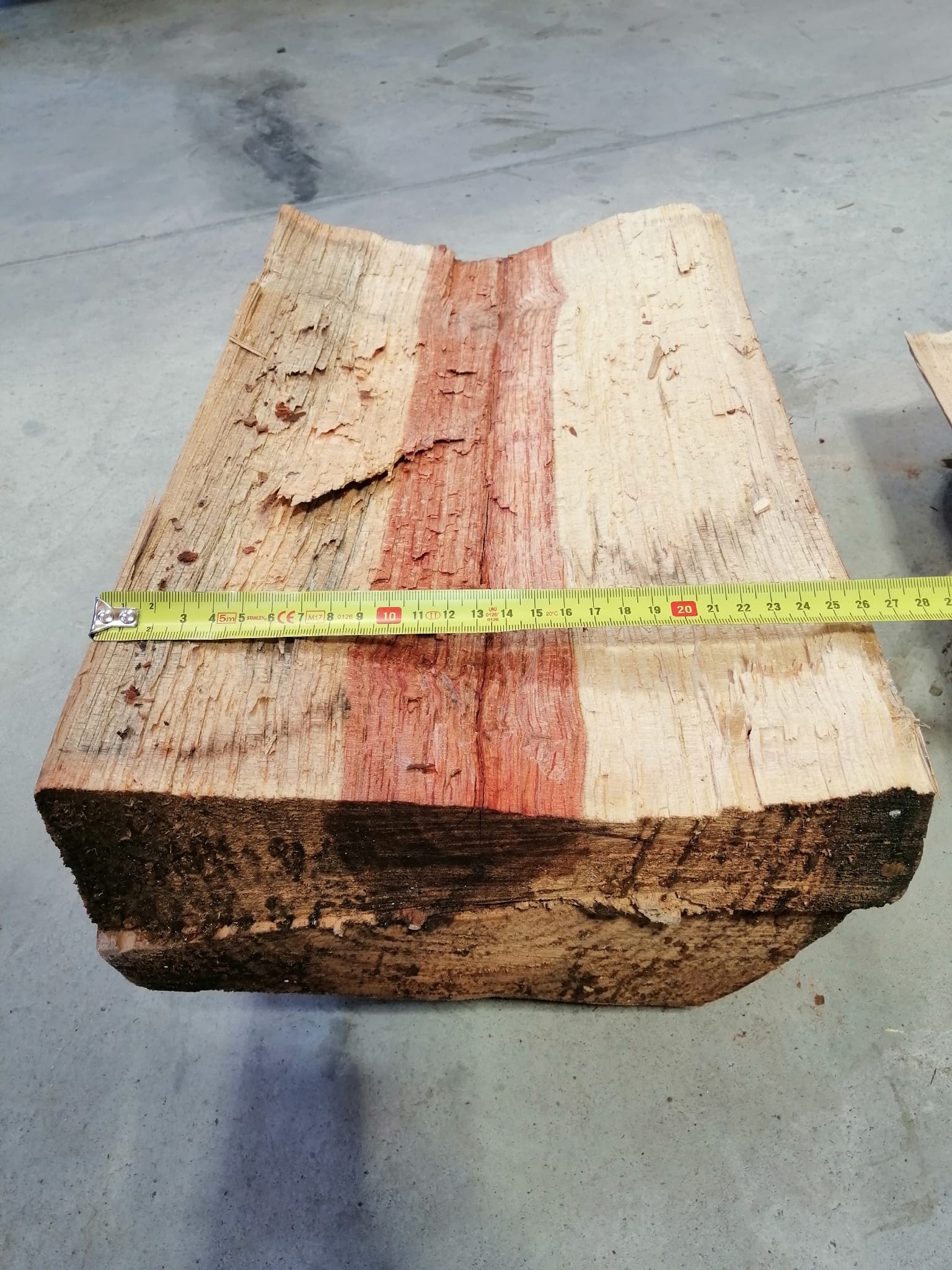
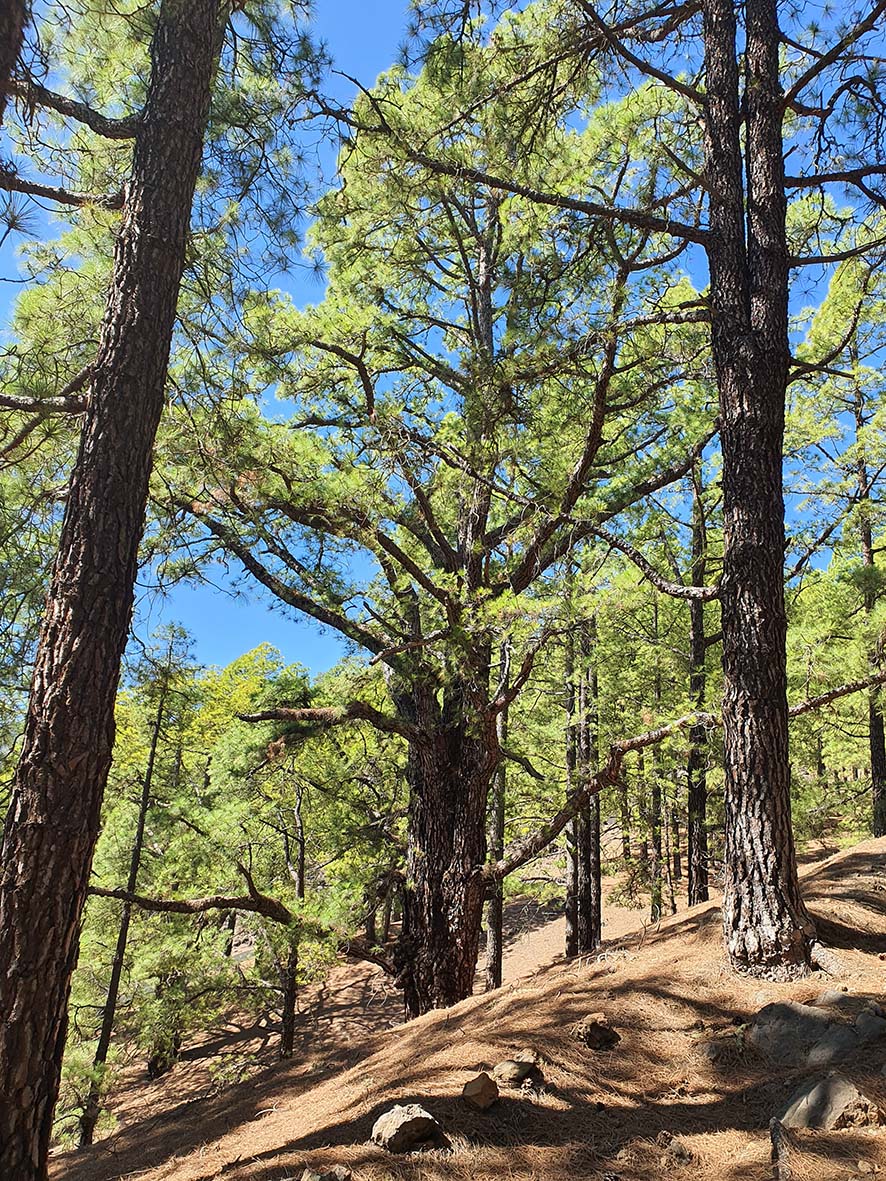
He Pinus canariensis, commonly known as the Canary Island Pine or Tea Pine, has historically been the most widely used wood on the islands as it has extraordinary natural characteristics, including a high resin content that has allowed it to become a highly durable and resistant construction material.
The endemic species from the Canary Islands' Monteverde were eventually used in traditional architecture. However, their use was primarily focused on the manufacture of tools for agricultural activities and pieces of folk crafts, but also on pieces for furniture, cabinetmaking, and even musical instruments. Thus, the wood of species such as Barbuzano (Canary Island ebony), Viñátigo, Canary Island mahogany, Holly, Laurel heather, Faya, Aderno, etc., have been especially valued for their excellent wood characteristics, linked to their workability, strength, durability, and quality.
Wood uses
Canary Island Pine or Tea Pine
Pinus canariensis
The Pinus canariensis or Canary Island Pine is primarily used in construction, enabling the creation of structural elements, carpentry work such as roof trusses, wooden floors, patio galleries, staircases, etc., and workshop carpentry work that resolves the closure of building openings such as doors, windows, balconies, mullioned windows, viewing points, patio galleries, etc.
The most notable woods from the Canary Islands Monteverde, which were widely used in traditional architecture, include:
Barbuzano
Apollonias barbujana or the ebony of the Canary Islands
A very strong, dark-colored wood used in construction, especially for ornamental elements or elements subject to friction or wear, such as stair handrails.
Viñátigo
Persea indica or the Canary Islands mahogany
Light pinkish wood, very light, highly valued in construction, cabinetmaking, furniture making, as well as in boat building.
Heather
Erica arborea
Hard, dense wood used especially for crafting and primarily as fuel, as it has a high calorific value, making it one of the best for making charcoal.
Faya
Morella faya
A very hard and compact wood, it is used in construction to make carpentry pieces, such as beams, as well as in workshops, especially in the structural frames of doors and windows. It is valued in turning and is also used to make certain parts of agricultural implements and tools, and to shape their handles.
Laurel
Laurus azorica
A wood of great hardness and durability, prized for its quality and workability. It is widely used in construction for the creation of carpentry elements and in the manufacture of structural pieces. It is also highly valued in cabinetmaking, turning, furniture, and even in the manufacture of carts and agricultural tools.
Acebiño
Acebiño
Ilex canariensis
This wood is extremely hard and dense, giving it great strength and durability. For this reason, it is used in the manufacture of various everyday utensils, such as farm implements, which require these wood characteristics, as well as in the production of outdoor pieces or elements.
Mocán
Visnea mocarena
This wood is quite hard, compact, and non-deformable, with a medium density, which is why it is moderately strong. Although it has not been specifically used for woodworking, it is highly valued for carving and engraving, as it also has a fine texture and smooth finish.

Since the earliest days of colonization of the Canary Islands, the carpentry trade has played a pivotal role in the formation and consolidation of the emerging island society, fostering the creation of a distinctive cultural model.
Over the centuries, the carpentry trade has become so consolidated that it has allowed for the development of a traditional architecture, or "a Canarian way of understanding architecture," which has given it its own distinctive connotations. One of these is the use of the Pinus Canariensis, or Tea Pine, as the basic raw material for construction in the Canary Islands, which has given it a distinctive and distinctive patina.
Added to this is the professionalism and specialization of carpenters and woodworkers, who become true artists in both design and creation. In fact, since the 16th century, there is evidence of carpentry guilds that gradually took root and consolidated in Canarian society, forming family-based schools that, in many cases, shaped the distinctive and distinctive quality of the Canarian way of interpreting carpentry.
Added to all this is the transfer of architectural models and elements between the metropolis, the Canary Islands, and the new territories of the Indies, resulting from ongoing social and cultural relations.
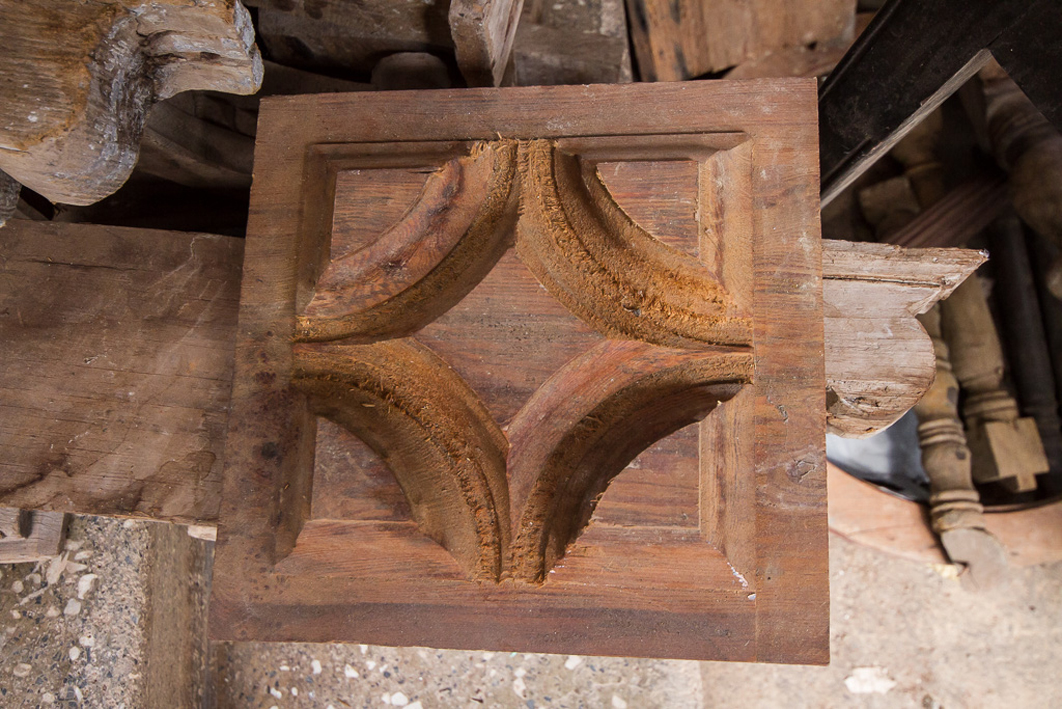
The specialization of carpenters in the Canary Islands was such that it allowed them to develop new creations based on pre-existing models. As an example of this, we should highlight the case of the town of La Orotava, where prominent schools of woodworking professionals emerged from the early days of colonization. This was due to the concentration of the valley's large landowners and, later, the agrarian gentry, driven by the abundant water, the fertility of its lands, and the proximity, quantity, and quality of the raw materials. This economic and social model of the time contributed to the rise and prestige of the profession, favoring the profusion of certain ornamental elements that contributed to this social distinction. Thus, we observe that the carpentry carving found in La Orotava features certain designs that are more complex than those found elsewhere in the Canary Islands. This is the case with the creation of quartered or cushioned tiles that incorporate organic, floral designs, more complex than geometric motifs, and which make La Villa's professionals first-rate specialists. Over the centuries, these designs have become distinctive and characteristic of La Orotava.
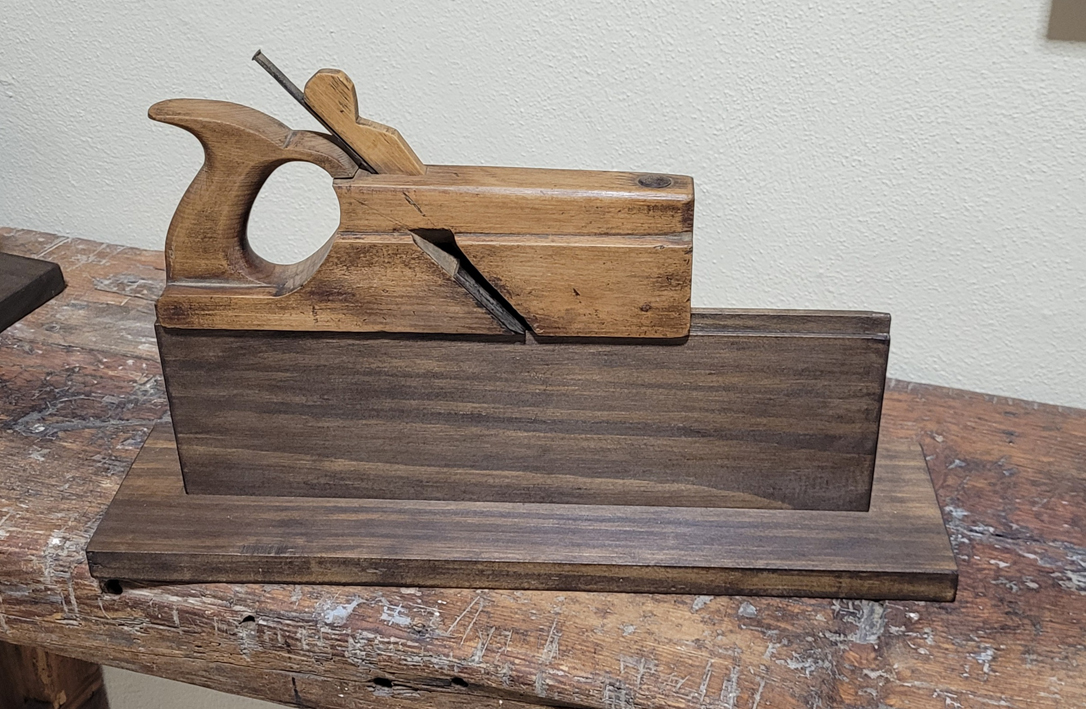
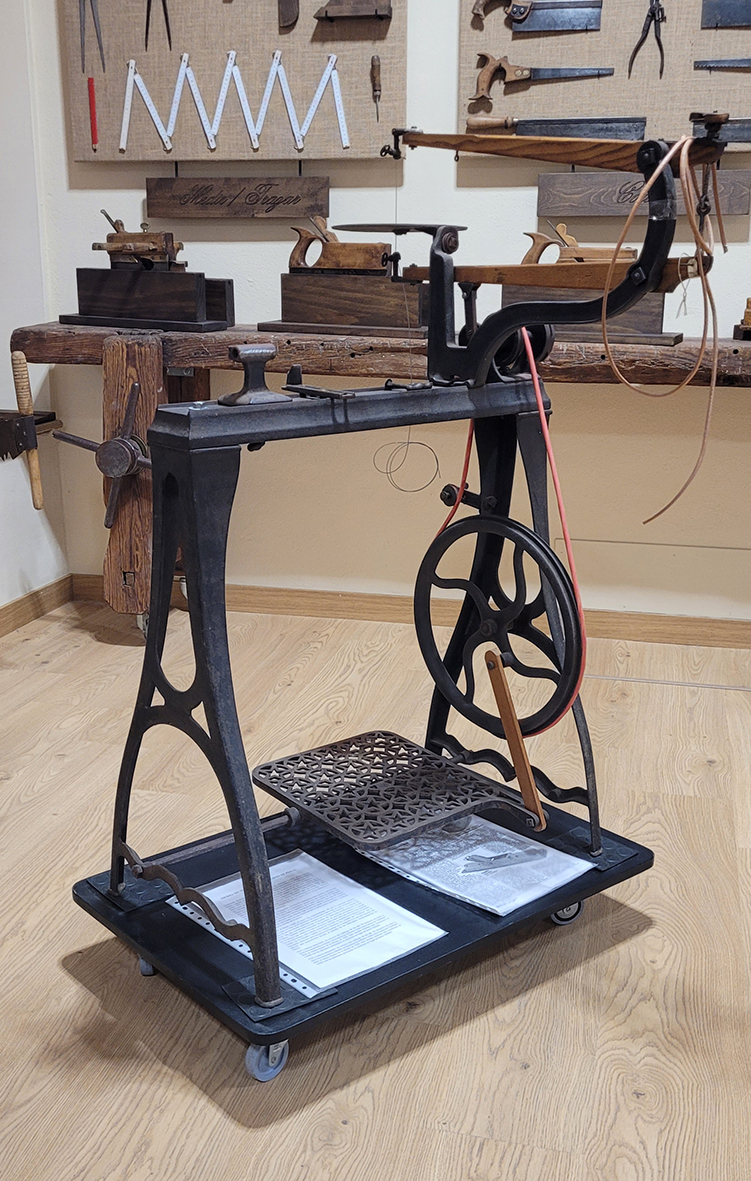
Historical reviews of the traditional and heritage carpentry trade in the Canary Islands
Traditional carpentry in the Canary Islands was an essential trade in the development of the new island society, being passed down and perfected from generation to generation, a fact that favored its evolution and the simplification of certain carpentry techniques. From the very beginning, the guild models of the metropolis were replicated, but due to the scarcity of skilled labor, its application was initially quite lax. However, as the nascent society consolidated, it later became a highly specialized trade with great social prestige. It allowed for the creation not only of everyday objects, such as tools and utensils, but also unique architectural pieces, intrinsic and characteristic of the traditional Canarian architectural-construction model. This was further enhanced by the incorporation of new, initially unknown, endemic raw materials, whose common use generated new knowledge regarding their use in wood, contributing to the emergence of certain distinctive patinas and finishes.
Characteristics and peculiarities of carpentry in the Canary Islands
The carpentry techniques and procedures used in the Canary Islands are essentially the same as those used on the mainland, derived from the great professionalism and experience of Visigothic carpenters on the one hand, and the ornamentation developed in Arab culture. However, in the Canary Islands, the models and characteristics developed in these carpentry workshops, both in the framing and especially in the workshop, acquire a distinctive and identifying seal. In the field of framing carpentry, we can find outstanding roof trusses, decorated with latticework patterns of Mudejar influence or incorporating organic patterns of Portuguese influence, or a combination of both, with certain artistic liberties. Staircases are also treated with magnificent exquisiteness, appearing finished with excellent lathe and carving work. In the workshop carpentry, magnificent work can be seen on doors, windows, patio galleries, mullioned windows, and balconies. Without a doubt, the balcony stands out among them, having become a benchmark, characteristic, and distinctive piece of woodwork crafted in the Canary Islands, a consequence of its architectural and construction model. Over the centuries, these morphological variations in woodworking were transferred to certain areas of the Americas where social and cultural ties with the Canary Islands were very close, such as Cuba, Colombia, etc., and were soon to return later, some of them adapting new morphological proposals and designs that reflect cultural fusion and mestizaje.
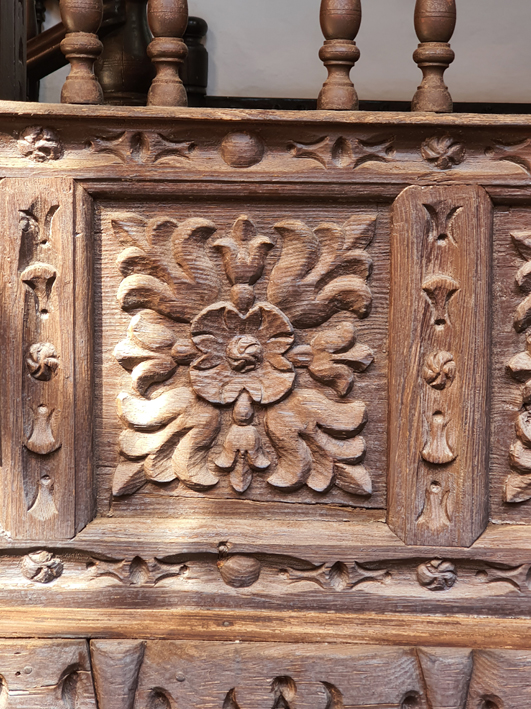
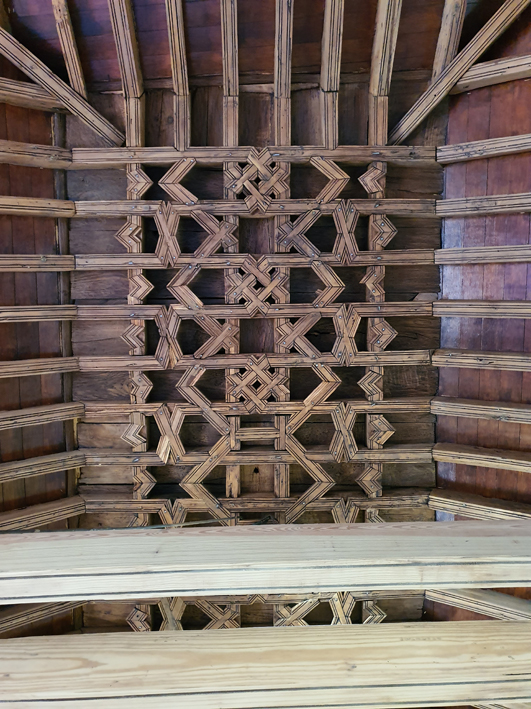
Traditional Canarian carpentry is much more than a simple trade; it is a cultural manifestation that, from the 15th century until practically the mid-20th century, shaped the architecture and landscape of the islands. In this carpentry, Mudejar techniques and styles are fused and interpreted with others influenced by Portuguese, English, Flemish, and even mixed-race traditions, derived from significant commercial and cultural exchanges, transforming it into a cultural legacy of inestimable value that deserves to be preserved and disseminated, not only for its aesthetic and historical significance but also for its contribution to the cultural identity of the islands throughout the world.
The basic objective of this universal cultural space will therefore be limited to highlighting both the craft and everything related to the creation and/or production of these pieces and elements that make the carpentry developed in the Canary Islands a significant and distinctive variant.
We will also focus on proposals and analyses of specific and unique interventions carried out on the architectural heritage of the Canary Islands, where woodworking and the techniques used in its recovery and/or restoration have played a decisive role in the rehabilitation process.