Government Pavilion, C/ Padre Herrera s/n
Post Office Box 456
38200, San Cristobal de La Laguna
Santa Cruz de Tenerife - Spain
Switchboard Tel.: (+34) 922 31 90 00
Hours: Mon, 8:00 a.m. to 9:00 p.m.

This micro-credential aims to equip students to understand and explain the Canary Islands Economic and Fiscal Regime (REF) in an integrated manner as a key instrument of economic and territorial policy. It addresses its historical foundations, its current legal framework, and the main measures that shape it, while also promoting critical analysis of its impact on regional development and the daily lives of Canary Island citizens, based on evidence and real-world case studies.
General objective:
To offer students an analytical and integrated understanding of the Canary Islands Economic and Fiscal Regime (REF), enabling them to interpret its historical origins, critically analyze its current legal framework, and evaluate, based on evidence and real-world cases, how this regime contributes to the economic and social development of the Canary Islands and improves the lives of its citizens today. The micro-credential will provide the necessary conceptual and applied tools to explain and justify the
relevance of the REF from a professional, social and economic perspective.
Specific objectives:
a) Analyze the historical background of the Canary Islands' private tax regime and evaluate, from an economic and institutional perspective, the extent to which the royal franchises and the declaration of Free Ports of 1852 contributed to the configuration of a differentiated economic model.
b) To critically interpret the economic and fiscal evolution of the Canary Islands between 1852 and 1972, identifying and assessing the structural factors that explain the need for a specific economic and fiscal regime.
c) Examine and evaluate the effects of the modern consolidation of the REF after the 1972 Law, as well as its process of adaptation to the democratic framework and the European context, taking into account criteria of institutional coherence and regional development. d) Interpret the current regulatory framework of the REF, identifying the main rules that regulate it.
d) Evaluate how the main economic measures of the REF affect daily life
Citizenship, critically analyzing real cases in areas such as transport, energy, water, telecommunications or employment, and assessing their economic and social impact in the Canary Islands context.
A university degree is not required to access this micro-credential. However, students wishing to access it must meet at least one of the following access requirements:
The following content is organized in an accessible way, with an informative and practical approach:
Part I. Historical evolution and foundations of the REF
1. Analysis of the origins and historical foundations of the Canary Islands economic and fiscal model and its impact on the configuration of a differentiated regime.
2. From the Free Ports regime to the 1972 Law: process of consolidating a unique economic and fiscal framework and assessment of its structural elements.
3. Adaptation and fitting of the REF in the autonomous State and in the European framework, with special attention to its regulatory evolution and functioning.
Part II. Concept, content and legal framework of the REF today
4. The REF as an instrument of economic and fiscal policy.
5. Essential components of the REF.
6. The legal framework of the REF.
Part III. Economic measures of the REF and their impact on citizens
7. Territorial continuity measures: impact analysis.
8. Measures for the compensation of structural cost overruns.
9. Measures in employment, social cohesion and public services.
10. Other sectoral and strategic measures.
The contents of the micro-credential allow students to understand and analyze in an integrated way the historical foundations, the legal framework and the main economic measures of the Economic and Fiscal Regime of the Canary Islands, as well as evaluate its practical application and its impact on citizens and regional development, from an economic, social and institutional perspective.
Each part will include practical examples and guided exercises that facilitate the progressive understanding of the content and its application to the Canary Islands context.
The training activities to be carried out during the delivery of the micro-credential will be the following:
• Theoretical classes: expository, explanatory or demonstration sessions of the contents and knowledge.
• Practical classes: sessions of practical application of the content developed in the theoretical classes, through the resolution of exercises, problems or theoretical-practical scenarios.
• Seminars, workshops, or other complementary activities (discussion forums, simulations, etc.): monographic sessions that encourage student participation. These are supervised by the course instructors.
• Independent work: independent and self-regulated activity of the student based on the documentation and guidelines proposed in the subject, preparation of classes and exams, preparation of final reports, internship reports…
• Tutoring (individual, group…): activity in which the teaching staff attends to, facilitates and guides one or more students in the training process.
• Assessment: continuous assessment tests and final exams. The tests will be virtual and may be written, oral, or consist of practical exercises.
All activities will be conducted virtually, combining synchronous and asynchronous sessions on the institutional virtual campus.
Regarding the way to organize the teaching to achieve the objectives set out in the micro-credential, the organizational modality summarized below will be followed:
• Lectures/expository method: presentation or explanation by the teaching staff.
• Seminars: carrying out exercises, solving problems or practical cases, others.
• Individual work: individual preparation of assignments/projects/reports, portfolio, …
• Personal study: preparation for tests, exams, etc.
• Assessment: written tests, oral tests, practical tests, …
• Tutoring: instruction period in which teachers and students interact with the aim of reviewing and discussing materials and topics presented in class.
The microcredential will have an evaluation system (ES) based on the following evaluation tests
• Objective tests (true/false, multiple choice, test type, fill-in-the-blank, ordering, etc.): These are measurement instruments that allow the evaluation of knowledge, skills, performance, aptitudes, etc. The answers are closed-ended, thus promoting objectivity during the scoring process.
• Short answer or brief tests: type of objective tests in which students do not elaborate on their answer and must respond to the specific information required.
• Case, exercise and problem solving: tests in which students must solve, in a reasoned manner, within a certain time, and according to the established criteria, the cases, exercises or problems posed by the teaching staff, with the aim of applying the knowledge acquired.
• Attendance, participation or attitude in teaching activities, seminars, tutorials, etc.: monitoring student attendance and participation in teaching activities, carrying out activities during teaching sessions.
The tests will be conducted entirely online, through the institutional campus, using, among other things, automated questionnaires, guided practical exercises and participation in forums.
The weighting of the assessments will be communicated to students at the beginning of the course in the course syllabus. Furthermore, the assessment system ensures that the learning outcomes correspond to the practical skills required at MECES level 2.
The evaluation calls established in the current regulations will be carried out, guaranteeing the students the right to take the official evaluations planned for this type of specific teaching.
Credits: 2 ECTS
Duration: 24/05/2027-03/06/2027
Teaching modality: Virtual campus and synchronous sessions on May 24, 25, 26, 27 and 31 and June 1, 2 and 3, 2027 from 5:00 PM to 7:30 PM. The sessions are not mandatory, they will be recorded.
Location: Virtual Campus of the University of La Laguna
Discounted rate thanks to the aid of the Commissioner of the Economic and Fiscal Regime of the Canary Islands, aimed at promoting participation in training actions on the REF given by the University of La Laguna and the University of Las Palmas de Gran Canaria, intended to partially cover the cost of giving the micro-credential.
This micro-credential is part of the Inter-university Certificate of Specific Training in the Economic and Fiscal Regime of the Canary Islands (REF). To obtain the degree, it will be necessary to register and pass the micro-credentials that add up to at least 15 ECTS credits.
Microcredentials mandatory:
Microcredentials electives (you must take at least one of the two):
Short courses available in various formats (in-person, online, or hybrid). Ideal for learning without interrupting your professional life.
Content created and delivered by professionals and experts in the field, designed for immediate application.
Endorsed by the University of La Laguna. You will receive an official ECTS certificate, valid in the European Higher Education Area.

Full Professor in the Department of Economic History and Institutions at the University of Las Palmas de Gran Canaria (ULPGC). Specialist in the study of the historical processes that lead to the formation of
Modern State in Spain and the design of the financial system of the Canary Islands.
Teacher
Professor of Financial and Tax Law at the ULPGC. Department of Sciences
Basic Legal Studies ULPGC.
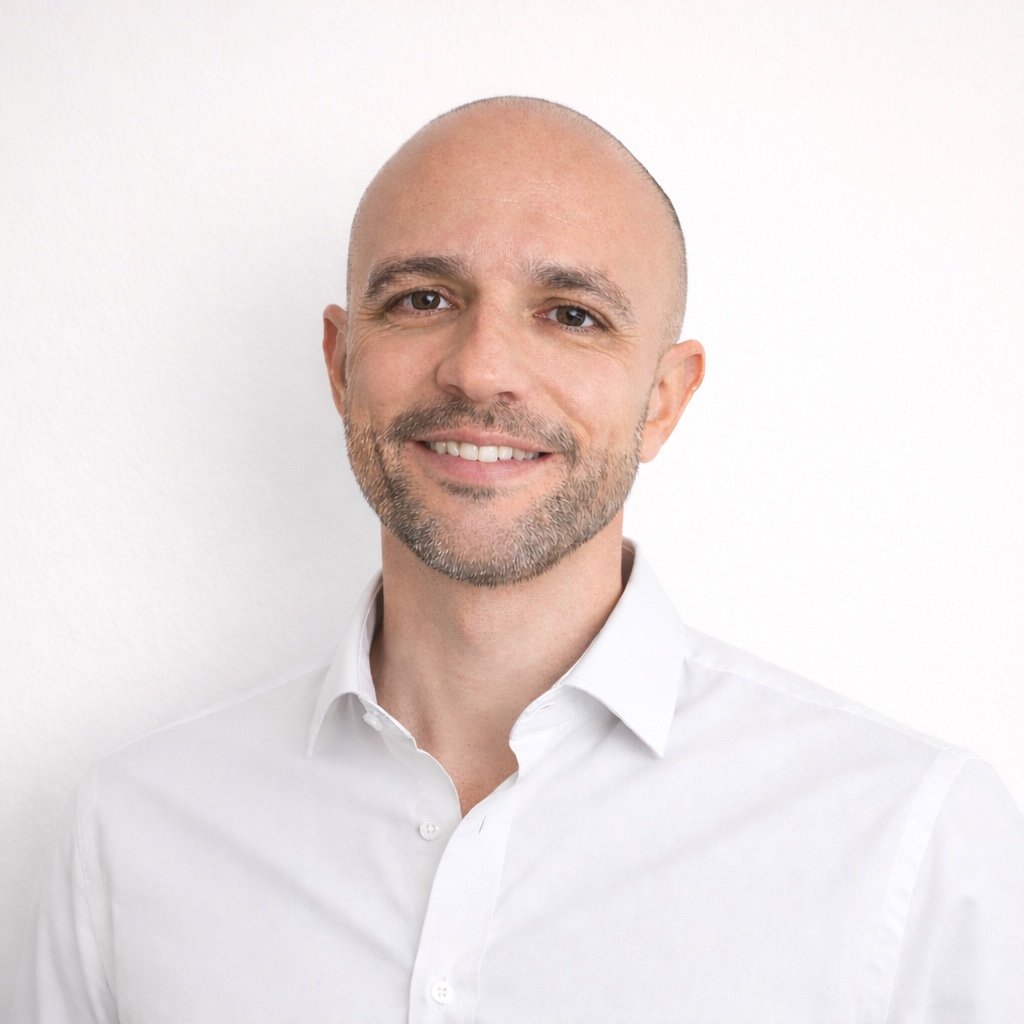
A member of the State Tax Inspectorate, with experience in monitoring the application of the REF tax incentives. Currently, he works in the office of the Commissioner for the Economic and Fiscal Regime of the Canary Islands, participating in analysis, monitoring, and dissemination activities.
Economist and PhD in Regional Development, Finance Technician and advisor to the Commissioner of the Economic and Fiscal Regime of the Canary Islands.

Government Pavilion, C/ Padre Herrera s/n
Post Office Box 456
38200, San Cristobal de La Laguna
Santa Cruz de Tenerife - Spain
Switchboard Tel.: (+34) 922 31 90 00
Hours: Mon, 8:00 a.m. to 9:00 p.m.
