Government Pavilion, C/ Padre Herrera s/n
Post Office Box 456
38200, San Cristobal de La Laguna
Santa Cruz de Tenerife - Spain
Switchboard Tel.: (+34) 922 31 90 00
Hours: Mon, 8:00 a.m. to 9:00 p.m.

This micro-credential qualifies students to conceive, produce, and direct an activist documentary. Students will develop skills in writing, planning, editing, and completing a collaborative film project.
Based on the theoretical and ethical foundations of activist cinema, with an orientation towards practical sessions, this micro-credential will present and develop all the creative, professional and social aspects for the creation and production of documentary film works oriented towards social impact and activism, under the tutelage and practical case of the films and audiovisuals made by Miguel Ángel Rolland.
The course will culminate in the filming, editing, and presentation of a collective activist documentary, based on the ideas presented and chosen by the participants, who will also have the opportunity to learn firsthand about the different professions that a small documentary production team can and should undertake.
Block I: Foundations and Ethics (Sessions 1-2)
Focused on the theoretical basis and the responsibility of the filmmaker.
Session 1: Cinema as a Tool for Change in the Canary Islands
Session 2: Narrative and Audiovisual Language
Block II: Development and Pre-production (Sessions 3-4)
From idea to paper.
Session 3: Script and Production Folder
Session 4: The Pitch and Shooting Plan
Block III: Production and Filming (Sessions 5-7)
Cameras ready. Real-world action.
Session 5: Field Technique I (Image and Light)
Session 6: Field Technique II (Sound is the 50%)
Session 7: Intensive Filming Day
Block IV: Post-production and Distribution (Sessions 8-10)
Where history is born.
Session 8: Impactful Assembly and Editing
Session 9: Completion and Sound Reinforcement
Session 10: Impact Strategy and Premiere
The training activities to be carried out during the delivery of the micro-credential will be:
Regarding the way to organize the teaching to achieve the objectives set out in the micro-credential, the organizational modality summarized below will be followed:
Credits: 3 ECTS
Duration: 12/05/2026 – 23/05/2026
Teaching modality: In person
Location: Faculty of Social Sciences and Communication.
Schedule: Monday to Friday from 4:00 PM to 7:00 PM
The cost of tuition for this Microcredential will be subsidized by the 'Plan for the development of university microcredentials', investment 6 of component 21 of the Addendum to the 'Recovery, Transformation and Resilience Plan', financed by the European Union – Next Generation EU, year 2025.
Short courses available in various formats (in-person, online, or hybrid). Ideal for learning without interrupting your professional life.
Content created and delivered by professionals and experts in the field, designed for immediate application.
Endorsed by the University of La Laguna. You will receive an official ECTS certificate, valid in the European Higher Education Area.
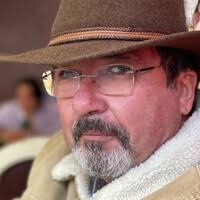
He holds a degree in Audiovisual Communication and Advertising. He is the Director of the Department of Communication Sciences and Social Work at the University of La Laguna (ULL), and is currently a tenured professor, having taught courses in Advertising and Film Theory and History. He has extensive professional experience as a director, screenwriter, and presenter of film programs on TVE and Televisión Canaria. He has also worked as an advertising photographer for multinational corporations.
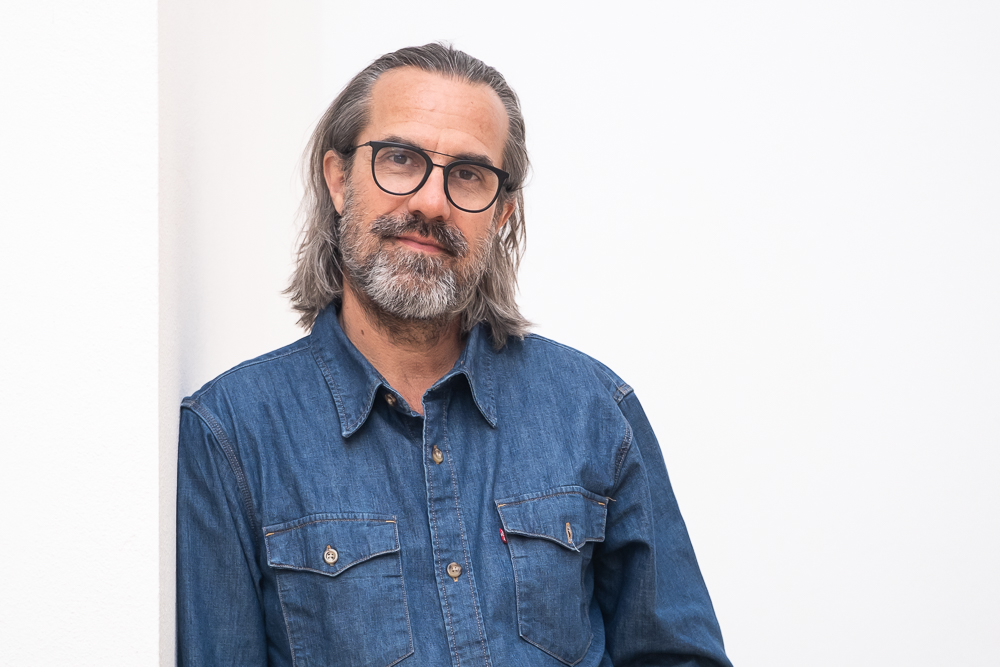
He holds a degree in Journalism from the Complutense University of Madrid, and received a scholarship from the Ministry of Culture to study film in New York (New York Film Academy) in 2001. He has held various professional positions in the audiovisual industry, including Antenna Director, screenwriter He is a documentary filmmaker (NHK Japan) and an advertising director. He was the founder of the professional association DOCUS MADRID. He has also worked as a content and social media director at communication and marketing agencies.
Since his first short film in 1996, several of his short films have been selected by numerous international festivals (IDFA, Los Angeles, Sitges, Silverdocs, DocumentaMadrid), television channels (RTVE, CANAL+), and VOD platforms (FILMIN, KANOPY, ALCHIMIE, GUIDEDOC). He has accumulated more than 25 mentions, nominations, and awards. Nominated for the Goya Awards for Best Documentary Short Film by Aerosol (2004). In 2016 he premiered his first feature-length documentary Holy Feast, It has been screened at the Documenta Madrid, Sitges, Cinespaña Toulouse, Cine Animal Colombia, and Central DOC Mexico festivals, and was the most-watched documentary of 2016 on the Feelmakers platform. It has an 8.8 rating from viewers on the Internet Movie Database (IMDb). In 2024, he published his first novel. I8I, and is preparing his next feature-length documentary: Balladero.

Government Pavilion, C/ Padre Herrera s/n
Post Office Box 456
38200, San Cristobal de La Laguna
Santa Cruz de Tenerife - Spain
Switchboard Tel.: (+34) 922 31 90 00
Hours: Mon, 8:00 a.m. to 9:00 p.m.
