Government Pavilion, C/ Padre Herrera s/n
Post Office Box 456
38200, San Cristobal de La Laguna
Santa Cruz de Tenerife - Spain
Switchboard Tel.: (+34) 922 31 90 00
Hours: Mon, 8:00 a.m. to 9:00 p.m.
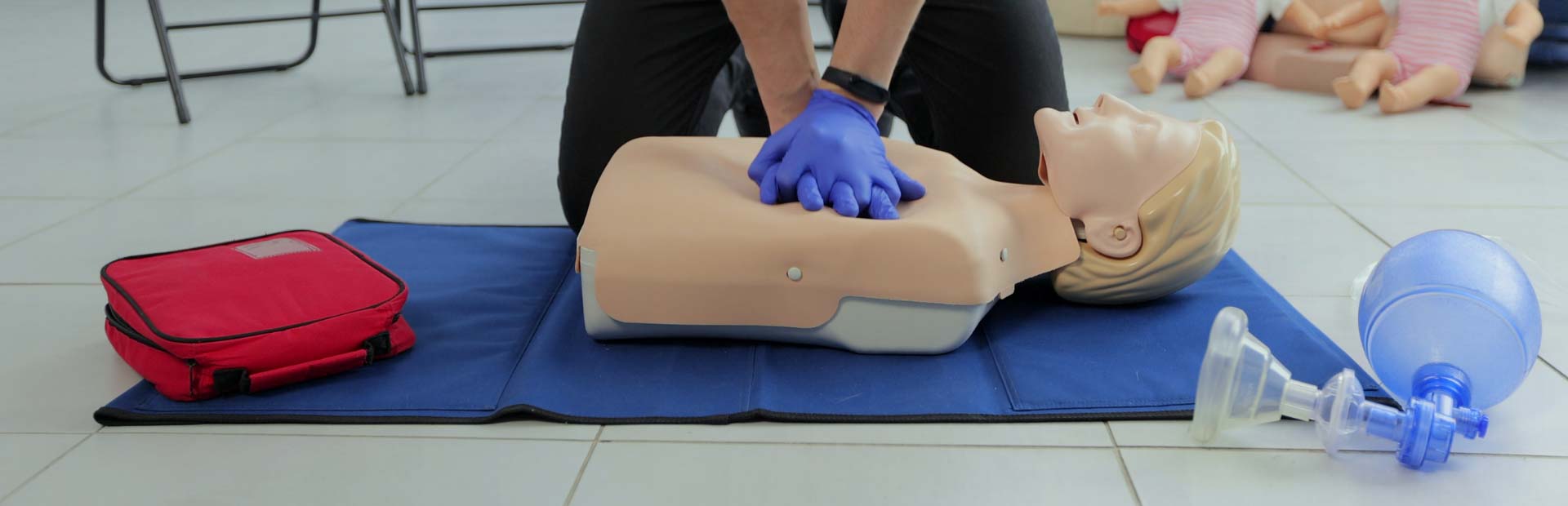
Acquire and apply skills in the early recognition and initial management of critical clinical situations in the Interventional Radiology environment, including the identification of hemodynamic and respiratory deterioration, and the activation of immediate life support measures in accordance with current protocols.
Develop technical and non-technical skills necessary for effective action in emergency scenarios, integrating the execution of life support maneuvers, the appropriate use of available resources and the coordination of teamwork in situations of high healthcare pressure.
Applying the principles of patient safety and quality of care in the context of Interventional Radiology, through standardization of the response to adverse events, decision-making based on clinical algorithms, and improvement of communication and leadership in the healthcare environment.
The training activities to be carried out during the delivery of the micro-credential will be:
• Theoretical classes: expository, explanatory or demonstration sessions of the contents and knowledge.
• Practical classes: sessions of practical application of the content developed in the theoretical classes, through the resolution of exercises, problems or theoretical-practical scenarios.
• Seminars, workshops, or other complementary activities (discussion forums, simulations, etc.): monographic sessions that encourage student participation. These are supervised by the course instructors.
• Independent work: independent and self-regulated activity of the student based on the documentation and guidelines proposed in the subject, preparation of classes and exams, preparation of final reports, internship reports…
• Tutoring (individual, group…): activity in which the teaching staff attends to, facilitates and guides one or more students in the training process.
• Assessment: continuous assessment tests and final exams. Tests may be in person or virtual, and may be written, oral, or consist of practical exercises.
Regarding the way to organize the teaching to achieve the objectives set out in the micro-credential, the organizational modality summarized below will be followed:
•Lectures/expository method: presentation or explanation by the teaching staff.
• Practical classes: activities supervised by the teaching staff in the classroom, laboratories, clinics.
• Group work: group preparation of assignments, projects/reports, …
• Personal study: preparation for tests, exams, etc.
• Assessment: written tests, oral tests, practical tests, …
• Tutoring: instruction period in which teachers and students interact with the aim of reviewing and discussing materials and topics presented in class.
• Exhibitions, debates and presentation of works and projects: activities supervised by the teaching staff.
• Active methodologies: cooperative learning, project-based learning, flipped classroom, service learning, game-based learning, case studies, problem-solving…
They are aimed at making learning a participatory process and are based on the leading role of the students.
The microcredential will have an evaluation system (ES) based on the following assessment tests:
• Objective tests (true/false, multiple choice, test type, fill-in-the-blank, ordering, etc.): These are measurement instruments that allow the evaluation of knowledge, skills, performance, aptitudes, etc. The answers are closed-ended, thus promoting objectivity during the scoring process.
• Case, exercise and problem solving: tests in which students must solve, in a reasoned manner, within a certain time, and according to the established criteria, the cases, exercises or problems posed by the teaching staff, with the aim of applying the knowledge acquired.
• Attendance, participation or attitude in teaching activities, seminars, tutorials, etc.: monitoring student attendance and participation in teaching activities, carrying out activities during teaching sessions.
• Observation techniques (records, checklists, attitude scales, etc.): application of methods to describe and record the manifestations of student behavior.
Credits: 3 ECTS
Duration: 18/05/2026 – 25/05/2026
Teaching modality: Blended learning
Location: Virtual Campus of the University of La Laguna – Skills Classroom of the Faculty of Medicine
The cost of tuition for this Microcredential will be subsidized by the 'Plan for the development of university microcredentials', investment 6 of component 21 of the Addendum to the 'Recovery, Transformation and Resilience Plan', financed by the European Union – Next Generation EU, year 2025.
Short courses available in various formats (in-person, online, or hybrid). Ideal for learning without interrupting your professional life.
Content created and delivered by professionals and experts in the field, designed for immediate application.
Endorsed by the University of La Laguna. You will receive an official ECTS certificate, valid in the European Higher Education Area.


Government Pavilion, C/ Padre Herrera s/n
Post Office Box 456
38200, San Cristobal de La Laguna
Santa Cruz de Tenerife - Spain
Switchboard Tel.: (+34) 922 31 90 00
Hours: Mon, 8:00 a.m. to 9:00 p.m.
