Design, Implementation and Evaluation of Clinical Simulation

Design, Implementation and Evaluation of Clinical Simulation

Overview

This micro-credential qualifies individuals to design and develop training activities using clinical simulation in the health sciences. Students will learn to conduct sessions, apply debriefing and evaluation techniques, and improve simulation programs through innovative teaching strategies focused on training quality and patient safety.

Goals

  • To train university faculty in Health Sciences and professionals with teaching authorization for the design, implementation, facilitation and evaluation of training activities based on clinical simulation, guaranteeing their pedagogical quality and their alignment with the principles of competency-based education and patient safety.
  • To promote the integration of clinical simulation into university teaching. To foster the continuous improvement of teaching practice through critical reflection and structured feedback.
  • Develop skills for the design of simulation scenarios aligned with the learning outcomes of the Degree in Medicine.

Access requirements

Students must be between 25 and 64 years old on the date the training begins.

In addition, to access the microcredential you will need to:

a. Hold an official Spanish university degree or another degree issued by a higher education institution belonging to another Member State of the European Higher Education Area, which qualifies for access to master's level studies in that State.

b. Holding a degree issued by an educational system outside the European Higher Education Area without a validation or declaration of equivalence. In these cases, the academic director will submit a report to the Academic Committee, which will authorize or deny admission. Under no circumstances will authorization imply validation of the foreign degree, nor its recognition for any purpose other than pursuing postgraduate studies at the University of La Laguna.

In accordance with the objectives of the micro-credential, the following is established as the preferred access profile:

• University teaching staff in health sciences, especially in the Medicine degree program.

• Associate professor in the health field.

• Healthcare professionals with teaching authorization linked to clinical teaching of the Degree in Medicine.

Academic program

Contents

  • Fundamentals of clinical simulation: types and levels of fidelity.
  • Design of clinical simulation scenarios.
  • Briefing: concepts and structure.
  • Debriefing: fundamentals, types and phases.
  • Performance evaluation: development of checklists.
  • OSCE (Objective Structured Clinical Examination).
  • Basic mannequin programming.
  • Applied example: clinical simulation project in the General Surgery Rotation.
  • Review and discussion of the scenarios designed by the students (pair work).
  • In-depth study of debriefing: phases, foundations and pedagogical justification.
  • Resolution of doubts and consolidation of theoretical content.
  • Introduction to work dynamics.
  • In-depth study of debriefing techniques (good judgment model, plus/delta).
  • Adjustment and fine-tuning of the scenarios designed by the students.

Methodology and activities

The training activities to be carried out during the delivery of the micro-credential will be:

  • Theoretical classes: expository, explanatory or demonstration sessions of the contents and
    knowledge.
  • Practical classes: sessions of practical application of the content developed in the theoretical classes, through the resolution of exercises, problems or theoretical-practical scenarios.
  • Seminars-Workshops or other complementary activities (discussion forums, simulations, …):
    These are specialized sessions that encourage student participation. They are supervised by the course instructors.
  • Work: preparation of a study, essay, work… proposed in the subject, either individually or in a group following established guidelines.
  • Independent work: independent and self-regulated activity of the student starting from the
    Documentation and guidelines proposed in the subject, preparation of classes and exams, preparation of final reports, internship reports…
  • Exhibitions, debates and defenses of works and projects: activity through which the
    Students present work, exercises, projects… based on established criteria, demonstrating sufficiency and maturity in the acquisition of the planned competencies.
  • Tutoring (individual, group…): activity in which the teaching staff attends to, facilitates and guides one or more students in the training process.
  • Assessment: continuous assessment tests and final exams. Tests may be in person or online, and may be written, oral, or consist of practical exercises.

Regarding the way to organize the teaching to achieve the objectives set out in the micro-credential, the organizational modality summarized below will be followed:

  • Lectures/expository method: presentation or explanation by the teaching staff.
  • Practical classes: activities supervised by the teaching staff in the classroom, laboratories, clinics.
  • Group work: group preparation of assignments, projects/reports, …
  • Personal study: preparation for tests, exams, etc.
  • Assessment: written tests, oral tests, practical tests, …
  • Tutoring: instruction period in which teachers and students interact with the aim of reviewing and discussing materials and topics presented in class.
  • Exhibitions, debates and presentation of works and projects: activities supervised by the teaching staff.
  • Active methodologies: cooperative learning, project-based learning, flipped classroom, service learning, game-based learning, case studies, problem-solving…
    They are aimed at making learning a participatory process and are based on the leading role of the students.

Evaluation criteria

  • Objective tests (true/false, multiple choice, test-type, fill-in-the-blank, ordering, etc.): These are measurement instruments that allow for the evaluation of knowledge, skills, performance, aptitudes, etc. The answers are closed-ended, thus promoting objectivity during the scoring process.
  • Case studies, exercises and problems: tests in which students must solve, in a reasoned manner, within a certain time, and according to the established criteria, the cases, exercises or problems posed by the teaching staff, with the aim of applying the knowledge acquired.
  • Attendance, participation or attitude in teaching activities, seminars, tutorials, etc.: monitoring student attendance and participation in teaching activities, carrying out activities during teaching sessions.
  • Written works, memoirs, internship reports, and projects: a document prepared on a topic or activity carried out, following the instructions established by the teaching staff.
  • Observation techniques (records, checklists, attitude scales, etc.): application of methods to describe and record the manifestations of student behavior.

General information

Credits: 3 ECTS

Duration: 29/04/2026-12/05/2026

Teaching modality: Blended learning

Location: University of La Laguna facilities. Online part from April 29 to May 10, in-person part May 11 and 12.

Free enrollment

Valued at: €217.50

Registration
More info and registration help

The cost of tuition for this Microcredential will be subsidized by the 'Plan for the development of university microcredentials', investment 6 of component 21 of the Addendum to the 'Recovery, Transformation and Resilience Plan', financed by the European Union – Next Generation EU, year 2025.

Flexibility

Short courses available in various formats (in-person, online, or hybrid). Ideal for learning without interrupting your professional life.

Employability

Content created and delivered by professionals and experts in the field, designed for immediate application.

Certification

Endorsed by the University of La Laguna. You will receive an official ECTS certificate, valid in the European Higher Education Area.

Teaching staff

María Candelaria Martín González

Contracted Professor with a PhD at the ULL. Lecturer in Internal Medicine with extensive experience in practical courses for professionals.

Diego J. Palacios Castañeda

. Attending Physician in Intensive Care Medicine at La Princesa University Hospital. Coordinator of the Training and Simulation Working Group of the SEMICYUC (Spanish Society of Intensive and Critical Care Medicine). Advanced Instructor in Clinical Simulation certified by the Center for Medical Simulation.
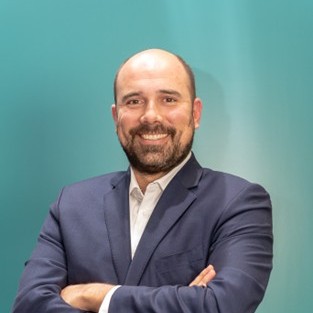
Pablo Jorge Pérez

Medical Degree from the University of La Laguna, Tenerife. Attending Cardiologist, Acute Cardiac Care Unit, University Hospital of the Canary Islands. Basic and Advanced Life Support Instructor certified by the Spanish Council for Cardiopulmonary Resuscitation.
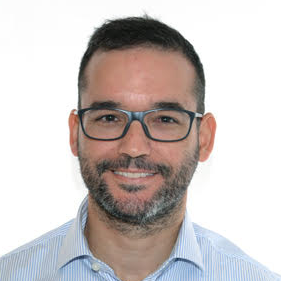
Beneharo Darias Delbey

Bachelor of Medicine from the University of La Laguna, Tenerife.
Specialist Physician of the Area of the Anesthesiology and Resuscitation Service of the University Hospital Complex of the Canary Islands.

Luciano Jonathan Delgado Plasencia Pérez

Medical Degree from the University of La Laguna, Tenerife. Attending Cardiologist, Acute Cardiac Care Unit, University Hospital of the Canary Islands. Basic and Advanced Life Support Instructor certified by the Spanish Council for Cardiopulmonary Resuscitation.

Share this microcredential