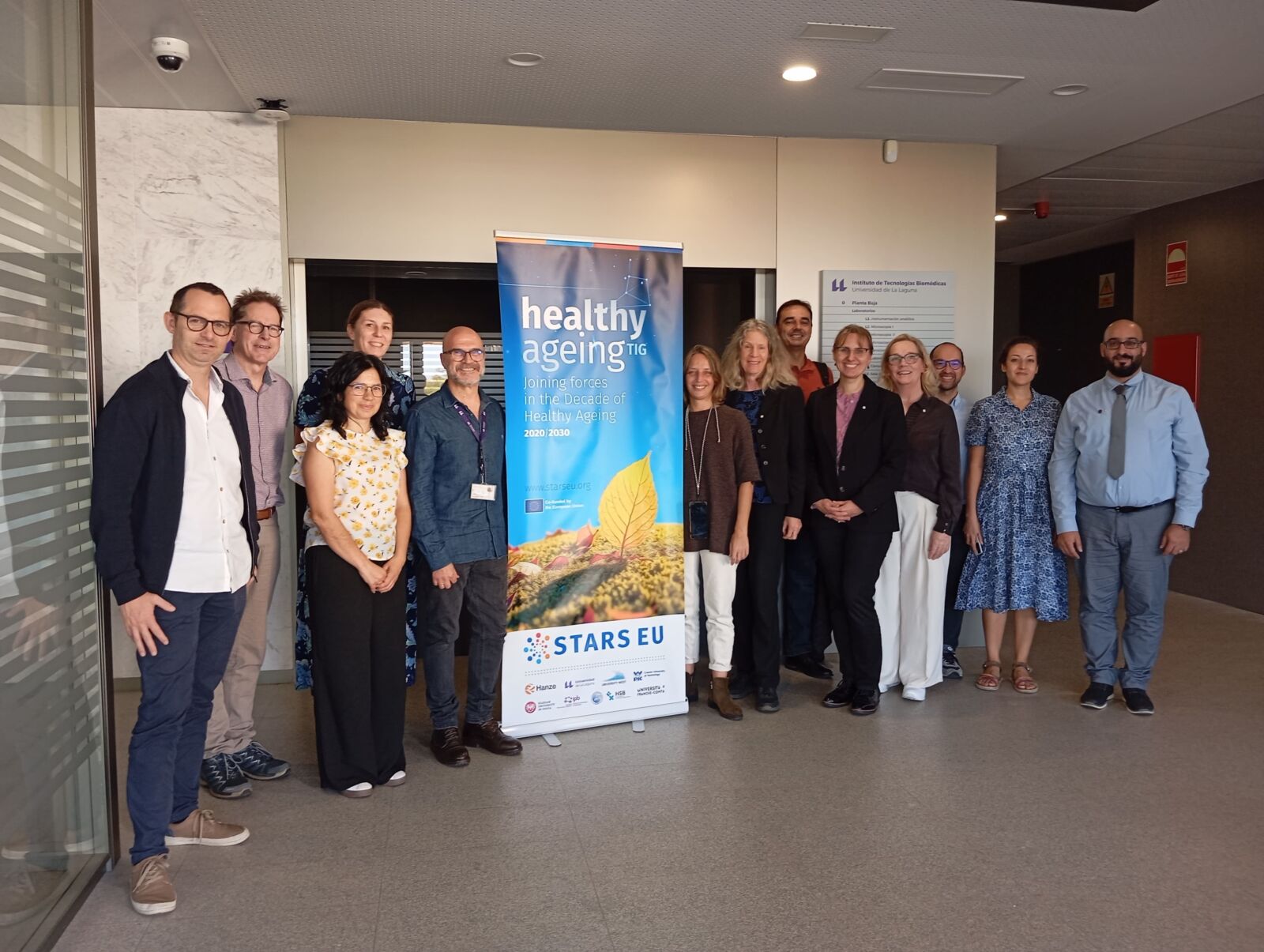
The University of La Laguna is actively participating in a research project that the STARS EU alliance of European universities, of which the university is a member, will soon launch to improve the capacity of elderly patients with poorer health and limited digital literacy. The initiative, called STARS- Health, is led by the Hanze University of Applied Sciences, along with the University of La Laguna, the University West, the Polytechnic University of Braganza, and the Silesian University in Opava .
The main objective of STARS-Health is to help older patients understand and use digital services to prevent and manage health conditions, empower patients, and improve communication with their caregivers. All these measures are ultimately aimed at reducing inequalities in access to healthcare, the ultimate goal of STARS- Health , a European-funded project with a total budget of nearly one million euros.
To achieve the stated goals, as explained by the project researchers at the University of La Laguna (ULL), Ángel Acebes Vindel, professor in the Department of Basic Medical Sciences, and Sara Darias -Curvo, professor in the Department of Nursing, an application called FindMyApps, originally developed for people with mild dementia, will be redesigned and adapted for older adults with lower health and digital literacy (LHDL). In addition to this application, the project addresses the development of training programs for caregivers in primary, hospital, and community care settings.
In the integrated care process, it is essential to consider a series of specific care needs. That is why STARS- Health starts by identifying the needs of elderly patients with LHDL, as well as those of their caregivers; reviewing digital services designed for these individuals; redesigning and implementing FindMyApps; and providing specialized communication training for professionals specializing in the care of the elderly.
As the STARS- Health team at the University of La Laguna (ULL) explains, developed within the framework of the Healthy Aging Thematic Interest Group (TIG) of the alliance, its results will not only impact the health of older adults with low-grade dysplasia (LHDL), but will also help alleviate pressure on health centers and primary care facilities, as well as improve communication between patients and caregivers. «The goal is to promote secondary and tertiary prevention in primary, hospital, and community care for these individuals,» the ULL researchers emphasize.
Promotion of new prevention strategies
The initiative will also promote new prevention strategies and improve equity in access to healthcare, especially for residents of rural areas. Another benefit would be the potential reduction of pressure on the healthcare and social services system, resulting from improved performance and job satisfaction among caregivers thanks to the use of support tools.
It’s important to recognize that caregivers support patients in managing their own health through the use of digital tools, such as apps, health portals, and monitoring devices. Many of these caregivers and patients struggle to find, understand, or use health information in digital media, so they need an integrated and effective healthcare system that guides them from hospitals to community care services.
The fact that 42% of the European population has a low level of health literacy affects the quality of care, increases pressure on healthcare systems, and exacerbates inequalities, especially in rural areas. Recent data indicate that lower health literacy among patients is linked to a higher prevalence of chronic diseases, hospitalizations, and doctor visits, which puts pressure on secondary and tertiary prevention programs within the healthcare system.
The project’s research team, which includes five of the nine partners that make up STARS EU, is headed by Sandra Jorna-Lakke (Hanze ), the project leader and coordinator, along with Hans Hobbelen , from Hanze University of Applied Sciences (Netherlands); Margareta Karlsson , from the University West (Sweden); Rui Pedro Lopes , from the Polytechnic University of Bragança (Portugal); Sara Darias -Curvo and Ángel Acebes, from the University of La Laguna (Spain); and Yvetta Vrublova , from the Silesian University in Opava (Czech Republic), together with the Canary Islands Health Service of the Government of the Canary Islands, represented by Lilisbeth Perestelo – Pérez.
STARS- Health , which begins next April, will last three years and has received €912,060 in funding from the European Partnership for the Transformation of Health and Care Systems (THCS). This co-financed action is part of the European Union’s Horizon Europe Research and Innovation Programme for the period 2021-2027.
