
There was a time, not so long ago, when a doctor's worth was measured by the dirtiness of their white coat. The dirtier and bloodier it was, the better the doctor was considered. Humanity once lived through a period when healthcare workers who washed their hands before an operation and separated the healthy from the sick were looked down upon. It was science that had to teach us that, beyond the reach of the human eye, there existed a universe of bacteria and viruses wreaking havoc in a society without vaccines or proper hygiene.
Then came Edward Jenner's vaccine and the eradication of the first (and only) disease in human history, smallpox. Things have changed considerably: the implementation of vaccination schedules, our understanding of the immune system, and the discovery of how microorganisms infect have resulted in a greater life expectancy, allowing millions of people to reach adulthood unknowingly surviving a multitude of infections. However, no matter how clear these arguments are or how solid the figures, there are always those who question the effectiveness of vaccines. These deniers not only endanger their own health but also the healthcare system that has been so painstakingly built. Between 2010 and 2018, the measles vaccine alone prevented 23 million deaths.
Every year, between April 24th and 30th, the World Immunization Week, A commemoration organized by the World Health Organization, which this year reminds us that “in the last 50 years, essential vaccines have saved at least 154 million lives. That's 6 lives per minute, every day, for five decades.” But at the same time, it warns that 22 million children did not receive their first measles vaccine in 2023.
At the University of La Laguna, a group of researchers is working to better understand the mechanisms of immunization and infection by pathogens such as HIV, SARS-CoV-2, and Zika. These studies contribute to the fight against viruses and bacteria, where it always seems that microorganisms have one step ahead.
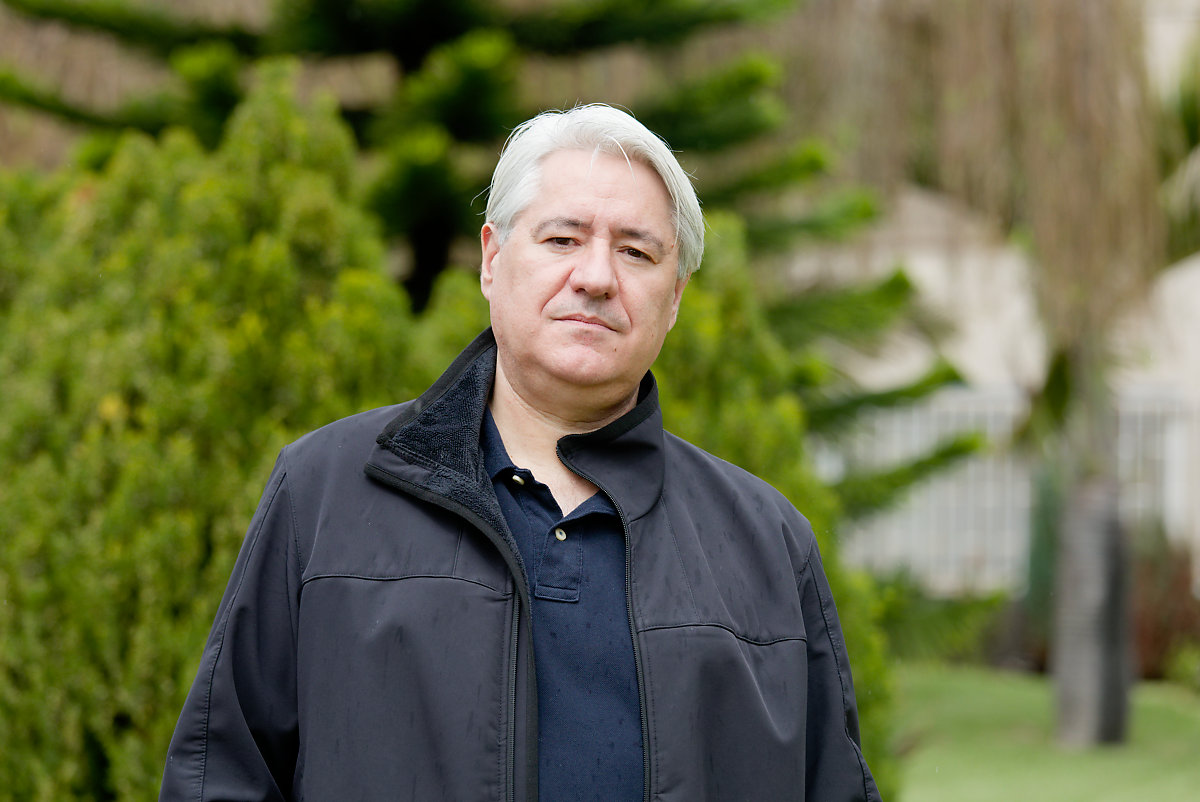
Agustín Valenzuela.
The fight against HIV
In 1981 the U.S. Centers for Disease Control and Prevention. (CDC) reports in Morbidity and Mortality Weekly Report The first cases of a mysterious immunodeficiency in young gay men in Los Angeles, which would later be recognized as AIDS. Four decades later, the disease seems to have been overcome; it has disappeared from newspaper headlines, but is that really the case? Agustín Valenzuela, Professor [Name], a professor in the Department of Pharmacology at the University of La Laguna, has dedicated a significant part of his career to studying this elusive virus and is clear on one point: “HIV remains a global public health problem.” Although drugs exist that contain the virus, it continues to kill many people in many parts of the world. “In developing countries, it remains a major disease with a high mortality rate, impacting girls and women most of all. In the Western world, it is primarily a disease of men who have sex with men, while in the developing world, it is a disease that affects both men and women, but especially women and girls.”.
The tireless work of thousands of researchers like Valenzuela has led to the development of antiviral therapies for HIV, ensuring that patients who reach the AIDS stage no longer face a death sentence. This has improved patients' lives, not only with better medications but also with early detection. “In many cities there are testing centers checkpoint where you can go, in case you are infected. You will quickly enter a retroviral therapy program, which will make it difficult for a highly variable viral reservoir to take hold and allow you to manage the infection with a controlled viral load in your blood for many years of your life.”.
Agustín Valenzuela and his collaborators are working with genes that can prevent infection through the capsid, a protein structure that surrounds and protects the virus's genetic material and some essential enzymes that HIV needs to infect a human cell and replicate. “In the laboratory, we have identified two genes that prevent viral infection, both during entry and exit, because they destroy the PR55 matrix, which is the polyprotein that generates the matrix and the capsid. We have published our findings on how to control infection with these two genes using virus from patients.”.
Despite the vast amount of material and human resources dedicated to fighting infectious diseases, it seems that viruses always win the battle, and they have only been defeated in one skirmish: the eradication of smallpox. But what makes viruses so elusive? Valenzuela reveals the virus' ace in the hole: mutation. A small mutation can ruin a therapy. This is the case with influenza, which, due to its seasonal mutations, requires a different vaccine to be designed and manufactured every year. "Diagnostic drift forces us to create a new vaccine each season. The problem arises when that virus combines with another virus in an animal species that jumps to us—avian, swine, or with another circulating influenza virus.".
The development of vaccines has changed the world and the way we interact. Global immunization allows millions of people to live together in the same city, fostering safe social interactions. We've gone from walled towns to open cities. "What has made it possible for us to live in modern cities is immunization through vaccines, especially at the pediatric level. We can live in large societies, we can all go together to a bar, to a park, to play, to share our snot at daycare. Even if we get sick, vaccines are essential.".

Yvelise Barrios.
Hospital Immunology
If research in this field is useful anywhere, it is in the hospital setting. The real battle against infections is fought in hospital beds, and it is vital that the flow of information between the scientific and clinical sectors is constant. This is the case with Yvelise Barrios, tenured lecturer in the area of Medicine at the University of La Laguna and medical specialist in Immunology at the University Hospital of the Canary IslandsAt this center, she and her team are responsible for caring for transplant patients, preventing their immune system from attacking and destroying the organ they have just received. But their work doesn't begin after the operation, as it's possible to predict in advance whether an organ will be rejected. "We can predict if a kidney will function better in one recipient than in another and improve the immunosuppression that will be given to those patients.".
Another concern for Barrios and his team is what are known as autoimmune diseases. Our immune system has a mechanism for tolerating our own cells, preventing friendly fire. This works in 95% of cases; the rest have autoimmune problems. Due to certain genetic circumstances or hormonal imbalances, these tolerance mechanisms fail and generate cells that begin to attack the body's own components. If this happens, we have an autoimmune disease such as lupus or rheumatoid arthritis. "A large part of our work in the laboratory consists of detecting autoantibodies in the blood of these patients, which tell us if a person has an autoimmune disease, thus enabling diagnosis and treatment.".
Another area where immunology has advanced significantly in recent years is oncology. This is both because our immune system can fight tumors, and because we now know that some types of cancer trigger Viral infections: research in this area is proving spectacular. Immunotherapy in this sector has advanced rapidly in recent years, and we are increasingly understanding the tricks cancer cells use to evade the immune system. Research that was recognized with the 2018 Nobel Prize in Medicine According to James P. Allison and Tasuku Honjo, “Immunotherapy is a highly personalized technique, very focused on the tumor, and we can take advantage of the enormous specificity of the immune system's tools to attack the tumor without harming the rest of the body. Therefore, everything developed in immunotherapy will help patients improve their outlook, even while undergoing treatment.”.
Despite the great benefits immunotherapy has brought us, and its fundamental role in areas such as transplants and autoimmune diseases, the researcher calls for greater attention to disciplines that should have a stronger presence in hospitals, with increased funding and personnel. “We need professionals specifically trained in immunology. All hospitals should have, just as they have microbiology or clinical analysis departments, professionals specially trained in this field because this is how we can apply these innovations to our patients.”.
We cannot discuss immunology without mentioning the last major pandemic that shook the planet. COVID-19 tested the healthcare system and the response capacity of the pharmaceutical industry, including in the Canary Islands. The researcher coordinated a study that resulted in a skin test that measures cellular immunity against the coronavirus. The pandemic accelerated a previously nascent technology and has generated promising new lines of research in other diseases. It also provided valuable lessons in management that we must not forget.
“RNA vaccines were first administered during COVID-19, but they had been in basic development for many years, something that was poorly explained during the pandemic. The public believed these vaccines were truly new. A vaccine platform that would have taken many years to develop was accelerated, but we had known about this technology for 10 or 15 years.” These advances are also being leveraged for cancer immunotherapy.

Judith Estévez.
The fight against Zika
It is very likely that the first time you heard about Zika was in 2016. That year the Olympics were held in the Brazilian city of Rio de Janeiro and, during those months, Brazil faced a significant health alert due to an outbreak of this virus transmitted by the infamous mosquito. Aedes aegypti. Despite the measures implemented by the country, some athletes decided not to participate in the games due to fear of the virus. This fear was based on the fact that the virus is linked to serious neurological complications, such as microcephaly in newborns.
Although it's no longer making headlines, Zika continues to affect thousands of people in 89 countries, including Uganda, where the forest that gives the virus its name is located. This is something they know all too well. Judith Estévez Herrera, assistant professor in the pharmacology department at the University of La Laguna. The researcher is working to understand how this virus infects us and what strategies can be used to treat the disease it triggers.
One of the problems posed by the tiny Zika virus is its remarkable ability to evade the immune response. “These viruses are unique in that, with their small genome—just 10 genes coding for 10 proteins, three structural, others related to replication and pathogenicity—they are capable of multitasking and sabotaging all the alarms that betray the virus.” Therefore, it is crucial to understand how it silences these alarms and how to activate them so they trigger when this virus, also known as ZikV, infects us.
«When a person is infected with a virus, the amount of virus in their body, or viral load, increases rapidly. In the first few hours of infection, the innate immune system kicks in.” This system uses molecules called interferons to slow the virus’s replication. Interferons slow the rise in viral load.
How does this happen? “When the virus enters the cell, it releases its genetic material, the genome. The cell detects this foreign genome and activates internal sensors. This triggers a cascade of reactions that lead to the production of interferons. The interferons, in turn, activate genes that degrade the virus's genetic material and stop the production of proteins, both from the virus and the cell.”.
The cell does this to slow viral replication, which is the greatest threat at that moment. The Zika virus has a strategy to counteract this. It manages to keep interferon production very low. The research in which Estévez Herrera participates has identified a Zika gene, called NS5, that produces a protein that interferes with the immune response. This protein, in addition to being a polymerase that copies the viral genome, also helps the virus evade the immune response. The Zika polymerase makes many errors when copying the genome. Although this may seem negative, it actually gives the virus an evolutionary advantage. The errors generate variants of the virus, some of which may be more capable of evading the immune response.
This ability to evade the immune response is what makes Zika so different from other similar viruses, such as chikungunya, dengue, yellow fever, and West Nile virus. These viruses are also capable of evading the immune response, but Zika does so more efficiently, allowing it to invade tissues that are normally protected by the immune system. ”We are investigating the Zika NS5 protein. We believe it could be a target for developing treatments against this virus.»
In this war of skirmishes between pathogens and therapies, battles are being won in a contest where, for now, we start at a disadvantage. Viruses and bacteria have millions of years of evolutionary head start on us, a genetic lesson we may soon be able to understand.
This report is an initiative framed within the InvestigaULL Commemorations Calendar, a scientific dissemination project promoted by the University of La Laguna.
Scientific Culture and Innovation Unit (Cienci@ULL)

 Spanish
 English
 French