The past was always better. This nostalgic refrain of those with gray hair isn't always true, although in the topic we're about to discuss, it wouldn't be far off the mark. Climatically speaking, the past was better.
We can no longer say that the climate will change, or even that it is changing. The climate has changed. And this is known to everyone who has been on planet Earth in recent decades. Our grandparents used to say that "the weather was crazy," but today we know that this has a name: global warming. The effects are visible in the intensity and number of hurricanes, floods, suffocating haze, and changes in rainfall patterns. This last factor, rainfall, is hitting the Canary Islands in an unprecedented way.
Without meaning to be pessimistic, in terms of water resources, we face numerous challenges. We are an isolated territory, with no possibility of water transfers. We inhabit a land with a low rainfall climate, situated next to a vast desert, and the distribution of rain, when it does arrive, is highly uneven, making its allocation difficult. To make matters worse, we are among the country's highest water consumers, with an average of 150 liters per person per day, 20 liters more than the national average. Furthermore, of all the crops available, we have chosen to cultivate the two that consume the most water: avocados and bananas. This doesn't even take into account the consumption of the millions of tourists who visit us each year and sustain our economy. What could possibly go wrong?
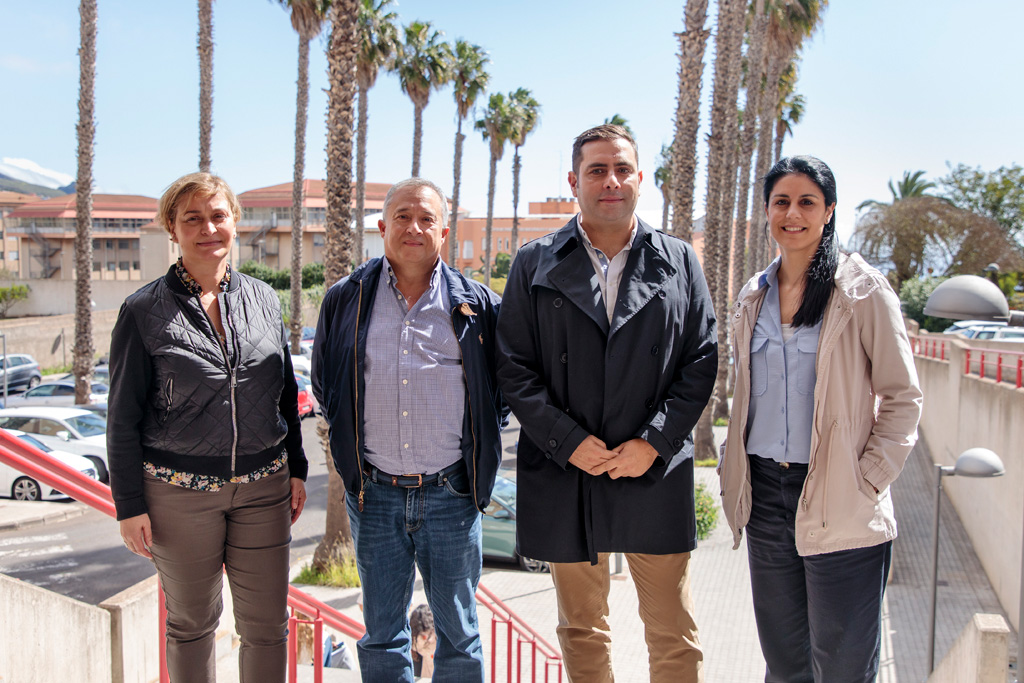
The University of La Laguna has a long history of research in the broad field of water, from its analysis to its economic and social impact. On World Water Day, established in 1992, we want to share some of this research with you.
Drought
2023 was the driest year on record in the islands, and 2024 is not shaping up to be any better. Generally speaking, according to Data from the State Meteorological Agency (AEMET), 2023 was the second warmest year since records began in 1961, surpassed only by 2022, and the sixth driest. If we zoom in, the news doesn't improve. Canary Islands had last year a “very warm” or “extremely warm” summer with an average temperature of 23.4 degrees, which represents an anomaly of 1.6 degrees above the usual value with respect to the reference period (1991-2020), being the warmest summer since 1961, according to data from the climate agency.
We can't control rainfall patterns, for now. What science does do is provide us with new sources of water supply and, above all, teach us how to conserve water, even by reusing water that has already been used for other purposes.
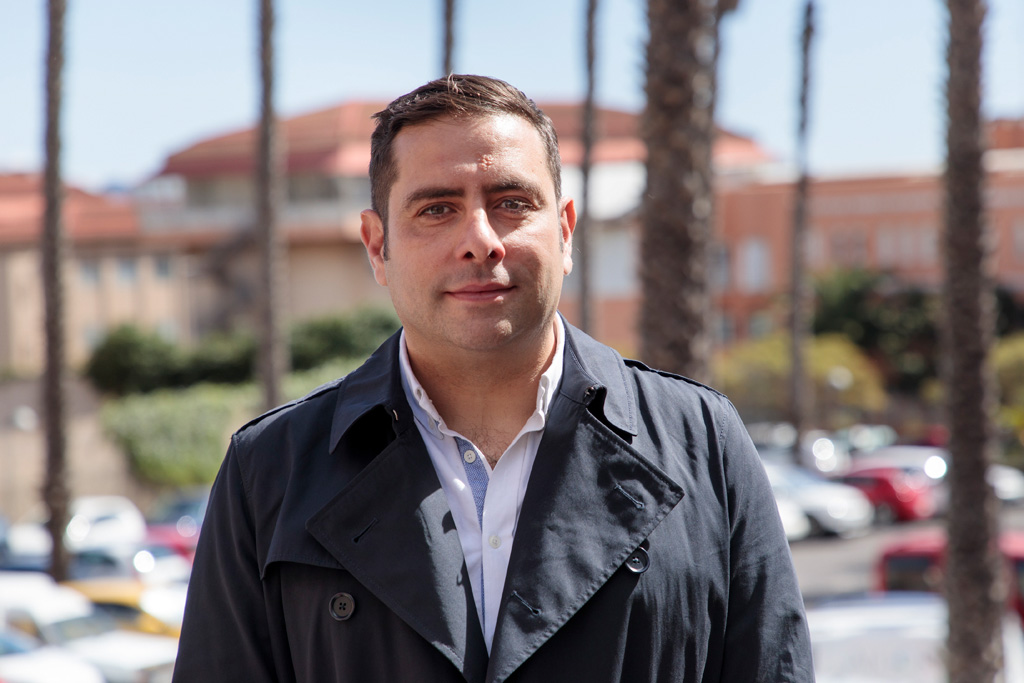
Juan Carlos Santamarta.
One of the groups working at the University of La Laguna to provide solutions to this water crisis is led by Juan Carlos Santamarta From the Department of Agricultural and Environmental Engineering. The researcher from León is clear that we are in an exceptional situation, “especially for agriculture.” The levels of the reservoirs on the islands suggest highly probable water restrictions for the agricultural sector, with the consequences that this entails: “We need to tighten our belts in terms of water resources.”.
Much of the water we consume in the islands, at least in the western ones, comes from underground. By drilling hundreds of tunnels and wells, we have been able to extract water from within the rocks. Despite this immense effort, Santamarta laments the widespread lack of awareness about water conservation in the islands. “In recent years, we have lost the water awareness that our elders possessed; we need more campaigns to raise awareness about the importance of water.” All this to highlight the effort behind the act of turning on a tap, a routine activity that we have come to take for granted.
Fortunately, the aquifer is a resilient system, able to withstand several years of drought without showing signs of depletion. In the specific case of the islands of El Hierro and La Palma, the aquifers studied by his team "are in quite good condition, both in quality and quantity, but they are not comparable to the Tenerife aquifer, where water consumption is much higher." In this regard, Santamarta states that there are some galleries where a decrease in flow is noticeable, while most remain stable. This may be largely due to the compensation provided by seawater desalination and the reuse of treated wastewater. Even so, in Tenerife, 851,000 tons of the water consumed comes from the island's subsoil.
Large water consumers
Some of the work carried out by Santamarta and Noelia Cruz's team aims to identify the largest water consumers in the islands. In the western islands, agriculture is the largest water consumer by a wide margin. This is true for all the islands except Lanzarote, where urban and tourism consumption takes the lead. On the island of La Palma, water consumption for agricultural activity accounts for approximately 801,000 tons of the total, reaching 501,000 tons in Tenerife. "If there is no rainfall to naturally meet the water demands of the crops, we will have to allocate more water to this sector," they explain, considering that urban consumption is the priority.
The paradox of water in agriculture in the Canary Islands is that in recent years—one after the other—we have focused on two crops with legendary water requirements: bananas and avocados. “Each kilogram of bananas produced consumes about 500 liters of water. Some producers have reduced this to about 300 liters. One kilogram of avocados consumes about 800 liters of water.” That's equivalent to 160 five-liter bottles. “Obviously, farmers plant what yields a profit; it's up to the consumer to choose whether to buy organic crops, which use less water, or not.”.
Another challenge regarding water in the islands is the ever-present issue of energy. One of our water supply sources comes from desalination. Large facilities subject seawater to such high pressure that it loses its salinity. This pressure of around 60 bar, the same as that found at a depth of 600 meters, requires a significant amount of energy. In Tenerife, one [unit of measurement missing] is desalinated. 100,000 cubic meters per day, with an energy cost of around 300,000 kWh. On this island, most of that energy comes from burning fossil fuels. How do we break this vicious cycle? The more water we desalinate, the more energy we consume, and therefore, the more pollution we emit. The answer lies in improving the efficiency of the plants and using renewable energy sources.
Juan Carlos Santamarta leads three projects Horizon Europe On this topic, Arsinoe is developing hydrogeological models for El Hierro and La Palma. The Natalie project is studying the use of nature-based systems in Gran Canaria, Tenerife, and Fuerteventura. Genesis is the latest European project in which they are participating. It studies nature-based solutions applied to groundwater, such as the use of hydraulic closures to store water within the aquifer.
The second life of water
Water deserves a second chance. It seems absurd that when we flush our toilet, we waste those 10 liters of water forever. But when we dispose of our waste by flushing, it, along with the water that carries it away, begins an interesting journey that most people are unaware of. If our house is connected to the sewer system, the journey will end at the treatment plant. If it's connected to a septic tank, it will go, as in Jules Verne's novel, into the Earth, contaminating everything in its path, including the groundwater that reaches our taps.
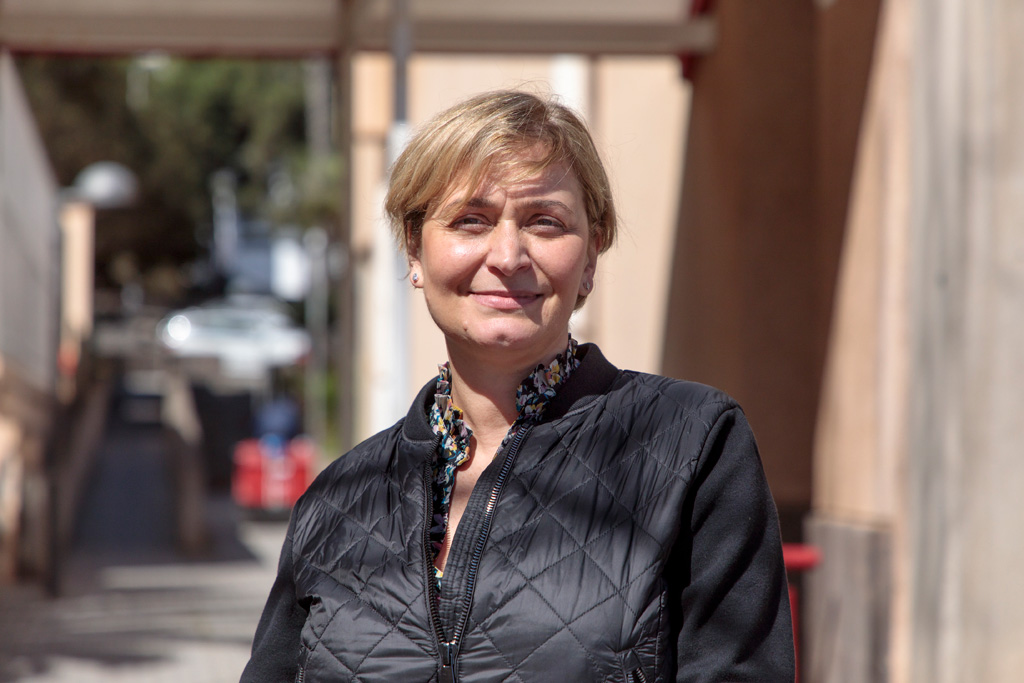
Luisa Vera.
Luisa Vera, researcher in the Department of Chemical Engineering and Pharmaceutical Technology and Cristina González, Luisa Vera, head of the Environmental Research Laboratory at the Institute of Tropical Diseases and Public Health of the Canary Islands at this University, is working to ensure that water can be reused safely. Our island status compels us to be self-sufficient, including in water management. However, the researchers lament that responses are almost always impulsive, lacking a long-term, sustained strategy. According to Vera, efforts are often concentrated in emergency situations, without considering that hydraulic works require extensive planning and execution. “Building a wastewater treatment plant requires a significant amount of planning and construction time. Putting it into operation isn't as simple as pressing a button; it requires an adaptation period for the systems and membranes, which doesn't happen overnight.”.
One of the first problems that arose when using reclaimed water was the potential social backlash. Would the public consume food irrigated with wastewater from the treatment plant? Thanks to work like Luisa and Cristina's, this has been done for some time now with complete safety guarantees. Farmers were the first to normalize it. “Just look at the northwest area of Tenerife. Farmers are queuing up to receive this water, as they have seen its quality. It's ultra-filtered with a membrane diameter of 0.04 microns, which eliminates viruses and bacteria. Furthermore, it undergoes electrodialysis to correct the salinity, so in the end, the water that reaches the farms is of better quality than that from many local water sources.”.
Luis Vera and his team are pushing the boundaries of filtration membranes. They are working to determine the limits of the materials they are made of. Currently, they are working with organic and ceramic membranes. The polymer solutions that make up organic membranes allow the pore size to be adapted to the size of the contaminant to be trapped. But for these microfilters to function, the entire upstream system in a wastewater treatment plant must be well-designed to prevent ruptures and leaks. Luisa and his team are working on bioreactors for wastewater treatment; membrane bioreactors are emerging as an innovative and sustainable technology. Their success lies in the strategic combination of two processes: biodegradation by microorganisms and separation by filtration membranes.
The membranes act as a barrier, retaining particles, bacteria and other contaminants, allowing for high-quality effluents that meet the most demanding regulations, even for reuse.
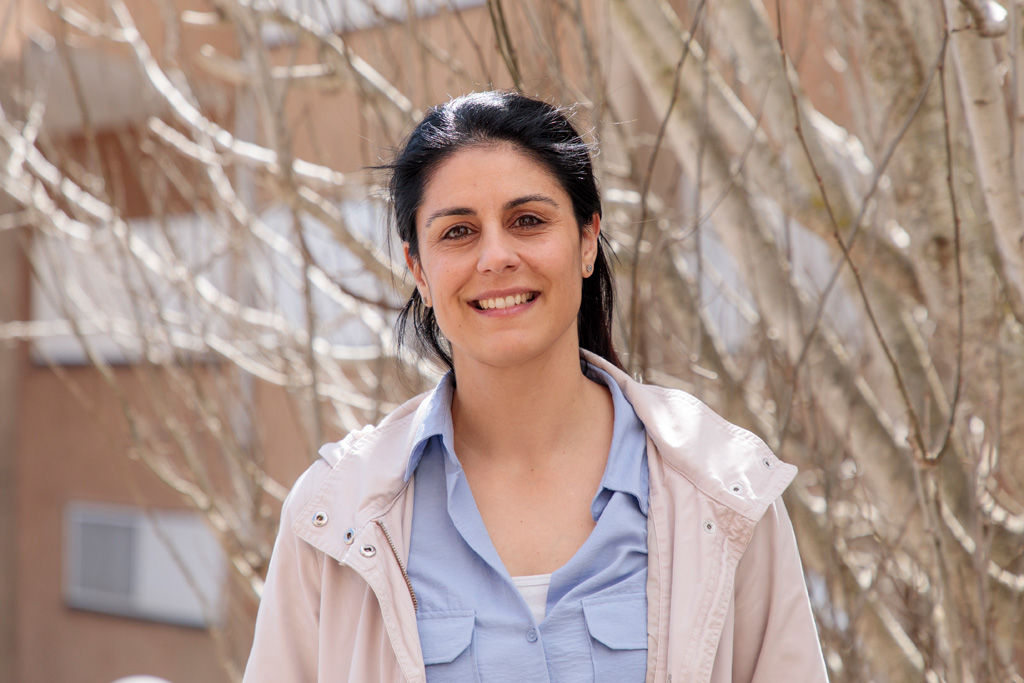
Cristina González.
These waters, which will be reused, must also be freed of unwanted biological components. That's where Cristina González comes in. Biological control involves a series of parameters established by law. In the case of reclaimed water, the law specifies certain organisms that are used as quality indicators. Obviously, the legislation is more restrictive for agricultural use than for water intended to irrigate a golf course. But their research goes beyond what the law strictly requires. “We analyze parasites; some are included in the law, and others are not. We work on finding certain parasitic protozoa whose cystic forms we know are highly resistant to chlorine-based treatments, which is why they interest us.” They have also made progress in detecting other parameters not currently covered by the law, such as the presence of microplastics, antibiotic resistance genes, endocrine disruptors, and so on.
Emerging contaminants in water
As if the contaminants found in water weren't enough, we're now seeing the addition of others known as emerging contaminants, whose effects we are only beginning to understand. Experts divide them into three types: those that have been known for a long time but whose adverse effects were previously unknown; those that are appearing as a consequence of human use, such as new medications; and finally, those that were already known, their toxicity was known, but whose concentrations didn't pose a problem—until now. These are new substances that must be detected so that we can later attempt to filter them out. Juan Ayala, A researcher in the Chemistry Department at the University of La Laguna and his team are working to detect these elements, which in most cases are present in concentrations that push current techniques to their limits. Emerging contaminants are organic compounds belonging to very different families and from multiple sources; therefore, their comprehensive analysis is very complex or simply impossible. What they do in the laboratory is establish families that allow them to group compounds with, for example, similar structures.
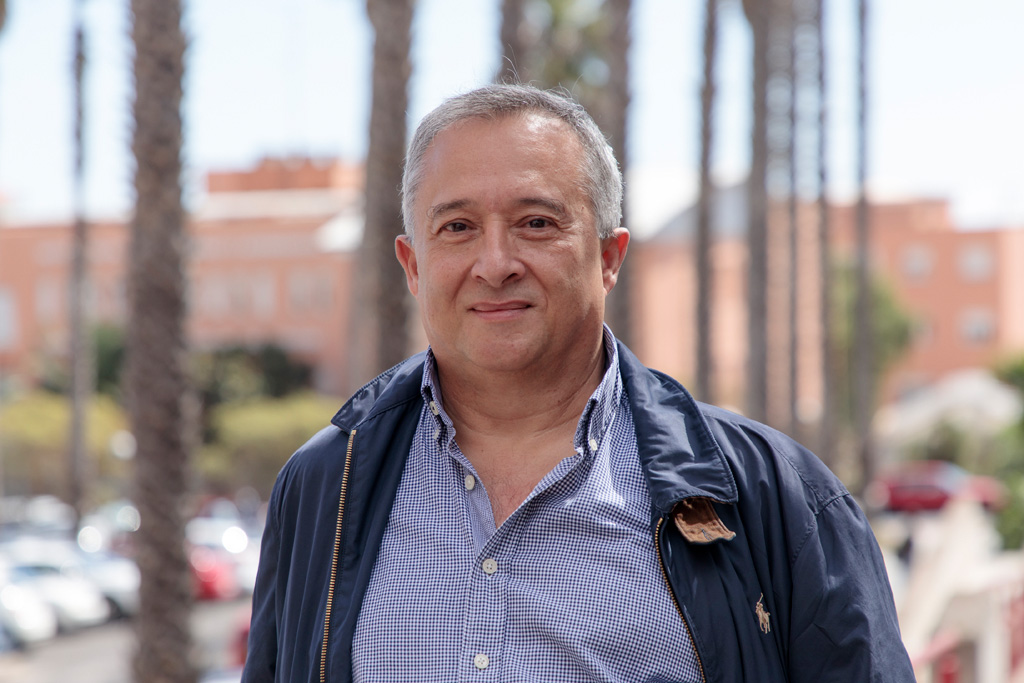
Juan Ayala.
One of the major challenges facing Ayala and his team is the detection of drug molecules and their degradation products. “Medicines undergo degradation or decomposition processes that generate new substances that can be just as polluting.” A very high percentage of these molecules reach the environment with adverse effects, and these are currently being studied. What we do know is that when these substances are released into the sea, they enter the food chain of animals. Their persistent and bioaccumulative nature means the cycle is completed when we consume seafood. “The problem is that, because there is a continuous input of these substances, an increasing accumulation occurs in organisms, leading to problems such as hormonal changes in fish, sex changes, etc., which can then affect humans when they consume them.”.
So how do we eliminate these substances before they reach the environment? Ayala and his team are working on metal-organic frameworks to extract emerging contaminants from water. They use selective materials capable of extracting these molecules from the sample for later analysis. These materials retain the contaminant, significantly increasing its concentration. “If we can retain them in this material, we can also act upon it and initiate a photodecomposition process, for example, to get rid of them.”.
This report is an initiative framed within the InvestigaULL Commemorations Calendar, a scientific dissemination project promoted by the University of La Laguna.
Scientific Culture Unit Cienci@ULL

 Spanish
 English
 French