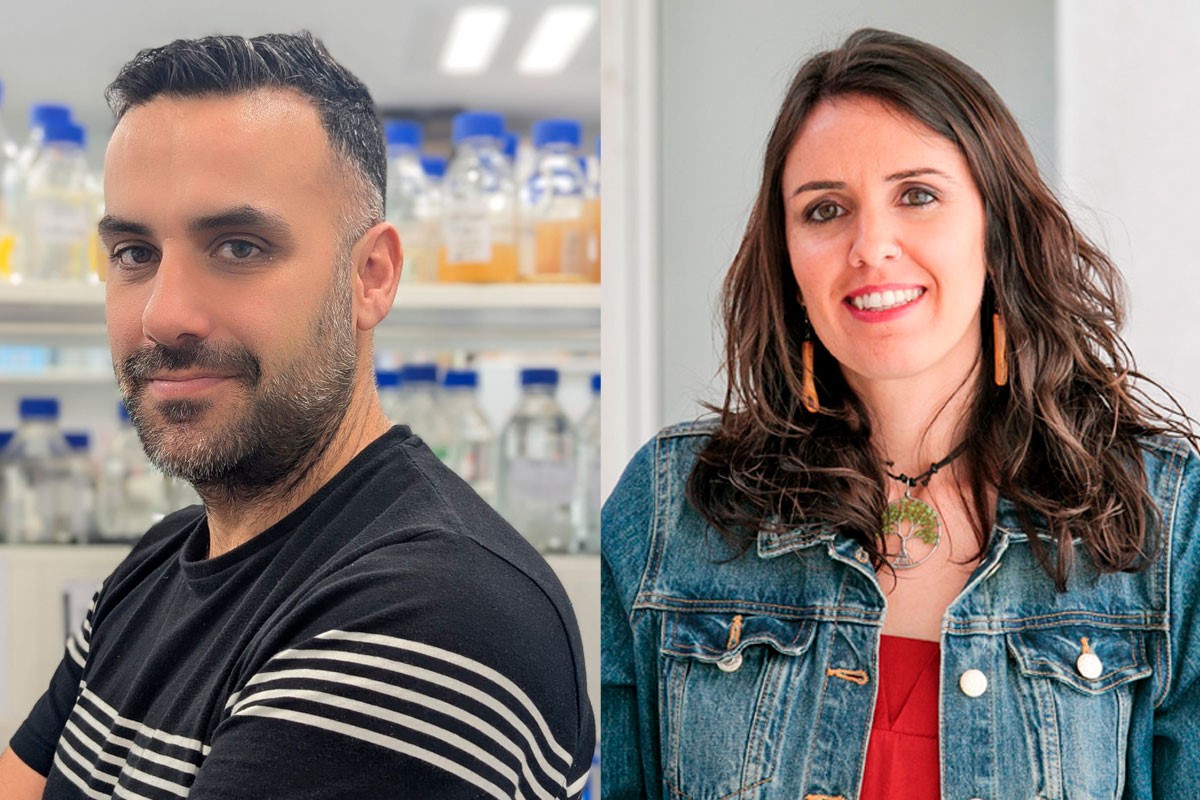
The provisional resolution of the call Research Consolidation 2024 The Ministry of Science, Innovation and Universities has awarded nearly €400,000 in funding to two projects at the University of La Laguna. These grants aim to foster the professional development of researchers within the Spanish Science, Technology and Innovation System (SECTI). Therefore, within the budget allocated for each research and development project, a portion is specifically earmarked for adapting laboratory spaces to enable the researcher to strengthen their research at the host institution.
The projects from the University of La Laguna that benefited from the resolution of this competitive call are “The craftsmanship of oblivion: a multi-analytical approach to the aboriginal basketry and rope making of the Canary Islands (PERISHABLE)”, led by the researcher Paloma Vidal Matutano, of the Department of Geography and History, and "Regulation of parasitic DNA by the Smc5/6 chromosome structural maintenance complex (Pac-Man)", by the researcher Jonay García Luis, belonging to Institute of Biomedical Technologies.
The PERISHABLE project aims to analyze the ancestral techniques and uses of Canarian aboriginal plant-based crafts through a comprehensive study of basketry and rope-making remains produced by the aboriginal populations who arrived in the archipelago around the 1st-2nd centuries AD from North Africa. According to Vidal Matutano, this will contribute to a better understanding of aboriginal subsistence strategies, traditional ecological knowledge, and the traditional resource management practices of the indigenous communities of the Canary Islands before European colonization. To achieve this, PERISHABLE will employ an interdisciplinary approach based on archaeobotany, experimental archaeology, ethnoarchaeology, metabolomics, isotopic analysis, and residue analysis.
A relevant aspect of this project is the inclusion in the team of local collaborators in North Africa for ethnoarchaeological fieldwork in Berber communities, as well as the collaboration with Canarian artisans who currently work with palm and reed and who will contribute to the study of aboriginal basketry production techniques.
The project will begin with the identification of raw materials used by the aboriginal populations of the Canary Islands, the characterization of production techniques, the carbon-14 dating of some archaeological pieces, and the development of experimental archaeology sessions with Canarian artisans to reproduce the manufacturing techniques of the objects. This will be followed by a block of ethnoarchaeological fieldwork, which will also include Berber communities from North Africa. Finally, cutting-edge methodologies will be applied to obtain information on plant collection criteria, management practices, and possible origins.
Meanwhile, the project led by researcher Jonay García aims to understand how cells protect their DNA against parasitic DNA that is part of our genome. These parasitic DNA sequences can move within the genome, causing genetic changes that, in some cases, contribute to the development of diseases such as cancer or neurodegenerative disorders.
The two-year project aims to understand how a protein complex called Smc5/6 contributes to DNA stability by controlling these mobile elements. To achieve this, various molecular biology and genomic techniques will be combined, using yeast as a model organism and analyzing samples from cancer patients.
First, the Smc5/6 protein will be studied in yeast, a model organism that facilitates the analysis of how it interacts with parasitic DNA. Then, human cells, including samples from cancer patients, will be analyzed to verify whether there is a relationship between the activity of these mobile elements and the disease. Finally, the results obtained will be integrated to better understand the cellular mechanisms and explore potential applications in cancer treatment.
This study could open new horizons in medicine and biology, as it would help us understand how the Smc5/6 protein complex regulates DNA, potentially leading to the identification of new therapeutic targets. Furthermore, it could improve disease diagnosis by allowing the detection of early signs of genetic instability. Finally, it would contribute to our understanding of the evolution of our genome, given that these mobile elements have played a key role in the history of genetics.
The 2024 Research Consolidation project call is framed within the State Plan for Scientific and Technical Research and Innovation 2024-2027 of the Ministry of Science, Innovation and Universities.

 Spanish
 English
 French