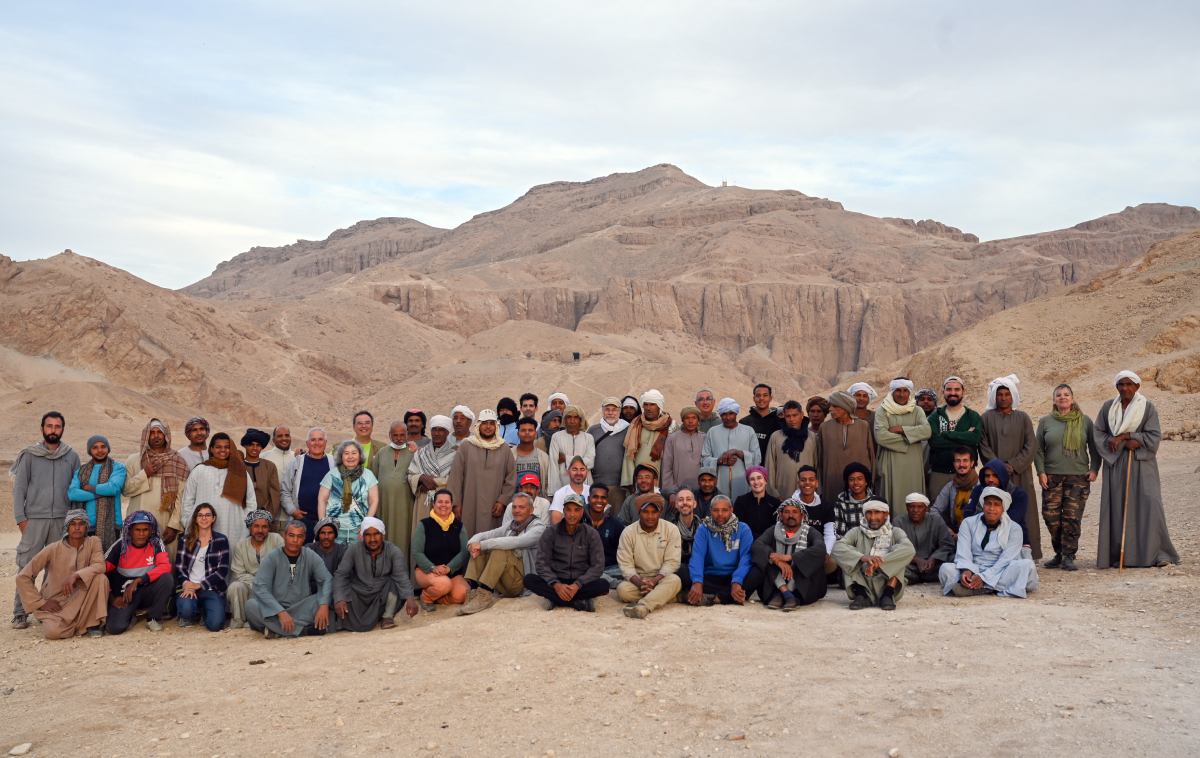
The sun beats down on the west bank of the Nile. Facing the Egyptian city of Luxor, the landscape transforms into a succession of limestone mountains, dry ravines, and natural terraces that slope down toward the desert. For most of the year, the terrain remains still and silent, as if time has stood still. But beneath this seemingly unchanging surface lies a history spanning tens of thousands of years.
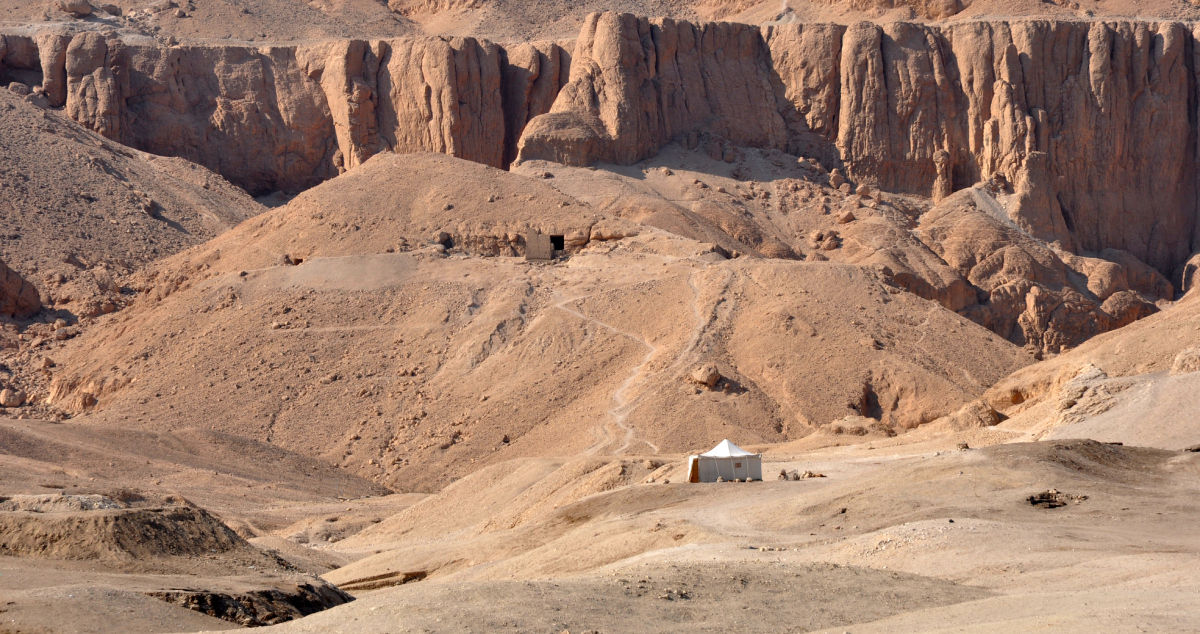
The Wadi Hatasun with the team's tent on the hillside where the TT 209 was built. Photograph_ Pdcn_M.Á. Molinero Polo.
In one of these ravines, Wadi Hatasun, an international team of researchers works every winter removing layers of sediment, cataloging tiny objects, and patiently reconstructing fragments of a very long history. There, they carry out their work. archaeological mission of the University of La Laguna, which between February and March 2026 carries out the eleventh campaign of Project 209.
What began more than a decade ago as the study of a specific funerary monument —the Theban tomb TT 209— has ended up becoming a much broader investigation. Today, the project allows us to reconstruct the history of this territory from the presence of the first inhabitants. Homo sapiens until the development of the Theban necropolis during the time of the pharaohs.
During five weeks of fieldwork, the team combines archaeological excavation with the study of materials recovered both during this campaign and previous ones, many of which are preserved inside the tomb and in Egyptian state warehouses. The final days of the mission are dedicated to completing the scientific documentation: inventorying and photographing the materials found, creating digital maps, and writing the campaign reports.
Behind this investigation is Miguel Ángel Molinero Polo, Professor of Ancient History at the University of La Laguna and director of Project 209. For more than a decade he has coordinated this international archaeological mission working in one of the least studied sectors of the Theban necropolis.
The starting point was a seemingly simple question. “Since we began excavating TT 209, we wondered why the tomb was built in a wadi, ”It was a place where water flowed and therefore posed a constant risk of flooding,“ the researcher explains. To find the answer, he adds, ”possibly the only method was to question the environment, to question the landscape.”.
That question led the team to broaden their focus beyond the funerary monument. What began as the study of an isolated tomb eventually became an investigation into the entire archaeological landscape of Wadi Hatasun, a territory that now reveals a sequence of human occupation spanning thousands of years.
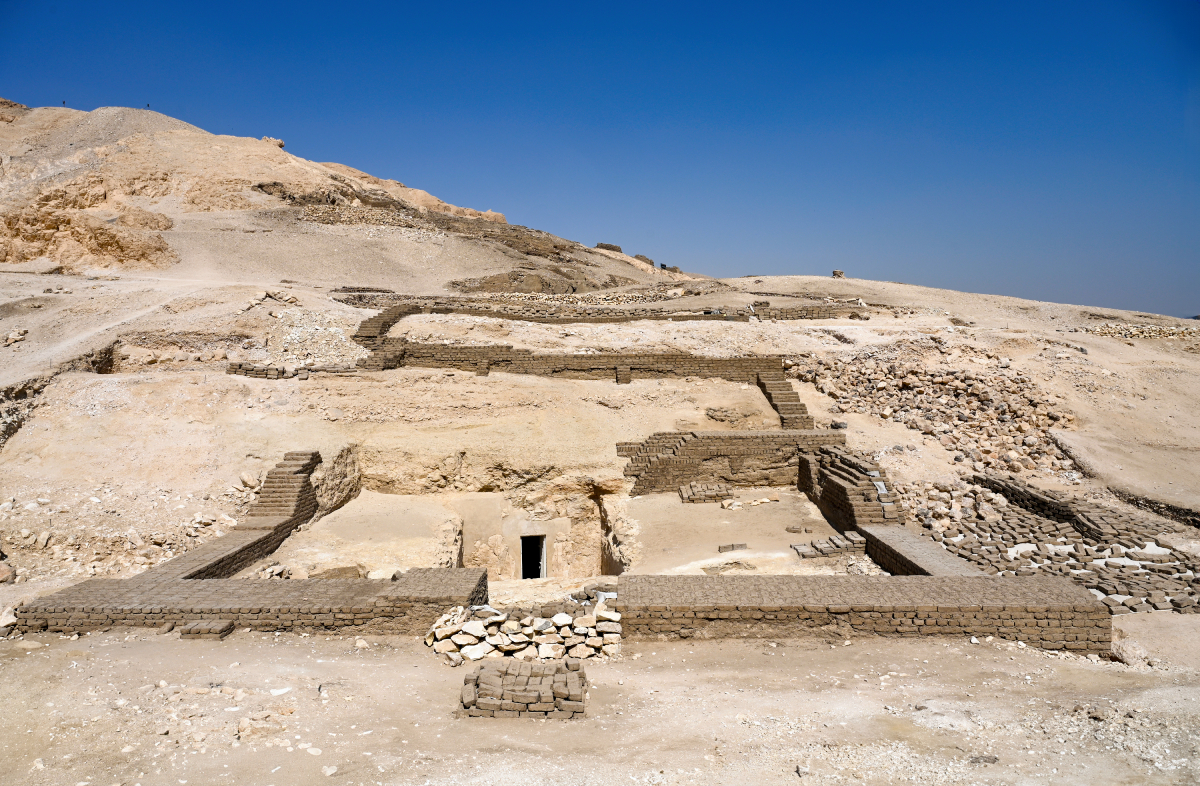
TT 209 view from the southern slope of Wadi Hatasun. Photograph by Pdcn K. Harzbecher Spezzia
A rediscovered tomb
The initial core of the project was the Theban tomb TT 209, located in the South Asasif sector, within the Luxor necropolis, one of the most important funerary landscapes of the ancient world.
When the archaeological mission from the University of La Laguna began working at this site, the monument had barely been studied, and there was not even clear evidence of its location on the surface. In fact, one of the first tasks of the initial campaigns was to relocate the complex and begin its systematic excavation.
The work has made it possible to determine that the tomb was built during the 25th Dynasty, a particularly interesting period in Egyptian history in which the country was ruled by a dynasty of Nubian origin from present-day Sudan.
“We confirmed that it corresponded to a little-known historical phase, a time when the Egyptian civilization was conquered by a power that came from Central Africa,” Molinero explains.
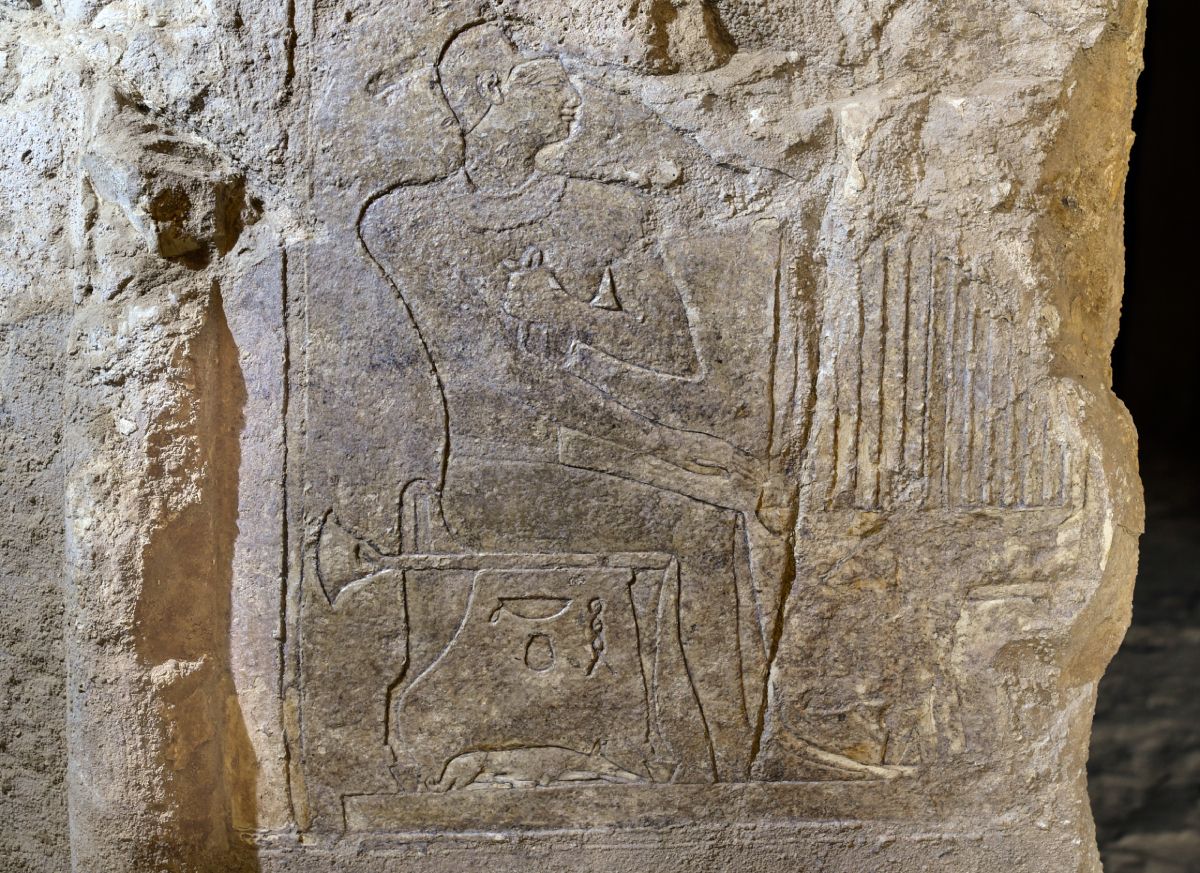
Relief of Nisemro, original owner of the TT 209. Photograph_ Pdcn_J.M. Barrios Mufrege
The monument's owner was Nisemro, a high-ranking official connected to the economic administration of Upper Egypt. His name appears in texts preserved at the entrance to the site, which also mention the positions he held in the state administration. According to the researcher, the Egyptian name Nisemro was probably pronounced Nasamalu in Nubian, reinforcing the cultural link between Egypt and Nubia during this period.
The architecture of the complex is equally unique. To construct it, the hillside of Wadi Hatasun was carved into several terraces, upon which the outer buildings of the complex were erected. “The tomb was built in a very original way; it was truly a monumental building,” Molinero points out. “The hillside of the wadi was cut into three terraces, and on these, buildings were erected that could reach up to seven meters in height.” The layout of the monument must have made a strong visual impact on the funerary landscape of the area.
When the team began excavations, the underground chambers were completely filled with sediment accumulated over centuries of flooding. As these deposits have been removed, archaeologists have been able to document the internal structure of the tomb and excavate several burial chambers that had remained undisturbed since antiquity.
Currently, work is focused on the last remaining areas of investigation, including a wall that could close one of the interior access points and lowering the floor of the courtyard to reach the wadi channel, a key step in understanding the relationship between the monument and the watercourse in whose surroundings it was built.
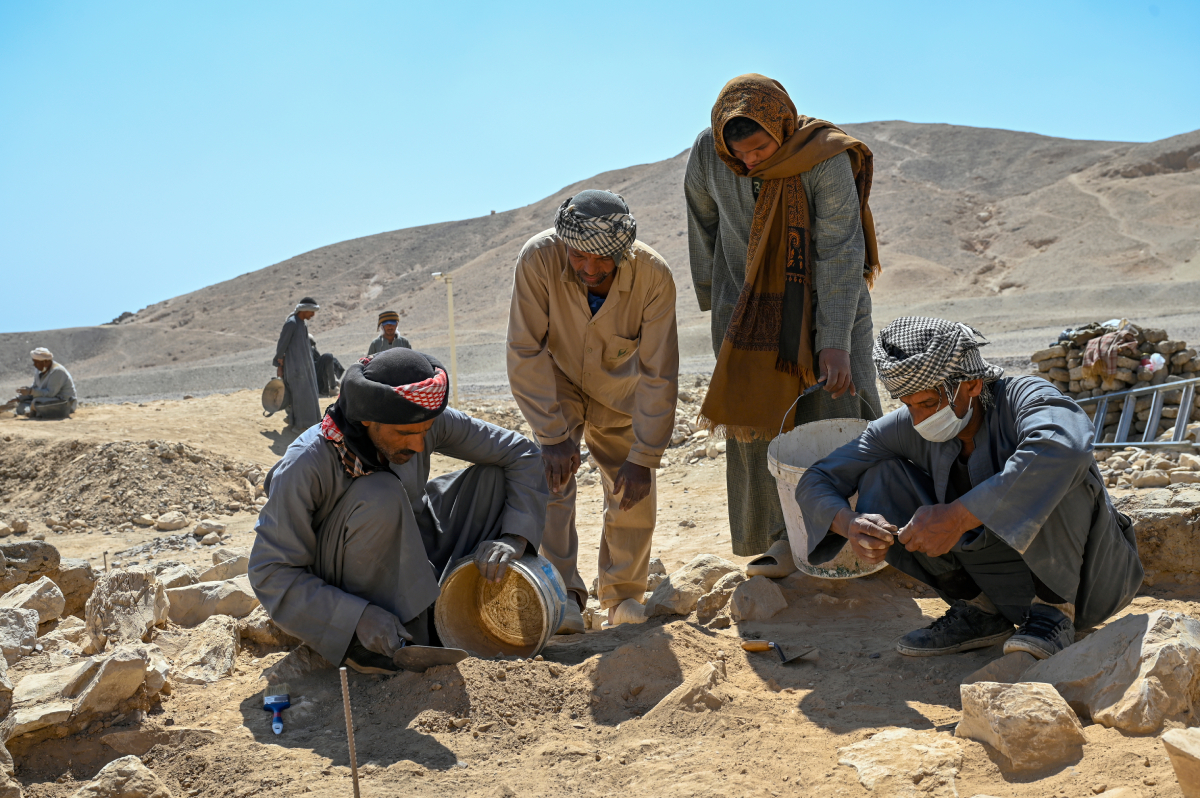
Excavation of the platform on the southern slope of the wadi. Photograph_ Pdcn_J.M. Barrios Mufrege.
The invisible work of excavation
Excavating a tomb is not simply a matter of removing sand. Each object found initiates a meticulous process of study, restoration, and documentation. Among the materials that appear during the excavation are those known as small finds, small archaeological objects that must be photographed, restored and cataloged before they can be studied.
Egyptologist Emma Perezzone Rivero is in charge of adding them to a scientific database that documents their characteristics and measurements. “The small finds, "These are the smallest finds. Once they have been photographed, restored, and studied, we have to enter all the data and all their measurements into the database," he explains.
Other specialists are working on the restoration of funerary objects. Researcher Laura Di Nóbile Carlucci, a specialist in ancient Egyptian jewelry, is attempting to reconstruct a funerary net made of small beads and bugle beads that were found separated after the original threads deteriorated. “All the bugle beads and small beads were found separated, without thread, because the thread is destroyed. And here I am trying to reconstruct it with many needles, bobbins, and threads,” she explains.
Funerary figures known as ushabtis, Small statuettes that were part of the grave goods placed in the tombs. Restorer Manuel Guerra-Librero de Hoyos is in charge of carefully extracting these pieces, many of them damaged by the floods that affected the underground chambers. “It is meticulous work, because they have to be extracted one by one, but it allows for the subsequent study of the pieces,” he explains.
Other findings allow for the reconstruction of aspects of the funerary ritual. Restorer Pía Rodríguez Frade is working with fabrics found in jars used during the mummification process, which were employed to clean the body and apply resins and ointments intended for its preservation.
Ceramics constitute another pillar of the research. Specialist María González Rodríguez, for her part, analyzes the fragments recovered during the excavation, a fundamental material for establishing the chronology of the different archaeological strata.
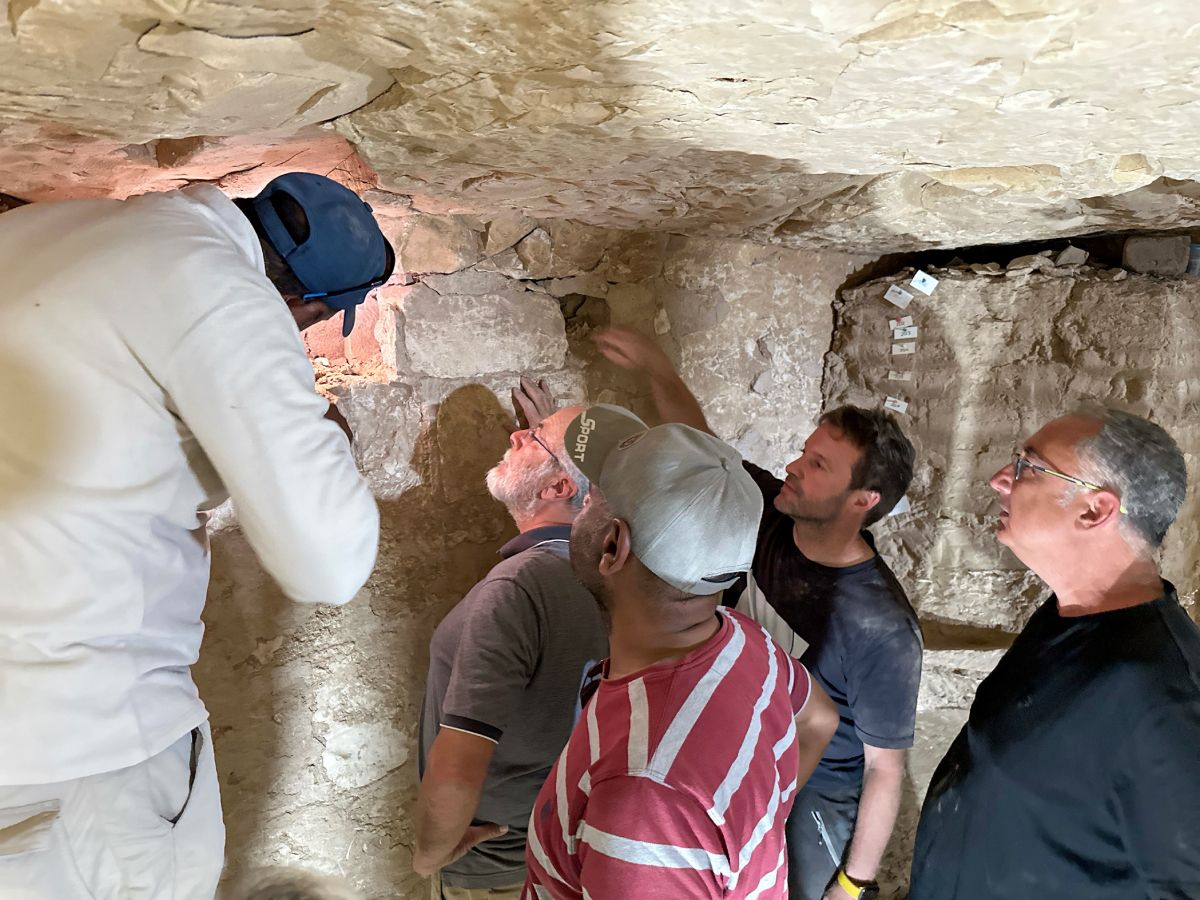
The team observes what might be behind a wall that conceals an opening. Photograph by J.M. Barrios Mufrege.
A landscape that holds thousands of years of history
As the campaigns have progressed, the project has broadened its scope of study beyond the tomb. Investigations now extend to various sites within Wadi Hatasun with the aim of gaining a better understanding of the environment in which the monument was built.
One of the most striking features of the landscape is a grand, monumental causeway. For a long time, it was thought that religious processions with statues of gods might have passed along it.
However, the excavations are revealing a more complex reality. Workshops have been identified in this area where flint and limestone were worked to make tools, as well as an adobe structure associated with numerous human remains whose interpretation is still under study. But the story of this place begins much earlier.
The works directed by Christ Manuel Hernandez Gomez, Professor of Prehistory at the University of La Laguna and deputy director of the project, have made it possible to document evidence of human presence dating back to the Paleolithic.
Flint tools made by hunter-gatherer groups between 100,000 and 60,000 years ago are preserved on the terraces of the ravine. These pieces were crafted using techniques characteristic of the Middle Stone Age, such as Levallois flaking and the so-called Nubian technology.
During this period, the Nile Valley acted as a natural corridor that facilitated the movement of early Homo sapiens to other territories. Therefore, this region is key to understanding the routes of human expansion out of Africa.
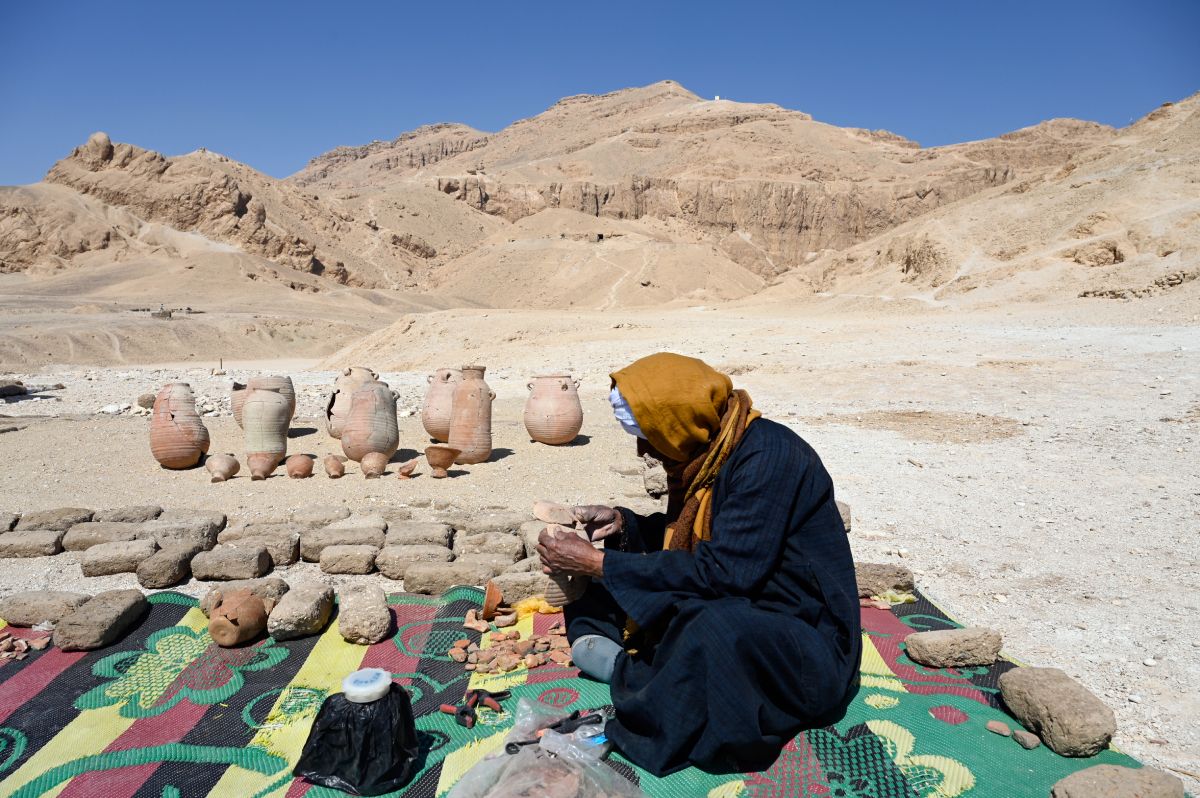
Azzab Ahmed reconstructing the ceramic vessels of an offering ritual. Photograph_ Pdcn_J.M. Barrios Mufrege.
An international project
The 209 Project is currently one of the leading international research initiatives in the field of Egyptology, spearheaded by the University of La Laguna. The mission brings together more than twenty specialists from various disciplines—Egyptologists, prehistorians, osteoarchaeologists, geologists, and experts in conservation and restoration—from diverse academic and scientific institutions.
The team includes researchers from the universities of La Laguna, Las Palmas de Gran Canaria, Burgos and the Mid-Atlantic, as well as from the Spanish National Research Council, the Sharjah Archaeological Authority (United Arab Emirates) and the Egyptian Museum of Barcelona, in addition to professionals from companies specializing in heritage management.
The campaign is funded by the General Directorate of Cultural Heritage of Government of the Canary Islands, the General Directorate of Cultural Heritage and Fine Arts of the Ministry of Culture of Spain, the Palarq Foundation and the University of La Laguna itself, which allows for ongoing research in one of the most complex and fascinating archaeological landscapes of the ancient world.
Communications Office

 Spanish
 English
 French