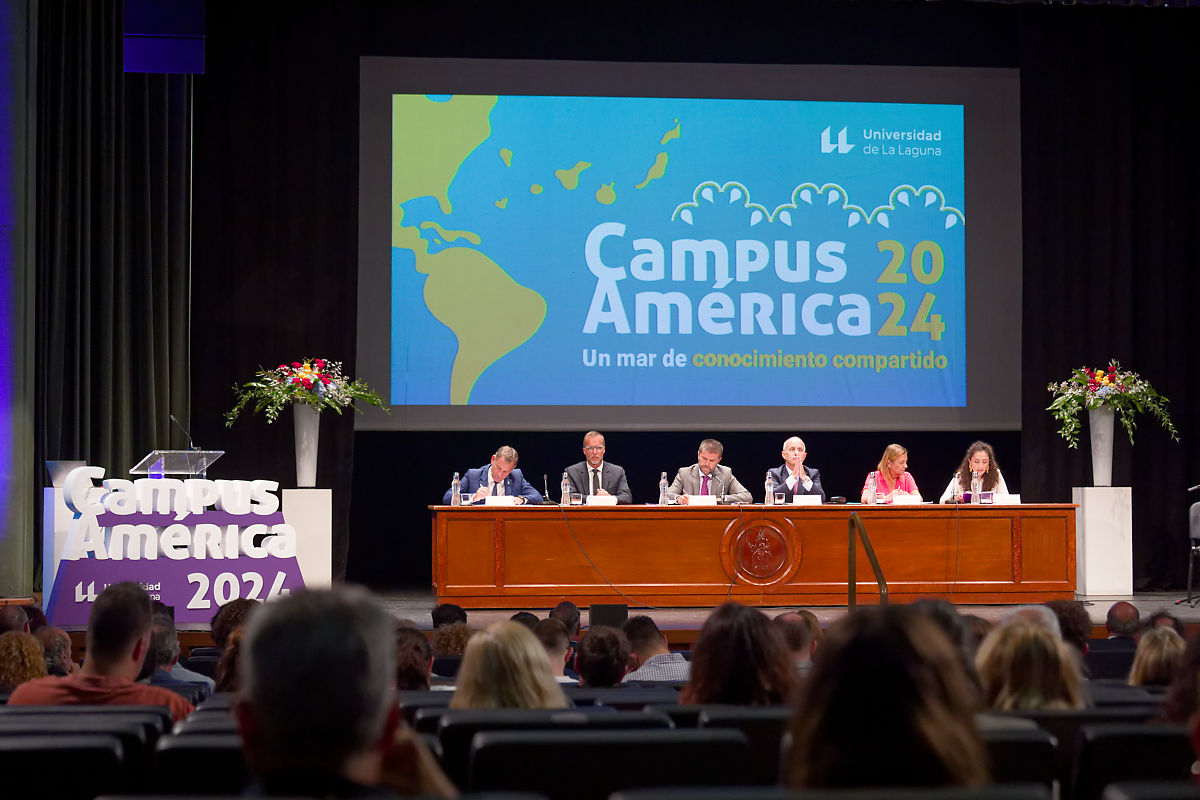
Coinciding with Guayaquil's Independence Day, the fourth edition of the international event kicked off today, October 9th, at the University of La Laguna. Campus America, The program, comprised of some thirty research seminars and a dozen cultural activities, reflects the internationalization of this academic institution. This event, which runs until the 18th, highlights the numerous scientific connections that the faculty of this academic center maintains with their counterparts at Ibero-American universities, and especially with Ecuador, this year's guest country.
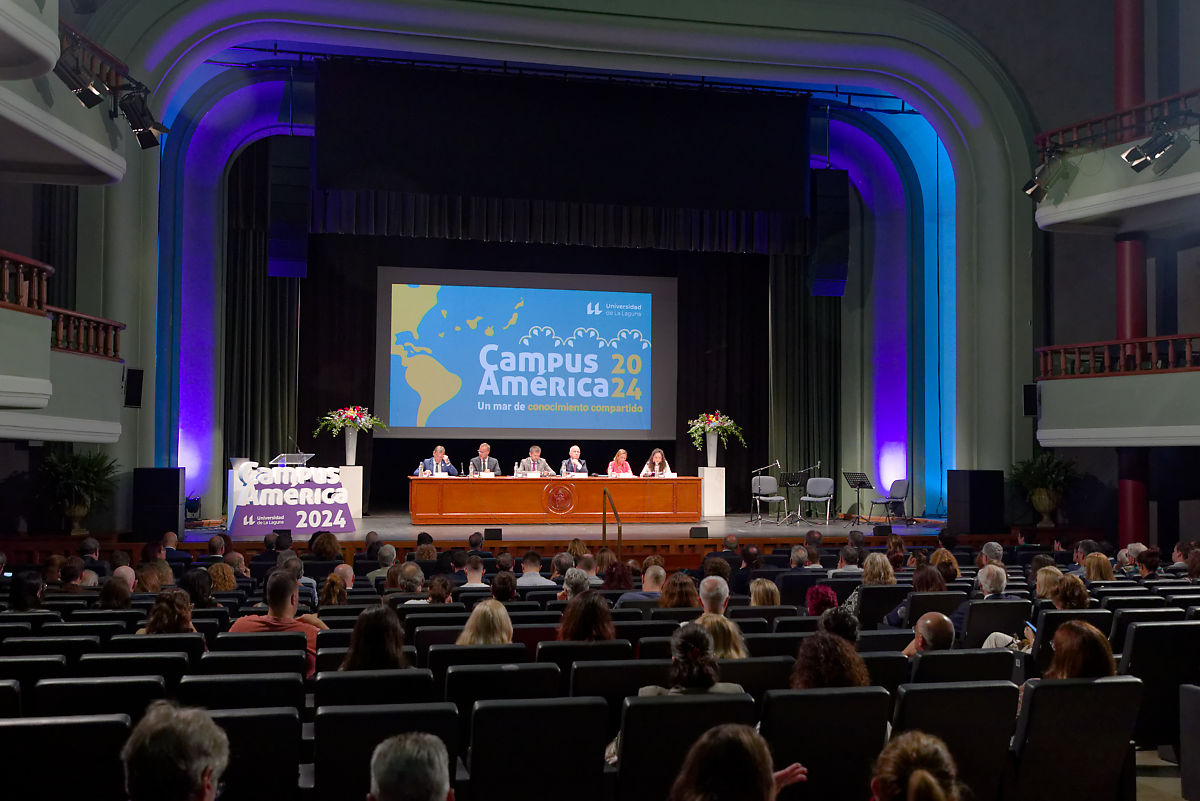
The opening session took place in the Paraninfo of the University of La Laguna, whose adjoining art gallery also features an exhibition of Ecuadorian paintings by Rosy Revelo. This session coincided with the launch of a dozen seminars currently being held simultaneously across all of the university's campuses.
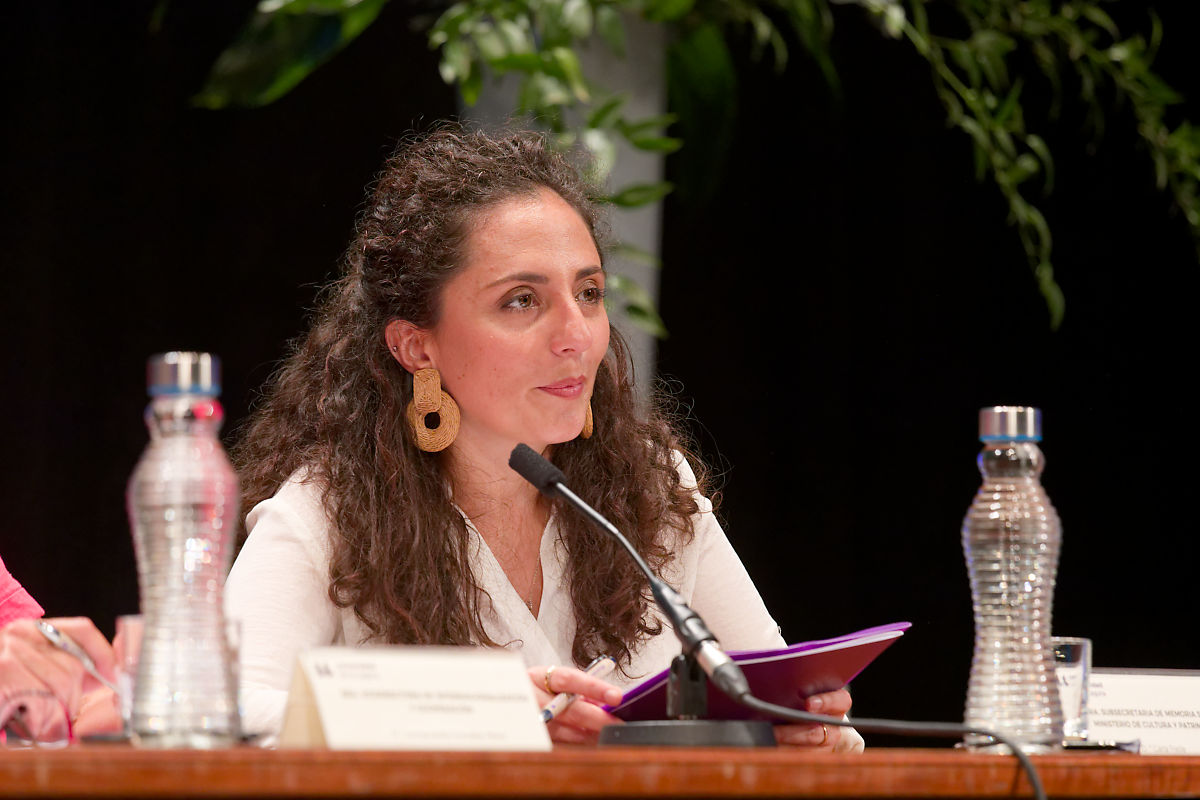
Clara Freire.
Clara Freire, Undersecretary of Social Memory at the Ministry of Culture and Heritage of Ecuador, was the first to speak, expressing her gratitude that her nation had been chosen as the guest country, fostering cooperation and dialogue through this event. “The Americas and the Canary Islands share a historical bond dating back to the colonial era,” she stated, recalling that since the 16th century the archipelago has served as a port of call for explorers on their voyages to the Americas. “From migrations to the rich heritage of both regions, Campus América allows us to reflect on our present and our future,” Freire maintained, before detailing the cultural efforts the country is undertaking to place culture at the heart of development, from a sustainable perspective.
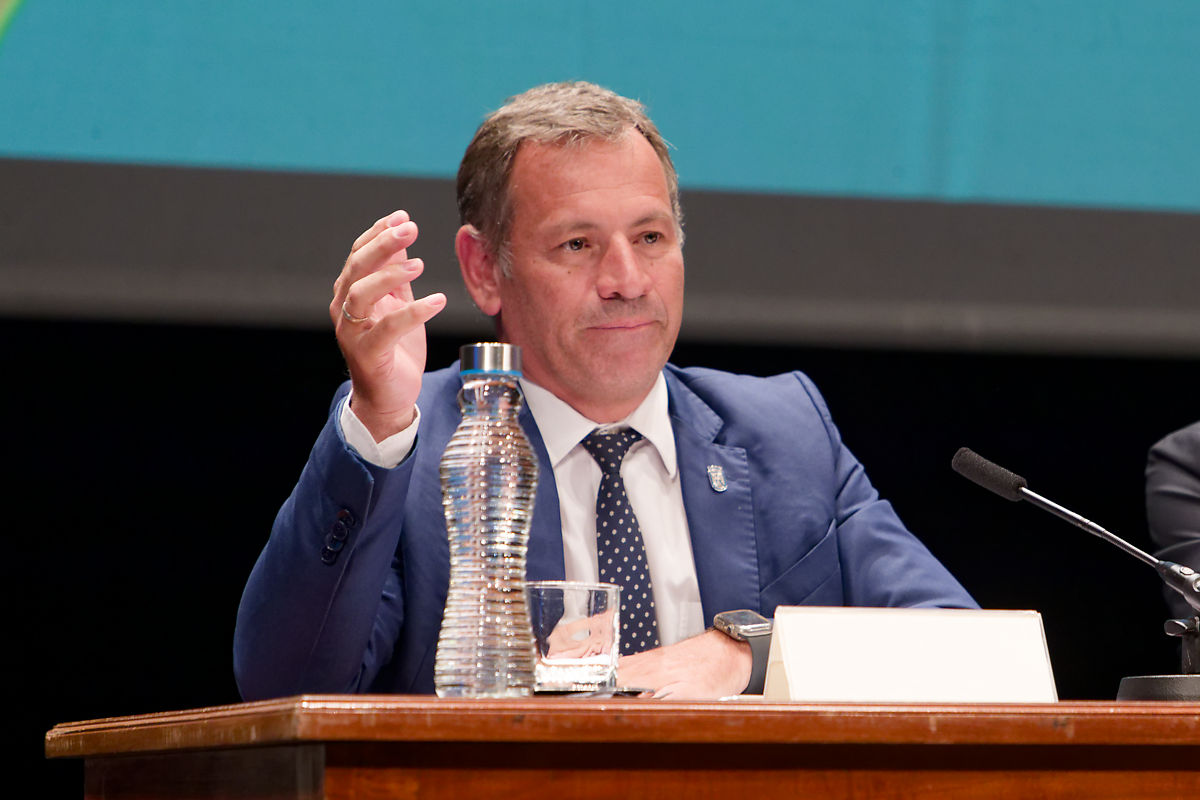
Pedro González.
For his part, Pedro González, director of Foreign Action of the Tenerife Island Council, stressed the historical relationship between the two regions on either side of the Atlantic, which has become a continuous dialogue that is reflected in Campus America, he said, so he thought it very appropriate to continue with this cultural legacy, which also means getting to know other ways of life.
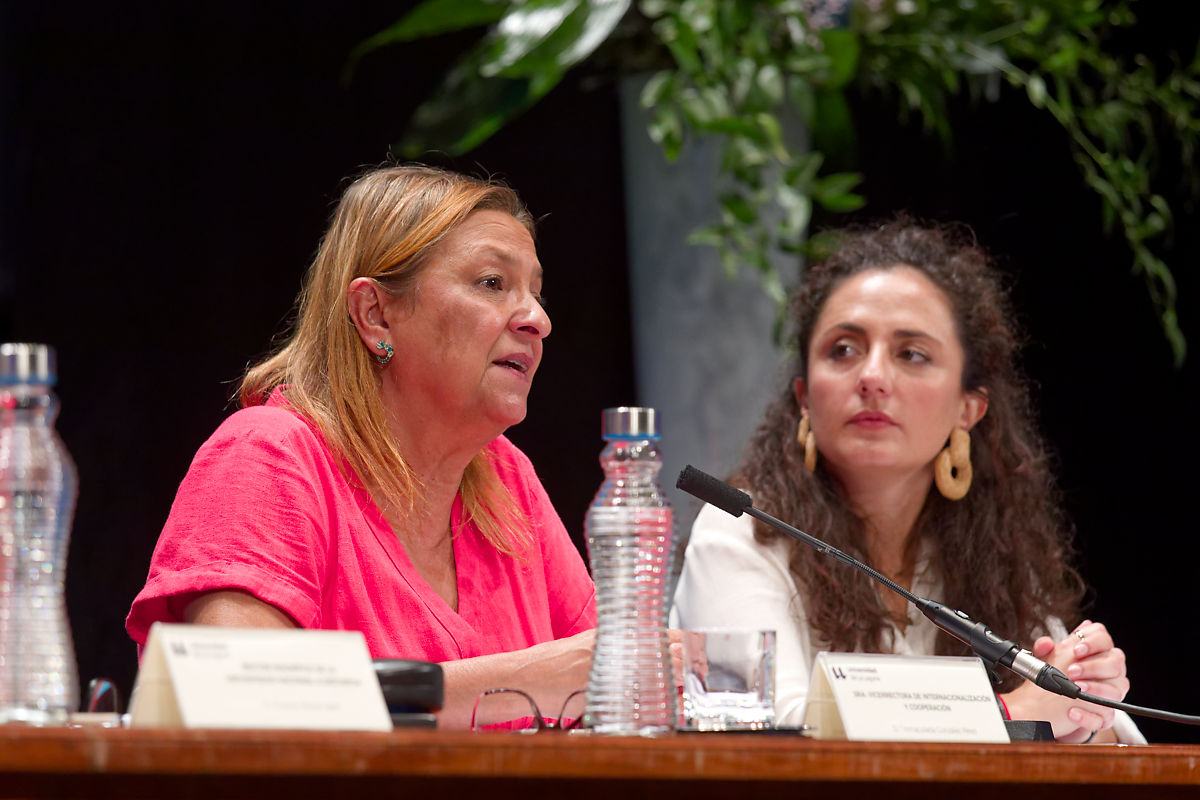
Inmaculada González and Clara Freire.
The Vice-Rector for Internationalization and Cooperation, Inmaculada González, pointed out that this event is the result of an outreach effort to all faculty members, with the participation of 50 universities from 17 countries and over 180 speakers. The Vice-Rector detailed the institutional panels that have been organized, dedicating specific time to strategic issues such as international degrees, digital transformation, youth participation, the Ibero-American Higher Education Area, and culture and heritage. In addition to the 27 seminars on topics as diverse as Black feminisms, public health, labor inequality, justice, childhood, human trafficking, and more, there will be over a dozen cultural activities focused on painting, poetry, music, and dance.
González highlighted the support of the funding entities, the Government of the Canary Islands, the Tenerife Island Council, the municipalities of La Laguna and Santa Cruz and Cajasiete, in addition to the support of Casa América and the Ministry of Culture of Ecuador, along with the support of more than 200 social and cultural entities.
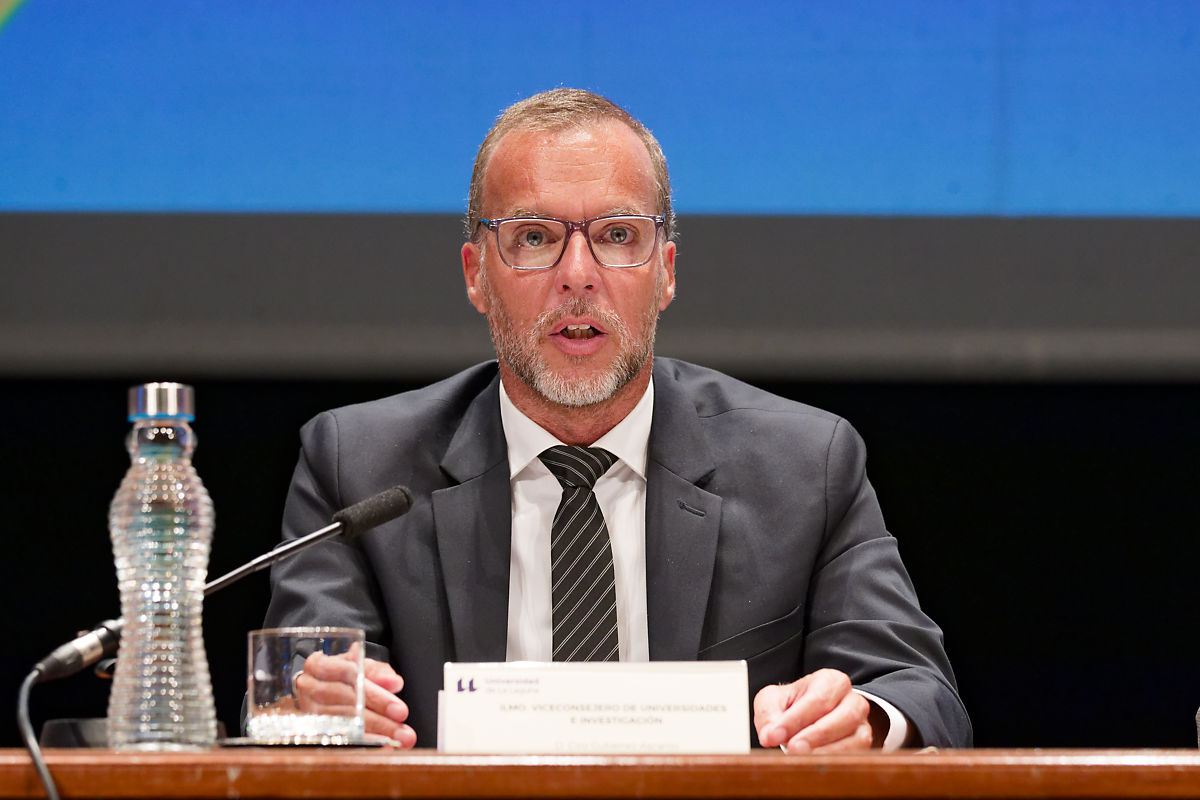
Ciro Gutiérrez.
Ciro Gutiérrez, Deputy Minister of Universities of the Government of the Canary Islands, valued the international aspect of this forum, "where challenges are addressed and solutions transcend beyond our borders," with the idea that new opportunities for institutional and research collaboration will arise from these meetings.
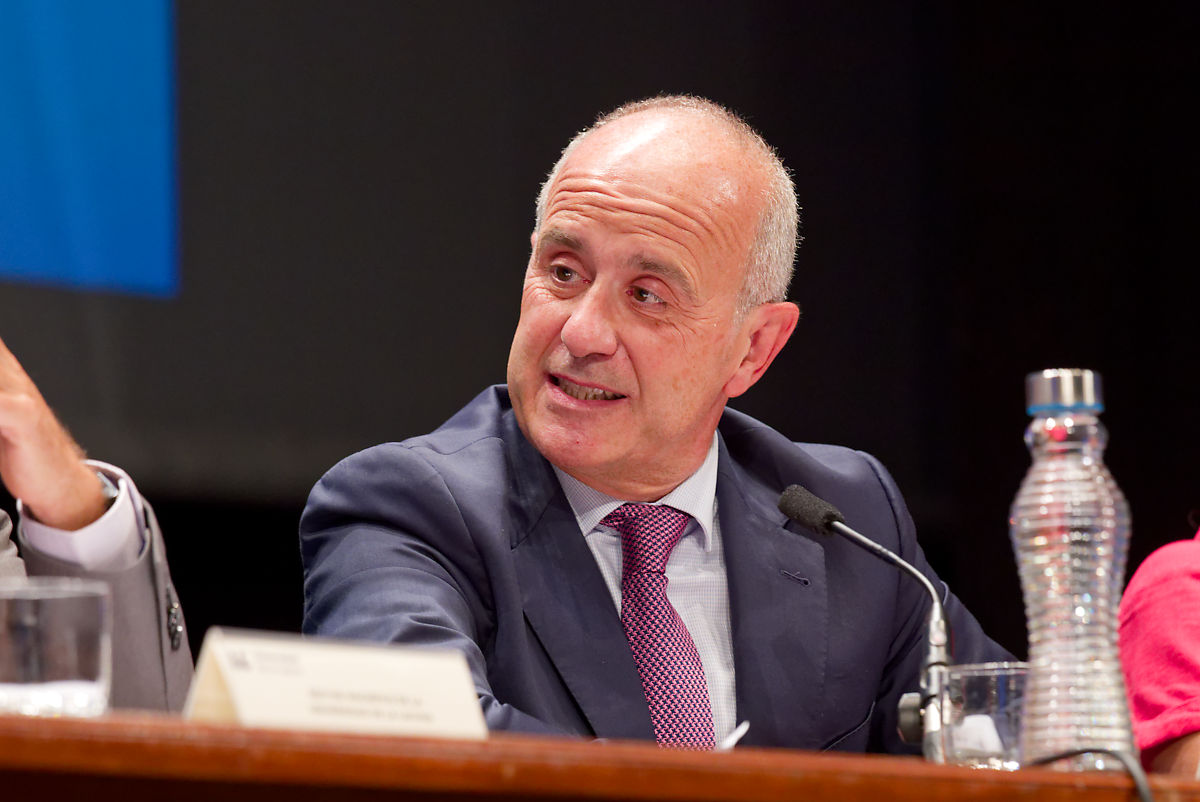
Ricardo Mairal.
The importance of internationalization
For his part, Ricardo Mairal, Rector of the UNED (National University of Distance Education) and President of the Internationalization Committee of the Conference of Rectors of Spanish Universities (CRUE), emphasized the importance of internationalization as a driving force for the progress of universities and society in general. He noted that CRUE is deeply committed to these challenges, “at a time when science is advancing relentlessly.” He also announced that they are working on replicating the Erasmus+ European mobility program in the Americas.
“The achievement of future challenges will depend on the importance we give to science,” and in this sense, internationalization and cooperation will facilitate the transition to these challenges, Mairal pointed out. “Dialogue always makes us more humble, moving us away from capricious dogmas and closer to dissent,” explained the rector of UNED, something very characteristic of universities.
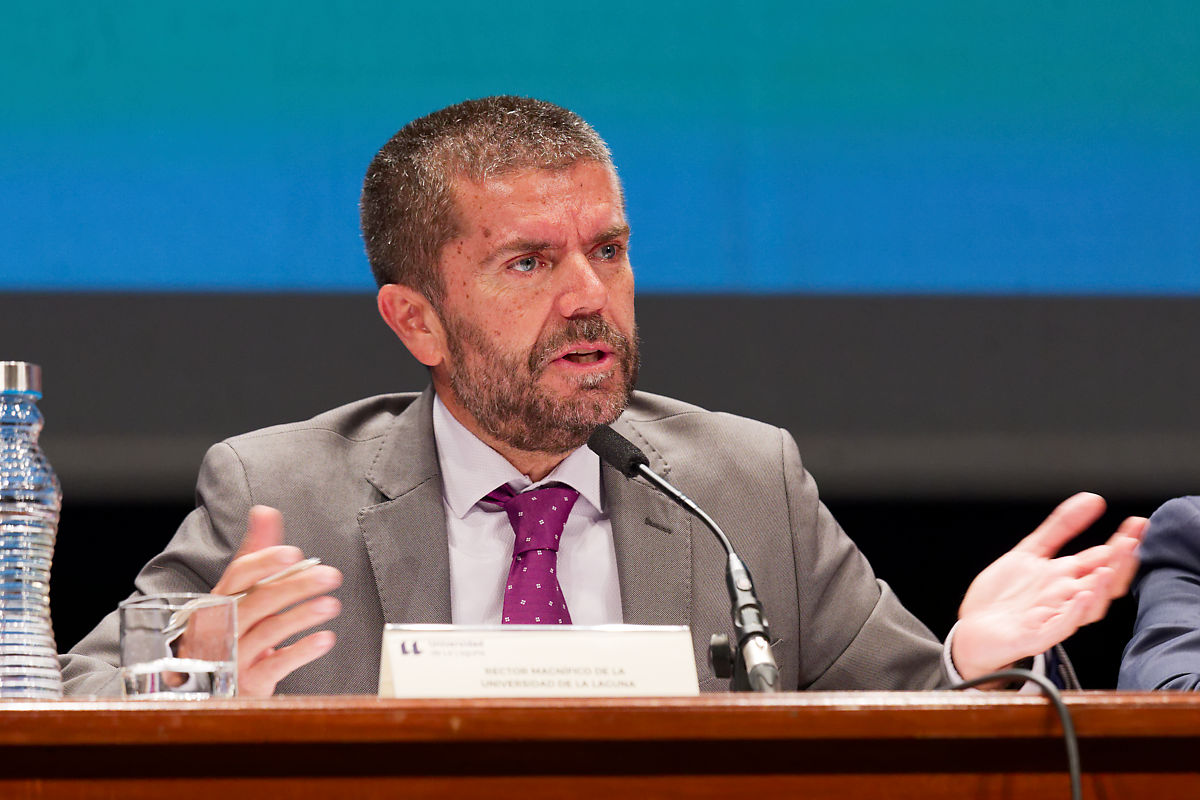
Francisco García.
Finally, the rector of the University of La Laguna, Francisco García, reinforced the idea of his counterpart at UNED, stating that "anything that does not have an international focus cannot be considered science.". He recalled the membership of this academic center in the European alliance STARS EU, made up of nine universities on the continent.
This internationalization towards the European continent does not preclude extending these same networks to Latin America. The rector reiterated that the 2024 edition's program is the result of an open call to all faculty members of this academic center, who submitted proposals leveraging their contacts and existing collaborative networks with the Americas. "We aspire to continue being a place where we co-design the shared academic space in social, cultural, and scientific terms on both sides of the Atlantic." He asserted that we cannot succumb to despair and resignation, the two current scourges, he noted, "and Campus America is a magnificent tool to combat them.".
The identity of words
Dolores Corbella, Professor of Romance Philology, delivered the opening lecture of this session. The member of the Royal Spanish Academy focused on the identity and intangible heritage of words. She recalled that she began as a lexicographer creating paper dictionaries, which were later digitized, and that she now works on electronic dictionaries that connect all terms and meanings, allowing for multiple and varied searches.

Dolores Corbella
Corbella detailed the different phases of her research career. The first was the creation of the "Lexicographical Treasury" in 1992, compiled on index cards, which allowed us to know what had been collected about the Canarian lexicon and what had not, and which was not initially intended for publication. However, it was distributed throughout the American academies, and something that fills her with pride is that many American researchers know her precisely because of this work.
Corbella paid tribute to authors such as Viera y Clavijo, Pérez Galdós, Manuel Alvar, and José Pérez Vidal, who played a fundamental role in collecting Canarianisms. “It is very important to acknowledge the work of those who came before us,” and the Tesoro was precisely that: a recognition of that work and the first step in creating a dictionary.
The creation of dictionaries occupied the second phase, with milestones such as the "Diccionario diferente del español de Canarias" (Dictionary of the Spanish of the Canary Islands), from 1996, and the "Diccionario ejemplarizado de canarismos" (Exemplified Dictionary of Canarianisms) from 2009, very useful to be able to contextualize the words and their uses.
The third phase was to broaden the field of study to a pan-Hispanic scope, which resulted in the "Canarian-American Lexical Treasury," a collection of a large number of shared words, reflecting the fundamental nature of contact between the two Atlantic shores. The sugar industry's lexicon, also studied by Corbella, perfectly illustrates this wealth of shared vocabulary.
The fourth phase is the “Historical Dictionary of Canarian Spanish,” which has been available on the RAE website since 2015 and is one of the few external resources that the Academy deemed worthy of sharing on its site due to its quality. Corbella highlighted this as an example of the knowledge transfer that researchers at public universities should undertake.
 The speaker explained that they are now working entirely electronically, so they can produce dictionaries on any topic, because everything is perfectly cataloged. They have processed around 14,000 entries in a project that Corbella described as “slow and steady.”.
Among other deductions, one can speak of pre-Hispanic words: the first one documented is "guanil", synonymous with "wild", whose first written reference dates from 1436. Like "laurisilva", they have also documented names of many plant species whose origin is Portuguese.
Corbella also pointed out pre-Hispanic words such as “gofio” and “tabaiba” that in some dictionaries were listed as Americanisms because their authors had not taken into account the data discovered by researchers from the Canary Islands; had they done so, they would know that the first of these words appears recorded in a text for the first time in 1495, that is, that it could not have come from America.
Currently, and given that the Canarian lexicon has already been almost entirely addressed, a new project focused on cooperation to encourage American lexicography has been requested from the Ministry, since in some countries it is still in its beginnings.
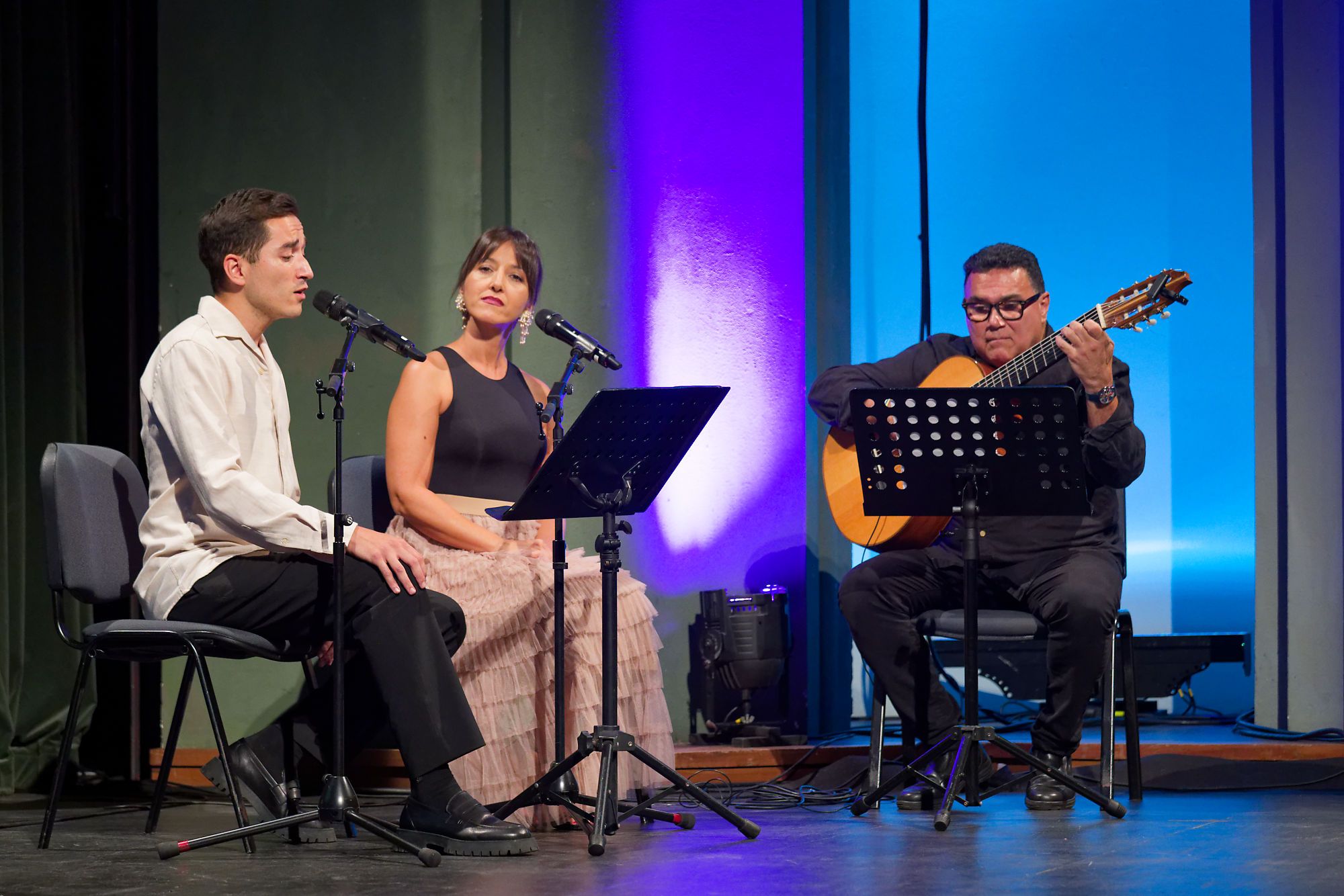
«"Ecuadorian whims.".
The inauguration ended with the musical performance “Ecuadorian Caprices”, featuring the island voices of Laura and José Félix Álvarez and the guitar accompaniment of multi-instrumentalist and composer Jesús «Pingüino» González, who brought together five examples of the rich Ecuadorian popular songbook.

 Spanish
 English
 French