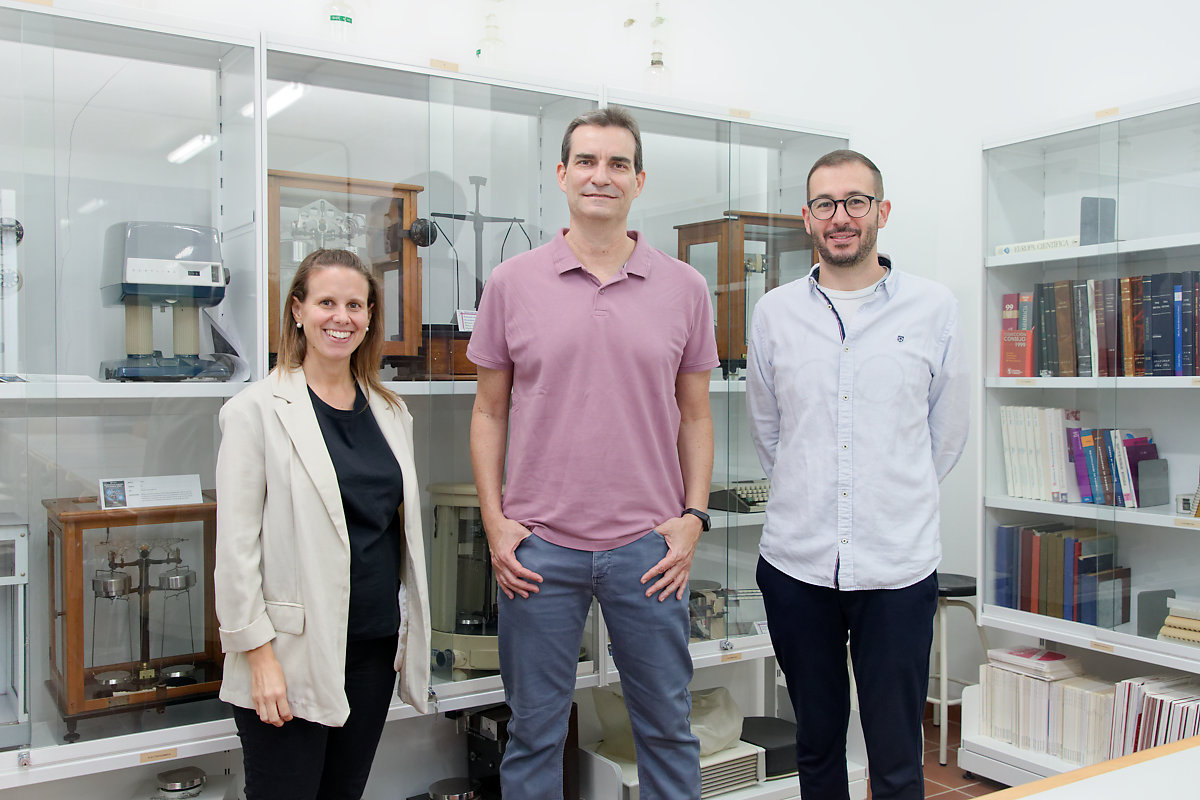
Researchers from the universities of La Laguna and Campinas (Brazil) have taken the first step towards the development of innovative and sustainable techniques capable of converting waste produced by the agri-food industry into value-added substances without generating any type of pollution, thanks to the use of bioactive solvents with low environmental impact that are not harmful to health.
These green technologies are already being used at the University of La Laguna to analyze pollutants, but not with bioactive solvents, as is done at the Brazilian university, explains the researcher. Barbara Socas, of the Research Group on Chemical Analysis Applied to Industry, Environment and Agri-food Products (AQAIMPA), specialized in the analysis of contaminants and the development of sustainable methodology for food safety assessment.
“Although we have been using green techniques for some time, we carry out the analysis of contaminants using eutectic liquids and miniaturized techniques with nanomaterials, since we do not have the necessary equipment to apply them with pressurized techniques and supercritical fluids, equipment that they do have in Brazil,” explains the researcher.
For this reason, the recent visit of the researcher from University of Campinas Julián Martínez to the University of La Laguna, carried out within the framework of the program of grants for visiting professor stays financed by the Vice-Rectorate for Research and Transfer, This meeting served to formalize a collaboration agreement between the two centers, which will facilitate the exchange of doctoral students and researchers. Both institutions share a common interest in the application of green technologies, such as supercritical fluid extraction and pressurized liquid extraction, capable of obtaining bioactive compounds without generating pollutants and without using toxic solvents.
Bioactive compounds have nutritional value, are beneficial to health, and can be used as ingredients in prepared foods, as preservatives, or as antioxidants, among other things. The use of supercritical fluids and pressurized liquids allows for targeted techniques to focus on the specific components being studied.
“With supercritical fluids, we can control the temperature and pressure of the process. What we achieve is an extraction technique that yields highly concentrated products for later application, for example, to waste derived from banana production, as well as other agro-industrial products,” the two experts explain.
Martínez and his research group, with extensive experience in this field, have been studying methods for years to recover compounds present in food production waste that possess nutritional, biological, and medicinal value. “We try to do this using sustainable methods and green, non-toxic technologies, an approach that, in addition to being a way to reuse products, has a strong focus on sustainability,” says the Brazilian researcher.
Union of green methods
As Bárbara Socas explains, one of the possibilities offered by this collaboration agreement is the use of eutectic liquids (as is done at the University of La Laguna) in the techniques employed by Julián Martínez in Campinas. This would allow for the creation of a "very green methodology," both in terms of the solvent used and the technique employed, and would promote the development of methodologies that integrate the technologies used by both parties.
One of the initial case studies will focus on the reuse of banana waste in the Canary Islands, a sector that generates large volumes of leaves and peels. According to both specialists, these sustainable techniques are expected to make the most of the nutrients and antioxidants present in these byproducts, which can be used as preservatives or nutritional supplements.
The project also aims to develop a chemical fingerprint for Canary Island aloe vera, differentiating it from other crops, with the goal of protecting its market value. The research includes techniques for identifying compounds and isotopes to guarantee the authenticity of products made with aloe vera from the archipelago, which is highly valued for its excellent properties and purity.
Julián Martínez's stay at the University of La Laguna also facilitated a meeting with the students of the Chemistry Section from the Faculty of Sciences, where he gave a talk focused on the techniques used in the analysis of waste derived from the food industry, its reconversion and potential uses.
This collaboration between the universities of La Laguna and Campinas aims to contribute to the development of sustainable solutions for the use of industrial waste and reinforces the commitment of both institutions to sustainability and innovation in scientific research.

 Spanish
 English
 French