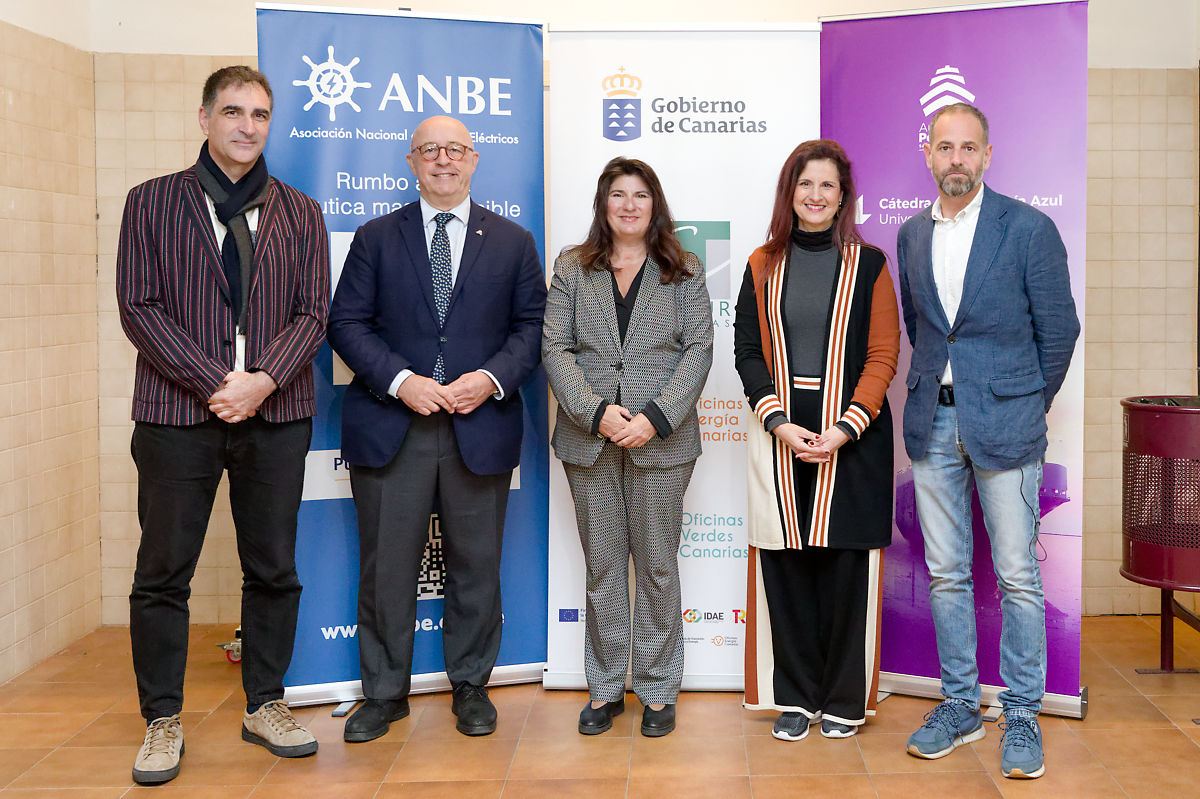
The National Association of Electric and Hybrid Boats (ANBE), in collaboration with the Port Authority of Tenerife, the University of La Laguna and the Canary Islands Energy Offices, under the Ministry of Ecological Transition and Energy of the Government of the Canary Islands, have organized the conference Canarias Blue Marine Talks 25. This first national meeting of companies in the electric, hybrid and hydrogen boat sector and traditional nautical industry has been a milestone for the visibility of the transition towards a more sustainable nautical industry in Spain.
The event, which took place this Thursday, February 13th, in the Lecture Hall of the César Manrique Building, on the Guajara Campus of the University of La Laguna, welcomed companies and representatives from the nautical sector and students from the Blue Economy Chair of the University of La Laguna.
Julieta Schallenberg, Deputy Minister of Ecological Transition, Climate Action and Energy, who was in charge of closing the conference, highlighted the Ministry's strong support for the decarbonization of the nautical sector and the archipelago's port areas.
In this regard, he argued that the electrification of the nautical sector's fleet, as well as port areas, through the installation of renewable energy in these facilities, "is strategic for the Canary Islands, as it represents a very important step towards decarbonization goals and to make the nautical sector a more sustainable space and more respectful of the rich marine ecosystems.".
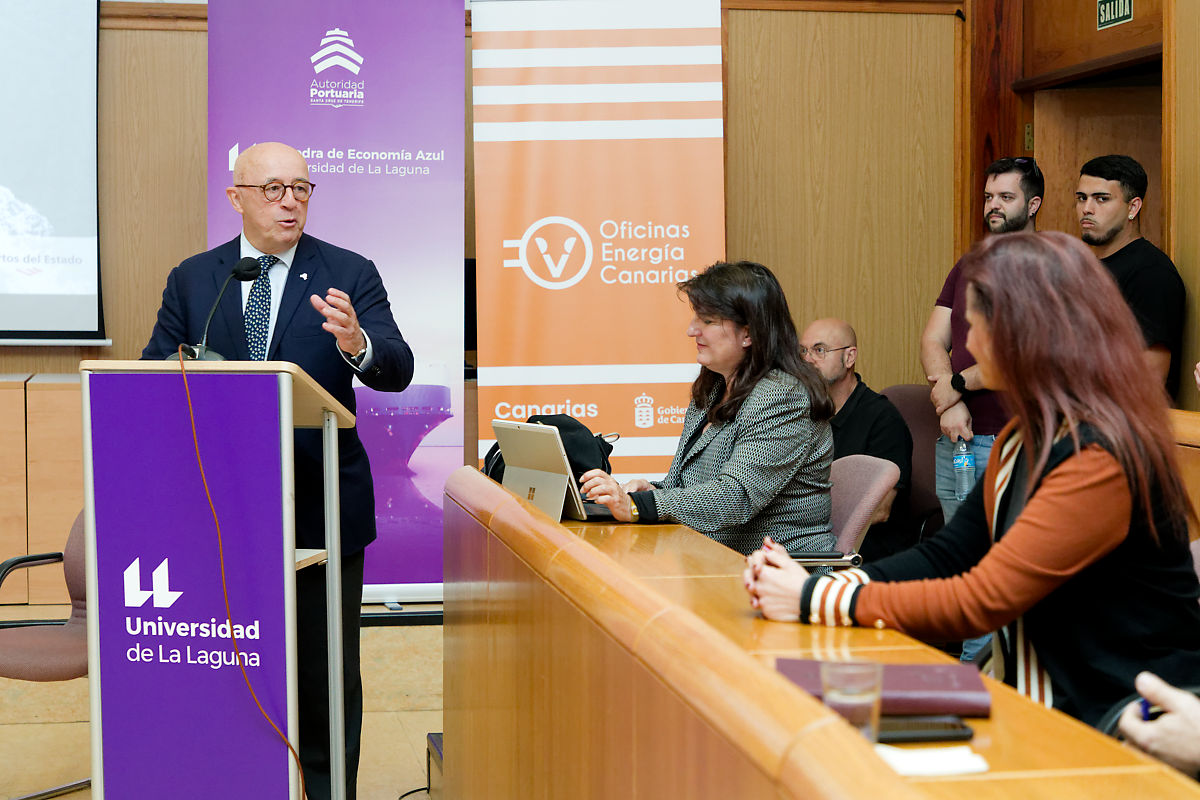
Pedro Suárez, president of the Port Authority.
For his part, the president of the Tenerife Port Authority, Pedro Suárez highlighted the importance of these events in raising the profile of the Chair and new stakeholders in climate change and marine protection through zero-emission navigation solutions. He recalled pioneering initiatives launched by the aforementioned entity, such as the supply of LNG to cruise ships and electricity to passenger vessels, the latter being one of the actions included in a much broader electrification project that, in the port of Tenerife alone, envisions investments of €29 million.
Furthermore, Isabel León, Vice-Rector for Culture and University Extension at the University of La Laguna, highlighted the crucial role of universities in the decarbonization challenge, as well as the positive impact of the synergies generated through endowed chairs (such as the Blue Economy Chair – Ports of Tenerife), “which serve as a link between the various stakeholders who must necessarily intervene to minimize the environmental impact: government, businesses, academia, and society in general.” According to the Vice-Rector, the development and implementation of increasingly sustainable technologies “revolves around science and the scientific and technological training of our young people.”.
Finally, the president of the National Association of Electric and Hybrid Boats (ANBE), Gonzalo Cotetillo, emphasized that this event has served to give visibility and a voice to zero-emission navigation within the sector. “Electric, hybrid, and hydrogen boats are already the present, and the Canary Islands have all the tools to develop projects and changes toward a more sustainable nautical sector for the islands.”.
The conference provided a forum for discussion on marine decarbonization and the energy transition in the port infrastructure of the Canary Islands. The event brought together leading experts from the maritime, academic, and institutional sectors, who presented the challenges and opportunities in the transition to a more sustainable navigation model. The University of La Laguna also presented its projects within the framework of the Blue Economy Chair, in which the Port Authority of Tenerife collaborates.
Among the topics discussed was the importance of nautical tourism promoting green navigation in the Canary Islands. Maritime excursions, whale watching, and other activities should be prioritized to embrace zero-emission navigation, "with no noise impact, no CO2 impact, and no ecological impact," the speakers emphasized.

 Spanish
 English
 French