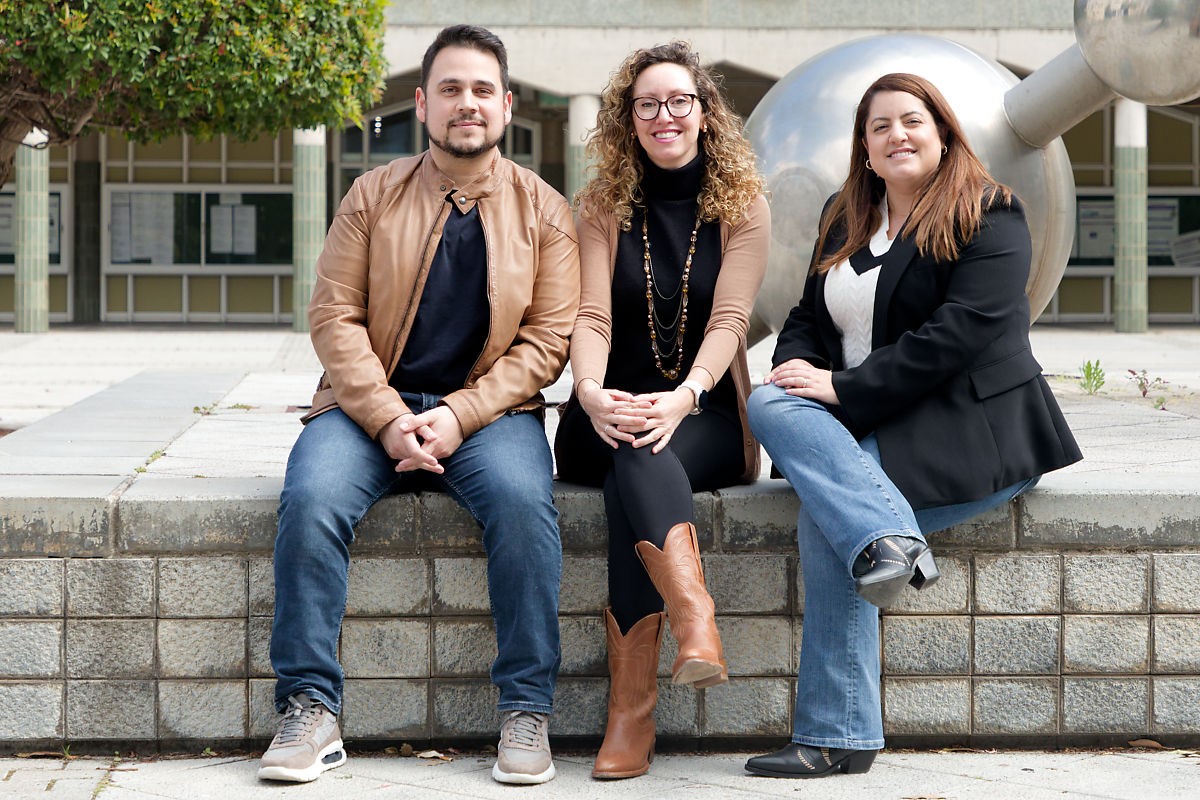
A study recently published in the magazine Innovation in Education and Teaching International It suggests that the use of cooperative learning strategies, along with measures to mitigate “social loafing,” are effective in promoting student engagement in their learning process. Its authors are Helena Bonache y Christian Rosales, from the Department of Cognitive, Social and Organizational Psychology; and Maryurena Lorenzo, from the Department of Communication Sciences and Social Work, all from the University of La Laguna.
This work arose from an attempt to address a common challenge in group work across all disciplines: the presence of students who contribute little to the collective effort and, therefore, benefit from their team's work. Furthermore, in an era where Artificial Intelligence tools allow students to find shortcuts in their tasks, it is essential to emphasize the use of student-centered strategies that help them develop the soft skills required by companies, including those in the technology sector.
There is existing literature demonstrating the growing interest in these teaching and learning methodologies that involve students as active agents in their learning process. Therefore, the research team decided to test them with a group of 126 students from three second-year Psychology classes at the University of La Laguna. Although these strategies may have some drawbacks, combining them can mitigate their weaknesses and reinforce their strengths.
The study was conducted over twelve sessions in three different classrooms with the same teacher, employing various active cooperative learning methodologies. First, each student was randomly assigned to a group of four to work on weekly activities. These groups changed every two weeks, allowing students to become accustomed to new partners.
In the first session, each team worked for 40 minutes researching materials and preparing classroom presentations, a format that facilitates discussions in small groups, allows students to ask questions about the topic or process addressed and, in this way, makes it easier for the teacher to identify areas that need further explanation.
Prior to the second session, all groups submitted the work they had prepared for the class presentation, which was evaluated solely by the professor. Once in the classroom, the professor randomly selected three groups, and two members from each team gave a presentation of up to 15 minutes. After each presentation, both the professor and the rest of the students evaluated them using online rubrics, and classmates were encouraged to provide constructive feedback anonymously.
Furthermore, to ensure fair assessments, students were warned that overrating their classmates' presentations could result in a penalty to their grades, although this was never enforced. The main objective of this peer assessment was not the grade itself, but rather to encourage students to pay attention to the presentations and identify the strengths and weaknesses of each other's work, based on established criteria. At the end of the semester, the students anonymously completed an 11-question online questionnaire about their perceptions and satisfaction.
The results have been described as “encouraging” by the research team: cooperative learning requires working towards a common goal in small, heterogeneous groups, which maximizes individual and group benefits.
Furthermore, the random formation of groups means working with classmates they barely know, which encourages students to project a positive social image. Being assigned to a new team every two weeks can motivate students to make a good first impression and foster a sense of belonging to the group. Combining both strategies with other active methodologies such as presentations and peer feedback is key to improving students' self-perception of their knowledge acquisition and performance.
The teachers also observed other results. For example, the students shared the same perspective as the teachers regarding the grading of presentations, suggesting that objective criteria be applied to each other's work, regardless of friendship. Furthermore, although some students initially expressed reservations about changing group members every two weeks, it had a positive impact on social interactions within the class. Moreover, many even said they appreciated the opportunity to work with different people, which helped them build new relationships.
Therefore, the team responsible for this study encourages teachers to incorporate these strategies into their classes, adapting the content and assessment to the current abilities and knowledge of their students, regardless of the educational program they teach.

 Spanish
 English
 French