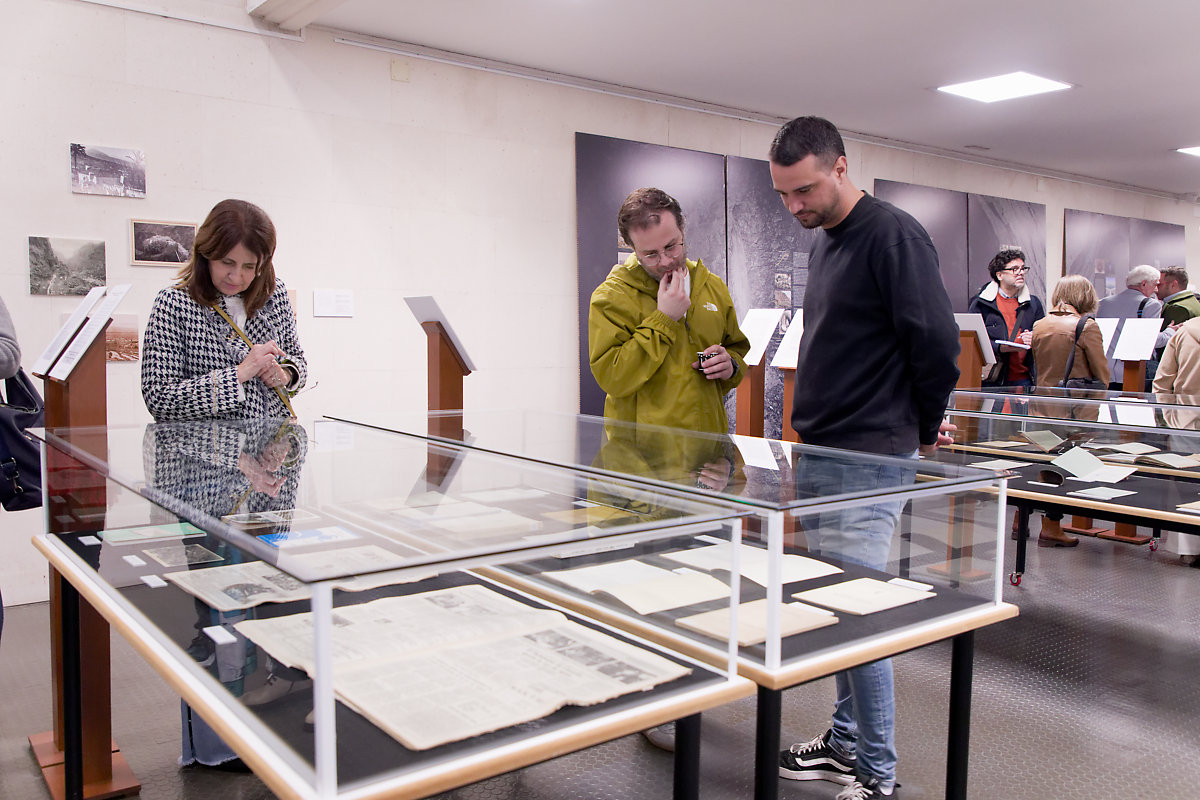
Progress in the Canary Islands has been largely linked to ongoing efforts to achieve a sustainable water supply for agriculture and private use. The General Library and Humanities Department of the University of La Laguna is hosting the exhibition «Water and life in the past, present and future of Tenerife«", which has been organized by the Faculty of Social Sciences and Communication, he Institute for Social Research and Tourism and the Library Service of academic institution, and the Tenerife Island Water Council, with the collaboration of Water Cultural Classroom from the university and the Tenerife Island Water Chamber.
 During the inauguration, the university's rector, Francisco García, noted that for people like himself, who come from rural backgrounds, the pioneering figures who risked their fortunes and their lives to open galleries and provide water to the population have always been a source of admiration. He also referred to the challenge to sustainability that continuing to obtain this resource represents in times when the water emergency is becoming increasingly urgent.
In this regard, he referred to climate change, noting that, in fact, the change has already occurred, making it more appropriate to speak of a “new climate order” that truly threatens the survival of humankind, thus requiring greater responsibility in all matters related to sustainability. In response to those who, despite the evidence, continue to deny the existence of this problem, García emphasized the role of science in combating misinformation, highlighting the importance of an exhibition like this one, which offers accurate data on the past, present, and future of water resources.
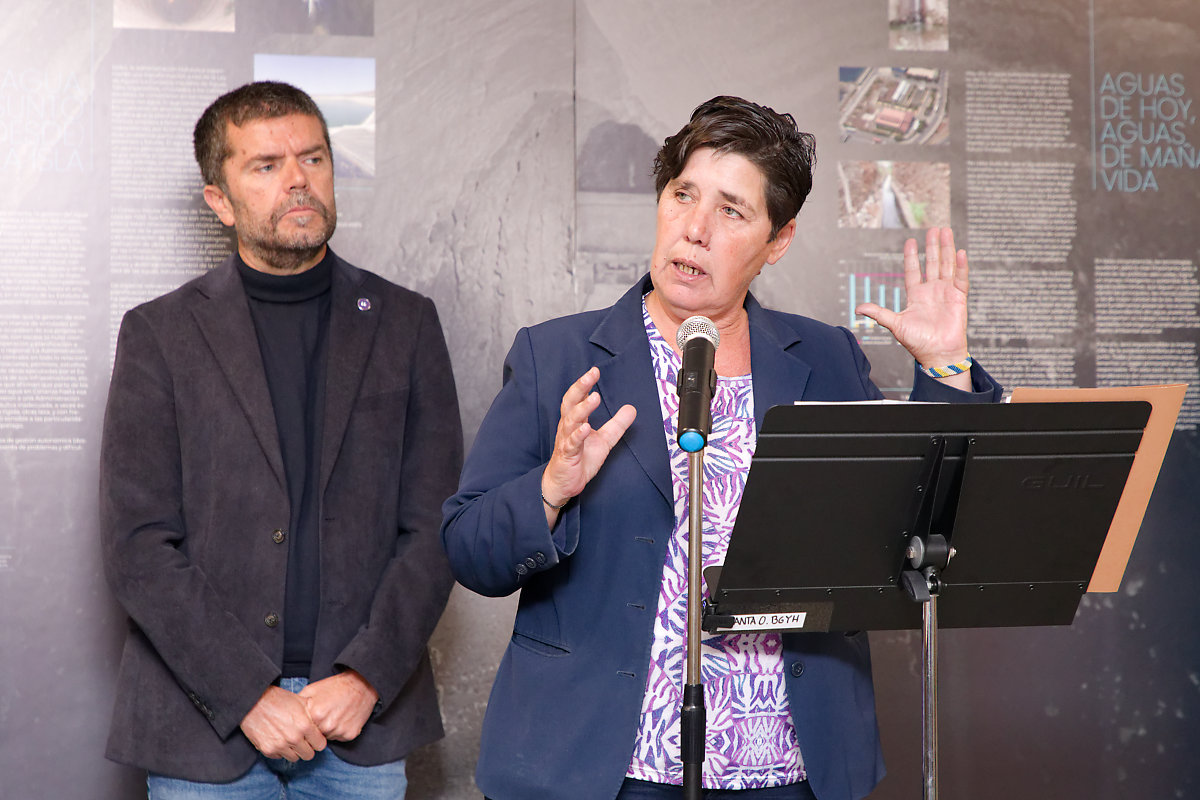
Blanca Pérez, Environment Councillor of the Tenerife Island Council, and Francisco García, Rector of the ULL.
The Environment Councillor of the Tenerife Island Council, Blanca Pérez, also addressed the environmental challenge of maintaining the water supply. She recalled that it wasn't until the 1940s that efforts to extract water through wells, galleries, and other means began to become widespread. These infrastructures have been vital for the island's development, but the data is worrying: annually, the amount of water available in galleries decreases by 5%, and its quality is also declining. Therefore, the major challenge lies in closing the water cycle by optimizing the reuse of this resource in a circular manner.
Domingo Pérez, from the Tenerife Island Water Chamber, emphasized the major problem posed by the progressive shortage of this resource, and stressed the importance of "raising awareness about saving and treating water well, as it is finite and a treasure.".
For their part, the anthropologists who curated this exhibition, José Antonio Batista y Noelia García, They took the opportunity to thank everyone who collaborated to make this exhibition possible and briefly explained the philosophy behind it. Above all, their aim is to highlight that water is more than just a natural and economic resource: it is also sculpture, history, politics, landscape… in short, it is life, hence the exhibition's title.
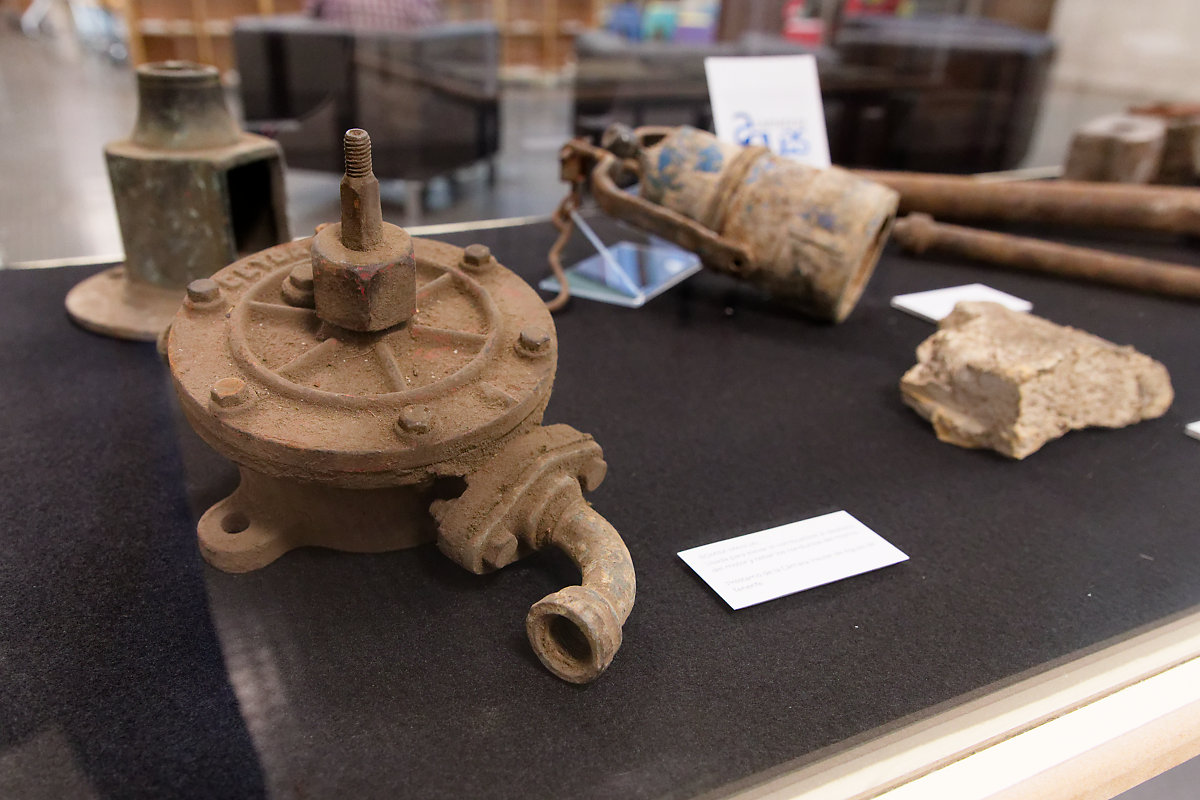
The panels and displays that make up this exhibition recount the history of this resource through text, books, map reproductions, and even objects related to water extraction. But the purpose of this exhibition is not only to dwell on the past, but also to provide a snapshot of the present and a reflection on the future of an island where, as Batista pointed out, 731% of the water is of underground origin, and of that percentage, 63% comes from underground galleries.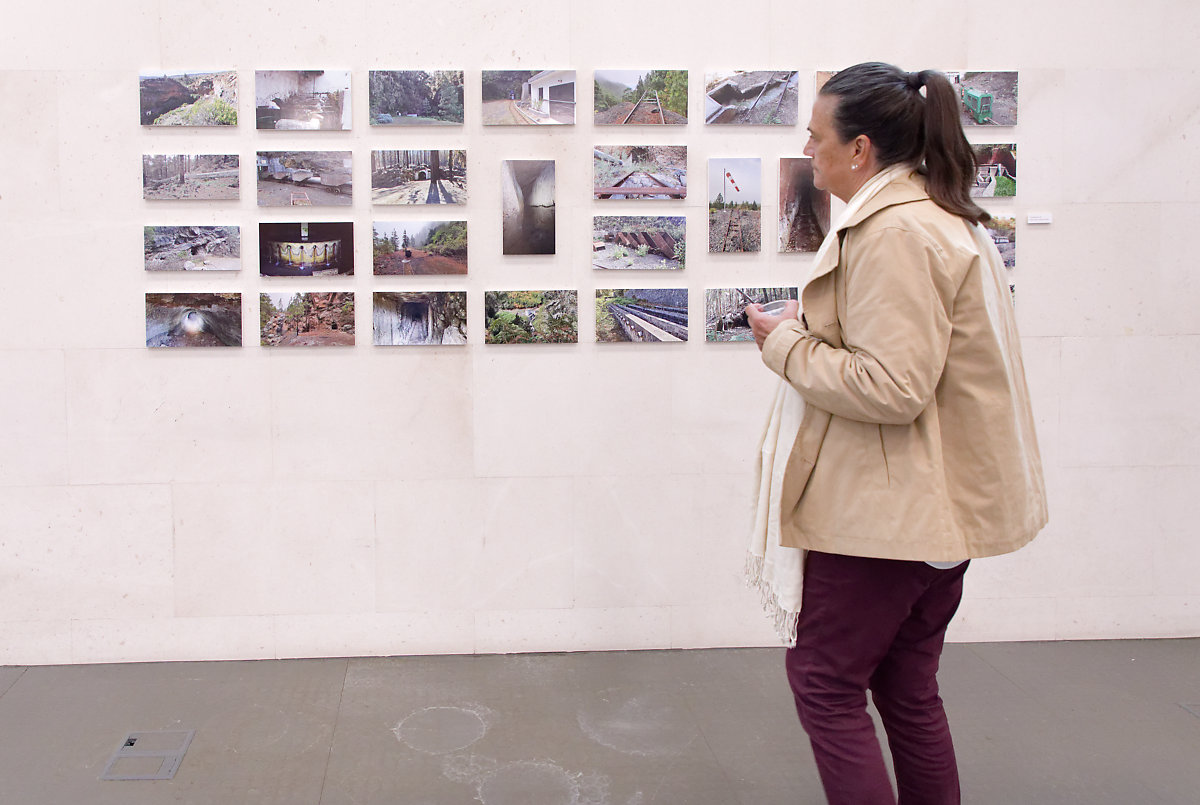
Also participating in the opening ceremony were the Deputy Director of the Library Service, Carmen Julia Hernández, and the Director of the Secretariat of Culture, Isabel Castells, who highlighted the work carried out by the library staff, in collaboration with the teachers who have advised and curated, to bring this exhibition to fruition on time.
As is typical of exhibitions organized by the Library Service, this one combines information panels with texts written by Professors Batista and García, with display cases exhibiting objects and, above all, bibliographic material on the central theme—in this case, water in the Canary Islands—drawn from the institution's vast documentary collections. The displays group the material thematically and divide the texts into sections on history, social sciences, law and engineering, hydrological plans, and individual figures such as the geologist Telésforo Bravo.

 Spanish
 English
 French