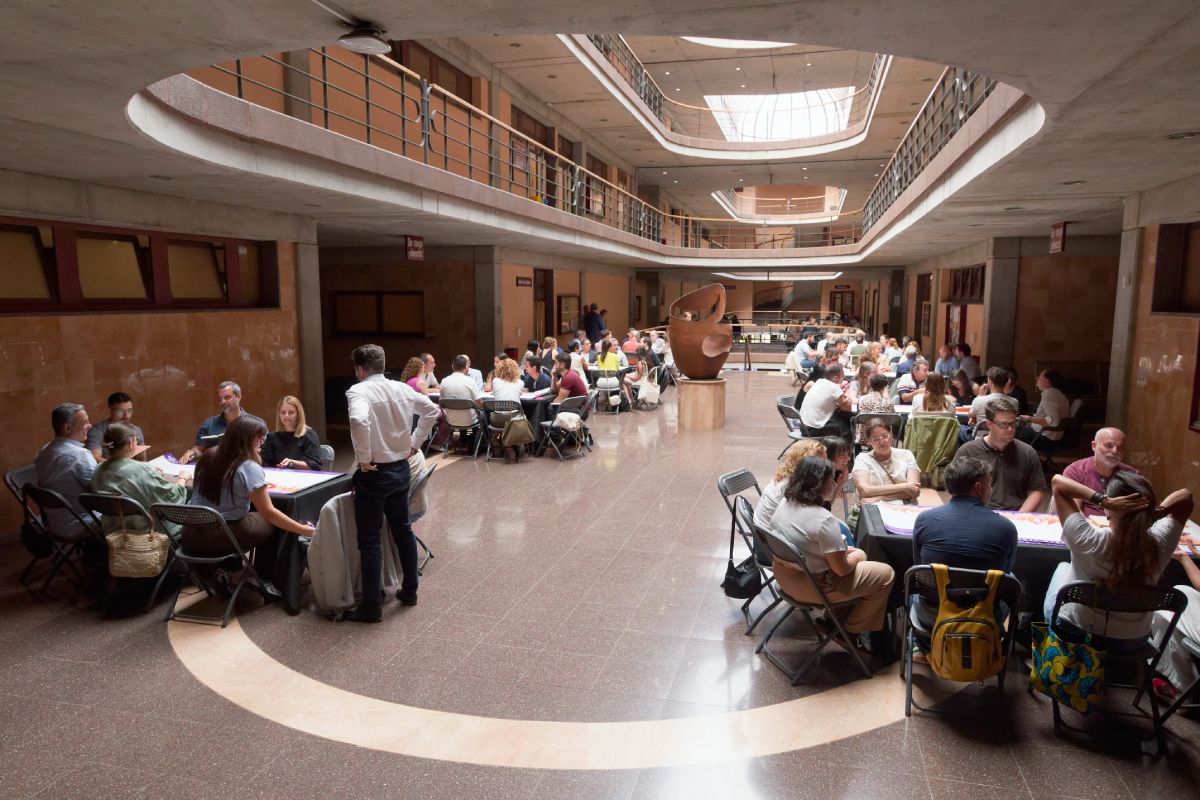
The Faculty of Economics, Business and Tourism of the University of La Laguna hosted last Tuesday, June 24th the First Meeting of Key Agents for Training in Economics, Business and Tourism, a day of reflection and active participation that brought together more than 130 people committed to the academic and professional future of the business sector.
The event, held between 4:30 and 6:30 p.m. at the university itself, marked the starting point for the new dean's team, which took office on June 4th. The Vice-Rector for Teaching, José Manuel García Fraga, attended the event and praised the organization of this meeting as an example of best practices in designing educational programs aligned with the interests and needs of society.
This initiative aimed to create a collective space for reflection on the challenges and opportunities facing the region and how these can be addressed through economics, business, and tourism. It also explored more specific issues such as specialized training programs, the possibility of dual degrees, and professional development for graduates.
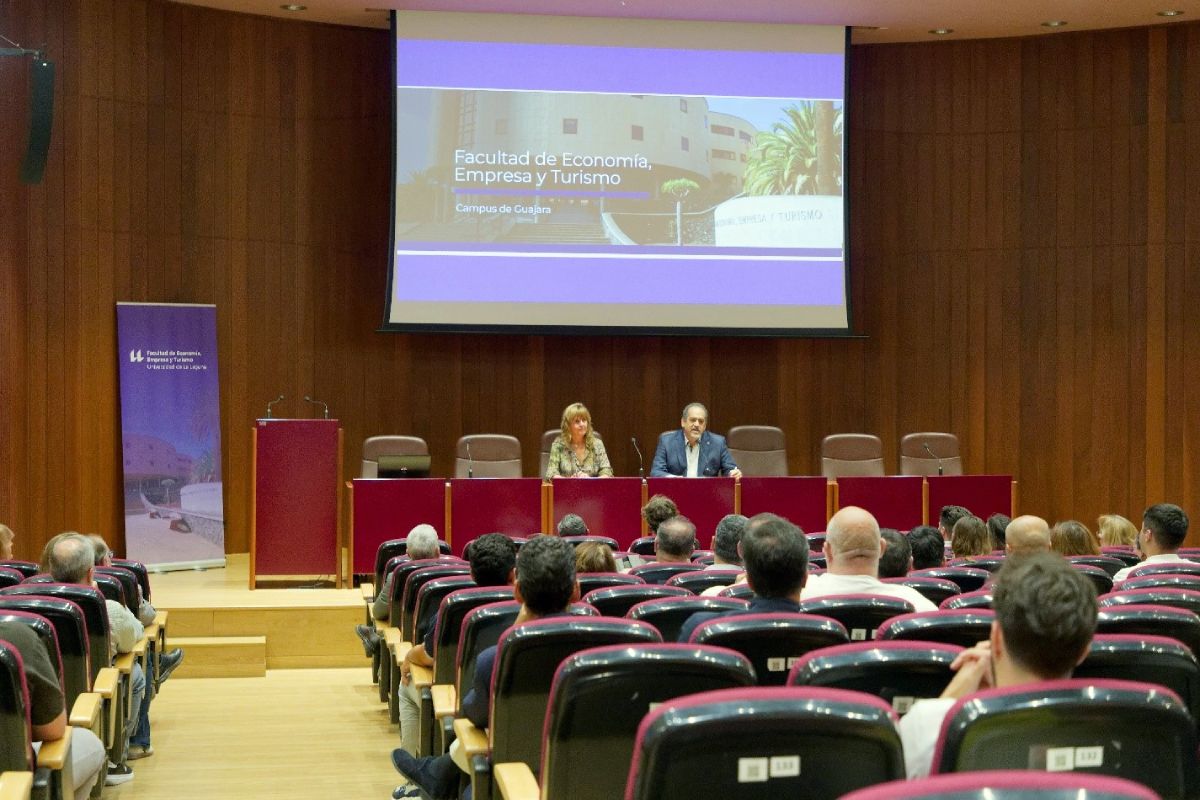
Opening of the meeting, with the dean and the vice-rector at the head table.
The organization of the teaching was also discussed, and the possibility of providing training in other languages, new teaching models, timetable organization, actions to enhance student attendance and participation, and aspects related to physical infrastructure as tools to enhance collaborative work were raised.
The event brought together representatives from public and private organizations linked to the economic, business, and tourism sectors, university and pre-university faculty, current and former students, and technical staff involved in service management and administration. Through participatory activities in small groups, attendees collaborated on what will be the first draft of a roadmap to guide the center's transformation in the coming years.
The Dean of the Faculty of Economics, Business, and Tourism, Inés Ruiz, expressed her enthusiasm for the broad participation and the quality of the contributions received, emphasizing that “the future must be built as a team.” With the contributions made by the more than 130 people organized into twelve working groups, a report will be prepared and shared with all interested parties who wish to participate in this collective development of the center's future educational offerings.
This first meeting marks the beginning of an open, inclusive, and excellence-oriented process that seeks to consolidate the Faculty of Economics, Business, and Tourism as an academic leader committed to the region. Progress on these initiatives can be followed through the profile of LinkedIn from the center.
(This activity is part of the pilot actions of the European project Innovamos (INTERREG MAC 2021–2027), co-financed at 85 % by the ERDF).

 Spanish
 English
 French