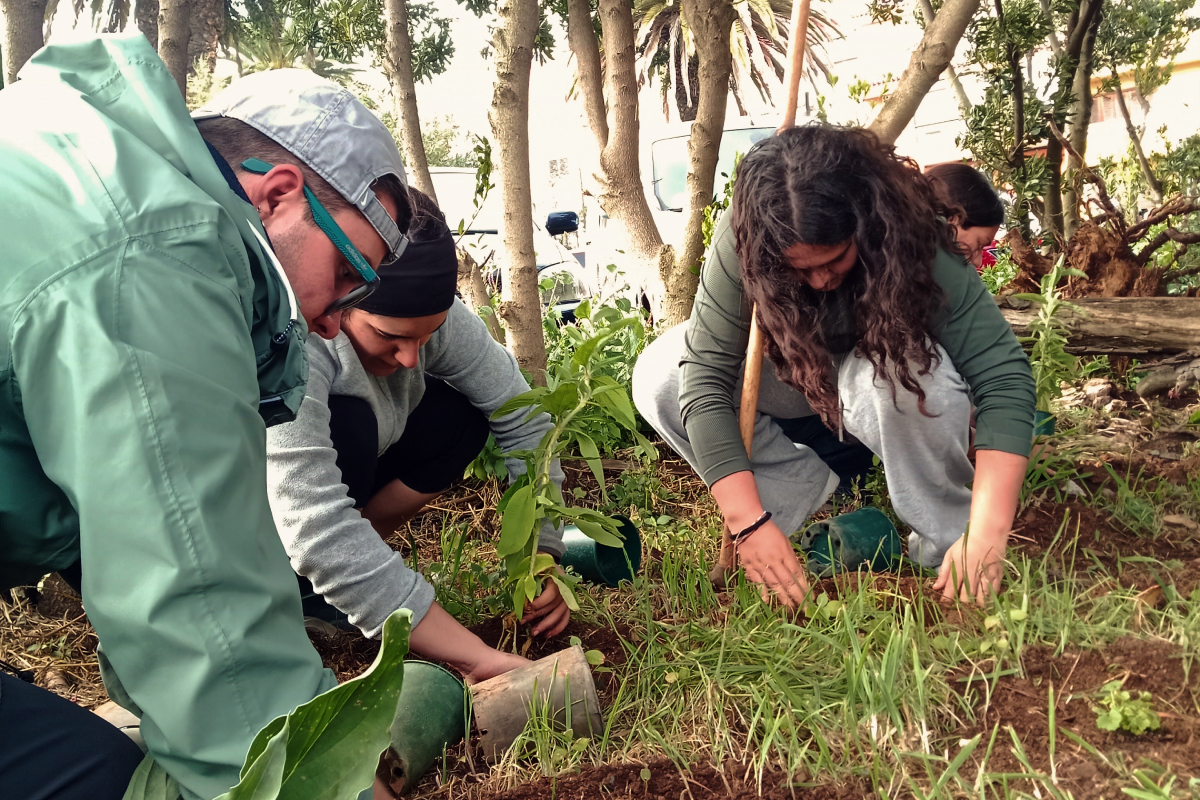
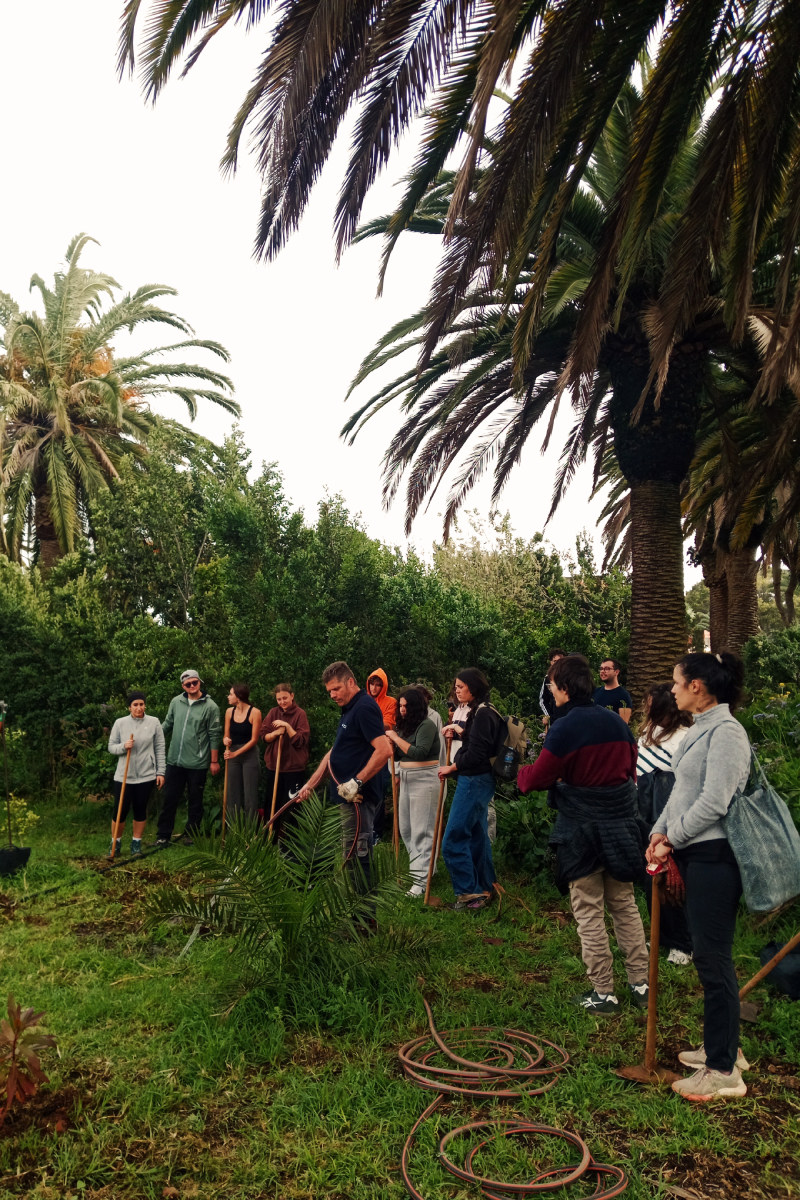
A group of 16 fourth-year students from the Environmental Sciences degree program at the University of La Laguna participated in a day of ecological intervention and sustainable management at the Canary Garden on the Central Campus. The activity, part of the "Sustainability and Environmental Education" course within the Botany Area of the Department of Botany, Ecology, and Plant Physiology, allowed students to connect the course's theoretical content with the active restoration of the university environment.
This educational initiative was strategically coordinated with the Parks and Gardens Service and the Cultural Center for Gardening, Biodiversity, and Permaculture at the University of La Laguna. During the day, 100 native plant species were planted for the ecological restoration of the transition zones between the thermophilic forest and the laurel forest within the garden, areas representative of two of Macaronesia's most emblematic ecosystems.
 Strategic restoration against invasive species
The main objective of the intervention was to densify the tree canopy to reduce light penetration to the herbaceous layer. This technical measure seeks the biological control of invasive exotic species, such as kikuyu grass (Cenchrus clandestinum) and red valerian (Centranthus ruber), which are currently competing for space in the open areas of the garden.
The activity allowed those who will be future environmental professionals to learn about the historical context of the arrival of these species to the Canary Islands from a socio-ecological perspective, in order to understand the impact that non-native flora generates on the island balances.
The planting of the 100 native vascular plants was divided into two priority areas: the transition zone from the thermophilic forest to the laurel forest and the laurel forest itself. Key species selected to reinforce the forest structure and understory include tree species such as strawberry trees, holly, holly, heathers, and mocanes; shrub species such as morgallanas, bencomias, rockroses, and rock cabbages; and herbaceous species such as starflowers and forget-me-nots, among others.
From waste to humus
A key aspect of the activity was the practical application of circular economy principles through the fertilization of the planted specimens using compost produced entirely at the University of La Laguna. This high-quality biofertilizer is generated by the Campustaje project, allowing the waste cycle to be closed by reintegrating the organic waste produced by the university community back into the soil.
As a complement to this work, the students finished the day by visiting the vermicomposting facilities at the San Fernando Residence Hall, a key center for organic waste management where kitchen scraps are transformed into high-quality worm castings. This resource is vital for the critical germination phases and the maintenance of the seedbeds of Canary Island flora within the park, allowing the University to produce its own seedlings for future reforestation efforts.
With this visit, the students were able to see how the efficient management of bio-waste completes a perfect cycle of sustainability that guarantees the self-sufficiency and health of the high biodiversity ecosystem that currently characterizes the Central Garden of the University of La Laguna.

 Spanish
 English
 French