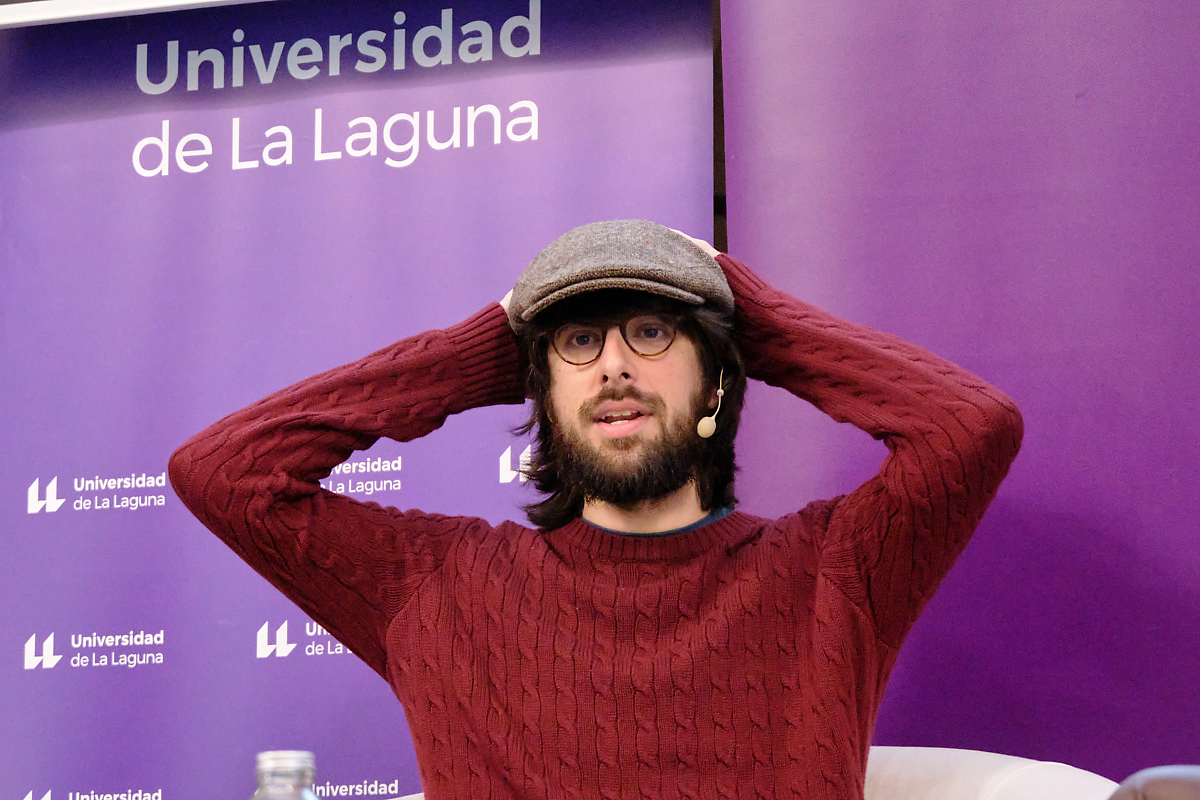
The University of La Laguna hosted the literary meeting today, Friday, March 13th. “On the island of empty houses” In the Auditorium of the Faculty of Social Sciences and Communication, a conversation with the writer David Uclés, winner of the Nadal Prize for his novel '‘The City of Dead Lights’. The event combined literature, memory, and stage performance, alternating dialogue with the author with dramatized fragments of the work.‘The peninsula of empty housesThe plays, performed by the Philology Theatre Group, created a space where word and stage intertwined to explore the wounds, memories, and silences of the Civil War. Regarding his visit to Tenerife, he mentioned that yesterday he saw the Franco monument in the capital, surprised, and expressed his hope not to encounter it again on his next visit.
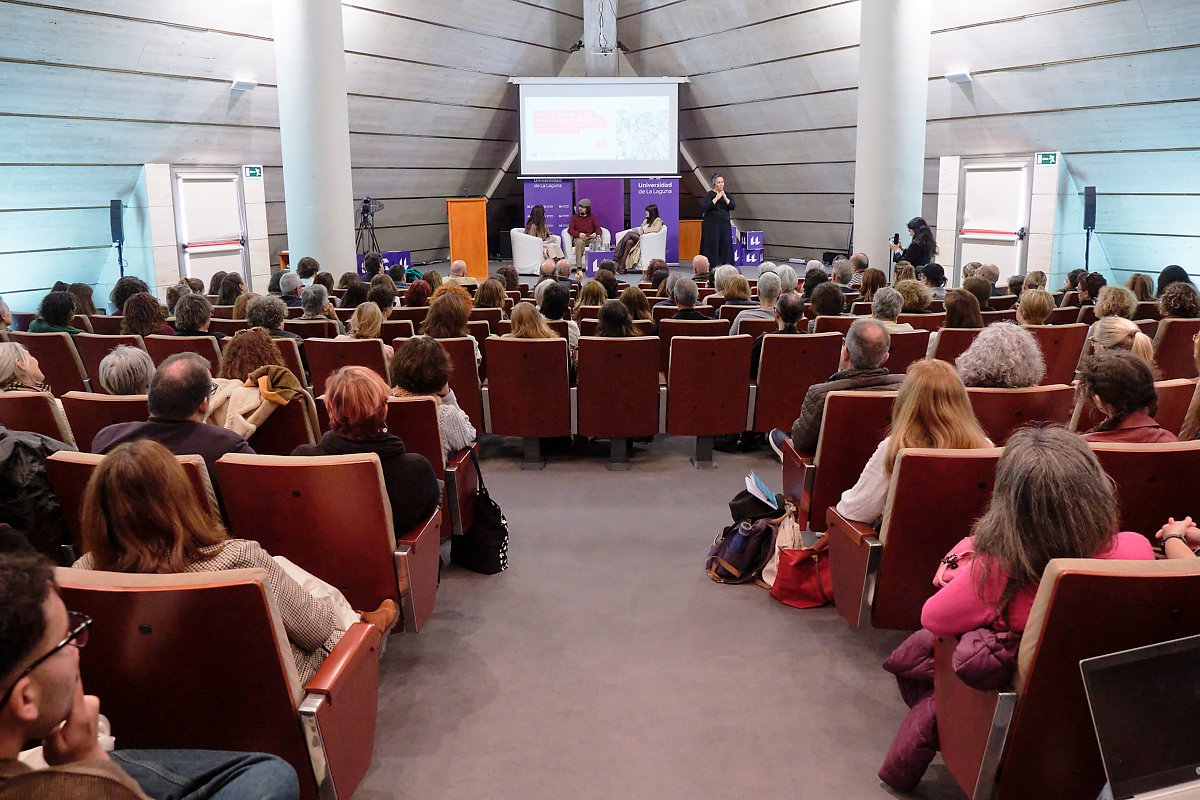
The event was opened by the Vice-Rector for Culture and University Extension of the University of La Laguna, Isabel León, who highlighted that "literature allows us to think about the present and the future without forgetting the past," and celebrated that the academic institution is a space where art, culture and critical thinking meet.
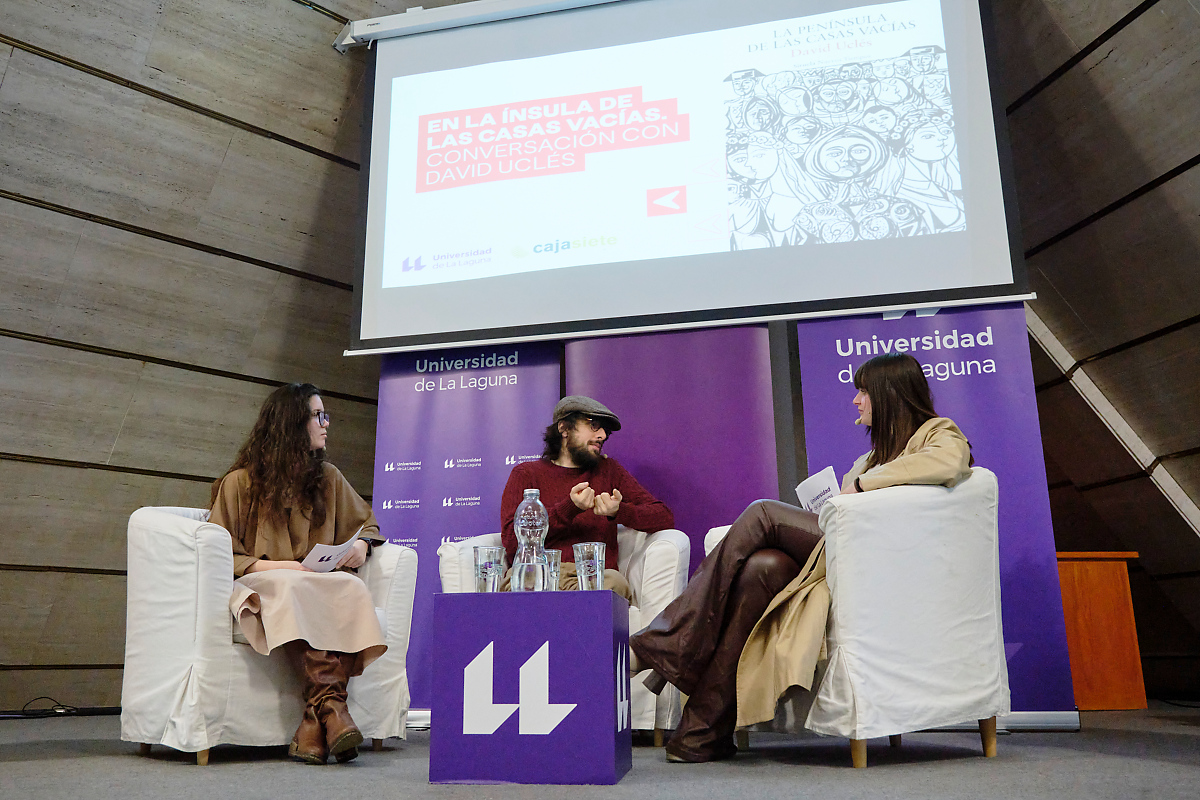 Throughout the event, the dialogue with the author was interspersed with scenes adapted from the novel by the Philology Theatre Group itself. Fragments of the story came to life on stage: a mother who loses her son, young men sent to the front, and brothers forced to fight each other in the war. The performances served as a reminder that behind major historical events, there are always concrete lives, identities, and personal stories that are often left out of history books.
Dialogue with the author
The author spoke with students from the University of La Laguna, Akeisha Illieva and Beatriz Ortiz, and discussed the creative process of '‘The peninsula of empty houses’, A work that Uclés began to develop when he was just eighteen years old and finished more than fifteen years later. During that time, he explained, the novel grew and transformed alongside him. “It was always there,” noted the author from Jaén, who dedicated years to research and traveling to different places in Spain to reconstruct the stories and settings that appear in the book.
The writer explained that his intention was not to offer a political judgment on the Civil War, but rather to bring the reader closer to what happened so that each person could draw their own conclusions. “When I wrote this novel, I wanted to depict what happened during the war and for each reader to investigate, judge, and reflect,” he stated.
 In this attempt to reconstruct the past, the work also pays attention to less visible or doubly silenced stories, such as LGBTQ+ memories during the conflict. Uclés noted that, while there are hardly any explicit testimonies about these experiences, it is difficult to imagine that love or desire were absent even in the midst of war.
During the dialogue, the writer also emphasized the difficulty of fully understanding the fear and uncertainty experienced by those who lived through that period. After years of researching the war, he acknowledged that it is almost impossible to truly grasp the anguish felt by those who lived through it. He explained that, beyond the violence and death, one of the most unsettling feelings must have been the constant uncertainty: not knowing what would happen, when the war would end, or if they would ever return home.
The conversation also turned to the role of art and literature in contemporary society. Uclés reflected on how the increasing individualization of social life has weakened spaces for collective encounter and debate. In his view, many communities have lost some of the basic tools for dialogue and expressing their opinions, in a context marked by polarization and the fear of public exposure on social media.
Faced with this scenario, she defended the role of art as a means to generate reflection and empathy. “Art has the capacity to transmit something to others and to make us see things we may not have noticed before,” she stated, also asserting the need for critical discourse to continue to have a place in the public sphere.
 The final moment of the event brought the focus back to the theatrical dimension of the performance. The Philology Theatre Group closed the evening with one of the most powerful performances of the day, a reenactment inspired by Miguel de Unamuno's words on the conflict. It evoked the idea that the Civil War was, in the intellectual's words, "a collective suicide," while also emphasizing the role of culture and thought as tools for understanding the past and avoiding repeating its mistakes.
The scene emphasized the responsibility of those who narrate, investigate, or create to keep memory alive. In that sense, the performance stressed the need to also tell the stories of those left out of official narratives: the anonymous, the forgotten, and all those whose lives were marked by the war.
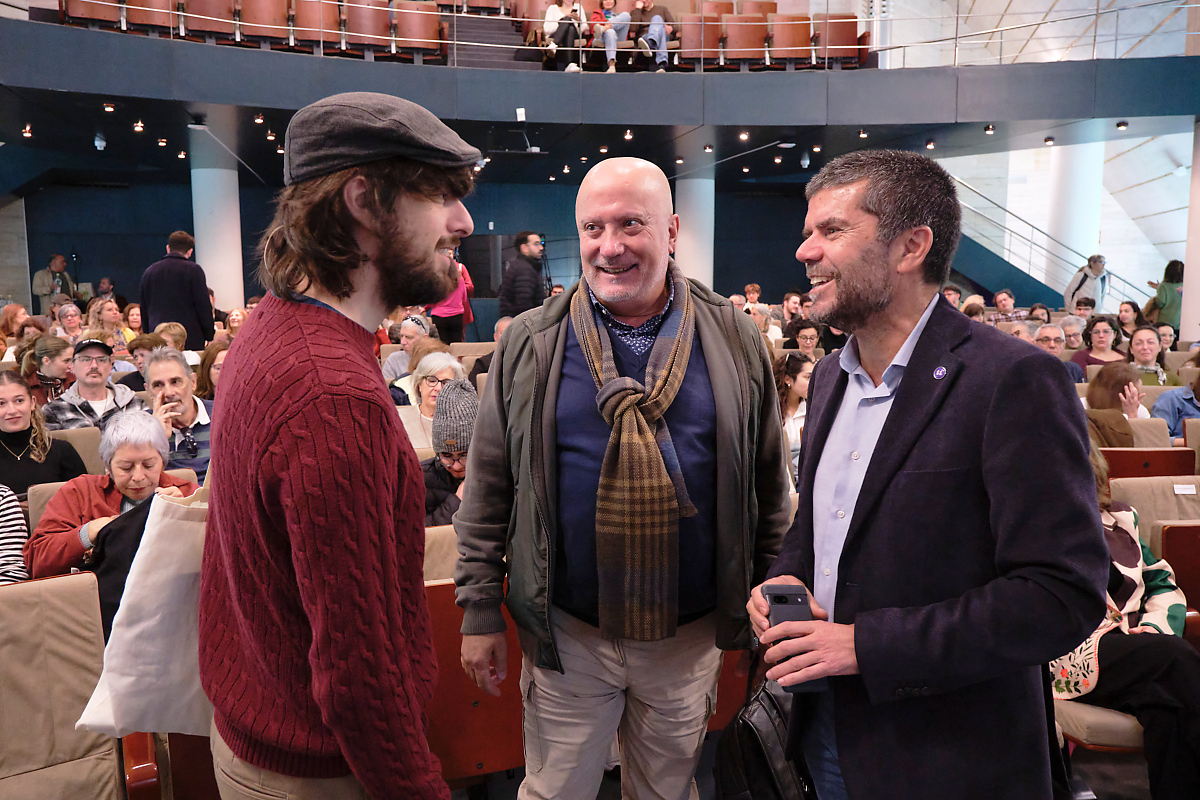
To close the event, Isabel Castells, director of the Secretariat for Cultural Development and the Library, presented the writer with a symbolic gift linked to the island's traditions: a collection of texts and materials about San Borondón, the legendary island of the Canarian imagination. This gift, like Uclés's own novel, combines history, myth, and memory to remind us that literature remains a space where past and present engage in dialogue.

 Spanish
 English
 French