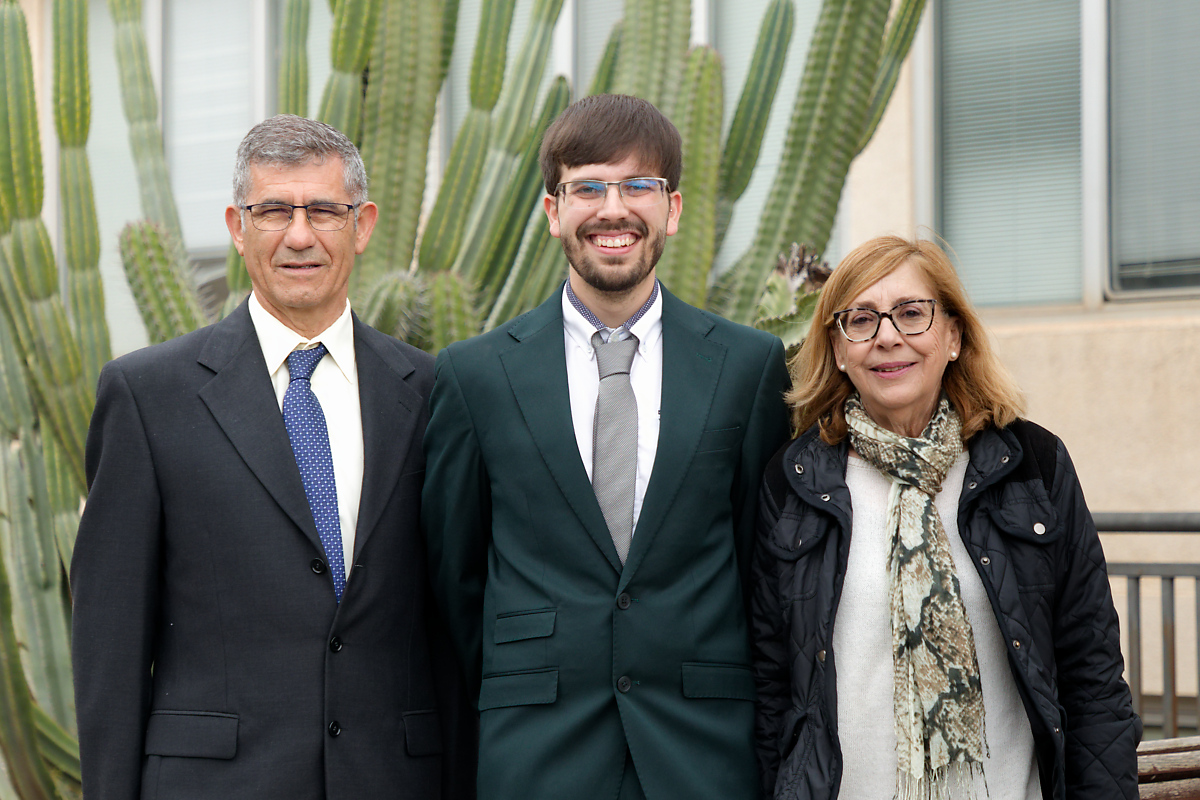
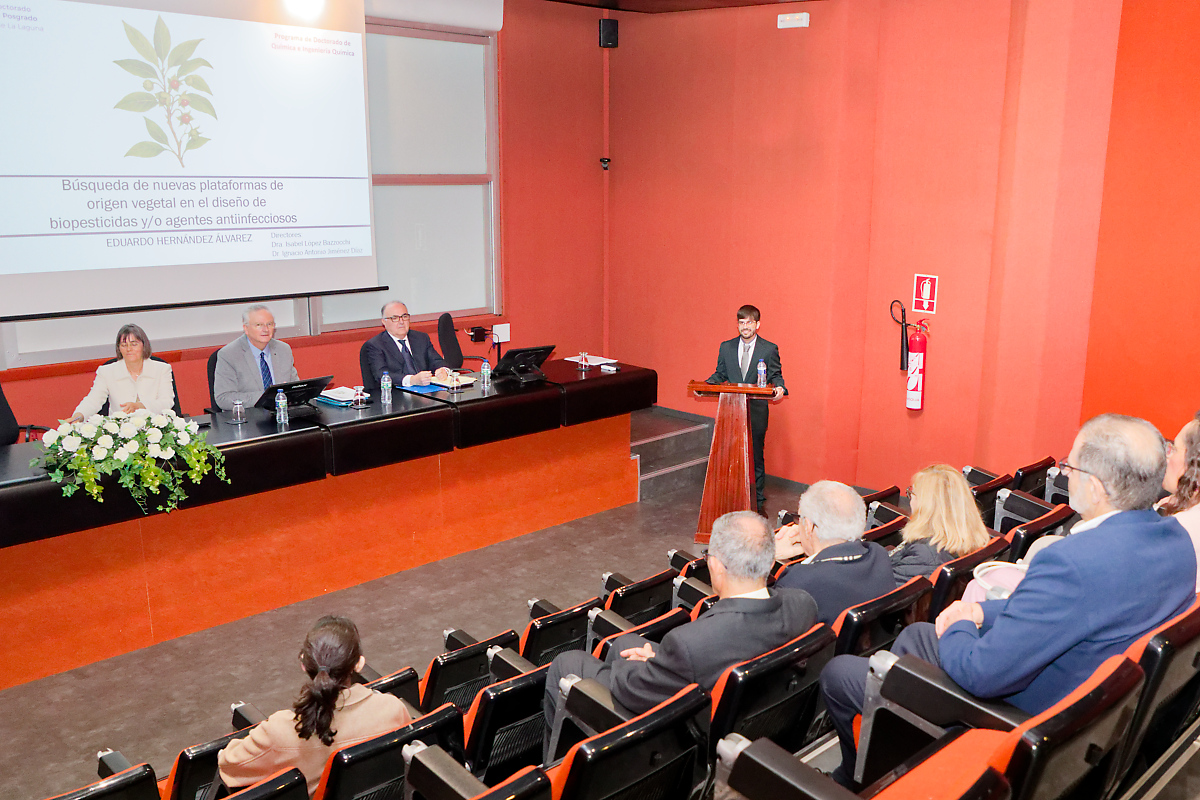
The Canary Islands, internationally recognized as a biodiversity hotspot, are not only a natural treasure, but also a strategic reserve of molecules with high therapeutic and agricultural potential. This is demonstrated once again by the doctoral thesis of Eduardo Hernández Álvarez, recently defended at the Antonio Gonzalez University Institute of Bio-organic Chemistry from the University of La Laguna, which proposes transforming local plant compounds into advanced tools for human health and crop protection.
The research, titled “Search for new plant-based platforms in the design of biopesticides and/or anti-infective agents”, has been directed by Isabel López Bazzocchi y Ignacio Antonio Jiménez Díaz, achieving a “bridge between folk wisdom and cutting-edge chemistry.” One of the pillars of the thesis is the development of antiparasitic agents to treat neglected tropical diseases, such as leishmaniasis and Chagas disease, pathogens that affect millions of people worldwide and for which treatment options are currently limited or toxic.
 Starting with withaferin A, a compound obtained from the endemic plant Withania aristata, In a project known as Orobal, the researcher used chemomodulation techniques to generate a library of compounds. Through precise structural modifications, 18 new derivatives were synthesized, 14 of which are entirely new to science. The results are promising: the new substances have proven to be more potent and selective than reference drugs, inducing programmed cell death in parasites.
In the agricultural sector, Hernández Álvarez's work aligns with the European Green Deal, which sets a target of reducing chemical pesticide use by 501,000 tons by 2030. The proposed alternative is biopesticides, compounds of natural origin that have proven to be less toxic, degrade rapidly in the environment, and prevent aquifer contamination.
Through a process called bioguided fractionation, the team identified the active ingredients of two key species, Salvia morisca (Salvia canariensis) from which salviol was isolated as a potent fungicide and from the Magarza (Argyranthemum frutescensThey obtained compounds with high bioactive capacity. These extracts have been successfully tested against phytopathogenic fungi that cause serious economic losses in the archipelago, such as fusarium wilt in banana plantations, botrytis in grapes, and alternaria in tomato and potato crops.
According to the members of the court, made up of Francisco Macías (UCA), Ana Maria Loureiro da Seca (U. Azores) y Javier Fernández Castro (ULL), The thesis stands out for its practical approach and its collaboration with key entities, as the results are being applied in real environments at the La Tahonilla Environmental Center, of the Tenerife Island Council and within the framework of the European project MacBioPest. Furthermore, trials conducted in collaboration with the company Coplaca have demonstrated the effectiveness of daisy extracts as a natural fungicide to protect the crown of banana pineapples during marketing, offering an ecological alternative to current treatments.

 Spanish
 English
 French