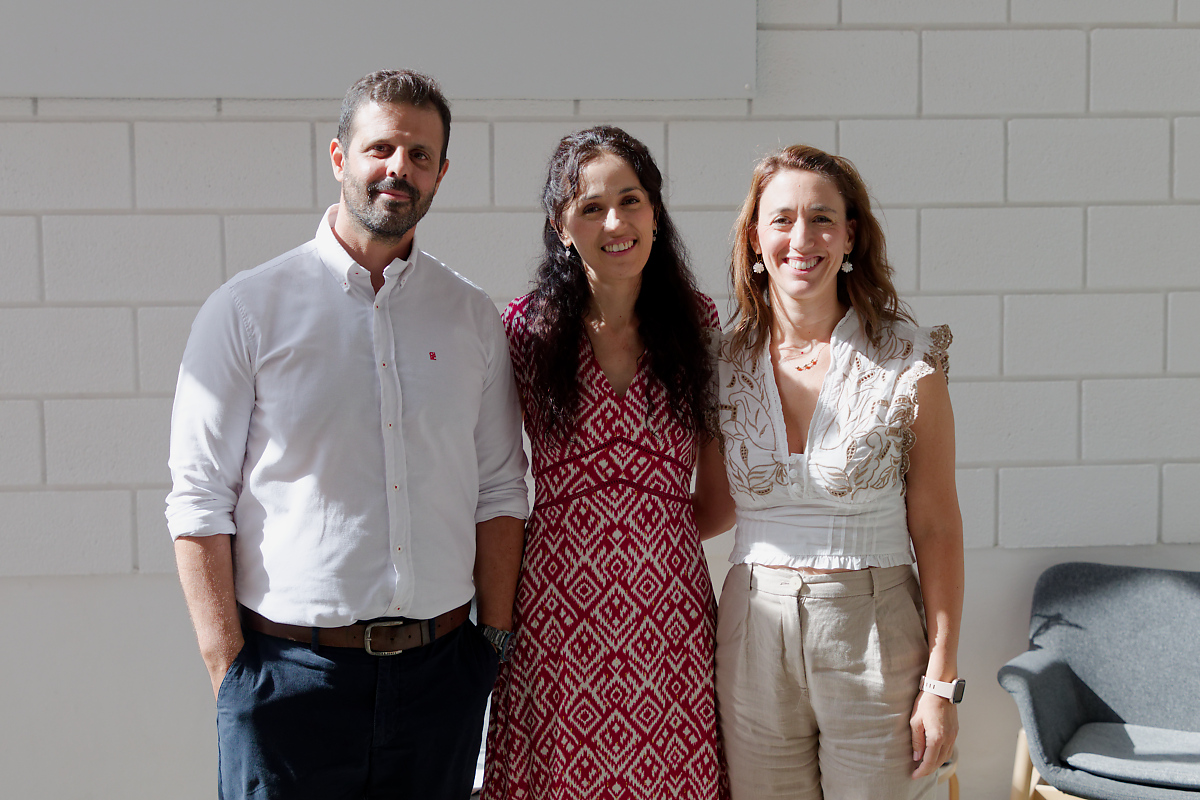
Yaiza Pérez Pérez In her doctoral thesis, she explored the use of the tetrazine ring to develop systems capable of selectively releasing drugs and other molecules of interest in the presence of hydrogen sulfide (H₂S), a substance found in higher concentrations in the cells of this type of tumor. Under the title “H-activatable therapeutic agents₂S for colon cancer”, was defended on September 17th in the Assembly Hall of the Institute of Natural Products and Agrobiology (IPNA-CSIC).
Directed by Romén Carrillo Fumero, from IPNA-CSIC, and Jimena Scoccia, A postdoctoral researcher at the same center under the Tenerife Island Council's "TALENTUM INNOVACIÓN" program, her research falls within the Doctoral Program in Medical and Pharmaceutical Sciences, Development and Quality of Life at the University of La Laguna and has received International Distinction. She has also received predoctoral funding from the Spanish Association Against Cancer (AECC) in Santa Cruz de Tenerife.
One of the main limitations of conventional chemotherapy is that systemic drugs can act on both tumor cells and healthy tissues, especially those with rapidly dividing cells. Targeted therapies aim to exploit specific tumor characteristics to activate treatment in a more controlled manner. In colon cancer, the high production of hydrogen sulfide is one such characteristic and allows researchers to explore its use as a trigger for certain chemical reactions.
This study focuses on the tetrazine ring, an aromatic system commonly used in bioorthogonal chemistry and with applications in biology and medicine. The thesis demonstrates that its properties can be exploited to develop hydrogen sulfide-sensitive compounds through aromatic nucleophilic substitution reactions. This strategy allows the design of systems in which a molecule of interest, such as a drug or a fluorophore, remains bound to the tetrazine until the reaction triggered by H₂S occurs.
Based on this strategy, a chlorambucil-based prodrug, a fluorescent probe, and a compound with theranostic properties were developed, designed to combine a therapeutic function with a visualization function. Experiments confirmed the release of chlorambucil from the prodrug and the rapid activation of the fluorescent probe in the presence of sulfide. Assays performed with various biologically relevant thiols also showed a response to the hydrogen sulfide anion, the species in which H₂S is primarily found in physiological media.
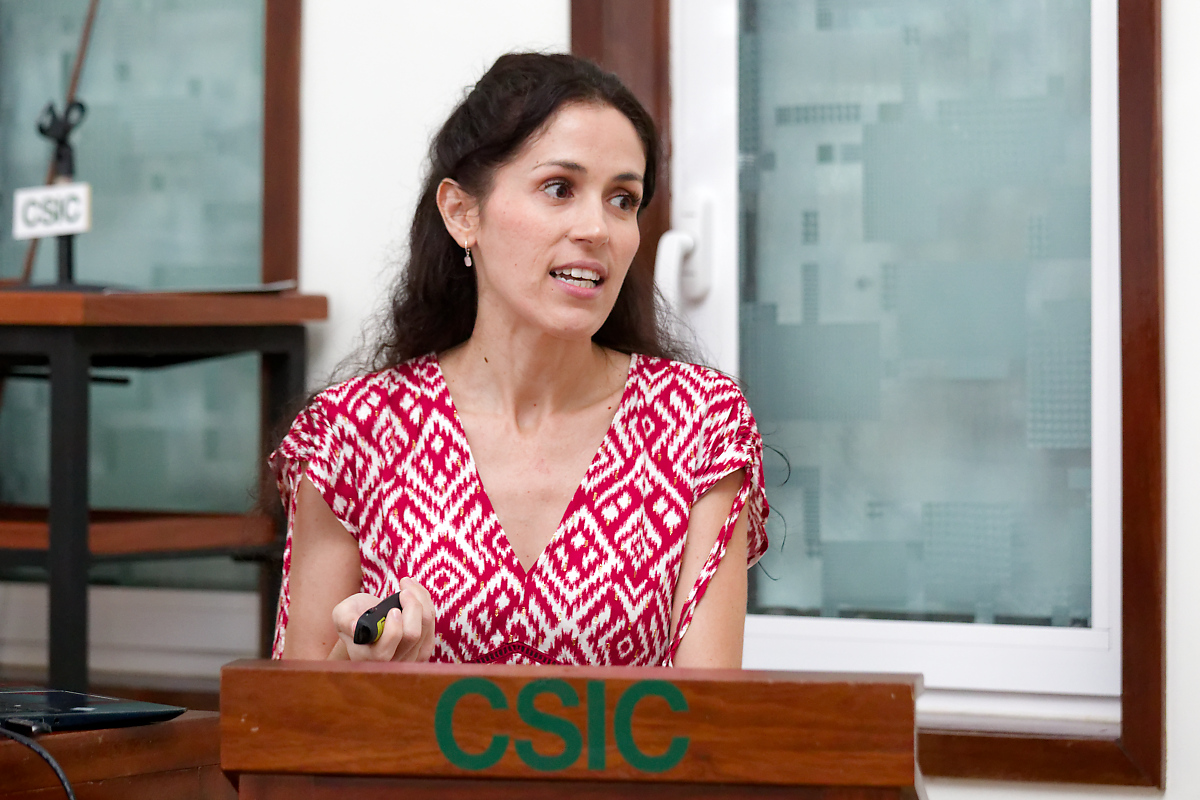
Yaiza Pérez.
The chlorambucil-based prodrug was also evaluated in cell models. The results showed selective antitumor activity in a colon cancer cell line characterized by high H₂S concentration, while no toxicity was observed at the maximum concentration tested in the other cell lines used. Similarly, the analysis of an analogous control compound, with a diazine ring, in which the nucleophilic substitution reaction does not occur, This allowed support for the proposed mechanism for prodrug activation.
An additional advantage of the tetrazine structure compared to other systems sensitive to this stimulus is its bifunctional nature, as it has two positions capable of participating in this type of reaction. This property allows for the design of systems capable of simultaneously releasing two different molecules and opens up possibilities for the development of theranostic compounds, in which one of the charges can perform a therapeutic function and the other facilitate visualization of the process. It also allows for the fabrication of tetrazine polymers that can be used as carriers for therapies against this disease.
The thesis also addresses the control of IEDDA bioorthogonal reactions in the tetrazine ring, which are widely used to control various processes such as the activation of bioimaging probes, the activation of photosensitizing therapies, or drug release. The idea is that this reaction will only occur under a specific stimulus so that the bioorthogonal system only functions in a particular cell type, for example, a tumor cell. This could improve the precision of these systems, including therapeutic bioorthogonal systems.
This reaction is controlled by supramolecular structures called rotaxanes, formed by two independent molecules linked by their shape. One of these molecules is dumbbell-shaped and, in this case, contains the tetrazine ring, while the second molecule, a macrocycle trapped between the bulky ends of the "dumbbell," hinders the reaction at the tetrazine ring. Disassembly of the rotaxane, triggered by a specific stimulus, allows the tetrazine's reactivity to be restored and the bioorthogonal process to proceed in a controlled manner.
Experiments showed that rotaxane significantly reduces the rate of the bioorthogonal reaction in the tetrazine ring. Furthermore, to test this strategy in a biological medium, a rotaxane was developed whose disassembly can be triggered by the enzyme β-galactosidase. Assays in cells with this rotaxane showed that the bioorthogonal reaction occurred selectively in a group of cells with a higher concentration of this enzyme, demonstrating the possibility of controlling the bioorthogonal process in the tetrazine ring through rotaxanation, allowing it to occur selectively in a group of cells of interest with a specific property. This work was published in the journal Angewandte Chemie International Edition and the collaboration of Dr. Teresa Giráldez's group from the ULL was enlisted.
According to this latest research, this strategy could be extended in the future to other stimuli, such as H₂S, and to systems designed to control drug release, although further studies would be needed to optimize the design of the rotaxanes and improve the degree of inhibition of the reaction. Overall, the results obtained lay the groundwork for continued research into chemical systems capable of activating drugs and other molecules of interest in a controlled manner based on specific characteristics of tumor cells.
The thesis, which received the highest possible grade (Cum Laude), was evaluated by a panel chaired by the Tomás Martín Ruíz, from IPNA-CSIC, and comprised of the María Tomás Gamasa, from the Singular Center for Research in Biological Chemistry and Molecular Materials (CIQUS) of the University of Santiago de Compostela, and the Asier Unciti Broceta, from the University of Edinburgh.

 Spanish
 English
 French