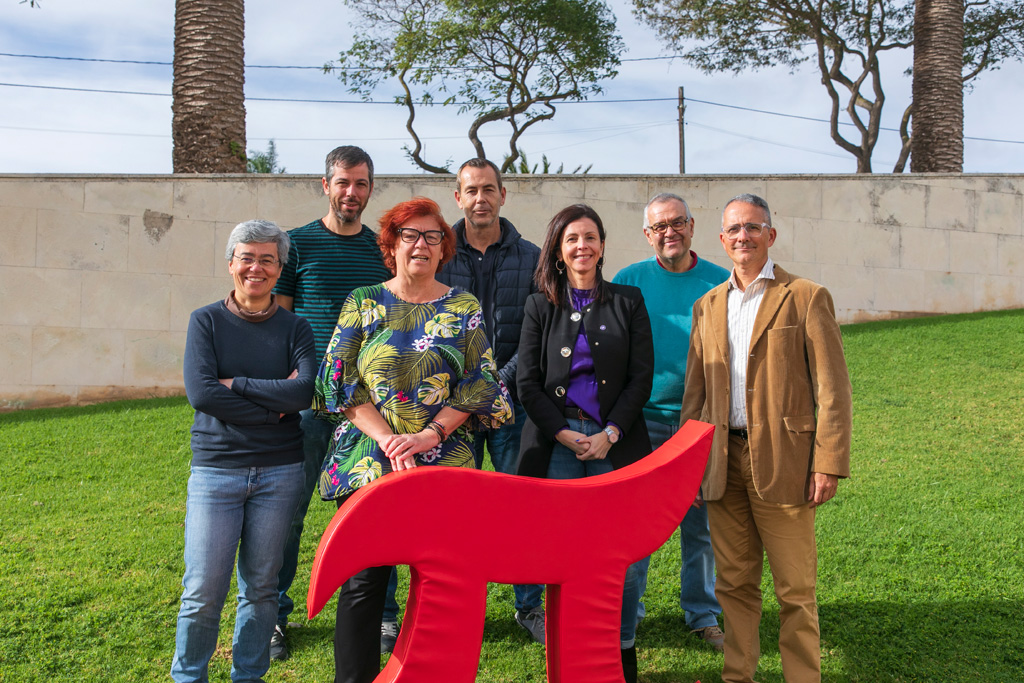
During the Covid-19 pandemic, mathematics played a vital role in its prevention, prediction, and control. The discipline was fundamental, among other things, in quantifying the state of the population and developing indices that assessed the spread of the virus, as well as in predicting informed public health decisions using mathematical models. This is just one example of this discipline's capacity to address problems of virtually any kind, including problems of critical importance such as this health crisis.
To highlight this importance, during the 40th UNESCO General Conference, held in 2019, a resolution established March 14 as the International Day of Mathematics, formerly known as Pi Day (3/14). This commemoration reaffirms the recognition of mathematics in solving challenges such as health, transportation, logistics, artificial intelligence, and sustainable development.
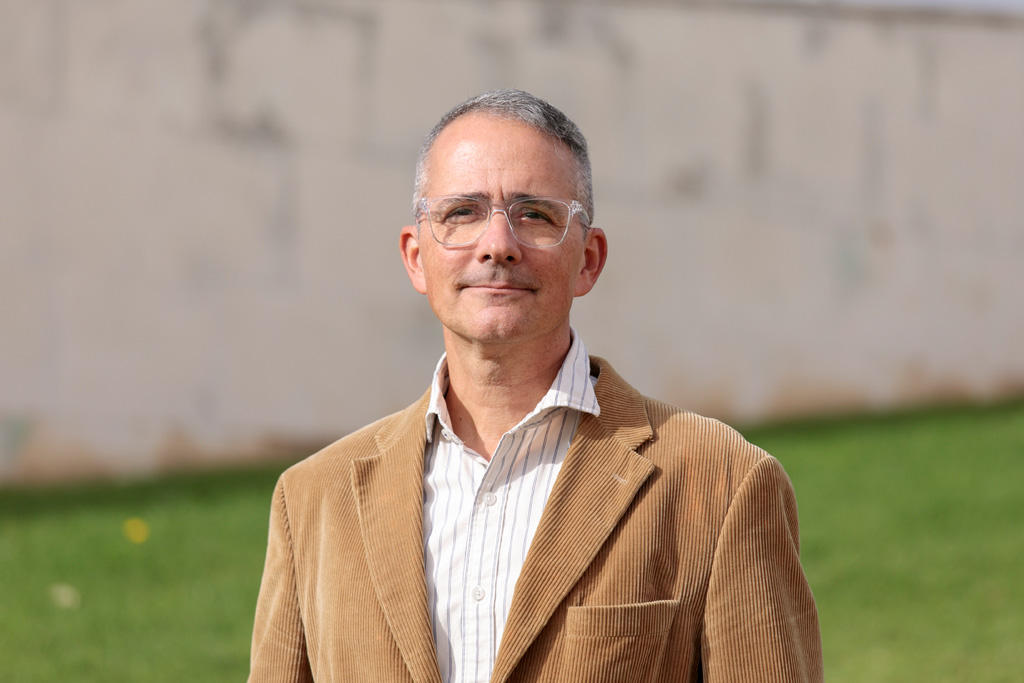
Juan José Salazar.
At the University of La Laguna, several researchers contribute from their fields of study to address certain current challenges. One of them is Juan José Salazar, from the area of Statistics to Operations Research, who, after three decades, continues to dedicate himself to the study of logistics from a resource optimization perspective. In collaboration with Applied Mathematical Optimization Group (GOMA) He is responsible for this project and has published over a hundred articles in this area.
Salazar focuses on creating mathematical models inspired by logistical problems in diverse areas, such as vehicle transportation or airline fleet management. An example of his work is his collaboration with the airline. Binter, where it provided tools to optimize the management of aircraft fleets and crew teams. It has also collaborated with the Canary Islands Institute of Statistics (ISTAC) in the logistics of selecting surveyors who travel to airports to collect data related to the shopping basket.
In 2023, the Government of the Canary Islands approved the creation of the first University Institute of Mathematics and Applications of the ULL in the archipelago, appointing Salazar as its director. According to the researcher, this initiative means having representation in a national network of institutes, as well as facilitating access to both economic and human resources and the establishment of collaborations with companies.
Salazar points out that both pure and applied mathematics are priority research areas within the institute, and in fact, one of the main objectives is to establish postgraduate studies in mathematics that integrate both areas. However, there is currently insufficient student demand to justify creating a master's program with these characteristics.
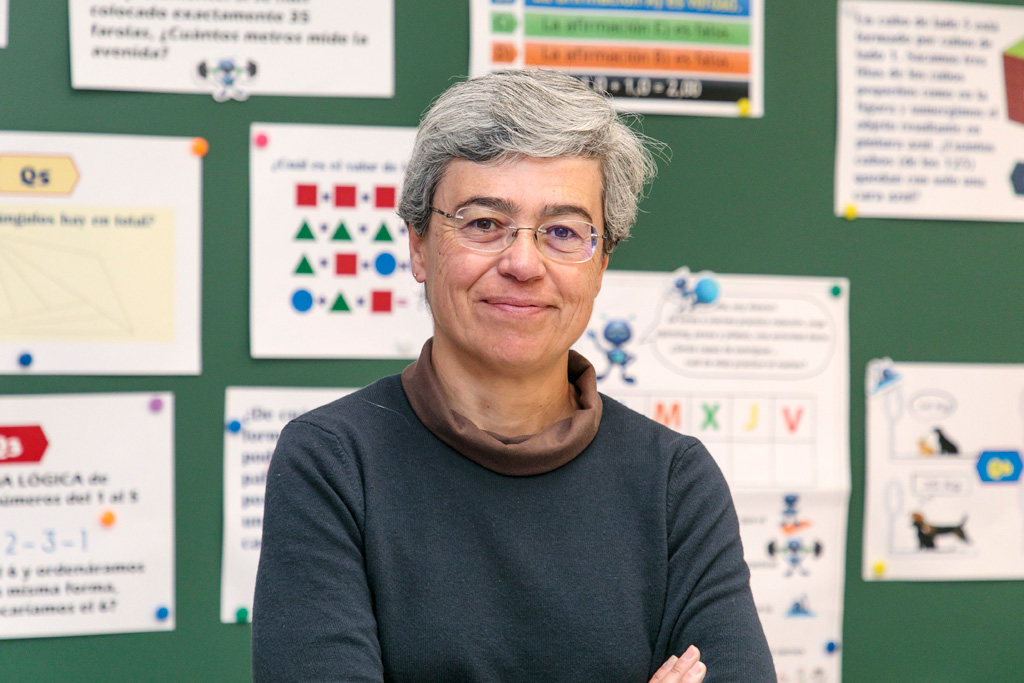
Inmaculada Rodríguez.
Application to transport
Inmaculada Rodríguez, a researcher also attached to the GOMA research group, studied mathematics and focused her thesis, directed by the researcher in the area of Computer Science and Artificial Intelligence José Andrés Moreno, In location research, a field of operations research focused on finding the optimal location for specific services, she later delved into problems related to the optimal design of networks for her doctoral thesis, under the supervision of Moreno and the Belgian researcher Martine Labbé. Since then, her research has been dedicated to the design of exact and heuristic algorithms for various optimization problems.
Currently, Rodríguez is working on route optimization for vehicle fleets. “When one of the vehicles in a fleet is temporarily unavailable, the others have to continue providing service. Our goal is to minimize the impact on customers when the necessary route reconfiguration for the remaining vehicles is disrupted,” he explains. Rodríguez has also contributed his expertise to the development of branch-and-bound and approximate algorithms for various routing and goods distribution problems.
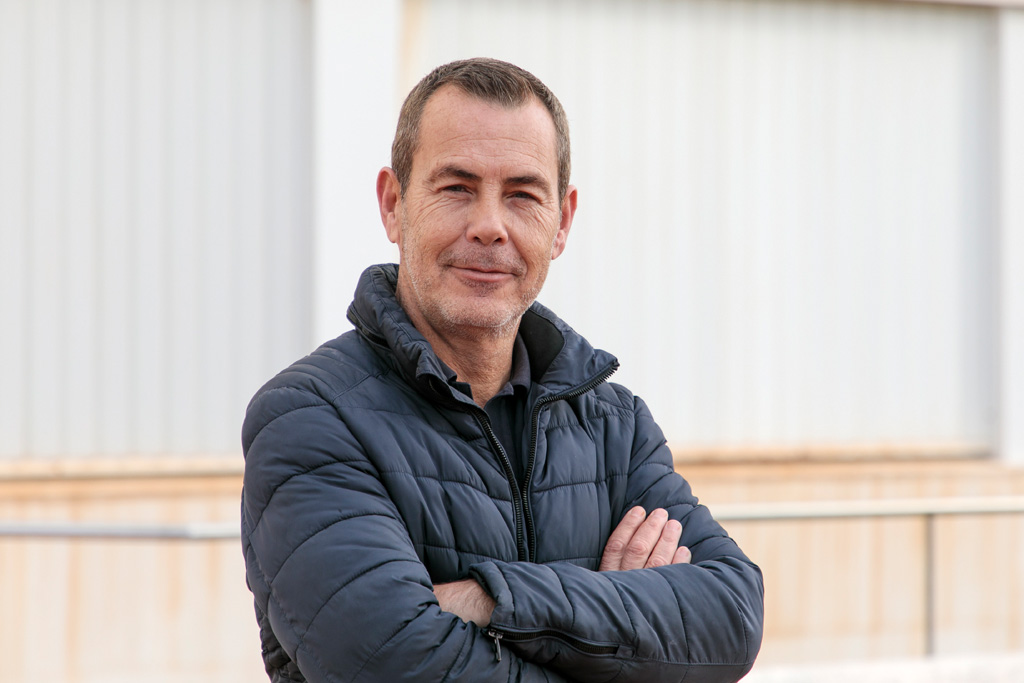
Antonio Sedeño.
Antonio Sedeño, researcher of the research group in Network Optimization, He began his studies in physics and specialized in electronics. He entered university in the area of Computer Languages and Systems He then moved into the field of Statistics and Operations Research, since his initial research led him to network flow problems. Sedeño emphasizes the effort he dedicated to these issues during this initial stage, because they provided him with various algorithmic tools to address multiple optimization problems.
Currently, Sedeño is directing two industrial doctoral theses in collaboration with Transportes Interurbanos de Tenerife (TITSAThe research aims to identify operational problems within the company that can be improved through modeling. The goal is to develop specific algorithms that will enable rapid and efficient solutions. "It's a tool that helps make the best decisions, and then others decide whether to use it," the researcher explains. Through his published articles and the supervision of these theses, Sedeño is transferring knowledge to TITSA, which the company can then leverage.
In this way, both Rodríguez and Sedeño, thanks to their research work in transport optimization, They contribute in some way to environmental sustainability. As Rodríguez explains: “We design algorithms to efficiently solve routing problems.” He adds: “This will result not only in minimized costs, but also in a reduction of emissions that impact the environment.”.
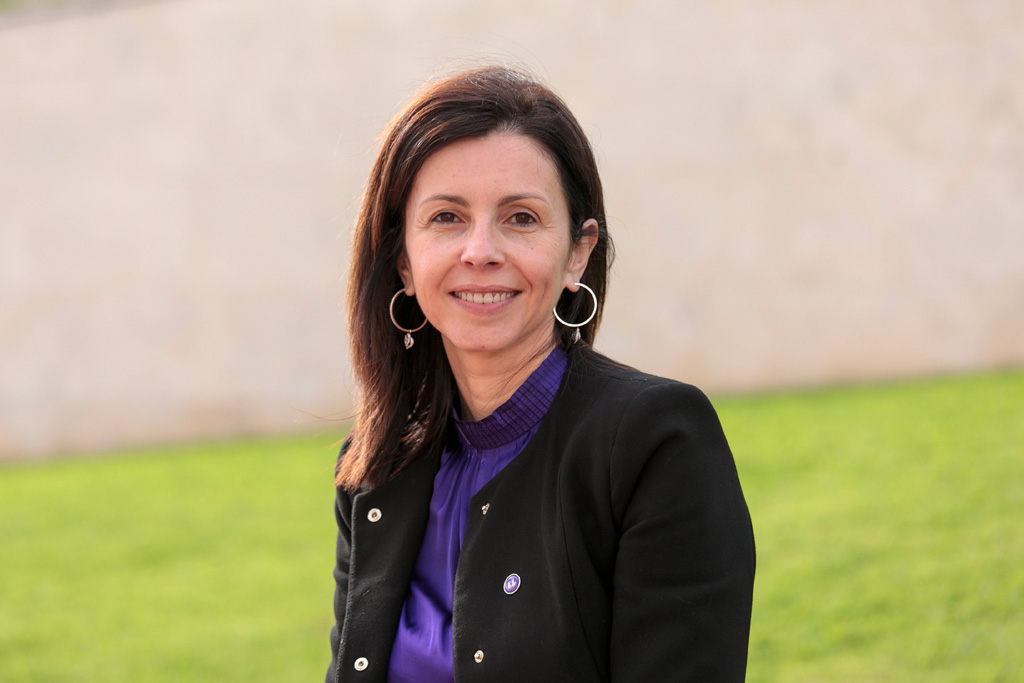
Belén Melián.
Logistics optimization
“I discovered programming when I was 11 years old,” he says. Belén Melián, researcher in the area of Computer Science and Artificial Intelligence. It was in a summer typing workshop in the Gran Canaria city of Arucas where he discovered he could learn the Basic programming language. He then studied for a degree in Mathematics and, in his third year, began programming with Fortran 66 to perform numerical computation.
Later, Melián progressed in his research and developed his thesis on combinatorial optimization problems through the design, implementation, and analysis of exact algorithms—designed to find an optimal solution within a given time—and heuristic algorithms—which do not guarantee such a solution. His advisors, the aforementioned José Andrés Moreno and Manuel Laguna, a professor at the University of Colorado at Boulder, challenged him to design fiber optic telecommunications networks that would guarantee the flow of information. This thesis not only helped him develop algorithms and understand the state of the art of the problem, but also improved his skills in writing, defending, and publishing scientific articles. “The thesis enables you to pursue a research career independently,” he states.
Melián has also dedicated himself to the study of metaheuristic algorithms, which approach problem-solving by combining intensification and diversification, especially in the area of sustainable logistics. In Spain, the transport sector represents the 25% of total emissions of greenhouse gases, and road transport is responsible for 951% of these emissions. Among the measures to reduce these emissions is the intelligent management of goods distribution through collaborative transport. In this sense, one alternative is the cross-docking, A collaborative supply chain strategy where shipments from multiple suppliers are unloaded at a transshipment point, sorted and consolidated according to the end customer, and then loaded directly onto outbound vehicles to send the goods to the corresponding recipient.
Another field where Melián has tackled optimization problems is port logistics. The work he carried out with his colleagues in the Computer Science and Artificial Intelligence department to solve optimization problems in logistics led to the creation of the company in 2019. spin-off Kaizten Analytics. The project originated from the motivation to transfer knowledge through the publication of results in high-impact journals or presentations at conferences. However, Melián is no longer part of the company: "My departure is due to personal reasons and a shift towards new professional interests," he explains.
She is currently working on three projects. First, she is one of the principal investigators on the State Plan project. Intelligent system to support collaborative freight transport. Furthermore, she is involved in a European project., Canary Islands Digital Innovation Hub (CIDIHUB), which aims to bring digitalization closer to companies in the field of data analytics and optimization. And, finally, she collaborates on the Artificial Intelligence Model project to enrich and improve mathematical skills in adolescent students (MATHIA). “I find it exciting to be able to contribute my knowledge to this project so that teenagers can benefit from everything I have learned about technology,” says Melián.
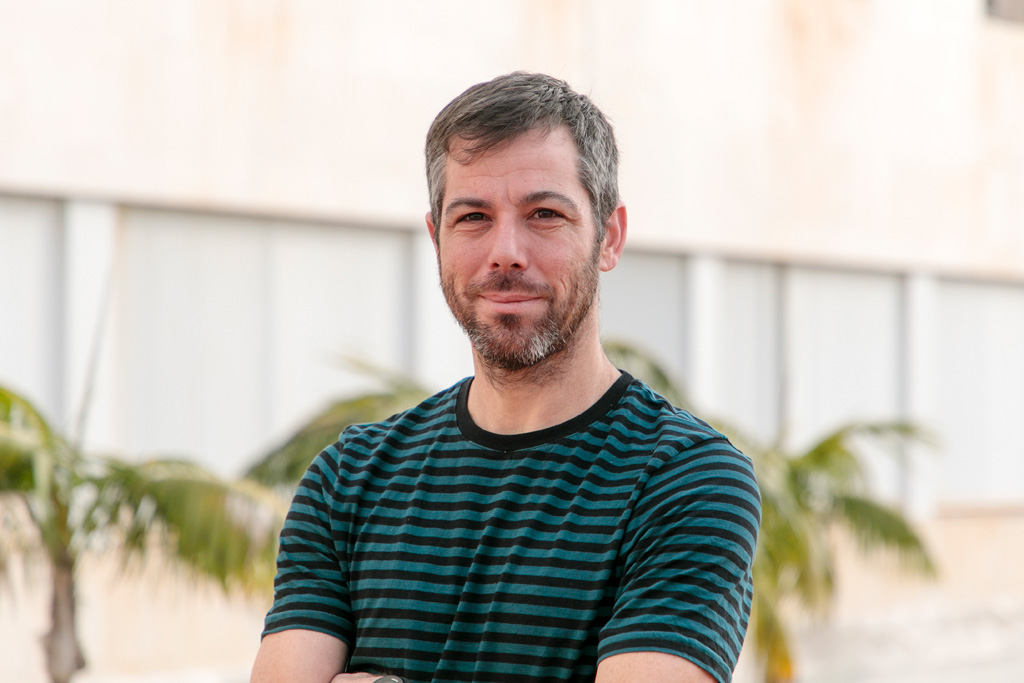
Ignacio García.
Computational algebra
In the area of algebra, the researcher Ignacio García He recalls that during his undergraduate studies, two aspects of this field caught his attention: first, the methods for solving problems efficiently; and second, the evidence that some problems are impossible to solve, which he learned in a course called Galois Theory: “I found it very striking that mathematics can demonstrate that a problem is impossible to solve using certain methods.” Later, García developed his thesis on a particular family of curves that is of great interest in fields such as chemistry, since they describe certain reactions.
García's research focuses on computational algebra. This involves transferring problems with polynomials and the solution of systems of equations to a computer for calculation. He is involved in research projects that seek methods for rapid computer solving. His strategy is to associate a graph with the system of equations. "We transform an algebra problem into a combinatorics problem using a visual object," García explains.
Algebra is experiencing a moment of great importance due to its applications. First, the rise of Big Data, data science, and artificial intelligence has generated the need to handle massive amounts of information, and in this field, linear algebra is emerging as a tool that can facilitate the processing of these enormous datasets. However, in his opinion, "the current challenge lies in the ability to handle monstrous quantities of matrices," which can be composed of millions of rows and columns.
On the other hand, there is the study of cryptography. Until recently, data security relied primarily on integer factorization problems. However, algebra is proposing new solutions based on the study of polynomials.
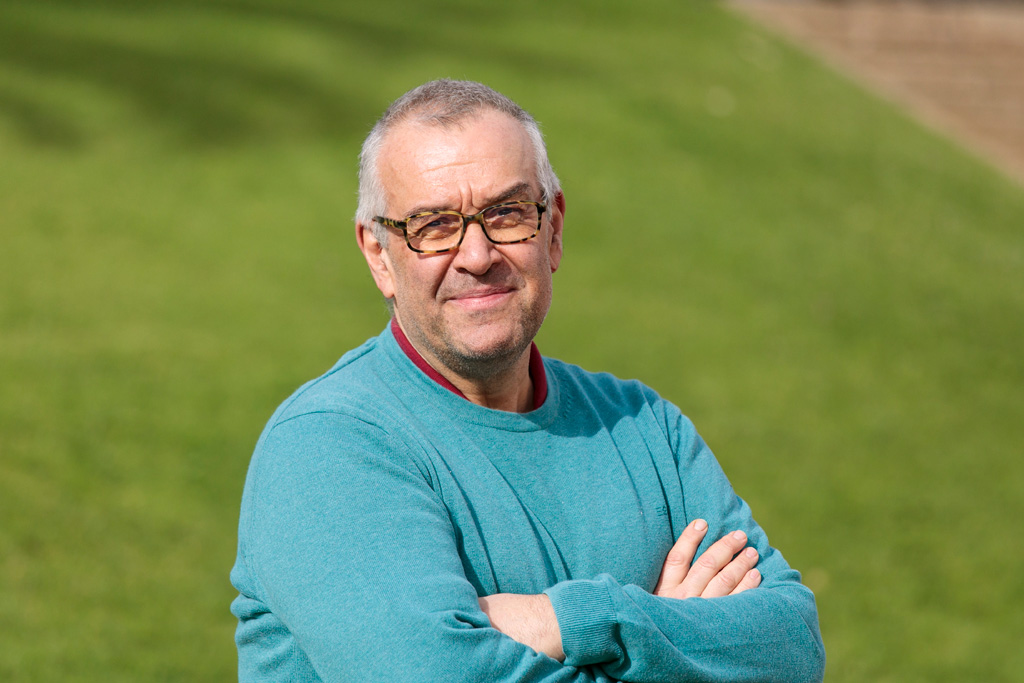
Rodrigo Trujillo.
Synergy between mathematics and biomedical science
Rodrigo Trujillo, researcher in the area of Mathematical Analysis, He identifies as an atypical mathematician, since he claims he is never doing the same thing twice. Although his main focus has been harmonic analysis, he currently collaborates closely with the research group of Cellular and Viral Immunology, He joined the university thanks to his extensive knowledge of university management and the scientific community. He also has considerable experience in securing European funding. He has held important positions, such as Director of the Research Results Transfer Office, Vice-Rector for Internationalization and Cooperation, Coordinator of the Campus of Excellence, and Vice-Rector for Research and Transfer.
“From a mathematical perspective, I contribute to the group in more prosaic aspects of statistical analysis,” says Trujillo. The researcher emphasizes that the great treasure of biomedical science, especially in patient treatment, lies in the data obtained. In this sense, communities of patients affected by infectious diseases provide a wealth of information that, in many cases, is ephemeral due to the disappearance of risks to patients after receiving treatment or due to vaccination, among other measures. For this reason, there is great interest in diseases without effective treatment, such as the human immunodeficiency virus (HIV) or Zika. In this context, mathematicians are responsible for analyzing the recorded data. On the other hand, there is genetic analysis; an essential aspect is the classification of biopathogens, which involves a huge volume of data and the use of tools that today rely on artificial intelligence.
In this sense, the market reality is heavily influenced by artificial intelligence. Trujillo indicates that one of the social challenges facing the university, specifically the mathematics community, is its ability to adapt to this changing environment: “Currently, artificial intelligence is advancing at a stratospheric speed compared to the evolution of our curricula,” he states. Another challenge lies in fostering research so that the mathematics community in the Canary Islands and Spain continues to maintain its intellectual capacity and does not disperse due to the choice of other professional paths or emigration to other countries.
Trujillo says he always has several pots on the fire. Among other things, he is part of the steering committee of STARS EU, an alliance of regional universities that since 2023 has managed to establish itself as one of the European Universities driven by community institutions. Trujillo is in charge of work packages related to academic offerings and the organization of research and knowledge transfer.
Furthermore, for the past year, he has held the position of president of the professional commission of the Royal Spanish Mathematical Society, The organization, which provides information about the mathematical community and organizes events and activities, is currently preparing a national data analysis and visualization competition to encourage undergraduate and graduate students to work with data related to the Sustainable Development Goals.
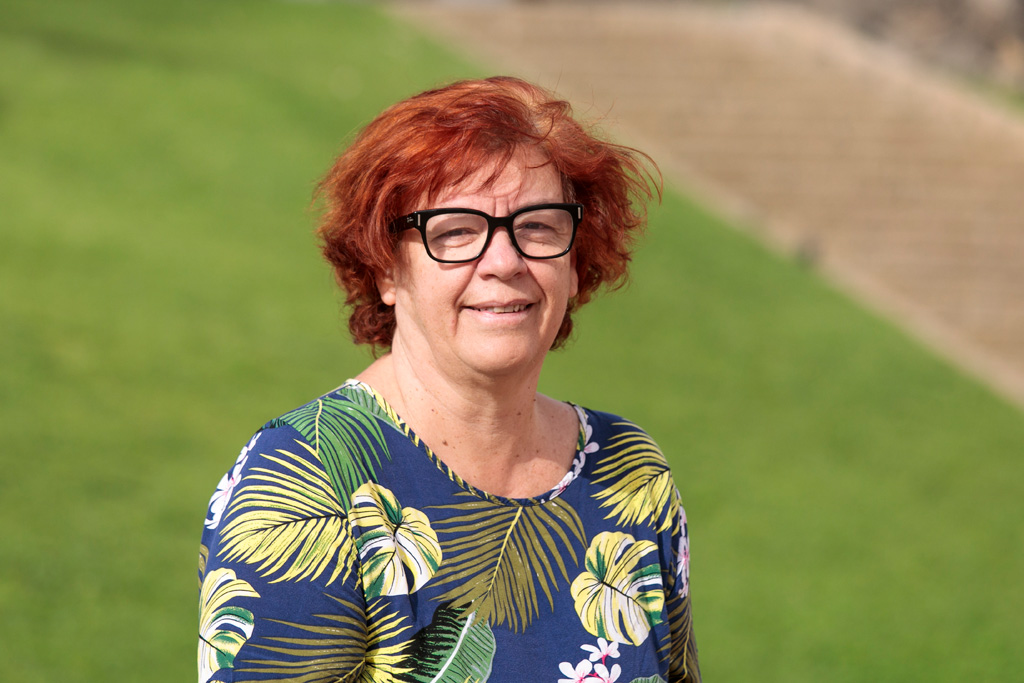
Edith Padrón.
Popularization, a balm for the fear of mathematics
Edith Padrón, coordinator of the Educational Mathematics Cultural Classroom A study by the University of La Laguna highlights that a portion of the population fears not understanding or participating in conversations about mathematics. This is reflected in the fact that Spanish students recorded their worst historical results in this subject in the 2022 edition of the [unclear text - likely a specific competition or exam]. PISA Report. Furthermore, their reading scores worsened compared to 2018. In response, the Spanish government has announced a plan to strengthen mathematics and reading comprehension in the upcoming General State Budget, which Padrón believes will help create more critical citizens, thus facilitating the understanding of any subject. For his part, Rodrigo Trujillo maintains that the emergency plan aims to address the problem of low academic performance among students and reduce the school dropout rate.
Since 2020, the first year the International Day of Mathematics was celebrated, a different theme has been chosen each year to encourage participation, foster creativity, and build connections between mathematics and other disciplines. The theme for 2024 is “Playing with Mathematics.”.
Padrón has promoted various activities. For example, together with TITSA and Tenerife Metropolitan have created the activity “Mathematics that transports us”This involves presenting math problems on billboards, posters, and screens in public transport. “The idea is that people waiting at the bus stop will solve the problem and share it on social media,” Padrón explains.
Furthermore, in collaboration with the Canary Islands Academy of Sciences, the Cultural Center has organized workshops, such as escape rooms in it San Sebastián de La Gomera Secondary Education Institute. Furthermore, in the Mathematics and Physics sections, a series of games have been developed in the square located in front of the building and an activity called “The Thinking Corner”where students can solve math problems published in newspapers. Their answers are placed in a box that is later opened to check which ones were solved correctly. The student who gets a correct answer will be rewarded with a book from the popular science series "A Bit of Math.".
And finally, on March 14th, the fourteenth season of “A little bit of math”which will run until May. This series offers engaging and entertaining talks lasting less than 10 minutes and focusing on mathematical content. The protagonist of the first "fisquito" of the new season is Jaime Madrid, popularizer and creator of the Lemnismath YouTube channel. According to Padrón, this activity distinguishes students in the Mathematics degree program at the University of La Laguna from those in other degree programs because they are responsible for creating the content of the presentation after receiving prior training. Padrón also emphasizes that this activity helps students understand the importance of communication and contributes to boosting their self-esteem in this area.
When the educational series began, Padrón confesses that he didn't expect it to have much impact. However, today the series is a resource used by secondary school teachers in their classes and has even garnered the participation of two students in an episode of the thirteenth season. Furthermore, the series is known among the mathematical community unfamiliar with Canarian culture, so outside the Canary Islands, Padrón is sometimes asked: “Are you the one in charge of the activity with such a peculiar name—'fisquito'?‘.
Padrón's interest in popularizing mathematics arose alongside his research. During his final year of undergraduate studies in Mathematics, he realized he wanted to continue studying the subject, but he didn't see the possibility of remaining at the university, so he began teaching at a high school in La Palma. However, his situation changed when a colleague from his department encouraged him to apply for an open position at the University of La Laguna. Thus, Padrón began by writing his undergraduate thesis, then his doctoral dissertation, and finally joined the research group. Differential Geometry and Geometric Mechanics. At the same time, the researcher in Mathematical Analysis at the Tenerife center María Isabel Marrero He recommended that she take some outreach courses that sparked a definitive motivation in her for outreach.
“The most rewarding aspect of science communication is seeing the audience's eyes light up when you explain something simply without sacrificing scientific rigor,” Padrón emphasizes. He maintains that the challenge of making mathematics more accessible and engaging for an audience not particularly enthusiastic about the discipline lies in sparking their curiosity. In the research field, Padrón believes that the importance of science communication has been increasingly recognized over time. However, Padrón would like to take his role to the next level in this area: he would like to focus more on creating new content.
This report is an initiative framed within the InvestigaULL Commemorations Calendar, a scientific dissemination project promoted by the University of La Laguna.
Scientific Culture and Innovation Unit of the University of La Laguna-Cienci@ULL

 Spanish
 English
 French