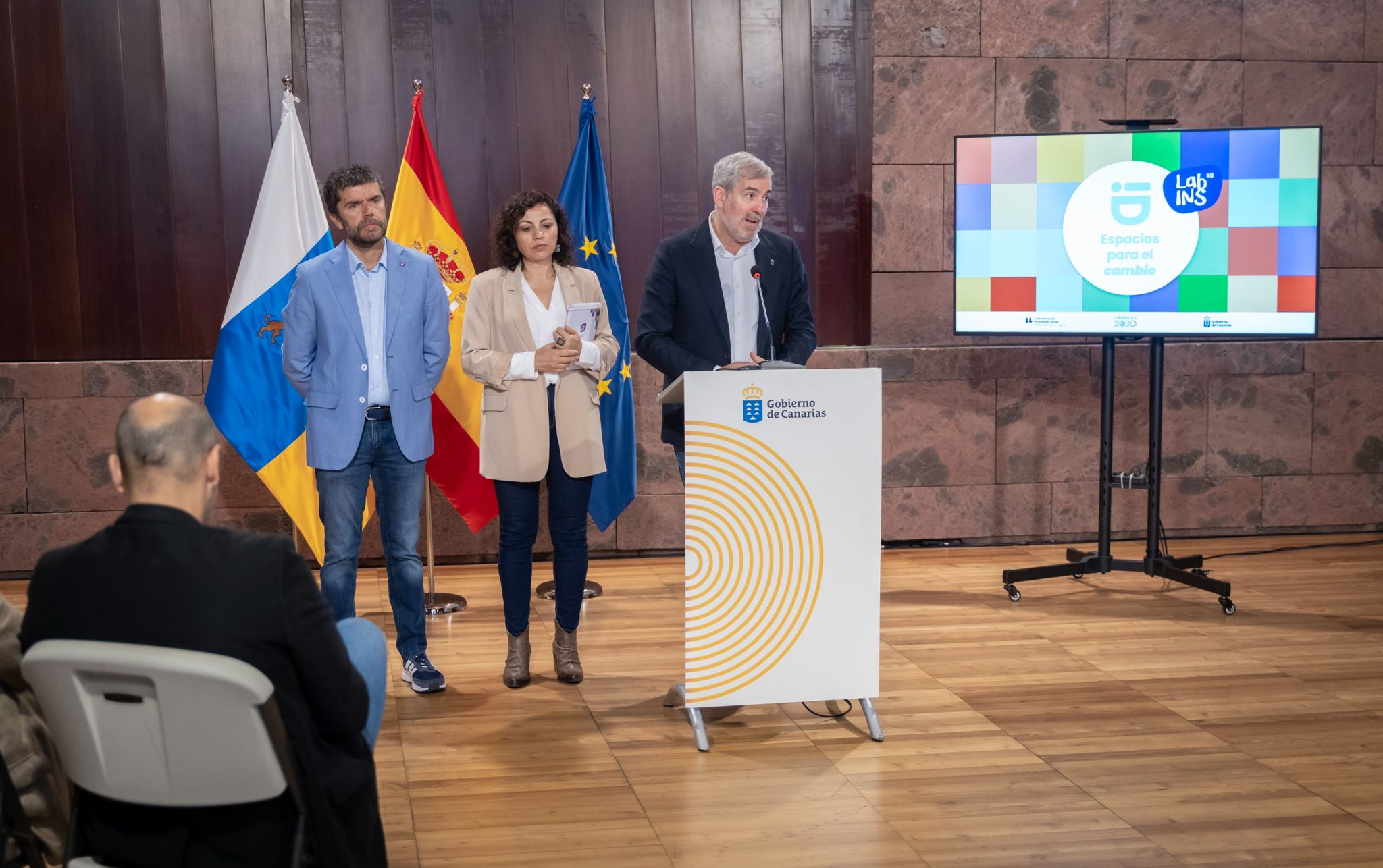
The Government of the Canary Islands is promoting the dissemination of Canary Islands Agenda 2030 Through the publication of a booklet for the educational community that encourages them to become “local actors” in the Sustainable Development Goals (SDGs). The President of the Government of the Canary Islands, Fernando Clavijo, and the Rector of the University of La Laguna, Francisco García, presented this Wednesday the printed version of the DIScomplicada Agenda, a working tool that promotes knowledge of the Canary Islands Agenda 2030 and aims to involve the entire society in its implementation.
In this regard, the head of the regional government highlighted the importance of this 'Practical Guide for Local Action on the SDGs' as a tool to involve citizens in the archipelago's progress towards economic, social, and environmental sustainability. He reiterated the regional government's firm commitment to sustainability but stressed the need for an alliance between government bodies and society to "build a better Canary Islands together.".
Fernando Clavijo believes that the dissemination of the 2030 Agenda should focus particularly on raising awareness and engaging young people, as key players in the immediate future of "the more sustainable Canary Islands we all aspire to." To achieve this, efforts are underway to encourage the Department of Education to promote the use of this "engaging" tool in classrooms.
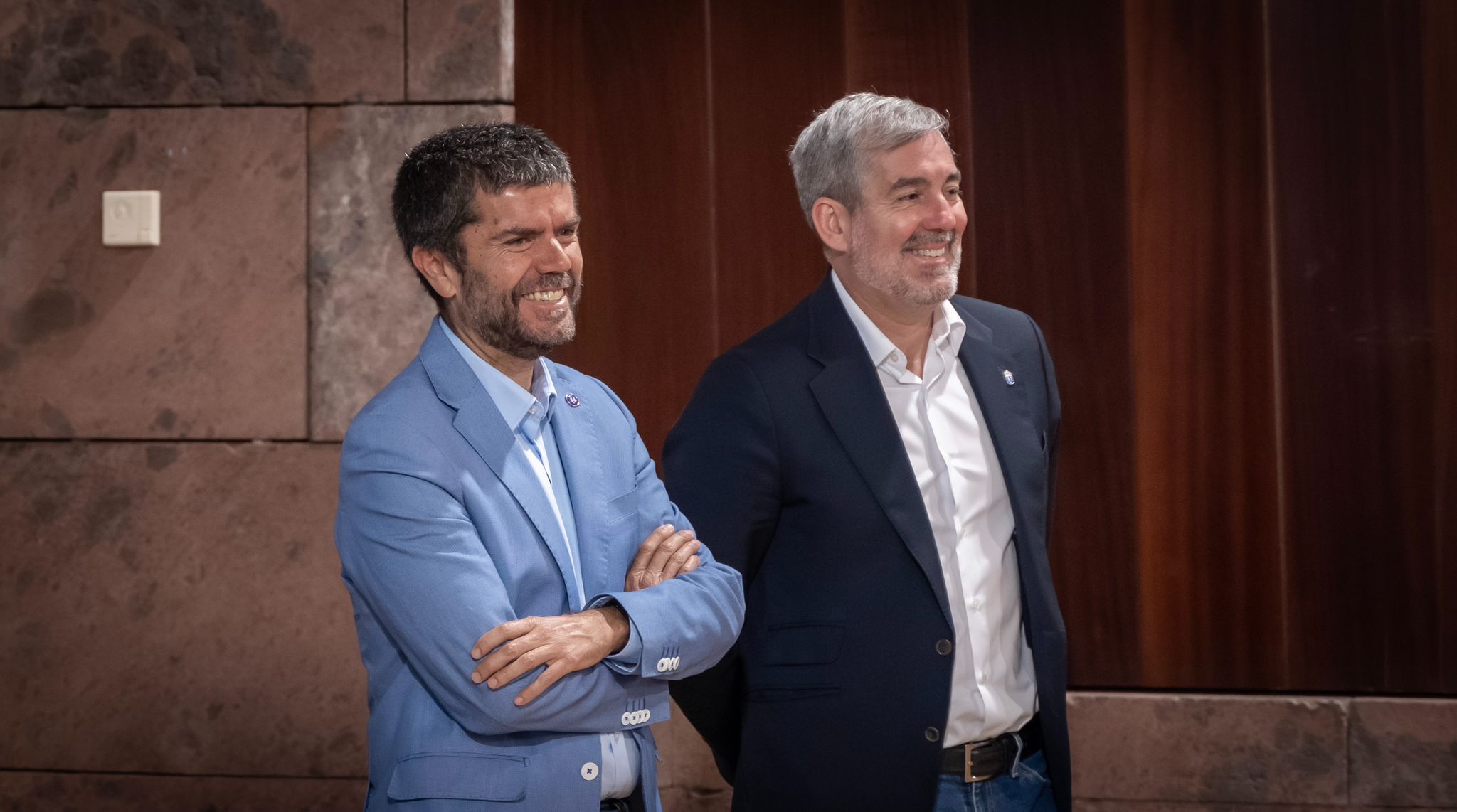 Along the same lines, the Rector of the University of La Laguna highlighted during the event the work carried out by the Social Innovation Lab team in creating this practical guide on the Canary Islands 2030 Agenda. García emphasized that the "DIScomplicada" Agenda is designed so that anyone, regardless of age, can learn about the Sustainable Development Goals and become involved in achieving them. In fact, this guide includes practical exercises that can be done individually or in groups.
Furthermore, the rector described the collaboration between the regional government and the Canary Islands' public universities as "fundamental" in implementing initiatives related to the SDGs. In fact, the University of La Laguna and the University of Las Palmas de Gran Canaria (ULPGC) will launch fourteen research projects this year, financially supported by the regional government, to find innovative solutions related to the Canary Islands 2030 Agenda.
Agents of change
An example of the fruit of this alliance between the Government and universities is the workbook for the educational community presented this Wednesday, a resource generated within the framework of the Spaces for Change initiative, which began in 2021. With a grant of €149,950 from the Government of the Canary Islands, the DIScomplicada Agenda calls for becoming “a protagonist of change for the common good,” as explained by Mónica Dios, director of the Social Innovation Lab from the academic center.
God has emphasized that "developing practical and educational resources is crucial to implementing the 2030 Agenda," as they "facilitate the understanding and application of its objectives, fostering active and conscious participation of society in building a sustainable future for all people.".
The 'Practical Guide for Local Action on the SDGs' is a simplified version of the Canary Islands 2030 Agenda, designed with input from people of all ages across the eight Canary Islands. It addresses the five dimensions of the Canary Islands' adaptation of the text adopted by the UN on September 25, 2015, with the aim of fostering the involvement of "change agents" in local processes of social and environmental transformation in the archipelago.
The five dimensions that make up the Canary Islands Agenda 2030 are public governance, prosperity, planet, people, and culture. This last dimension, Culture, is a unique focus in the archipelago, because the regional government considers it “impossible” to act on the other dimensions and SDGs without paying attention to cultural objectives.
In line with the SDGs, the ULL Social Innovation Lab has designed this workbook—along with the accompanying stories and worksheets, also presented this Wednesday—using sustainable features such as the predominance of white in its illustrations and a limited print run of 80 copies. Priority has been given to the digital version, which is more interactive and durable, and can be accessed at the following link: https://linktr.ee/labins.ull
(Note and photo provided).

 Spanish
 English
 French