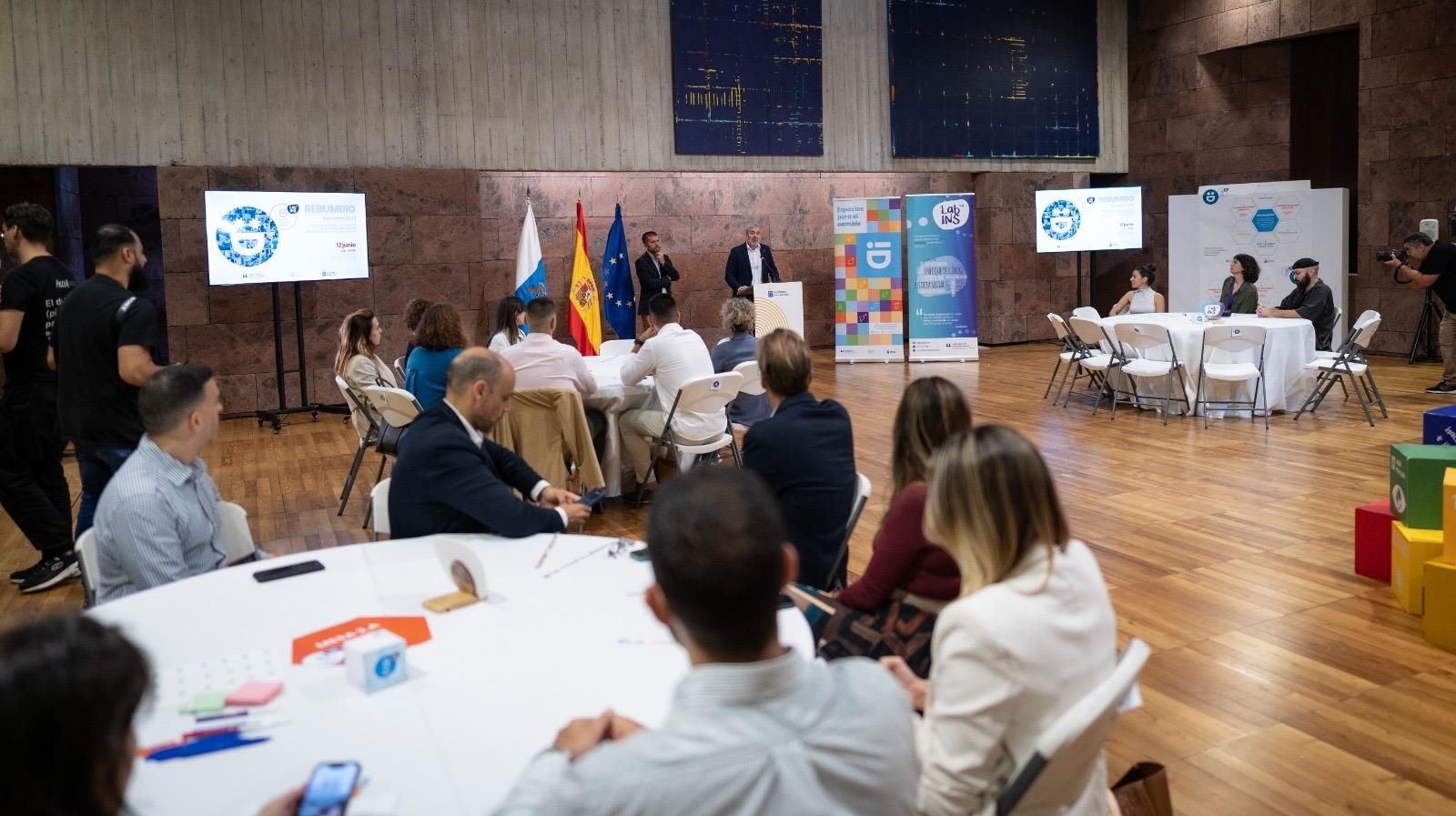
The President of the Canary Islands, Fernando Clavijo, participated today in the opening of the 'Rebumbio for Change' conference, highlighting the importance of using scientific methods led by public universities for the development and implementation of the Canary Islands 2030 Agenda. In his view, the debate promoted by this initiative among all sectors of society contributes to the search for consensus-based solutions to boost the archipelago's sustainable development. "If we want to do things differently, we have to find different ways to generate that change," he emphasized.
In this regard, Clavijo considers it essential to open spaces for intersectoral and intergenerational dialogue, such as the one that brought together more than 60 representatives of public administrations, companies, knowledge centers, the third sector and citizens this Wednesday at the headquarters of the Presidency of the Government to reflect on "how to better implement the Sustainable Development Goals (SDGs) set by the UN in the reality of the Canary Islands.".
For the head of the regional government, this event, which concludes the 'Chats for Change' program, is especially important due to its use of scientific methodology through the Social Innovation Laboratory of the University of La Laguna. "We are deeply grateful to our centers of knowledge for helping us implement these processes of reflection," he stated, expressing his conviction that meeting points like 'Rebumbio' promote a gradual process of change across all sectors, allowing us to build a better Canary Islands together.
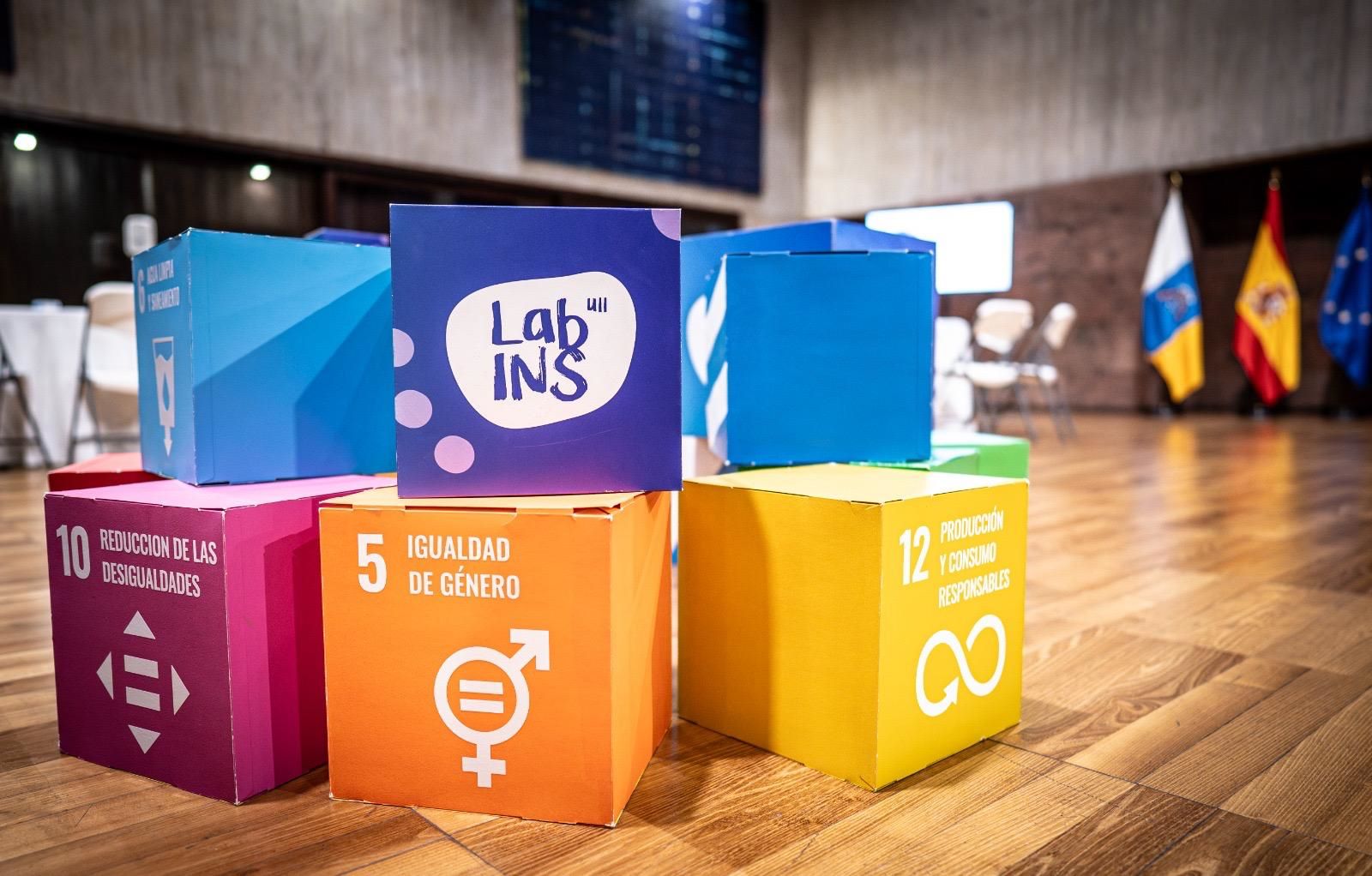 The rector of the academic center, Francisco García, also highlighted the importance of the archipelago's public universities transferring their knowledge in the field of social sciences. García praised the 'Spaces for Change' project as an example of the successful use of scientific methodology to promote debate on how to improve the implementation of the Canary Islands 2030 Agenda. "For us, it is a privilege to be able to contribute our knowledge to society," he added.
Award-winning project
Regarding this methodology, Mónica Dios, director of the Social Innovation Laboratory at the University of La Laguna, explained that this working meeting, held with the support of the regional government, aims to "give a boost" to the SDGs in the Canary Islands by "weaving a network among all sectors." She explained that it is an experimental project to "link diverse social spheres" in the fulfillment of the Canary Islands 2030 Agenda.
With this objective, 'Rebumbio para el cambio' has brought together more than 60 representatives from public administrations, educational institutions, businesses, the third sector, and citizens in various working groups. These groups initially focused on specific sectors and then combined sectors to encourage the exchange of opinions.
This initiative, promoted by the Prime Minister's Office, concludes a pioneering project that has been nominated for the NOVAGOB Excellence Awards. These awards, since their inception in 2015, have helped to highlight innovative projects and initiatives developed within public administrations across various management areas. They recognize pioneering experiences in public sector transformation throughout Latin America and the Iberian Peninsula, as well as the public sector entrepreneurs leading this change.
The awards for which 'Paliques para el cambio' is nominated are selected through an open call for participation from any public institution in the various proposed categories, followed by a voting and/or evaluation process by an independent jury. The winners will be announced at the end of the year.
(Note and photo provided).

 Spanish
 English
 French