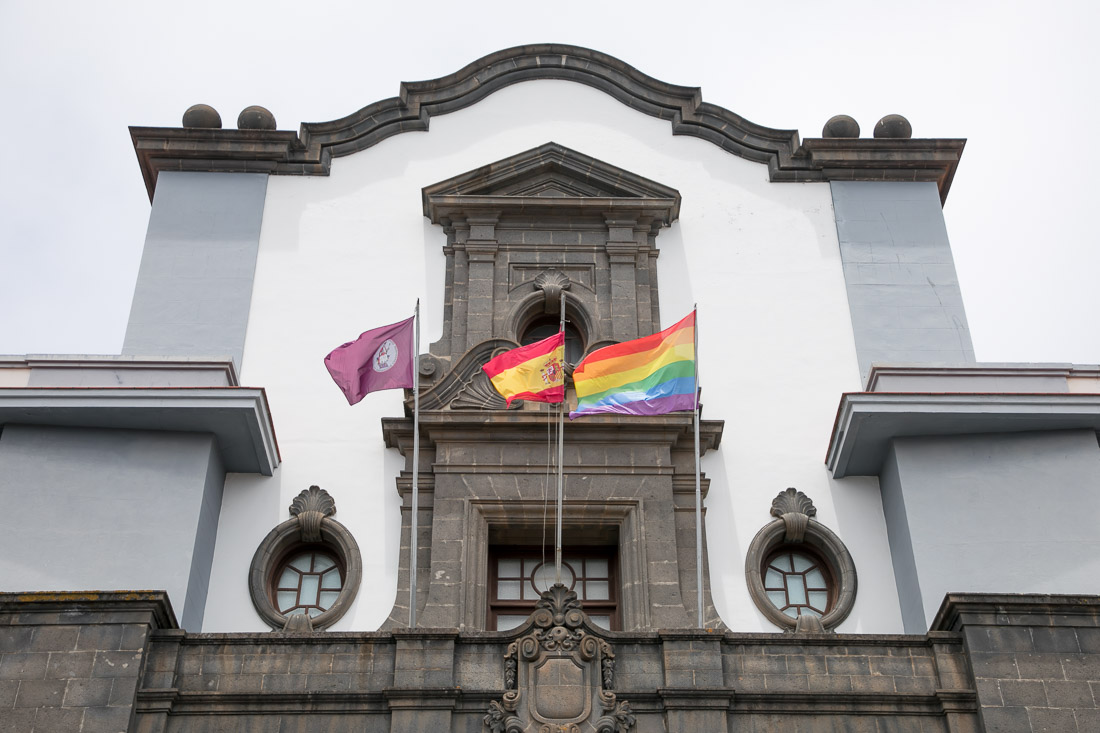
Bisexual people have worse health, lower self-esteem, and a worse perception of their own health than other groups, according to a study. recently published in the journal Healthcare, signed by the Professor of Psychology at the University of La Laguna Pilar Matud and the doctoral candidate Roberto Matías, who will soon read his doctoral thesis, from which some of these results have been extracted.
Previous studies have identified this increased risk of physical and mental health problems in lesbian, gay, and bisexual (LGB) people, but they have focused on analyzing the presence of disorders such as depression and anxiety, as well as other health issues, rather than differences in overall well-being. Furthermore, they have generally treated LGB people as a homogeneous group, without considering potential differences between sexual orientations or between women and men.
Therefore, Matud and Matías developed this study with a dual objective: to examine the relevance of sexual orientation to the health and well-being of women and men; and to identify protective and risk factors for psychological distress, self-rated health and well-being of gay men, lesbian women, bisexual women and men, and heterosexual women and men.
The sample consisted of 747 LGB women and men and another 747 heterosexual women and men between the ages of 16 and 47, ensuring that there were no significant differences between the two groups in terms of age, ancestry, education level, occupation, or the percentage of women and men. The assessment was conducted online using eight questionnaires that measured factors such as psychological distress, self-reported health, well-being, self-esteem, resilience to stress, social support, fear of negative evaluation, and homonegativity. Access to the sample was obtained through the research team's social media networks, a significant number of collaborating students, and the State Federation of Lesbians, Gays, Trans, Bisexuals, and Intersex People (FELGTBI+).
Study results
The results showed great diversity in the health and well-being of all groups, and although differences existed based on sexual orientation and between women and men, their magnitude was generally small and depended on the health indicator considered. Furthermore, in most variables, the relevance of sexual orientation differed between women and men.
For example, heterosexual men reported less psychological distress than the other groups, but there were no differences between heterosexual women and LGB men and women. Life satisfaction was similar among lesbian women and heterosexual men and women, although it was higher than among bisexual men and women and gay men.
Heterosexual men showed greater resilience to stress than the other groups, and gay men showed greater resilience than bisexual men, but there were no significant differences in resilience to stress among women. Heterosexual men and lesbian women did not differ in fear of negative evaluation, which was lower in both groups than in the other groups.
Women perceived greater social support than men, and among women, heterosexuals reported the highest levels of social support. Gay men experienced greater homonegativity than other groups, and there were no differences in homonegativity between gay and bisexual men.
As mentioned, bisexual individuals reported poorer health, with lower self-assessment of their health and lower self-esteem. In all groups, self-esteem is a protective factor against psychological distress and is associated with better health and well-being. To a lesser extent, social support is also a protective factor against psychological distress and is associated with greater well-being in all groups.
The conclusion is that, while sexual orientation is relevant to individuals' health and well-being, so is gender. Furthermore, differences exist among sexual minorities, notably with bisexual individuals reporting lower self-esteem than homosexual individuals. The findings that sexual orientation interacts with gender in most of the health and well-being indicators analyzed suggest the importance of psychosocial factors in the health and well-being of the population.
Therefore, the research team believes that these results should be taken into account in educational programs and public policies aimed at achieving greater equality and well-being for all citizens, especially for sexual minorities and women.
The poorer health of LGB people has been attributed to minority stress, a theory proposed by Meyer almost three decades ago. This theory posits that in a heterosexist society, LGB people are subjected to chronic stressors stemming from their stigmatization, including internalized homophobia, stigma itself, and experiences of violence and discrimination. This increased stress is believed to be responsible for their poorer physical and mental health.
But in the last two decades there have been important legislative changes in many countries, including Spain, recognizing the rights of LGB people, so it is worth asking whether differences in health and well-being persist based on sexual orientation and what the protective and risk factors for health and well-being are.

 Spanish
 English
 French