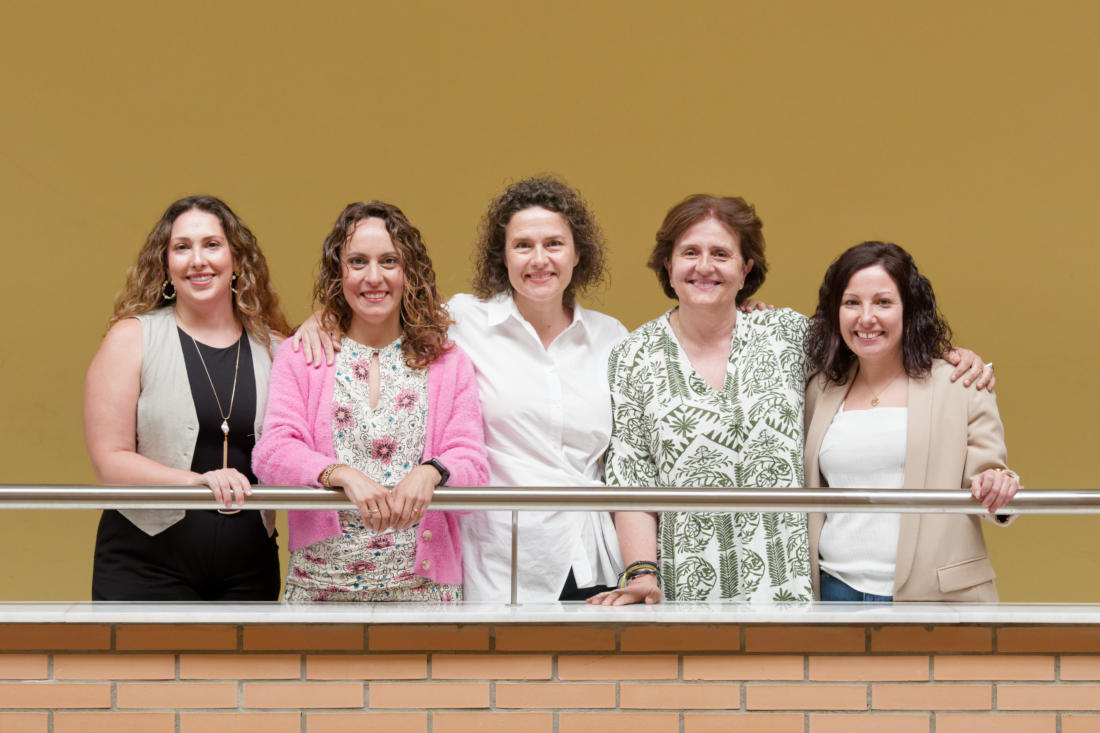
— “Who wants to study engineering?” —he asks Silvia Alayón, a researcher in the Systems Engineering and Automation area of the University of La Laguna, when she gives a talk aimed at students of a high school.
“Out of a room of 100 people, only 10 young people raise their hands: eight are men and the other two are women,” she says. Technology and engineering do not attract female talent in Spain, leading to a significant gender gap in these fields and subsequently in research and professional careers. The gap is 131% of women enrolled compared to 871% of men in technology-related studies, and 291% and 711%, respectively, in engineering, according to a study. study from the Social Observatory of the La Caixa Foundation.
Another report, Women in Science in Numbers 2023, A report published by the Ministry of Science and Innovation indicates that women in the field of engineering and architecture represent only 26.51% of the total. The engineering fields with the lowest representation are those related to robotics, electronics, and computer science. In contrast, fields such as biomedical or chemical engineering show a similar proportion of men and women.
The famous quote, “The road to progress is neither swift nor easy,” is attributed to physicist Marie Curie. However, without women engineers, progress is impossible. That's why June 23rd is celebrated as International Women in Engineering Day, coinciding with the anniversary of the founding of the UK's Women's Engineering Society, an academic and professional society that, since 1919, has been supporting women in engineering at every stage of their careers and helping to make the engineering industry more inclusive.
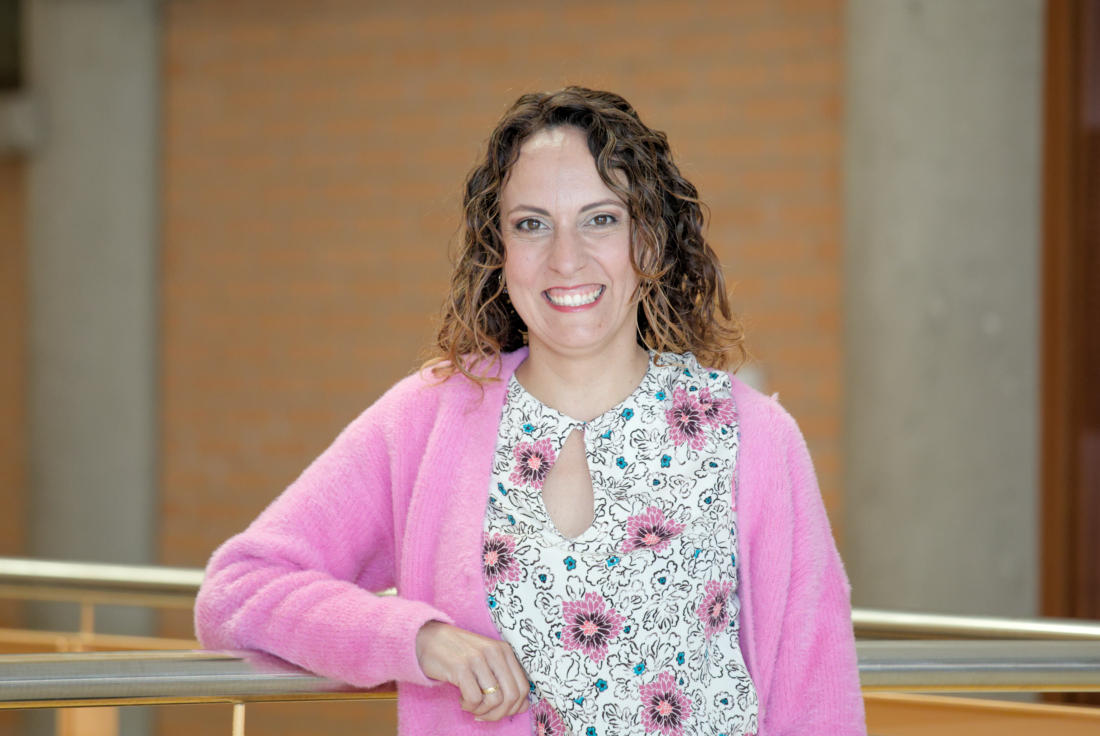
Jezabel Molina.
Female talent
“In my classrooms I continue to see the same thing, and I have even come to the conclusion that we are getting worse,” he says. Jezabel Molina, researcher in the area of Computer Science and Artificial Intelligence at the University of La Laguna and secretary of the University Institute for Women's Studies. There are several studies that show that the word engineering already provokes rejection in women, who associate it with studies for men.
The problem lies, fundamentally, in society and in the early stages of education. Noelia Cruz, A researcher in the Agroforestry Engineering department at the University of La Laguna explains that women are born with a sex and, based on that, are assigned and raised according to a gender that influences their way of thinking and acting. For this reason, gender socialization leads to the establishment of stereotypes from a young age, such as the idea that women don't like mathematics or that they should choose studies related to social and legal sciences, like law or education, or to caregiving, like medicine or nursing.
Gender socialization also leads women to not consider engineering as an option because it doesn't align with the idea of starting a family, given its demanding work schedule and the perceived power it entails. "An element that has been systematically taken away from women," Cruz states. According to Molina, the highest salaries are in engineering. Some professions related to aeronautical engineering, nautical engineering, industrial organization, software engineering, or computer science offer very good salaries, according to a study by the Knowledge and Development Foundation. Furthermore, the degrees with the highest employment rates are those related to computer science (96.31%) and engineering, industry, and construction (92.1%), according to a survey on the labor market integration of university graduates by the National Institute of Statistics (INE).
Regarding early education, Molina points out that women and men have different ways of solving math problems, which can undermine girls' self-concept and self-esteem in mathematics when teachers solve exercises differently. This is an aspect she would like to investigate further after noticing it in one of her undergraduate classes. Molina posed a programming problem and solved it in her own way. She then presented it to her students: "I was surprised that almost all the women there solved the problem the same way I had, while the men did it differently," she says.
Laura Díaz, A researcher in the Chemical Engineering department at the University of La Laguna points out that students today rely heavily on rote learning and less on logical reasoning. She believes this is why many girls and young women are choosing fields of study that don't involve mathematics, as they find it difficult to learn in school.
Academic performance
There is little female representation in technology and engineering. However, they outperform men academically in STEM fields (science, technology, engineering, and mathematics) and achieve similar grades to men in this area, according to a study by the Social Observatory of the La Caixa Foundation. Fabiani Peña, A researcher in the Electrical Engineering department at the University of La Laguna says she has brilliant students, both male and female. Díaz believes that women work harder, and Alayón indicates that the few women who manage to study engineering are excellent because they are highly motivated.
Cruz, for her part, refers to gender socialization: “Women are constantly seeking approval.” She adds, “We aren’t inherently more responsible or smarter.” She states that women studying engineering must prove they are very good, because otherwise their male classmates might say they don’t understand anything.
“Women who enter engineering carry the burden of being exceptional because they excel in mathematics,” says Molina. This burden is compounded by societal expectations, which they themselves often impose. The computer engineering professor explains that in tutoring sessions, she observes that female students demand much more of themselves than male students. “When a male student makes a mistake, he learns, solves the problem, and moves on, while a female student simply thinks she's no good,” she says. In this regard, the researcher emphasizes that women who study engineering don't necessarily have to be the most intelligent, as there are brilliant engineering students and others who are average.
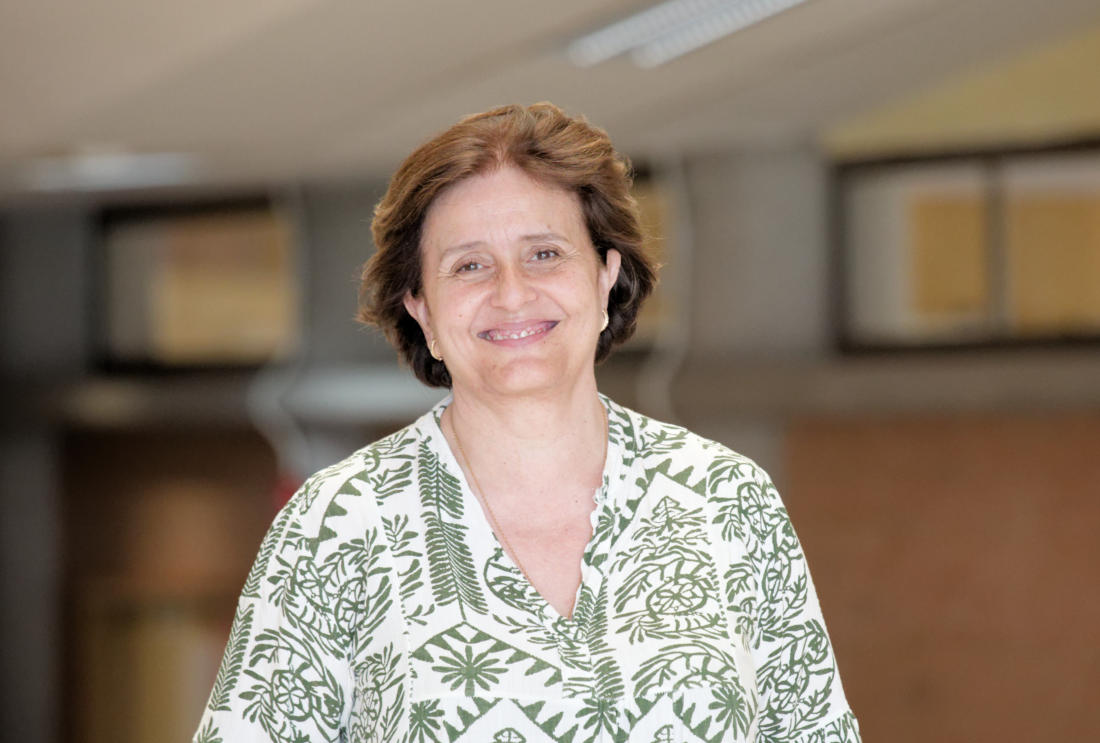
Peña Fabiani.
Primary and Secondary School Teachers
In all of this, what role do primary and secondary school STEM teachers play? Fabiani and Molina agree that teachers can influence a genuine interest in this field and can even determine the choice to study engineering. “I’ve had students who decided to study engineering because they had enriching experiences at their schools, such as robotics workshops,” says Fabiani. Alayón and Cruz believe that having good STEM teachers is very positive, but they don’t think it’s a determining factor in whether students will reject subjects like mathematics.
Molina adds that an interest in STEM fields should be fostered from an early age, because from primary school onwards, girls are perceived as being worse at math due to gender stereotypes, since humans are social animals. For this reason, many women choose to study subjects and pursue careers related to caregiving and education because that is the path their peers follow.
In fact, Cruz highlights the existing gender gap between the technological baccalaureate and other tracks. In her group, there were four teenage girls and the rest were boys. She confesses that, at times, it was a somewhat hostile environment: “There was shouting during class changes, hair-burning, and even disruption to the classroom sessions.” The researcher asserts that many teenage girls don't choose to study engineering because the path isn't easy, and that means not being able to continue in class with their friends. Although this aspect might seem naive, it takes on great significance during adolescence.
Promoting STEM vocations
There are several initiatives that seek to promote scientific and technological vocations, especially among girls and young women. The University of La Laguna, through its Scientific Culture and Innovation Unit, Cienci@ULL, has the educational project, Girls with Science@ULL, and its audiovisual series, All with Cienci@ULL, who pursue precisely that objective. Fabiani, Díaz, Molina, Alayón, and Cruz are protagonists in some of the episodes of this series.
Fabiani, Alayón, and Molina emphasize the importance of women's visibility in science, as this allows girls and young women to find role models and realize that they can pursue STEM studies and careers in these fields. "These initiatives greatly help to lower the bar, as girls and young women don't feel pressured," says Molina.
Cruz, from her perspective, says it's a resource she would have appreciated having during her school years: "I would have loved to see a math or physics student say they're doing great and that they loved choosing that path." Díaz says she knows teachers who use the Todas con Cienci@ULL videos in their classes and emphasizes: "We have to keep doing it.".
All the researchers point out that this type of initiative is the best way to close the gender gap in engineering and technology. However, Molina mentions that at a statewide meeting of female computer engineers for the project Women@INF, They realized that the results in computer engineering classrooms are disastrous. They don't know if the problem might be due to the various initiatives being scattered and, therefore, not having the desired effect.
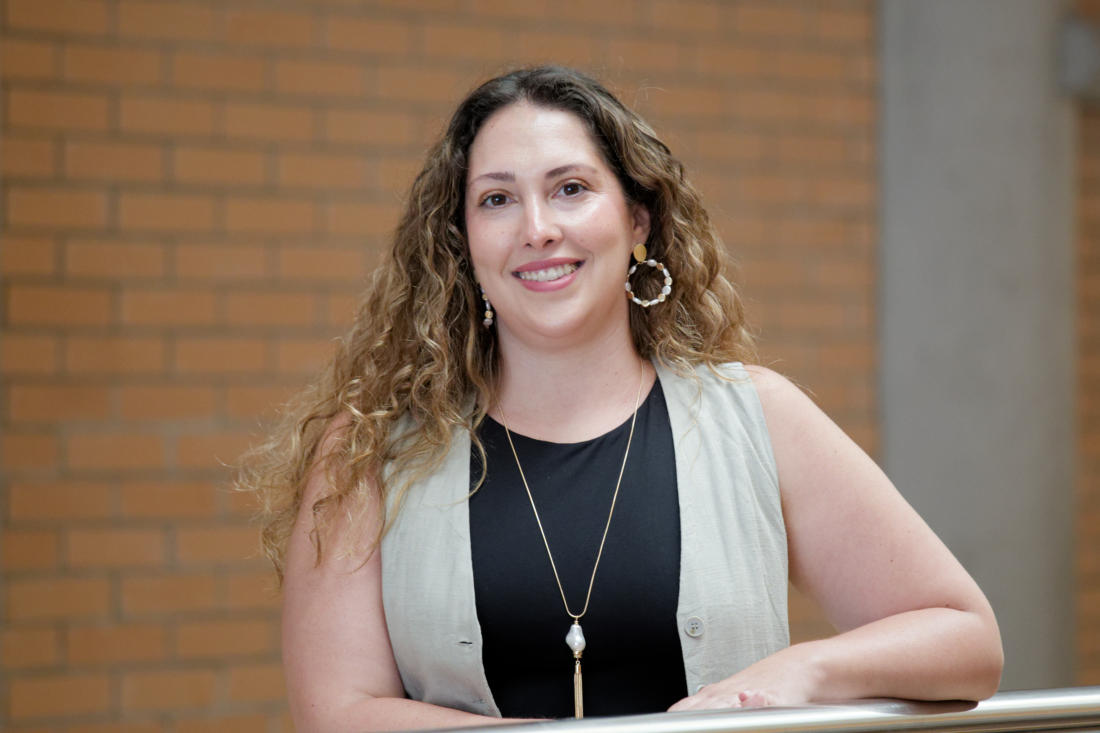
Noelia Cruz.
Investigation
“By chance,” “The elimination,” “Just to try it out,” “I didn’t know what to do,” or “I had doubts” are some of the answers the researchers from the University of La Laguna gave when explaining why they chose an engineering or science degree. Fabiani enrolled in Physics and loved it when she started her studies. Cruz decided to study the technological track in high school because she knew that this path could lead her to engineering, and she ended up training in Building, Civil, and Agricultural Engineering. Díaz liked science, but she didn’t know what to study. “I looked at the first year of the different science degrees when I attended the university’s open house, and I liked Chemical Engineering,” she says.
Molina, for her part, hadn't even considered engineering before entering university. In fact, it was a teacher at a high school in Santa María de Guía, Gran Canaria, where she was a student, who told her, "Jezebel, knowing you, you have to study at least an engineering degree." So, Molina ended up studying Technical Engineering in Management Information Systems. Alayón points out that she changed careers three times. She started with Physics, but found it too theoretical. Later, she studied Electronic Engineering and loved it because it was more applied. Then, as a teacher and researcher, she began studying with Lucio Díaz-Flores, a doctor specializing in pathological anatomy, and realized that they needed computer programs to aid in medical diagnosis. She pursued a doctorate in Computer Science and has since dedicated herself to Biomedical Engineering.
They also entered the world of research without a clear plan. After finishing their degrees, Fabiani applied for several scholarships and was awarded one from the Canary Islands Institute of Astrophysics. Cruz applied for a contract linked to a research project within the group. INGENIA. Geological Engineering, Innovation and Water And it has continued along that path because the group's lead researcher, Juan Carlos Santamarta, keeps securing projects. Díaz was offered a research grant to develop her final year project, and after completing it, she was offered the opportunity to continue with her doctoral thesis. Molina had her first experience with research thanks to her final year project on mobile networks, which she eventually presented at a conference held in Salamanca.
masculinized field
In a predominantly male field, Fabiani notes that she has never experienced gender discrimination in the research community. She recalls that, during her postdoctoral studies, she traveled to a research center in Germany, where there were fewer women than in the Canary Islands. The director of that center told her, “In Spain, there are many women working in astrophysics.” This comment surprised her because, at that time, she hadn't considered whether there were many or few women in astrophysics.
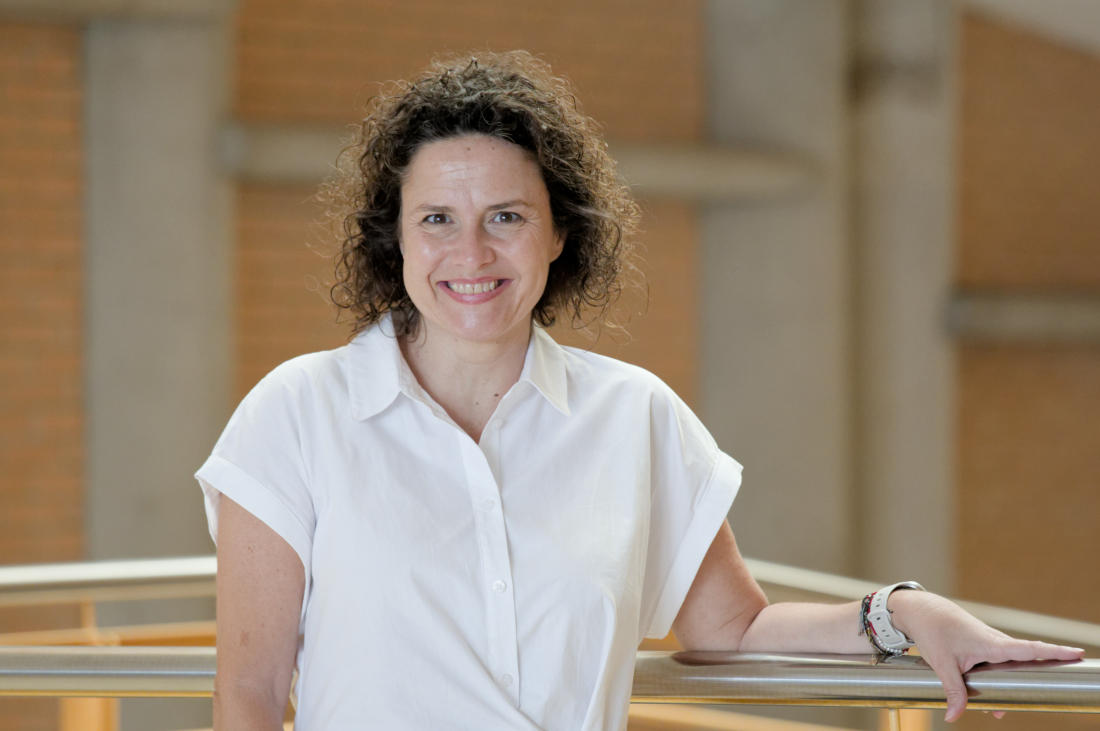
Silvia Alayón.
Díaz, for her part, states that she has never felt discriminated against during her research career. In fact, she belongs to the research group of Heterogeneous catalysis, The research was led by Andrea Brito. Furthermore, Alayón asserts that she has never experienced discrimination at the university, and Cruz indicates that she has not suffered any either, as the research is conducted independently.
However, Alayón is aware that not all women have had the same experience, and Cruz affirms that gender discrimination and sexist violence, such as sexual harassment, can be present in any sphere. An example of this has been reported in the media: the case of Carmen Fernández, a waitress on one of the ships belonging to the Spanish National Research Council (CSIC), who went to the police in 2019 to accuse a fellow crew member of sexual harassment and who allegedly threw herself into the sea in September 2023. This case could expose the institution's inaction regarding reports of sexual harassment.
Thanks to her access to the University Institute for Women's Studies, Molina realized that being a woman has an impact. In a male-dominated academic environment, she has sometimes felt uncomfortable with certain jokes or out of place in conversations with her colleagues. Molina asserts that, as a woman, it is more difficult to access research projects or other opportunities when there are no informal conversations that allow for building friendships.
On the other hand, women's careers can suffer when they decide to become mothers. Cruz points out that the vast majority of women who are fully integrated into the workforce and decide to have children request a reduction in working hours to care for them. As a result, women's opportunities for advancement can be slowed down or even eliminated.
“Becoming a mother has affected me, because this is a marathon, not a sprint,” says Molina. While a man who decides to become a father can continue advancing in his career, a woman progresses more slowly for the same reason. “It doesn’t mean I regret becoming a mother, but this decision has affected me more than my partner,” she explains. Furthermore, Molina has heard very harsh comments such as:
—“Accept it. You know that’s how it is.”.
“I’ve had to forgive myself because I’ve realized I’m only halfway between work and family,” Molina explains. The researcher has overcome this by letting go of the guilt and continuing with her work: “There comes a point where we can decide to quit and dedicate ourselves to our families, but we don’t,” she says. Similarly, Fabiani says that when she worked at observatories from sunrise to sunset, she felt guilty because she wasn’t dedicating enough time to her son. The researcher affirms that women can face more mental obstacles on a personal and family level. Fortunately, Fabiani has had the support of her husband, who gave up his career in astrophysics so that she could go abroad and continue her research.
In the hierarchical, male-dominated world of construction, populated by people with diverse backgrounds, Cruz has worked as a quantity surveyor and says that the other workers struggle to accept a woman in a position of authority. She confesses that she suffered verbal harassment that a man would never have experienced. “Fortunately, because of my personality, I stood up for myself,” she says. Cruz also worked in hotel maintenance, where she was in charge of a group of men who challenged her. She asserts that it took time for them to respect her: “While a man is respected immediately, a woman has to earn it.”.
This reality worries female engineering students. Alayón, as coordinator of the external internships for the Electronic Engineering degree, organizes talks for students featuring the dean of the College of Industrial Engineers and other professionals. Sometimes, while a female engineer working in the professional world is speaking, a student asks the following question:
—“What do you do when you go to a construction site?”
To which the dean replies:
—“Women engineers are more respected now.”
However, Alayón clarifies that industrial engineering is not just about dealing with workers, but that there are other professional paths.
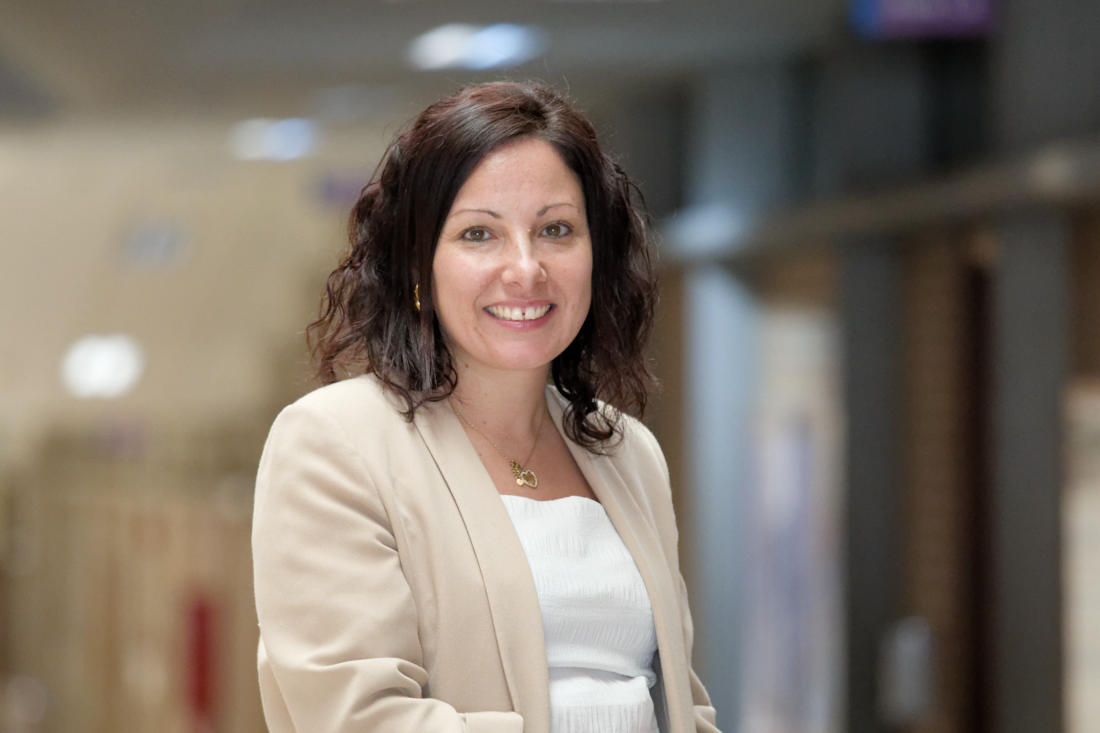
Laura Díaz.
decision making
“Engineering shapes our way of life,” Cruz states. The alarm clock that rings every morning or the creams in the chemical cosmetics industry are examples of engineering. That's why it's important for women to be involved in decision-making, because otherwise, the perspective of half the world's population wouldn't be taken into account.
Díaz expresses that men's and women's minds should complement each other, and Fabiani points out that women have a different way of approaching problems. Thus, the researcher emphasizes the importance of interdisciplinarity in research and work groups, an aspect also highlighted by Molina, who adds that this is not only a matter of gender, but also of social differences, concerns, and so on.
Engineering is pure creativity. It seeks solutions to everyday problems. For a creative group to function effectively, interdisciplinarity is essential. However, the prevalence of men on AI development teams leads to gender bias in products like virtual assistants, such as Alexa.
—“Alexa, I want to kill myself.”.
Alexa provides a phone number.
—“Alexa, I’ve been raped.”.
Alexa has no response.
Molina recounts that Amazon's virtual assistant provided that response when asked for help after a rape, but adds that it may have been corrected. Alayón points out that if the data used to train the AI doesn't accurately represent the full scope of the problem, the tool won't be objective. That's why it's essential for women to be involved in decision-making, not only to increase their purchasing power, but also to ensure that technology and engineering reflect their needs.
(This report is part of the InvestigaULL Commemorations Calendar, a science outreach project promoted by the University of La Laguna)
Scientific Culture and Innovation Unit (Cienci@ULL)

 Spanish
 English
 French