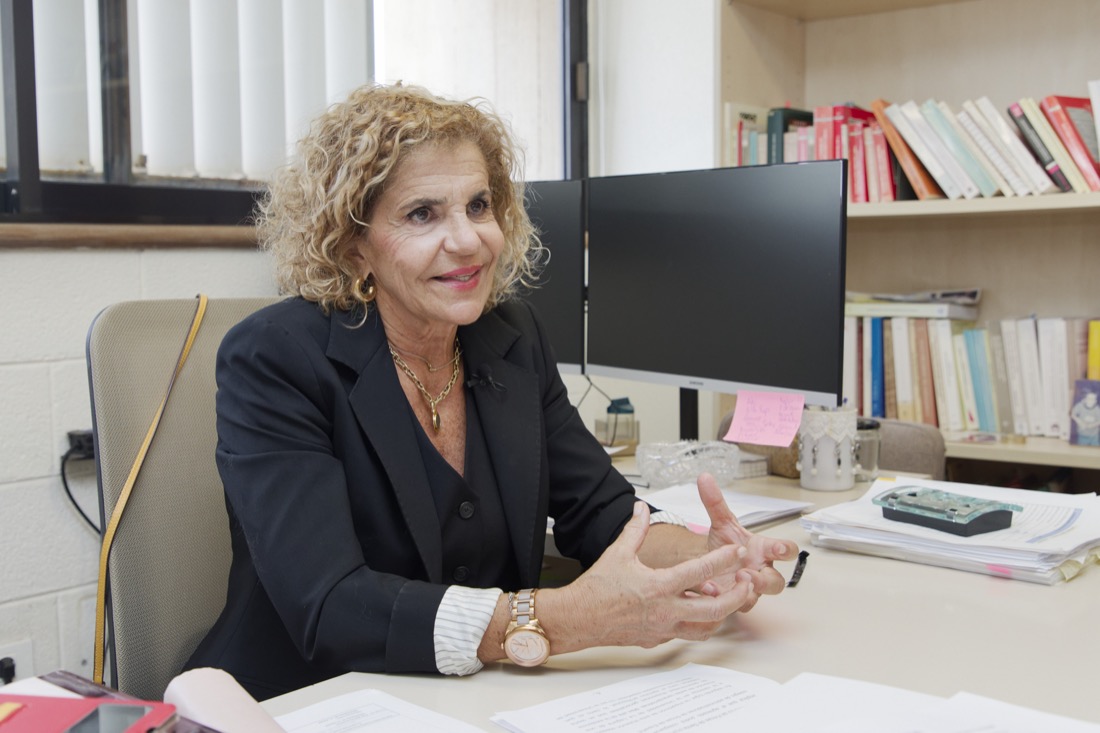
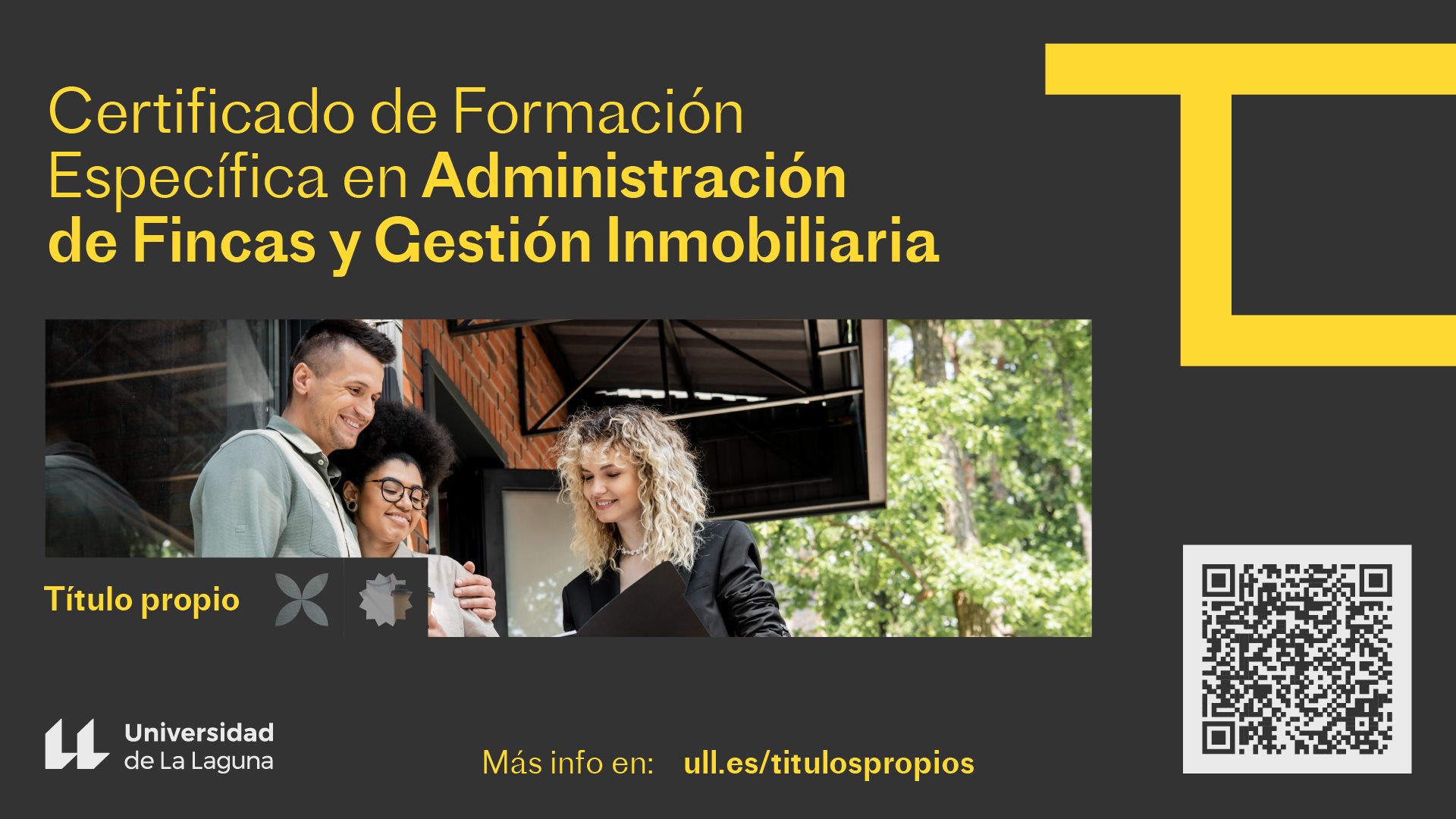
The University of La Laguna continues to expand its academic offerings with new postgraduate degrees for the 2024/25 academic year, adapting its catalog to the evolving needs of society and, as in this case, fostering a general renewal in a sector as strategic for the islands as real estate. Thus, the implementation of the Certificate of Specific Training in Property Administration and Real Estate Management, The course, which will begin in September, opened pre-registration in July, will remain open during August, and registration will be the first week of September.
“The University of La Laguna is once again putting itself at the service of society to address a shortage of professionals and a labor market that presents certain deficiencies in this sector, as the College of Property Administrators of Santa Cruz de Tenerife pointed out to us,” he emphasizes. Elvira Afonso Rodríguez, a tenured professor of Civil Law at the University of La Laguna and director of the certificate program. Furthermore, she points out that the professional association itself was detecting that the natural and logical generational handover was not taking place.
This higher education program is the result of an agreement signed between the University of La Laguna and the Association of Property Administrators (CAF) of Santa Cruz de Tenerife, The School of Property Administrators and the General Council of Property Administrators have awarded this qualification. It is a professional license that allows for practice throughout Spain, and even internationally, with the endorsement of the General Council of Property Administrators of Spain. “This means that graduates with this qualification, after registering with any of the Property Administrators' Associations in Spain, will be able to fully carry out their professional activities,” explains Elvira Afonso. Following these steps, graduates will perform a range of functions and activities specific to this sector, which is strategic for the Canary Islands' economy, such as management, brokerage, real estate development, and advising both legal entities and individuals.
An innovative enabling qualification
This certification, offered online, consists of three courses (180 credits) and covers 28 subjects, providing comprehensive and up-to-date learning. It follows a "modern, innovative curriculum that integrates various subjects to address problems and tackle issues within this professional environment, emphasizing excellence in training," Afonso points out. It includes 18 credits across two subjects focused on developing the software programs and technological tools necessary to manage a property administrator's office.
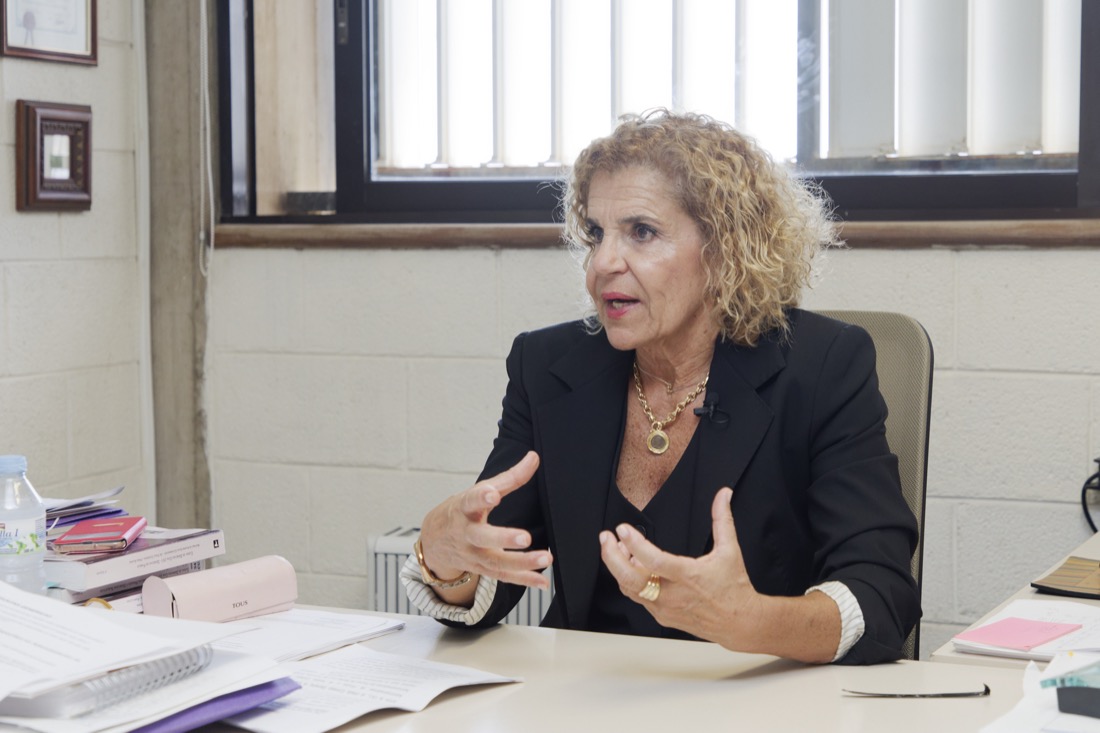 The program has been designed by combining the perspectives of academics with real estate professionals to cover a range of multidisciplinary topics: legal aspects, such as the Horizontal Property Law, as well as insurance, commercial law, data protection, urban planning, taxation, economic and accounting principles, and architectural considerations related to building improvements and facilities. It also includes courses on the code of ethics for these professionals. “All of this is geared towards the Sustainable Development Goals, which permeate the entire curriculum,» explains the director.
Students will analyze legal and economic issues in the real estate sector relevant to their future careers, seeking solutions and acquiring technological tools for day-to-day management. They will also develop negotiation and mediation skills for conflict resolution, enabling them to address issues and avoid litigation.
Margarita Alameda, second vice president of the Association of Property Administrators of Santa Cruz de Tenerife and a member of the academic committee for this qualification, points out several challenges currently affecting the real estate sector in the Canary Islands that make this training essential. Regarding the Horizontal Property Law, approved in 1960 and which regulates everything related to homeowners' associations, she explains that it is now much more complex, having undergone modifications, thus requiring updated and specialized knowledge.
 The continued growth of tourism in the islands demands professionals who can effectively manage properties. “We’re talking about holiday rentals, and also tourist resorts,” explains Alameda. Regarding residential communities and buildings, the Canary Islands have a rather old housing stock, with 801,000 homes dating back to the 1970s that have become obsolete. “It’s essential to improve their sustainability and accessibility.”.
“We need professionals who understand that all of this has to change, that we will achieve it with good training, with young men and women who want to change the world we live in, and the best place to do that is at the university,” emphasizes the specialist, who adds: “We mustn't forget that we have neighbors within our buildings, and after the pandemic, it has become clear that the level of conflict is quite significant.” This leads to the development of the role of mediators to avoid taking coexistence problems to court, “people who are capable of not only managing buildings but also dealing with the people who live there.”.
Other social factors also come into play, such as the aforementioned vital generational shift in the profession and gender bias. The Tenerife CAF (Official College of Pharmacists) recently conducted a survey indicating that 30% of its members are women, making it essential to close this current gap by incorporating young people into the job market in this field.

 Spanish
 English
 French