The young woman Carolyn Davidson walked nervously to an important meeting. It wasn't a big job, but she always gave her all to every assignment; no task was too small. This time, the call came from a fledgling sports company with a rather pretentious name, alluding to the goddess of victory in Greek mythology. They had asked her to draw inspiration from the Hellenic goddess to create an image that represented the company's optimistic spirit. She arrived at the meeting with her A3 poster board and a logo that, she explained, had been inspired by the mythical wings of the goddess of victory. She defended it, saying it was a logo that represented all the values they wanted to embody in their sports brand. It was dynamic, flexible… in short, exactly what they were looking for. When she finished her presentation, silence fell over the room, save for a few nervous coughs, doubtful expressions, and no questions. Despite the initial lukewarm reception, the company executives eventually accepted the proposal, and Davidson went home with the $35 he had quoted for the design. He had created the iconic Nike logo.
The history of design is filled with famous creations that we all recognize. But even more numerous, almost countless, are the anonymous designs that surround us and with which we interact every day. Design, as a visual process, is present in our lives from the moment we get out of bed in the morning. The way designers write with images shapes our relationship with our environment, helping us identify the countless objects that surround us. But this is nothing new. From cave paintings to the cybernetic age, from hieroglyphics to the printing press, the history of humankind is inherently linked to design, whether industrial, graphic, architectural, or environmental. That's why its study and analysis are fundamental. So much so that every April 27th, World Design Day is celebrated. International Design Day. This day was chosen in 1991 to commemorate the founding of International Design Council.
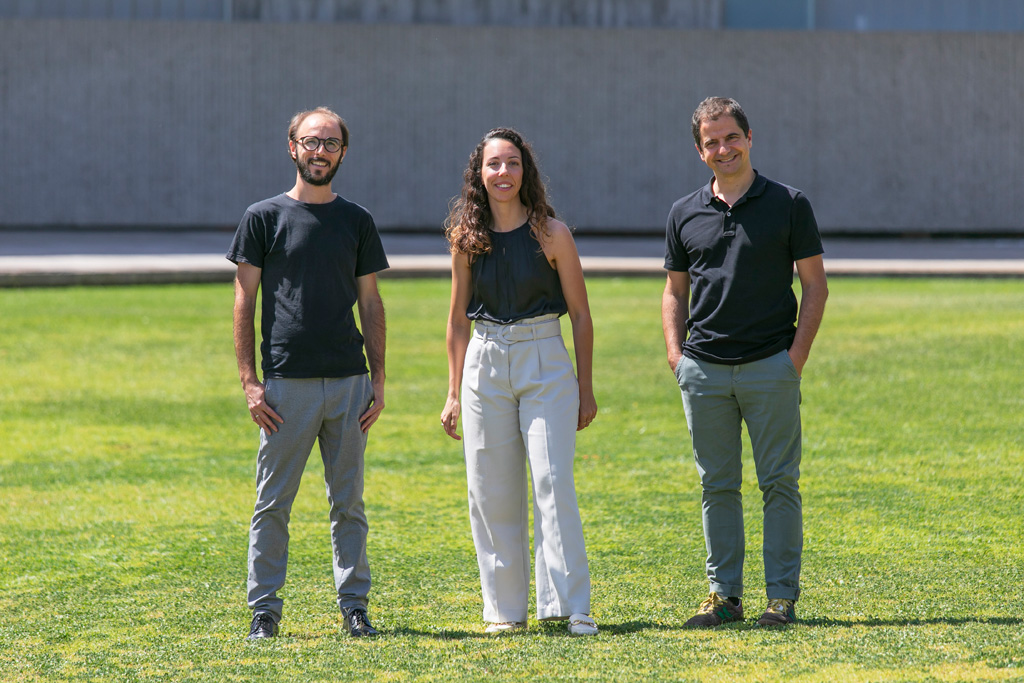
More than a decade ago, the University of La Laguna began to offer a Design Degree. It trains future design professionals and equips them with the necessary tools to thrive in such a competitive and in-demand sector. Alongside this training, several research projects have been developed that aim to contribute further knowledge to this area of Fine Arts. We met with three of them, members of the Research and Innovation Group in Design, to learn about their work and their opinion on the importance of design today.
Why design?
The first application of design that comes to mind is to improve our lives, as he acknowledges Noa Real García, assistant professor in the Drawing department. “An example can be found in something as commonplace as the forms we have to fill out at a police station. Before, it was a real headache to understand them; design has simplified everything so that users no longer have any doubts about what information goes in each box.”.
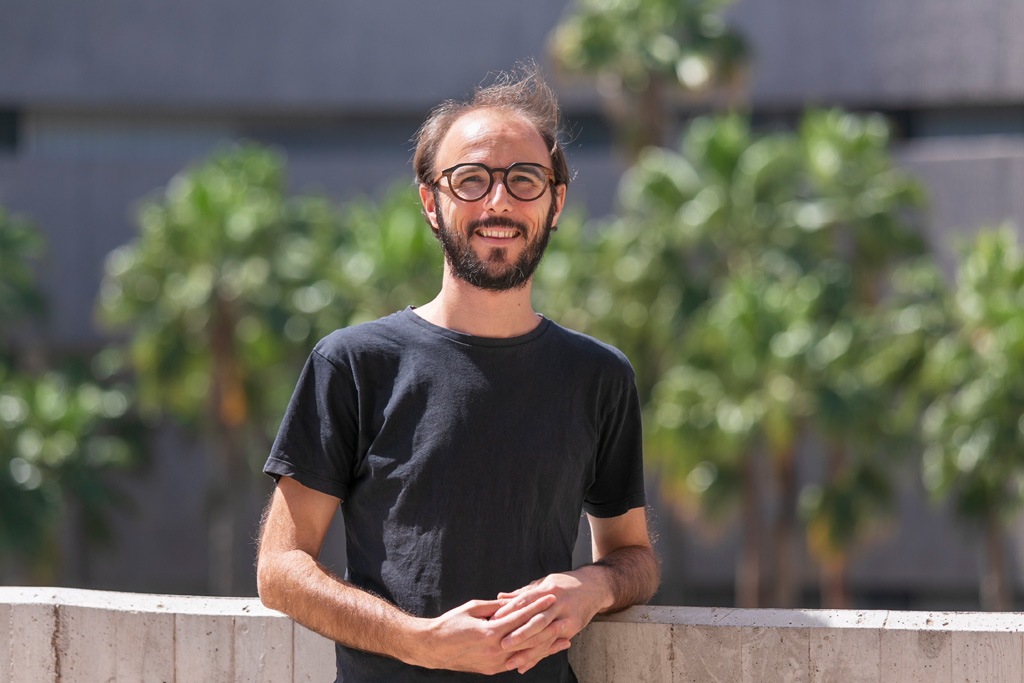
Bernardo Candela Sanjuan
But design goes far beyond its graphic representation. “Thanks to design, we sit comfortably, because above all, design solves problems, and it does so in a way that is, in principle, better for society.” This can be seen in all areas of our lives. The researcher points out that the results of good design work are not only seen in large companies, but also in small ones. “I remember a project for a dental clinic. Nobody noticed it; hundreds of people walked by on the street, but nobody knew it existed. After a project focused on its visual identity, everything changed; the clinic stopped going unnoticed.”.
Although design can also complicate our lives. Carlos Jiménez Martínez, A lecturer with a doctorate from the Fine Arts department makes a point that reveals the less appealing side of design. Can we design to annoy people? The surprising answer is yes, and it happens quite often, “like when urban benches are designed to prevent homeless people from lying down, creating bales of recycled plastic, or simply when design is approached in a banal and superficial way, when design is confused with style or posing; this can create more problems than solutions.”.
Design and Environment
Although it may seem like an area where design can contribute little, the environment is a key sector. Design helps to conserve forests, reduce CO2 emissions, and protect marine species. Bernardo Candela Sanjuan, teacher A tenured professor in the Department of Fine Arts emphasizes that design has been helping the environment for years through numerous strategies, from the products themselves to how they are consumed. "The 80% impact of products lies in the conceptualization phase, which is when decisions are made regarding materials, forms, product life cycle, and so on." Knowing this, designers create design strategies to minimize energy consumption, use recycled materials, and even go further. "Considering how a product will be disposed of or what its end-of-life will be like, whether its components can be separated, whether its subcomponents can be recycled, whether they are compostable, etc. All these strategies are decided during the product design process and can facilitate reducing a product's environmental impact on the market." But this isn't limited to tangible elements; it also applies to services.
Design can be used to reduce the consumption of resources when a new service is launched. With a focus on the public policies, Designers are already involved in the planning processes of many public services to make them more efficient and reduce their environmental impact. While initiatives like replacing can tabs with cardboard containers or the new system that retains caps on plastic bottles are very popular, design is also present in less visible processes such as organization, transparency, and how to present data to residents of a municipality.
Design in the process
Many designers complain about a common complaint in the industry: “We’re told to design when the product is practically finished.” As we’ve seen, the designer’s input is fundamental to the proper functioning of a product or service. Their contributions prove effective when they’re involved from the very beginning. When they arrive at the end, when everything has already been decided, their room for maneuver is very small, and it shows. “Traditionally, design has been included in the final stages of the project process,” Sanjuan laments. “That’s when a designer has the least impact, because the deal is already done.”.

Noa Real García
At these stages of the process, the designer's role is merely cosmetic or aesthetic. "Design must begin with the very conceptualization of the idea." In this sense, various industry associations have implemented tools to measure the impact of design in the business sector or to analyze how companies use design. There is the so-called "design ladder," which ranges from the complete absence of design at the bottom to its integration as a core business philosophy at the top. Companies at the top tend to see better results. The problem, as researchers acknowledge, is that design struggles to gain recognition because it deals with intangibles; these must be translated into measurable values to calculate its impact. Many groups are already working on this conversion. It has been demonstrated that organizations that incorporate design into the creation process of a service or product achieve better results, not only financially, but also environmentally and socially.
“It is well known that companies that invest in design from the outset improve their profits.” And this is closely linked to innovation, an element intimately connected to design. Proof of this is the existence of the National Design and Innovation Awards Recently delivered in Gran Canaria. An innovation that permeates the private sector and reaches the public sphere. The administration also needs design for creating advertising campaigns or for determining how to display information to citizens in public buildings. "And there, also in the public sector, the designer must be involved from the very beginning, from the initial conceptualization.".
Design and Artificial Intelligence
Disruptive artificial intelligence (AI) is here to stay. Few human processes remain untouched by this technology, from the most honorable, such as those related to the study of diseases, to the most detestable, such as its use in warfare. Design is no exception. "It can be a tool that helps us," emphasizes Noa Real, albeit with many nuances. All major technological innovations have arrived with fears and reservations, and AI is no different. "When computer science arrived, there were also designers who didn't jump on the bandwagon, but you can use it to vectorize your drawings while others have remained painting by hand.".
Currently, the researcher points out, AI can be used as a tool to facilitate work, but not to replace the role of the designer. "Where does AI get the information to generate the designs it creates?" This is a topic currently being analyzed, as technology has proven to advance faster than our capacity to assimilate it. Jiménez Martínez defines artificial intelligence as "systems that mince, turn into meatballs whatever they find, devouring all creations and appropriating them unless you can hack the algorithm.".
Can AI replace designers? Researchers are clear on this point. “If someone enrolls in a university degree program in arts and humanities to become a computer expert, their career path will be very short and unstable, because design has often been confused with a high level of tool knowledge, and that's not the case.” Undoubtedly, as they acknowledge, knowledge of current and future tools is important, but it's not the most important thing.
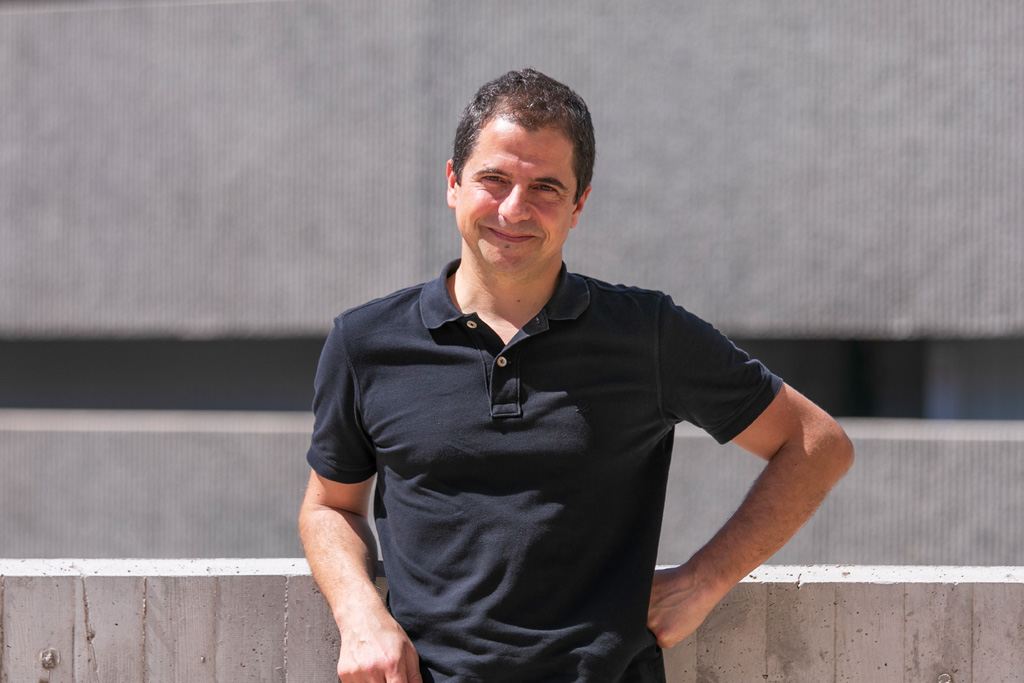
Carlos Jiménez
The researchers acknowledge that the purpose of these studies is not to teach the latest in AI, but rather how to use it as just another tool, like photography or software were in their time. "It's useless to be an expert in a tool if you don't know how to integrate it." They recognize that it will change the way designers work in the future. In this sense, Sanjuan believes it will help the best. "AI will empower the best professionals and weed out the worst, those with more limited design knowledge." He recommends embracing it as an ally and questioning it regarding intellectual property, where there is currently a broad debate "because it takes things without permission.".
Lines of research
The world of design is not only, as we have seen, a life-changing creative process, but also a vast field of study and research. Our protagonists know this well, and through a shared field, each one, along with many other colleagues, applies different methods and tools to explore the many facets of this discipline.
One can work from a quantitative or qualitative perspective. The former allows for the measurement of eco-designs, for example, starting with a product that has an environmental impact. This impact can be measured with data such as reduced waste volume or distance traveled for raw materials. On the other hand, a more empirical study can be conducted on the feelings, experiences, or perceptions of users of a campaign. Carlos Jiménez works on composting from a design perspective, intervening in the visual aspects of products and services to address "the lack in the Canary Islands of systems that comply with waste law for separating organic matter at the source, a fraction that is not considered waste." One of his main efforts is focused on gaining visibility and establishing community-based, rather than centralized, systems so that the organic matter is converted into compost locally. He also works on visualizing complex phenomena through design.
Noa Real and Bernardo Candela, for their part, are working on the link between design and public policy. “How can design facilitate the public policy creation cycle by developing tools, facilitating participation processes, or visualizing impact?” They are currently immersed in the circular economy, quantifying how design is integrated into this field. They are also exploring visual communication, graphic facilitation, and the history of design in the Canary Islands, “which is still being written.” Tourism, as a cross-cutting area in society, is also a subject of study for these researchers. “We work on the graphic brands of tourist destinations, investigating their impact, how they are developed, their design processes, and creating analytical tools to determine, for example, whether they are well-constructed or have the desired impact.”.
NOTE: This report is an initiative framed within the InvestigaULL Commemorations Calendar, a scientific dissemination project promoted by the University of La Laguna.
Scientific Culture and Innovation Unit Cienci@ULL

 Spanish
 English
 French