Index
Introduction
Data processing is a key business process for making better-informed decisions. In particular, using historical data to create predictive models allows companies to... making decisions in anticipation of events. In a particularly uncertain time due to the impact of COVID-19, being able to make estimates of what will happen takes on added importance to help in decision-making that allows for the continuity of the company.
This master's thesis incorporates this data treatment and modeling for predict the evolution of the number of members at Radazul Sport Center, a sports center located on the island of Tenerife.
Context
This master's thesis presents the final part of an extensive data audit project at this sports center, carried out by a team from this department consisting of Carlos Alberto González, Ginés León, Erika Herrera, Samuel Tarife and the author of this Master's Thesis (Carlos DomínguezIn summary, this project:
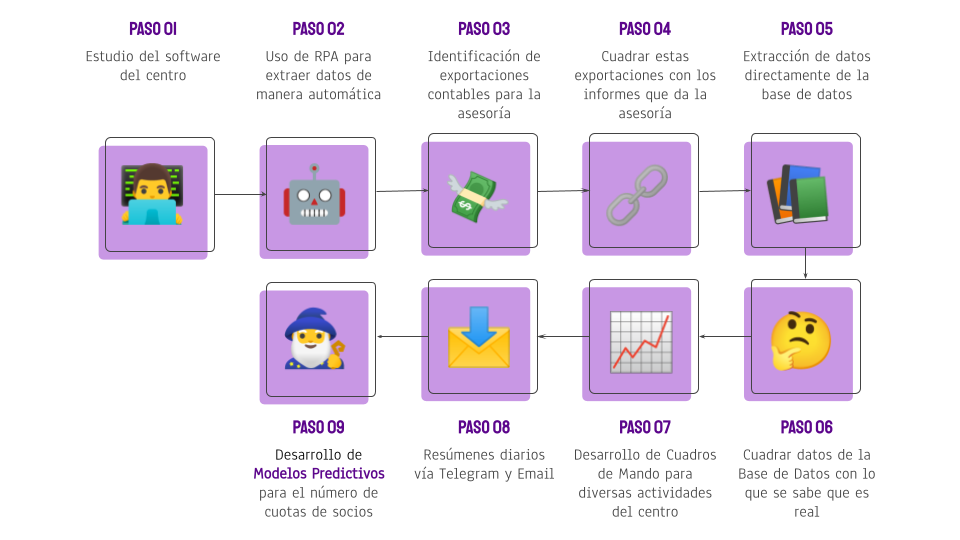
- Guided by the BOB Map, a study of what could be done at the center based on the use of data. And the investigation began by examining the software the center uses to record its activity.
- A Robotic Process Automation (RPA)-based solution was implemented for the automatic data extraction through the software's graphical interface.
- Periodic exports of accounting data from the software were identified, which are sent to a consultancy.
- Dashboards were created comparing the information exported from the software with the information provided by the consulting firm to ensure that the data matched and that the company could have its own control over this information.
- The software database was identified and accessed, so from this moment on it was possible to start extracting information from the software at any time, so that the control that can be offered to the company of its activity is always up to date.
- Dashboards were created comparing the information already available with that extracted from the database to ensure that they are correct.
- Furthermore, at this time there was access to a wide variety of data from the center, so it was possible to carry out dashboards on various subjects useful for decision-making y suggest improvements to the company's processes so that you have better control of your activity.
- A system was developed to send daily summaries of activities of interest via email.
- Finally, as part of this Master's Thesis, it was They developed predictive models for the evolution of the demand for membership fees at the center.
Project summary
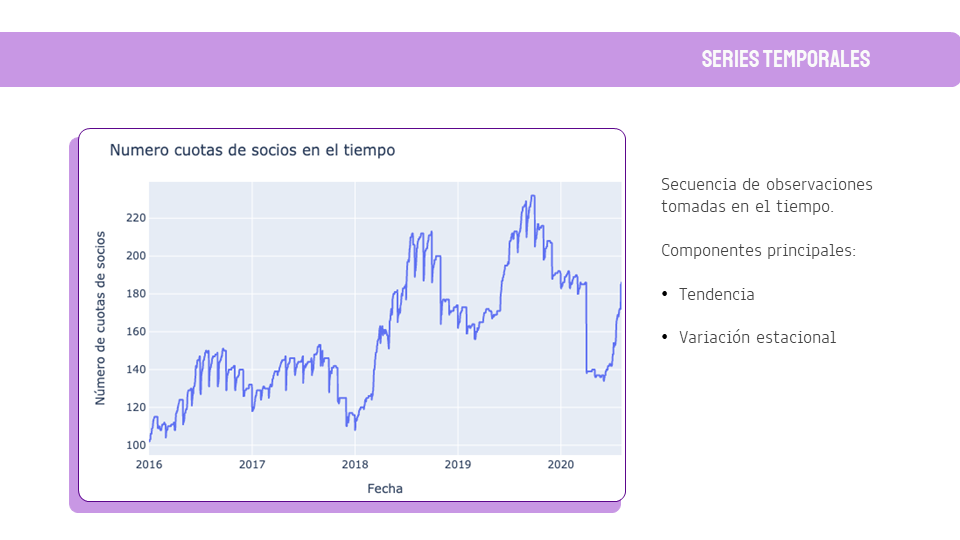
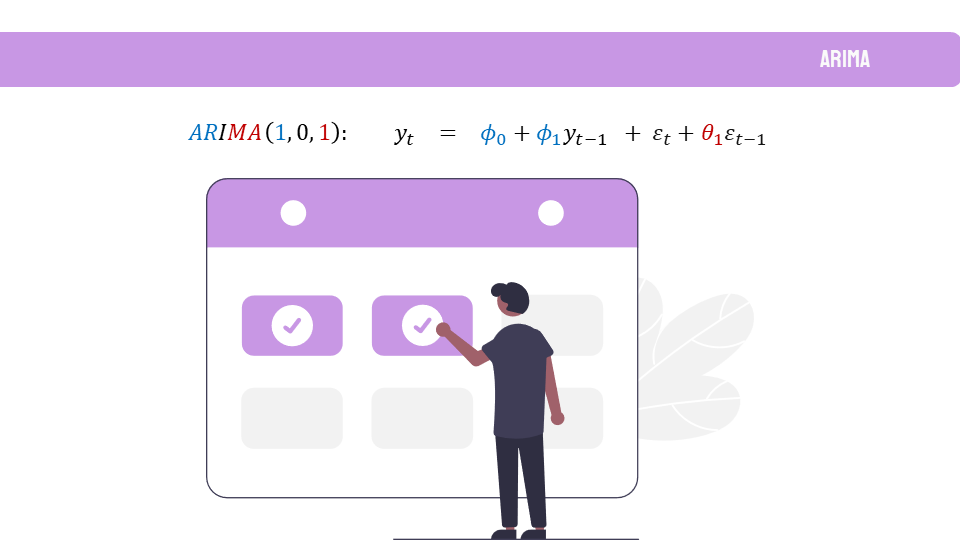
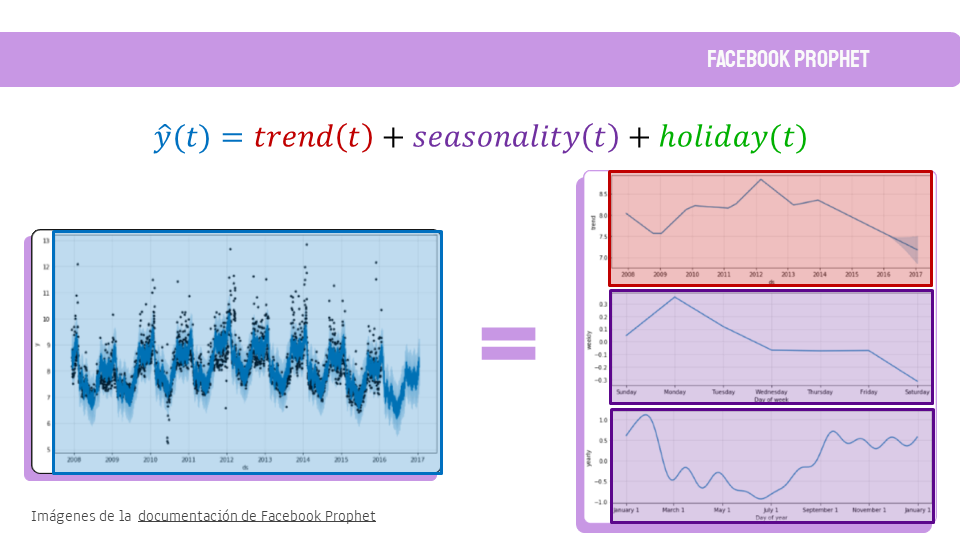
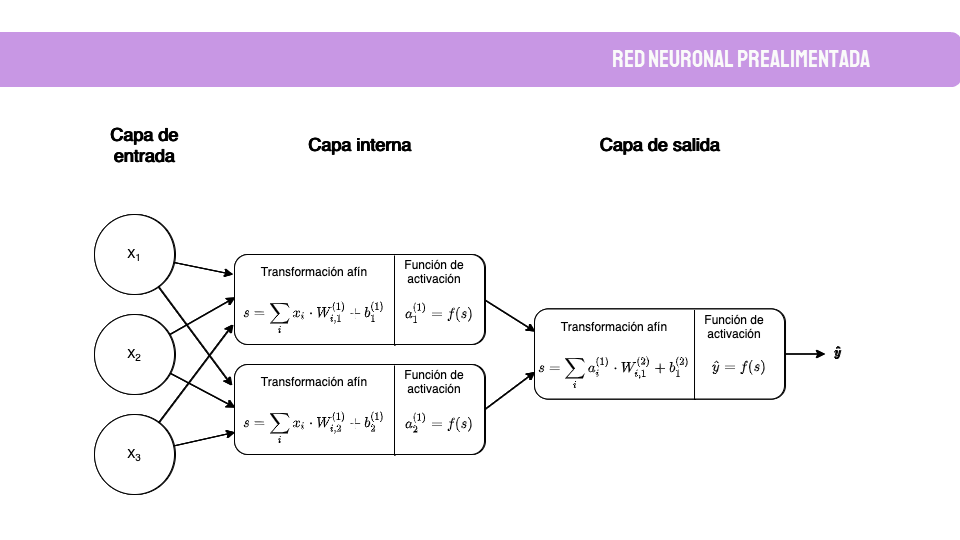
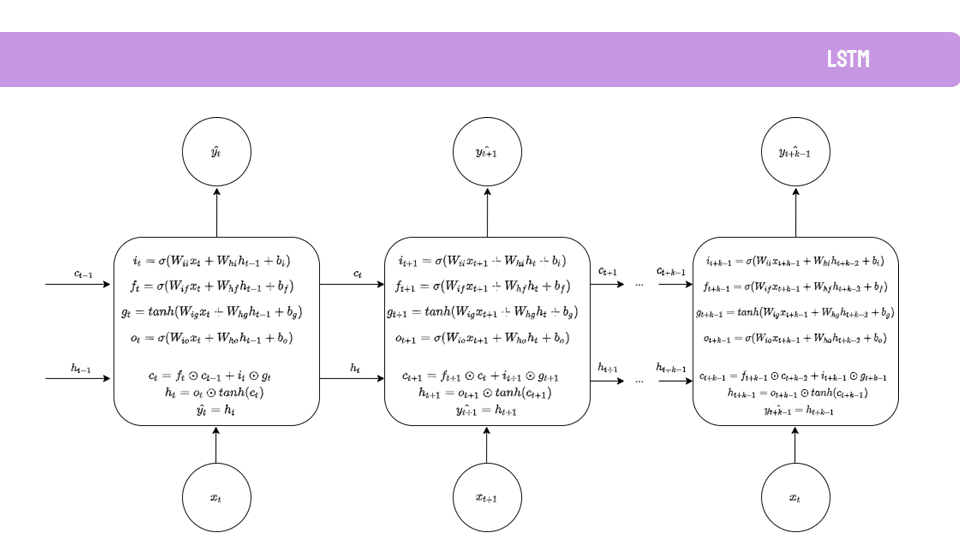
Since the data to be predicted is the number of new members over time, the first part of this Master's thesis includes the theoretical foundations of this type of data: time series. This also includes the theory of the predictive models that have been used, from statistical models such as ARIMA or SARIMAX, to models of Deep Learning such as Recurrent Neural Networks or DeepAR.
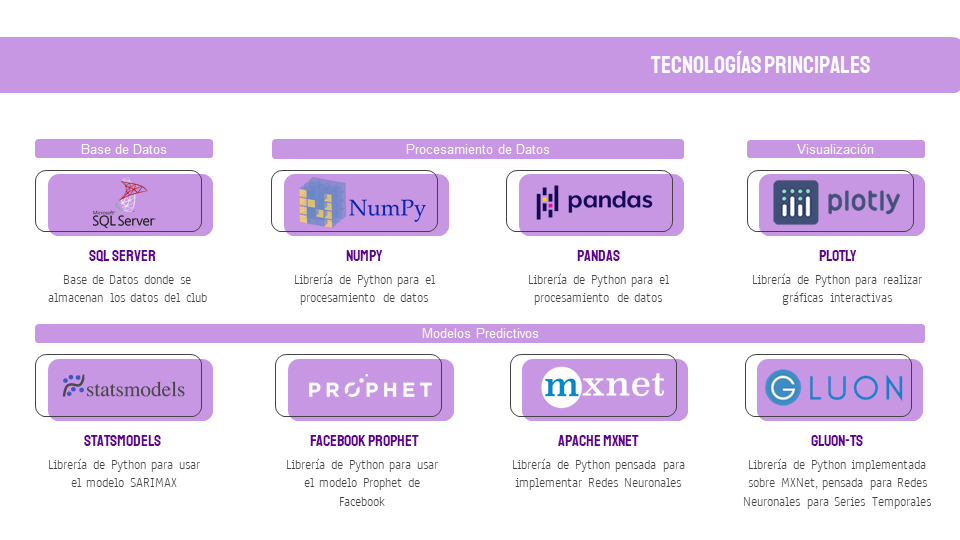
Following this, a brief description of the tools used is shown: SQL Server as the database, Python as the programming language, and the MXNet and GluonTS libraries for the models. Deep Learning for time series, etc.
The processes used for data treatment are described below. The tests performed with the predictive models are detailed, firstly without considering the impact of COVID-19 to assess whether the data was sufficient to continue the project. Secondly, predictions were made taking 2020 into account to project future outcomes.
Of these models, SARIMAX yielded very promising results for monthly data. However, it is a computationally expensive model for predicting data on a daily basis. Therefore, other models were also tested, but without achieving such satisfactory results. This was partly to be expected, given that the models of Deep Learning They work best when they have more than one time series from which to extract patterns. Therefore, A possible future direction for this project is to add other time series. such as: the number of visits to the club over time, the number of reservations, the number of activities, weather data such as rainfall or wind, mobility data, etc.




More information
The report on the work is publicly available at the Institutional Repository of the University of La Laguna.
- Author: Carlos Domínguez García
- Tutor: José Marcos Moreno Vega
- Co-tutor: María Belén Melián Batista

