Index
Introduction
Blockchain is a technology that has garnered interest from numerous sectors thanks to its potential, leading to its use in a significant number of diverse projects today. Among all the available blockchains, Ethereum stands out due to the concept of "smart contracts," programs that facilitate the execution of agreements.
Nevertheless, The technology presents certain scalability problems These limitations hinder its adoption in certain use cases that could benefit from its implementation. These problems are reflected in the number of interactions per second the network can handle and, consequently, the cost of each interaction.
This final degree project presents a prototype of a system whose purpose is to correct the scalability problems that Ethereum presents applied to a specific use case.
Context
This project is aimed at people knowledgeable and informed about Blockchain technology, especially Ethereum. A solid understanding of basic terminology and the general workings of the technology is essential. It is also important to understand why Ethereum is said to have a scalability problem.
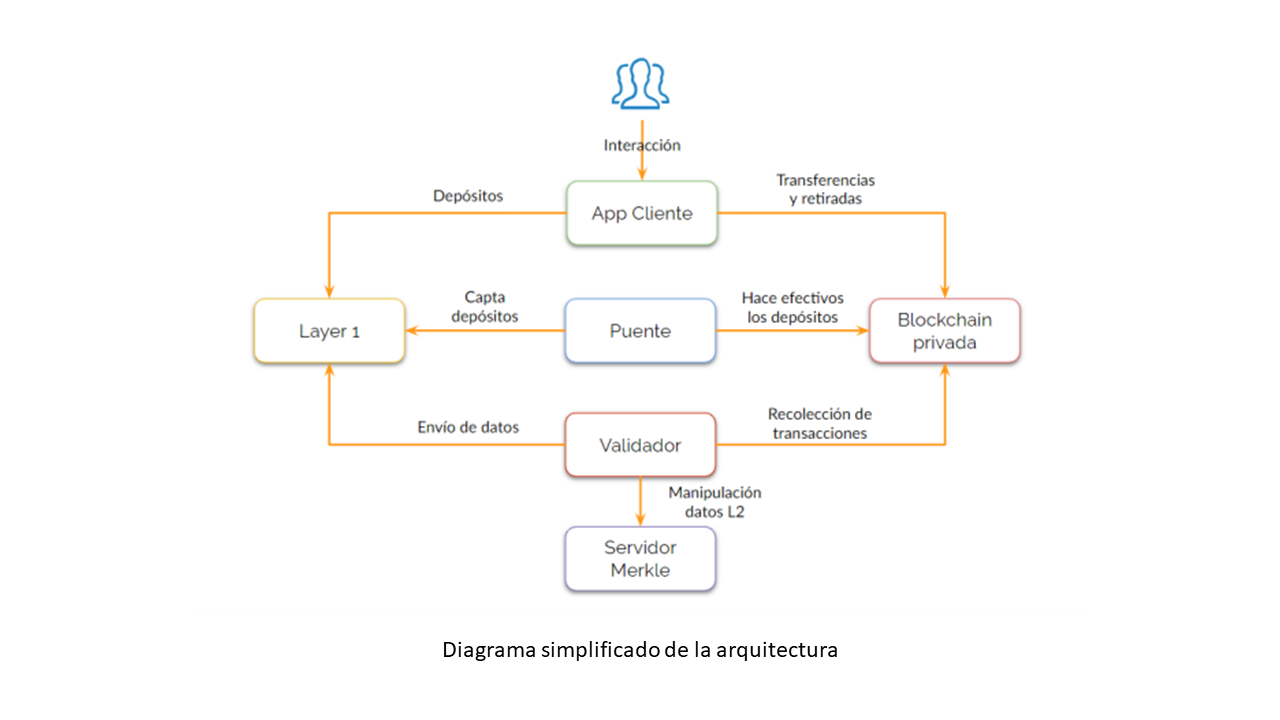
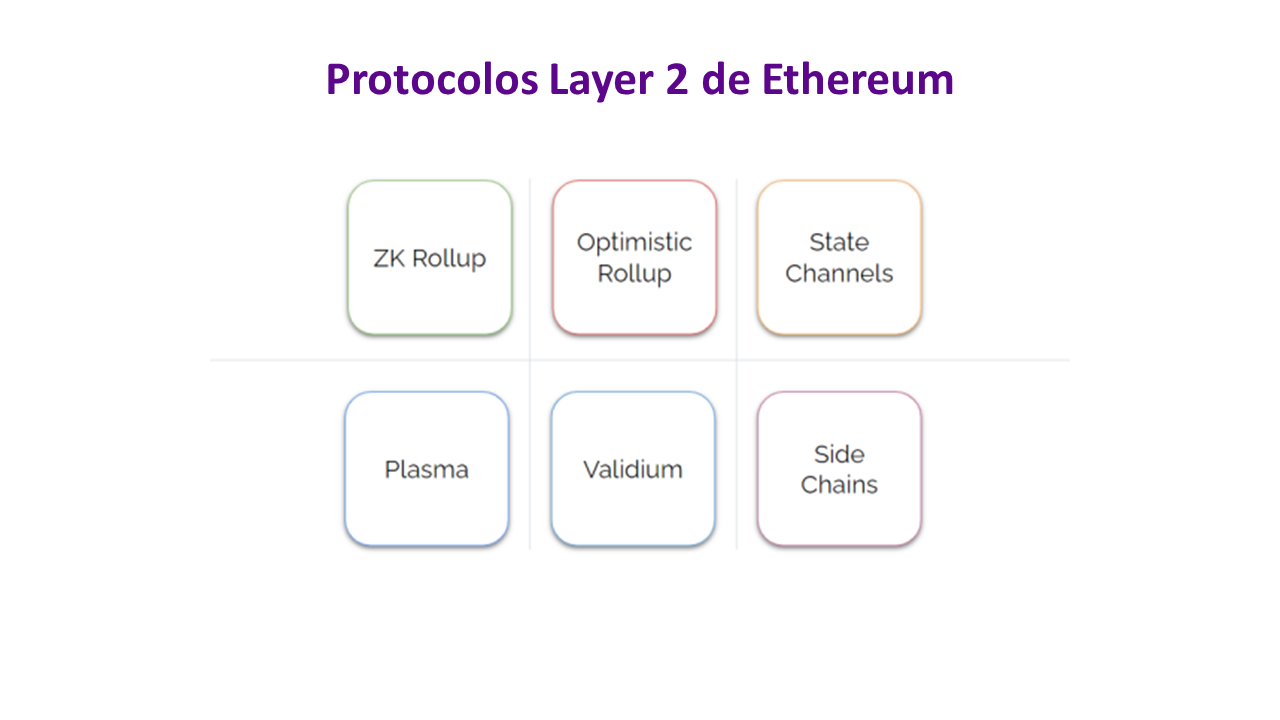
The prototype is an experimental approach to a second-layer protocol for Ethereum. They improve the scalability of the main network by offloading part of the computational load to a secondary environment. or layer that forwards the results of the delegated operations to the main network. In practice, several of these protocols exist, each with its own characteristics and disadvantages that make them more or less suitable for certain use cases. This final degree project briefly introduces the main existing protocols and identifies the prototype as one of them. Furthermore, the project also presents a hypothetical use case scenario and delves into the developed system, including the overall architecture and the design decisions made for each and every component.
Project summary
The goal of the prototype is to obtain the best possible scalability results, both in transactions per second and in the gas cost for each of these transactions.
The defined components correspond to the essential and fundamental ones that can be identified in the second-layer protocol on which the prototype is based. These are designed to capture user transactions, modify and perform the relevant calculations, and send information from the second layer to the main network. This information is a summary of the operations performed by users, as well as cryptographic proof that corroborates the veracity of the processed information.
In addition to the architectural design, the various design decisions made are outlined, along with their rationale and effect on the overall system. Several alternatives are compared on multiple occasions, and the reasons for choosing one over the others are explained. Some of these design decisions are general, meaning they affect the system as a whole.
Having reviewed the general aspects of the prototype, the implementation details of each of its components are specified, highlighting the most significant elements and justifying the design decisions made.
Next, the results obtained by the system in its operation are shown and compared to those presented by the main Ethereum network to justify the improvement in scalability, making the clarifications and points that are considered appropriate. These results demonstrate the viability of second-layer protocols as solutions to the scalability problems presented by the technology.


More information
The report on the work is publicly available at the Institutional Repository of the University of La Laguna.
- Author: Florentín Pérez González
- Tutor: José Luis Roda García
- Partner company: Open Canarias

