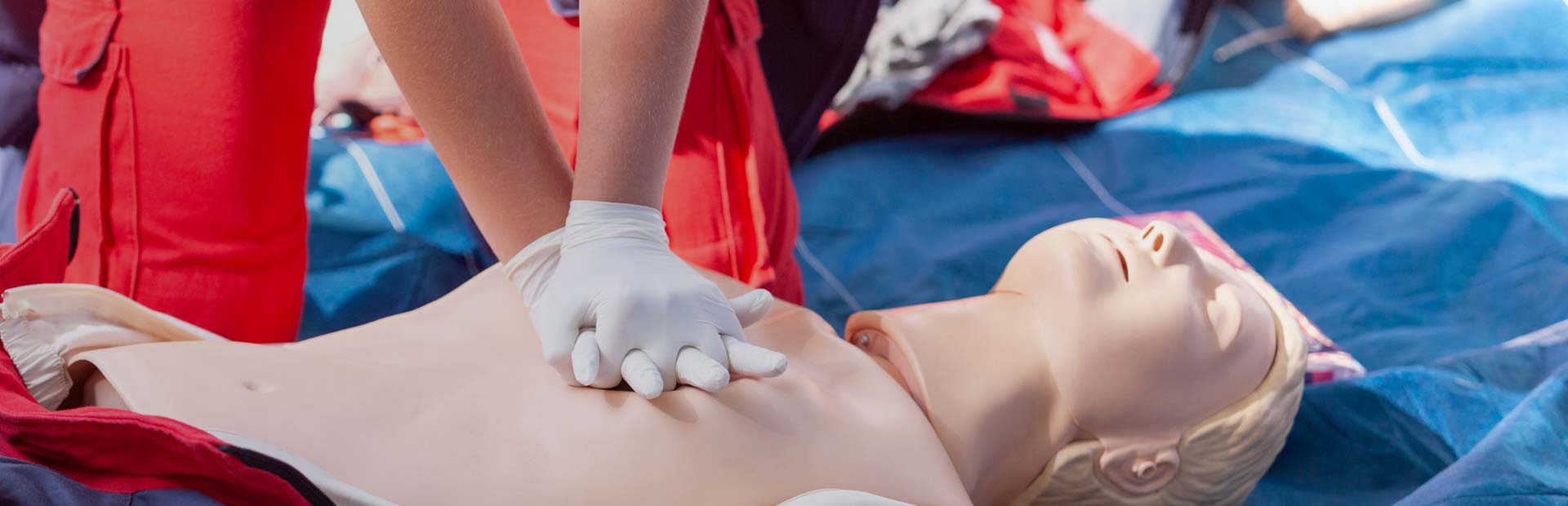
Initial Emergency Care_ First Aid, Basic Life Support and AED

Initial Emergency Care: First Aid, Basic Life Support and AED

Overview

This training course is designed to equip participants with the basic knowledge and skills necessary to respond effectively to medical emergencies. Throughout the course, participants will learn to identify different types of emergencies and apply initial intervention measures, including first aid techniques, basic life support maneuvers, and the safe and appropriate use of an automated external defibrillator (AED). The goal is to improve initial response capabilities, facilitate early intervention, and increase the chances of recovery for those affected until specialized services arrive.

Goals

To train participants to recognize emergency situations and properly apply the first action measures using first aid techniques, basic life support and use of the semi-automatic external defibrillator (AED), contributing to improving the initial response to health emergencies.

Access requirements

To benefit from this subsidized training course, you must meet the following requirements:

  1. Be between 25 and 64 years old at the start date of training.
  2. A university degree will not be required to access this micro-credential. However, students wishing to access it must meet the following access requirements: They must hold, at a minimum, a high school diploma or advanced vocational training qualification.
    The microcredential is primarily aimed at professionals and students in the field of Health Sciences (Medicine, Nursing, Pharmacy, Psychology, Physiotherapy, Speech Therapy, Biology or other related degrees), as well as emergency health technicians and professionals linked to emergency care.

Academic program

Contents

  1. Principles of action in emergencies. Concept of urgency and emergency. Conduct of the first responder. PAS method. Safety of the responder and activation of the system of
    emergencies.
  2. Initial assessment of the victim. Primary assessment, assessment of level of consciousness and
    breathing, identification of serious situations.
  3. Hemorrhage control. Types of hemorrhages, risks associated with blood loss.,
    Control techniques using direct compression, compression bandaging, and initial use of the tourniquet.
  4. Foreign body airway obstruction (FBAO). Recognition of choking and application of disobstruction maneuvers in adults and pediatric populations.
  5. Basic Life Support (BLS). Concept of cardiac arrest, chain of survival, recognition of cardiac arrest and application of cardiopulmonary resuscitation maneuvers.
  6. Use of the semi-automatic external defibrillator (AED). Principles of defibrillation, indications, safety and application of the AED within cardiopulmonary resuscitation.
  7. First aid in emergency situations. What to do in case of fainting, seizures,
    Injuries, burns, fractures, and allergic reactions. Recovery position.
  8. Non-technical skills in emergencies. Effective communication, leadership, teamwork, and decision-making in critical situations.
  9. Integrated emergency simulation. Practical application of acquired knowledge through simulated emergency scenarios and training through clinical simulation.

Methodology and activities

  • Lectures/expository method: presentation or explanation by the teaching staff.
  • Assessment.
  • Tutorial.
  • Active methodologies.

Evaluation criteria

  • Objective tests (true/false, multiple choice, test type, fill in the blank, ordering, etc.).
  • Case studies, exercises, and problems.

General information

Credits: 5 ECTS

Duration: May 11, 2026 to May 29, 2026

Teaching modality:

Location:

Registration fee: €108.75

Valued at: €362.50

Registration
More info and registration help

The cost of tuition for this Microcredential will be subsidized by the 'Plan for the development of university microcredentials', investment 6 of component 21 of the Addendum to the 'Recovery, Transformation and Resilience Plan', financed by the European Union – Next Generation EU, year 2025.

Flexibility

Short courses available in various formats (in-person, online, or hybrid). Ideal for learning without interrupting your professional life.

Employability

Content created and delivered by professionals and experts in the field, designed for immediate application.

Certification

Endorsed by the University of La Laguna. You will receive an official ECTS certificate, valid in the European Higher Education Area.
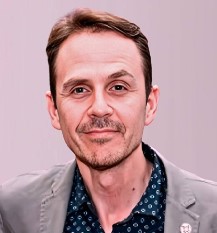
Teaching staff

Francisco Javier Castro Molina

Doctor. Mental health nurse. Art historian. Anthropologist. Member of several research groups. Director of the Nursing School of Our Lady of Candelaria (Canary Islands Health Service-University of La Laguna).
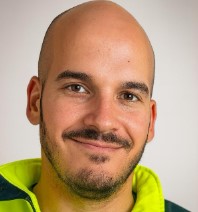
Joshua Caleb Fortes Gonzalez

Emergency Medical Services (EMS) Nurse. Master's in Emergency, Critical Care Nursing. Instructor.
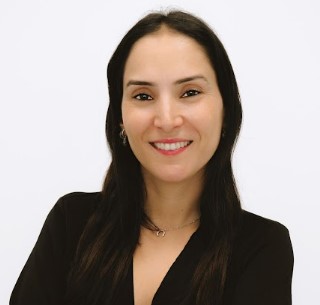
Cristina García Marichal

Specialist in Family and Community Medicine. Doctor of Medicine. Family physician in the primary care management of Tenerife.
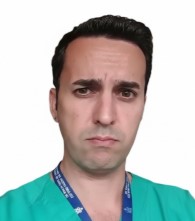
Felipe Santiago Fernández Méndez

Specialist Nurse in Gynecology and Obstetrics (Midwife). PhD in Medical Sciences, Master's in Research, Management and Quality in Health Care, Master's in Nursing Service Management. Contracted Professor with a PhD in the Department of Nursing at the University of La Laguna.

Haydée Hernández Jorge

Advanced Life Support Nurse. Master's in Emergency, Critical Care Nursing. Instructor.

Share this microcredential

// Common variables (we improved the encoding for email) const pageUrl = window.location.href; const pageTitle = document.title; // Sharing functions (those for social networks with window.open remain the same, but we added return false to avoid page breaks) function shareFacebook() { window.open(`https://www.facebook.com/sharer/sharer.php?u=${encodeURIComponent(pageUrl)}`, '_blank', 'width=600,height=400'); } function shareLinkedIn() { window.open(`https://www.linkedin.com/sharing/share-offsite/?url=${encodeURIComponent(pageUrl)}`, '_blank', 'width=600,height=500'); } function shareTelegram() { window.open(`https://t.me/share/url?url=${encodeURIComponent(pageUrl)}&text=${encodeURIComponent(pageTitle)}`, '_blank', 'width=600,height=400'); } function shareWhatsApp() { window.open(`https://api.whatsapp.com/send?text=${encodeURIComponent(pageTitle + ' ' + pageUrl)}`, '_blank'); } // Email share function (copy to clipboard + Gmail fallback) function shareByEmail() { const pageUrl = window.location.href; const pageTitle = document.title.trim(); // Text ready to paste into email (with line breaks) const emailText = `${pageTitle}\n${pageUrl}\n\nI'm sharing this interesting article with you.`; // We try to copy to the clipboard if (navigator.clipboard && navigator.clipboard.writeText) { navigator.clipboard.writeText(emailText).then(() => { // Success message (you can use alert, toast, or a temporary div) alert('Link copied to clipboard!\nPaste it into your email (Ctrl+V).'); }).catch(err => { console.error('Error copying:', err); fallbackToGmail(); }); } else { // If clipboard is not supported (very old browsers) fallbackToGmail(); } } function fallbackToGmail() { const pageUrl = encodeURIComponent(window.location.href); const pageTitle = encodeURIComponent(document.title); const body = encodeURIComponent(document.title + '\n' + window.location.href + '\n\nI'll share this with you:'); // Open Gmail compose window.open(`https://mail.google.com/mail/?view=cm&fs=1&su=${pageTitle}&body=${body}`, '_blank', 'width=800,height=600'); }