Government Pavilion, C/ Padre Herrera s/n
Post Office Box 456
38200, San Cristobal de La Laguna
Santa Cruz de Tenerife - Spain
Switchboard Tel.: (+34) 922 31 90 00
Hours: Mon, 8:00 a.m. to 9:00 p.m.
This micro-credential addresses the neuropsychological phenomenon of "chemobrain" and its cognitive consequences in women with breast cancer, training students in neuropsychological assessment and intervention. The program includes the use and interpretation of specific tests, report writing, and the design and application of intervention programs, with a practical approach aimed at improving the cognitive functioning and quality of life of patients.
Learn about the neuropsychological phenomenon of "Chemobrain" and the cognitive consequences it entails.
Become familiar with the neuropsychological tests necessary for the development of an appropriate evaluation protocol for women who have been diagnosed and treated with chemotherapy and/or radiotherapy for breast cancer.
Acquire the competence of neuropsychological assessment in women with breast cancer.
Learn how to grade administered tests
Be able to prepare the corresponding neuropsychological report of the results obtained in the neuropsychological evaluation phase.
Become familiar with neuropsychological intervention techniques and methods.
Learn how to intervene neuropsychologically in women with breast cancer
Carry out the development of a neuropsychological intervention program for women with breast cancer.
Implement an intervention program in at least one woman diagnosed and treated for breast cancer.
Students must be between 25 and 64 years old on the start date of the program. To obtain the micro-credential, the following is required: a. Possession of an official Spanish university degree in Psychology or the same degree issued by a higher education institution in another member state of the European Higher Education Area, which qualifies the holder for admission to master's programs in that state. b. Possession of a degree in Psychology issued by an educational system outside the European Higher Education Area without official recognition or a declaration of equivalence. In these cases, the academic director will submit a report to the Academic Committee, which will authorize or deny admission. Under no circumstances will authorization imply official recognition of the foreign degree, nor its recognition for any purpose other than admission to postgraduate programs at the University of La Laguna (ULL).
A.- THEORY PROGRAM BLOCK I
1.- Introduction
1.1.- Symptomatic characteristics of breast cancer: Etiology, frequency, evolution and medical treatments.
1.2.- The Role of Neuropsychology in Breast Cancer: “Chemobrain Syndrome”. 2.- Neuropsychological Assessment in Breast Cancer.
2.1.- The clinical interview
2.2.- Tests to evaluate complex cognitive functions:
2.2.1.- Manual Preference
2.2.2.- Intelligence
2.2.3.- Attention
2.2.4.- Processing Speed
2.2.5.- Verbal Learning Curve
2.2.6.- Short and Long Term Verbal Memory
2.2.7.- Visuospatial Learning Curve
2.2.8.- Short and Long Term Visuospatial Memory
2.2.9.- Visuospatial, Visoperceptive and Visuomotor Skills
2.2.10.- Psychomotor Skills 2.2.11.- Executive Functions
2.2.11.1.- Planning
2.2.11.2.- Verbal Working Memory
2.2.11.3.- Visuospatial Working Memory
2.2.11.4.- Inhibition
2.2.11.5.- Verbal Fluency
2.2.11.6.- Design Fluency
2.2.11.7.- Cognitive Flexibility
3. The Neuropsychological Assessment Protocol
4. Correction of tests, use of norms and obtaining of referral scores
5.- The Neuropsychological Report BLOCK II
6. Principles of Neuropsychological Intervention
6.1.- Empathy
6.2.- Timing
7. The Neuropsychological Intervention Program
7.1.- Justification
7.2.- Objectives
7.3.- Methodology
7.4.- Materials
7.5.- Design
7.6.- Timing
7.7.- Expected results
7.8.- Implementation of the intervention program
8.- Activities, Procedures and Tasks for the Neuropsychological Rehabilitation of: 8.1.- Intelligence
8.2.- Attention
8.3.- Processing Speed
8.4.- The Verbal Learning Curve
8.5 - Short and Long Term Verbal Memory
8.6 - The Visuospatial Learning Curve
8.7.- Short and Long Term Visuospatial Memory
8.8.- Visuospatial, Visoperceptive and Visuomotor Skills
8.9.- Psychomotor Skills
8.10.- Executive Functions:
8.10.1.- Planning
8.10.2.- Verbal Working Memory
8.10.3.- Visuospatial Working Memory
8.10.4.- Inhibition
8.10.5.- Verbal Fluency
8.10.6.- Design Fluency
8.10.7.- Cognitive Flexibility
B) INTERNSHIP PROGRAM
1. Functional Neuroanatomy of the Cerebral Cortex
1.1.- Brain Lobes, Areas and Circuits
1.2.- Cortical Irrigation
2. Neuroimaging Techniques
2.1.- Electroencephalography
2.1.1.- The Electroencephalogram
2.1.2.- Evoked Potentials
2.1.3.- Computerized axial tomography
2.1.4.- Structural Magnetic Resonance Imaging
2.1.5.- Functional Magnetic Resonance Imaging
2.1.6.- Positron Emission Tomography
3. Training in neuropsychological assessment tests
3.1.- Application
3.2.- Correction
4. Training in the Preparation of the Neuropsychological Report
5.- Training in Neuropsychological Intervention
5.1.- Design of an Intervention Program
5.2.- Application of an Intervention Program
Lectures/expository method: presentation or explanation by the teaching staff.
Practical classes: activities supervised by the teaching staff in the classroom, laboratories, clinics.
Seminars: completing exercises, solving problems or practical cases, others.
Individual work: individual preparation of assignments/projects/reports, portfolio.
Group work: group preparation of assignments, projects/reports
Personal study: preparation for tests, exams, etc.
Assessment: written tests, oral tests, practical tests, …
Tutoring: instruction period in which teachers and students interact with the aim of reviewing and discussing materials and topics presented in class.
Exhibitions, debates and presentation of works and projects: activities supervised by the teaching staff.
Active methodologies: cooperative learning, project-based learning, flipped classroom, service learning, game-based learning, case studies, problem solving… These are aimed at making learning a participatory process and are based on student agency.
Field trips, visits: activities that take place outside the center and allow students to acquire the professional skills associated with a subject.
Objective tests (true/false, multiple choice, test-type, fill-in-the-blank, ordering, etc.): These are measurement instruments that allow for the evaluation of knowledge, skills, performance, aptitudes, etc. The answers are closed-ended, thus promoting objectivity during the scoring process.
Development tests, long answer: students must develop, relate, organize and present their knowledge on a topic to produce an extensive answer.
Case studies, exercises and problems: tests in which students must solve, in a reasoned manner, within a certain time, and according to the established criteria, the cases, exercises or problems posed by the teaching staff, with the aim of applying the knowledge acquired.
Attendance, participation or attitude in teaching activities, seminars, tutorials, etc.: monitoring student attendance and participation in teaching activities, carrying out activities during teaching sessions.
Written works, memoirs, internship reports, and projects: a document prepared on a topic or activity carried out, following the instructions established by the teaching staff.
Oral presentation and defense of topics, assignments, etc.: oral presentation on a topic related to the micro-credential content or on the results of an assignment, exercise, or project, followed by discussion with the teaching staff. This can be done individually or in a group.
Credits: 3 ECTS
Duration: 12/05/2026-21/05/2026
Teaching modality: In person
Location: Faculty of Education (Central Building)
The cost of tuition for this Microcredential will be subsidized by the 'Plan for the development of university microcredentials', investment 6 of component 21 of the Addendum to the 'Recovery, Transformation and Resilience Plan', financed by the European Union – Next Generation EU, year 2025.
Short courses available in various formats (in-person, online, or hybrid). Ideal for learning without interrupting your professional life.
Content created and delivered by professionals and experts in the field, designed for immediate application.
Endorsed by the University of La Laguna. You will receive an official ECTS certificate, valid in the European Higher Education Area.
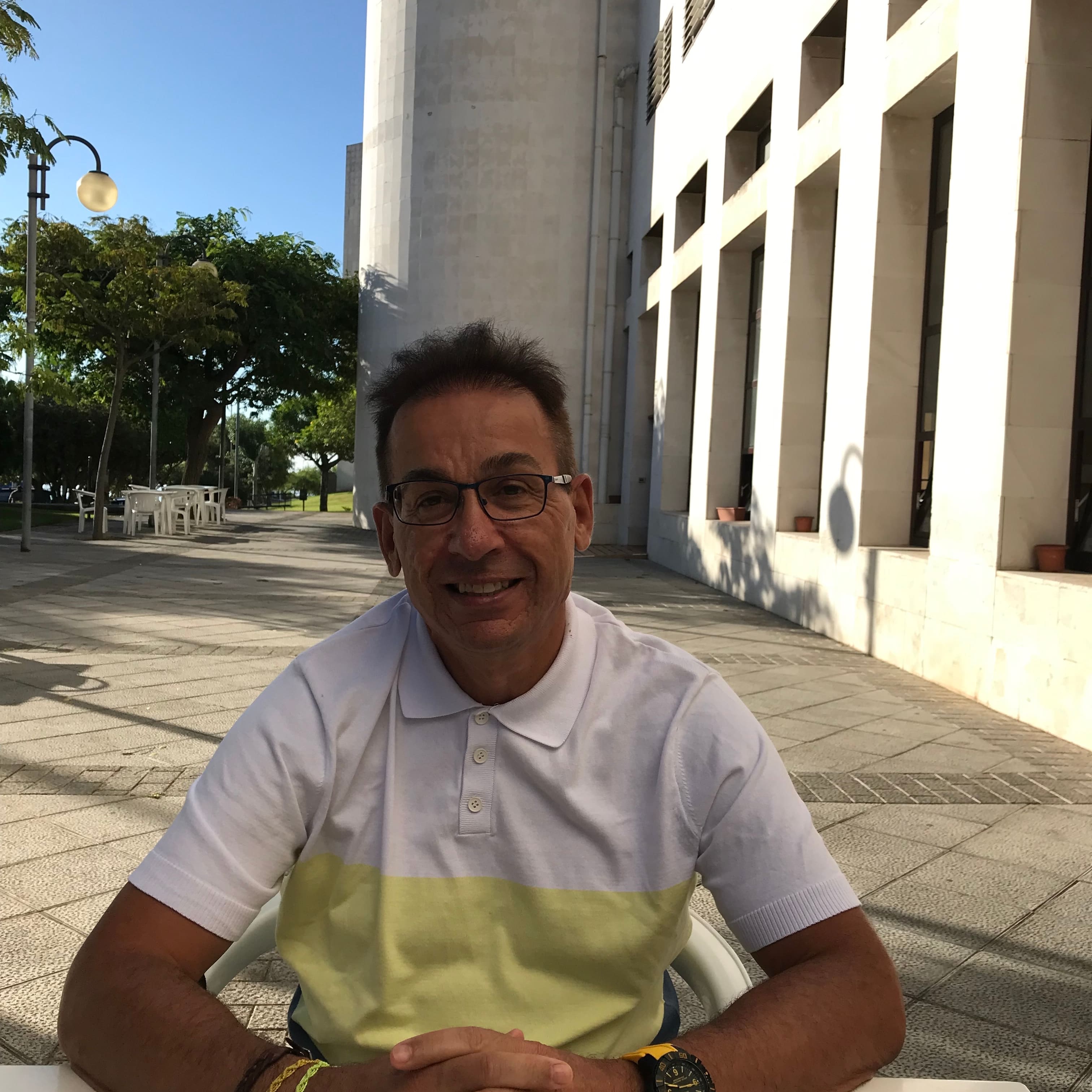
Full Professor of Neuropsychology at the Faculty of
Psychology and Speech Therapy, University of La Laguna (ULL). Neuropsychologist for the Network
Canary Islands Assistance to Children and Adolescents with Cancer of the Ministry of Health of
Government of the Canary Islands. Principal Investigator of the Intervention Project
Neuropsychology in Children and Adolescents with Cancer from the University of La Laguna.

Government Pavilion, C/ Padre Herrera s/n
Post Office Box 456
38200, San Cristobal de La Laguna
Santa Cruz de Tenerife - Spain
Switchboard Tel.: (+34) 922 31 90 00
Hours: Mon, 8:00 a.m. to 9:00 p.m.
