Government Pavilion, C/ Padre Herrera s/n
Post Office Box 456
38200, San Cristobal de La Laguna
Santa Cruz de Tenerife - Spain
Switchboard Tel.: (+34) 922 31 90 00
Hours: Mon, 8:00 a.m. to 9:00 p.m.

This micro-credential offers specialized training to strengthen teachers' skills in academic tutoring of external internships and in supporting students in professional contexts. Through pedagogical strategies and practical tools, it addresses internship planning, coordination with company mentors, and learning monitoring. It also covers communication techniques, guidance, feedback, and fostering student autonomy. The training delves into formative assessment processes and the evaluation of skills acquired during the practical experience. Aimed at teachers and professionals who currently serve or wish to serve as tutors, it is delivered in a 100% online and asynchronous format.
This micro-credential is intended for teachers or trainers who currently serve, or are in the process of serving, as academic tutors for practicums or supervised professional internships. Specifically, the training is aimed at:
Documents to be submitted:
MODULE 1: Design and planning of external internship training
MODULE 2: Tutoring and the functions of the academic tutor of the Practicum
MODULE 3: Techniques and strategies for the development of academic tutoring in the Practicum
MODULE 4: Educational and support function in the Integrated Vocational Training System
MODULE 5: Formative assessment processes in external internships
Asynchronous training through the virtual campus, which includes the following activities:
AdmissionEnrollment will be on a first-come, first-served basis until the maximum number of students is reached. Of those enrolled, at least 15 must be employed individuals who currently work or will work as tutors in Vocational Training for Employment institutions. If the approved enrollment limit is exceeded, a waiting list will be created to fill vacancies or offer additional sessions of the Microcredential.
Credits: 2 ECTS
Duration: 02/11/2026 to 04/12/2026
Teaching modality: On-line
Location: Virtual campus of the University of La Laguna
Action funded by the Canary Islands Employment Service, through the project "Integrate Dual Vocational Training in your Company 2025" implemented by CEOE Tenerife. Action funded by the State Public Employment Service.
Short courses available in various formats (in-person, online, or hybrid). Ideal for learning without interrupting your professional life.
Content created and delivered by professionals and experts in the field, designed for immediate application.
Endorsed by the University of La Laguna. You will receive an official ECTS certificate, valid in the European Higher Education Area.
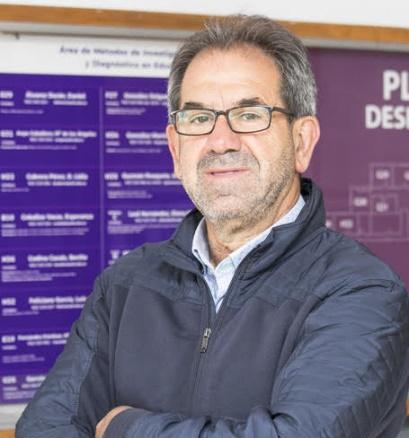
Professor of Educational and Psychopedagogical Guidance in the Department of Didactics and Educational Research at the University of La Laguna (ULL). He teaches in various degree programs, offering courses in Career Guidance, Tutoring, and Occupational Guidance. He has extensive experience in delivering courses, workshops, and seminars.
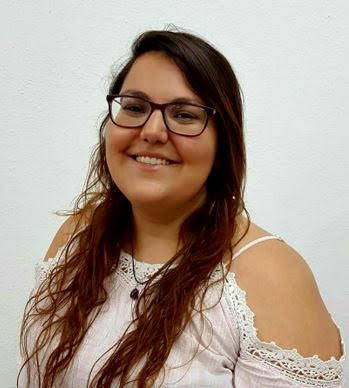
Assistant Professor with a PhD in the area of Didactics and School Organization at the University of La Laguna. Her teaching and research career is linked to educational guidance, the transition to university, and the prevention of academic dropout.
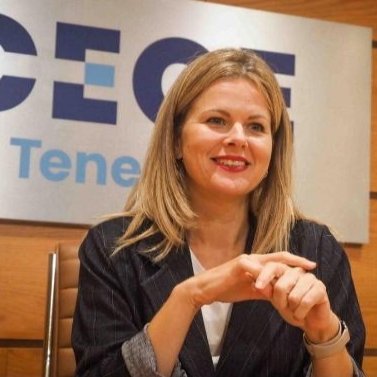
She holds a degree in Economics from the University of La Laguna and a Master's in Senior Management from ESADE. Since September 2025, she has served as Secretary General of CEOE Tenerife. Her career combines economic consulting, business representation, social dialogue, and public policy analysis to contribute to the economic and social development of the Canary Islands. She is Vice President of the Economic and Social Council of the Canary Islands and a member of the Advisory Council to the President of the Government of the Canary Islands, among other positions.
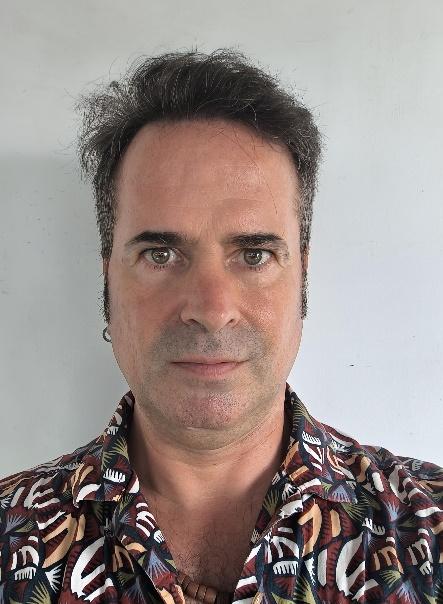
A hospitality and tourism teacher since 2010 and a substitute teacher since 2007. He has worked at IES Los Naranjeros, IES María Pérez Trujillo, CIFP Virgen de la Candelaria, and IES Punta Larga, where he has been since 2007. He has been a Professional Qualifications Assessor since 2020 and has been preparing candidates for competitive examinations in the field of Culinary Arts and Pastry since 2021. He worked as a cook in several restaurants in Bilbao and Madrid between 1999 and 1999. From 2000 to 2007, he was a Head Chef in various restaurants in Madrid and Tenerife.
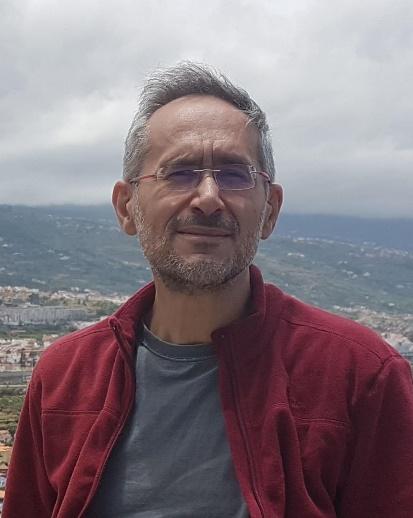
Professor of Didactics and School Organization at the University of La Laguna. With a PhD in Psychology and Education, he has extensive experience as a teacher and educational advisor. His academic and research work focuses on curriculum, teacher training, educational innovation, assessment, and educational equity.

Government Pavilion, C/ Padre Herrera s/n
Post Office Box 456
38200, San Cristobal de La Laguna
Santa Cruz de Tenerife - Spain
Switchboard Tel.: (+34) 922 31 90 00
Hours: Mon, 8:00 a.m. to 9:00 p.m.
