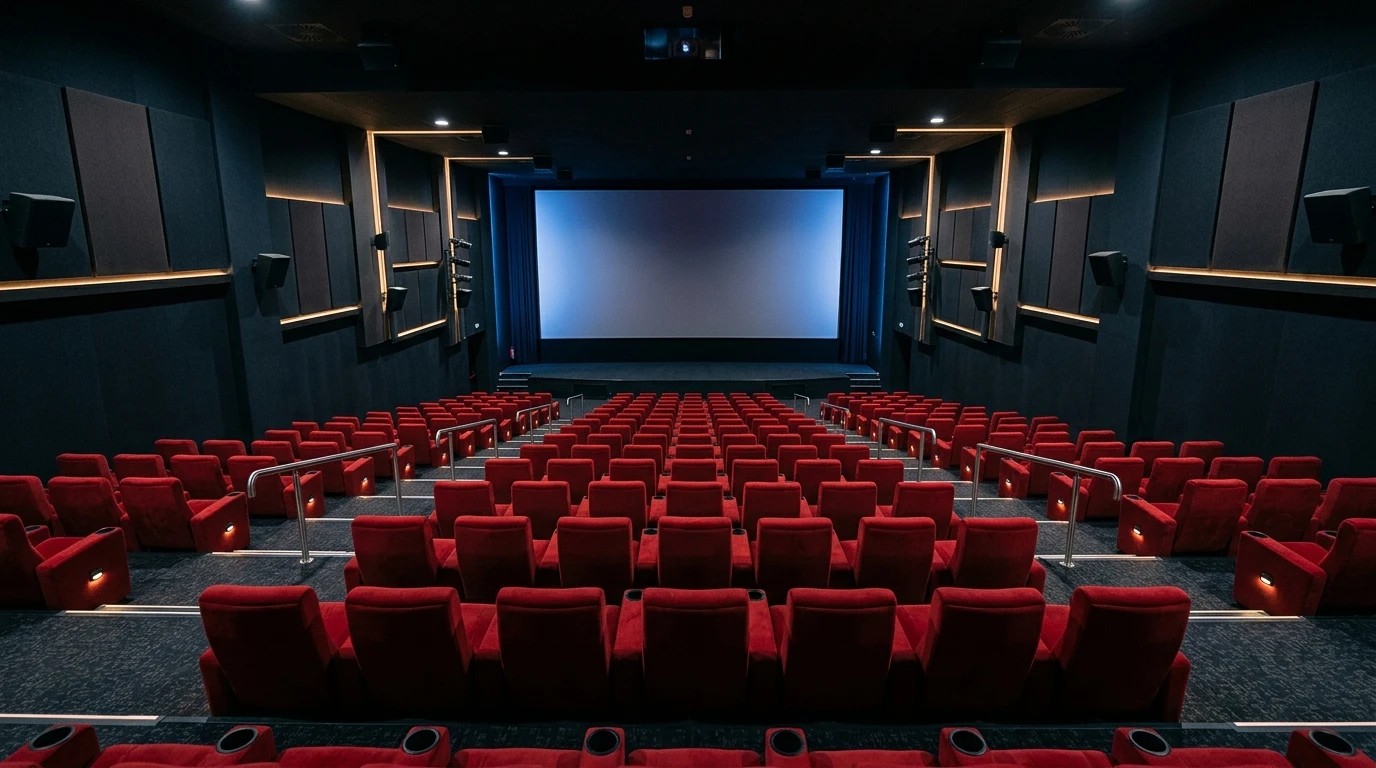
Microdegree in History
and film language

Microdegree in History and Language of Cinema

Brief description

The Microdegree in History and Language of Film offers specialized, modular training focused on the analysis of film as an artistic, cultural, and historical language. The program enables students to acquire critical and analytical skills regarding the main film movements, directors, and narrative forms, as well as the specific expressive resources of this audiovisual art form. It is designed as complementary training to undergraduate studies, with particular emphasis on its applicability in educational, cultural, and creative contexts.

Contents

  1. Introduction to film language: shot, framing, editing, sound, lighting and staging.
  2. History of cinema and audiovisual arts from its origins to classic cinema.
  3. Evolution of modern and contemporary cinema and its relationships with other visual arts.
  4. Spanish and Latin American cinema: historical, aesthetic and cultural contexts.
  5. Basic methodologies for historical-artistic analysis of cinema.

Associated skills and competencies

Specific competence. Skills

  • CEA-4 – Professional responsibility and ethical commitment to society regarding the defense and conservation of historical and artistic heritage

Specific competence. Skills

  • CEH-5 – Use of new technologies as a means for the study and dissemination of works of art.
  • CEH-4 – Ability to use other historiographical techniques for the knowledge and evaluation of the work of art.
  • CEH-3 – Acquire familiarity with artistic works through direct contact in museums, exhibitions and visits to historical-artistic monuments.
  • CEH-1 – Develop the critical and analytical spirit to interpret the work of art and extract information from it about the culture that generated it.

Specific competence. Knowledge

  • CEC-10 – Acquire specific knowledge that enables you to perform work specific to the professional profiles of the degree.
  • CEC-8 – To know the most important publications made on the subject, as well as those that allow you to delve deeper into specific aspects of it and guarantee the appropriate ways to expand your knowledge.
  • CEC-5 – To know and handle the specific language and terminology that are characteristic of the different manifestations of Art.
  • CEC-3 – To know the theory of art and aesthetic thought in its different contexts and how they have conditioned the function, discourses, techniques and formal languages of Art.
  • CEC-2 – To know the different formal and visual languages, as well as the artistic techniques used throughout history, in order to understand how they act on the final result of the work of art
  • CEC-1 – To understand the characteristics, functions and basic lines of Art throughout History, as well as its causes, always placing the work of art in its socio-economic, political and ideological context, and connecting it with other forms of cultural expression

General competence

  • CG-1 – Rational and critical knowledge of artistic production throughout history and its manifestation in different cultures and through diverse artistic languages

Basic competence

  • CB-1 – That students have demonstrated possession and understanding of knowledge in an area of study that builds upon general secondary education, and is usually found at a level that, while supported by advanced textbooks, also includes some aspects involving knowledge from the forefront of their field of study
  • CB-2 – That students know how to apply their knowledge to their work or vocation in a professional manner and possess the skills that are usually demonstrated through the development and defense of arguments and the resolution of problems within their area of study
  • CB-3 – That students have the ability to gather and interpret relevant data (usually within their area of study) to make judgments that include reflection on relevant social, scientific or ethical issues
  • CB-4 – That students can transmit information, ideas, problems and solutions to both specialized and non-specialized audiences.
  • CB-5 – That students have developed those learning skills necessary to undertake further studies with a high degree of autonomy.

Access profile

Undergraduate students from the University of La Laguna who have completed at least 60 ECTS credits, preferably from degrees in Humanities, Arts, Social Sciences, and Education. Graduates or those who meet the admission requirements for undergraduate studies, as well as those who can demonstrate equivalent professional experience in cultural or audiovisual fields, may also apply.

Curriculum

Credits required to obtain the microdegree (ECTS)

24 credits

Subjects of the Curriculum

Subjects
Code Subject Credits Semester Degree
289131204 Introduction to Film Language 6 Second History of Art
289133102 History of Cinema and other audiovisual arts I 6 First History of Art
289133202 History of Cinema and other audiovisual arts II 6 Second History of Art
289130902 History of Spanish and Latin American cinema 6 First History of Art

Places offered

10 places

Selection and enrollment process

Specific selection criteria

  1. Academic record.
  2. Adaptation of the educational or professional profile to the micro-degree.
  3. Order of pre-registration in case of a tie in merits.

Specific registration limits

Students simultaneously pursuing a degree and a microdegree may enroll in a maximum of 12 ECTS per academic year, with a limit of 6 ECTS per semester, unless expressly authorized by the center.

Observations

This microdegree is not to be confused with official qualifications nor does it grant competencies specific to regulated professions. Its modular structure facilitates compatibility with undergraduate studies and addresses criteria of cultural development, critical thinking, and employability in educational, cultural, and creative fields.

General information

Credits: 24 credits.

Places offered: 10 places.

Place of deliveryFaculty of Humanities.

Complete your degree

Expand your knowledge with a training itinerary in a field different from your main degree.

Expand your opportunities

Acquire additional skills that add value to your academic and professional profile.

University recognition

Obtain a qualification from the University of La Laguna that certifies your specialized training.

Share this micro-degree