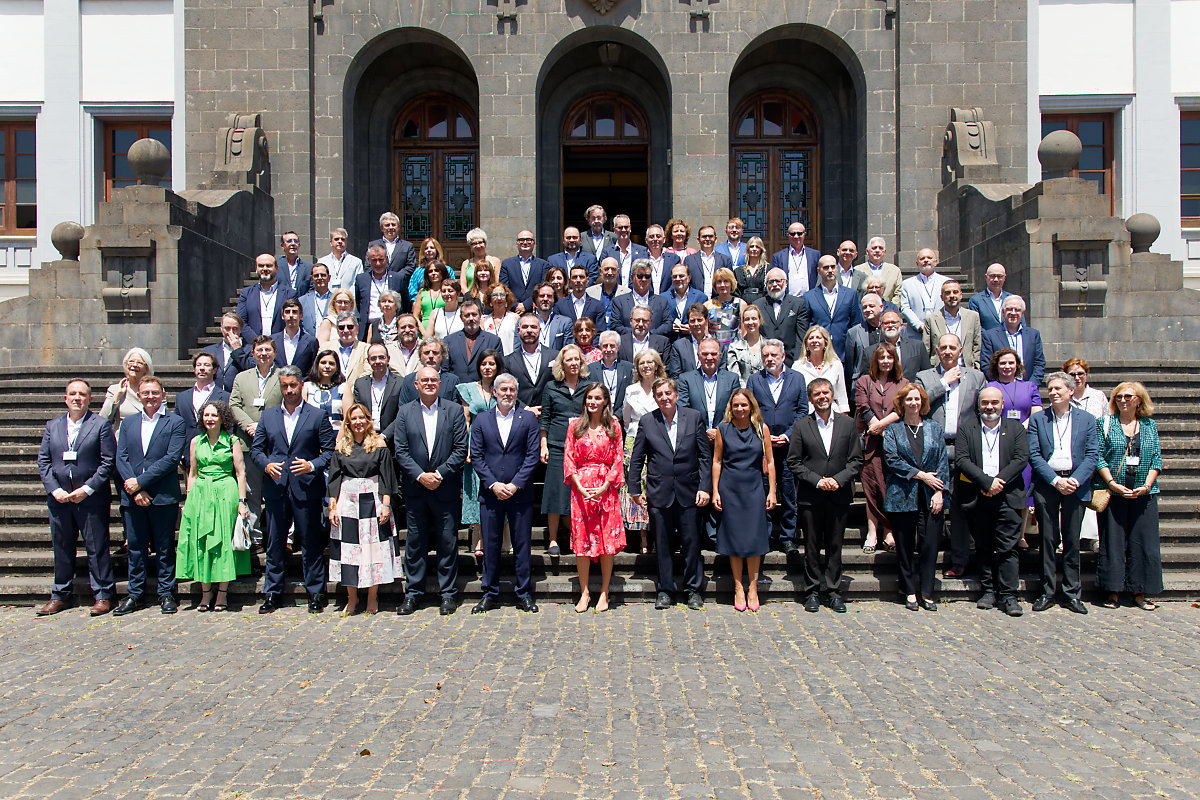
Queen Letizia defended Spanish as a "tool of seduction" on Monday, July 28, and also highlighted the work and importance of the Cervantes centers around the world during the first working session of the Institute's Annual Meeting, which will be held over three days at the University of La Laguna and is attended by more than 70 officials and the institution's management team.
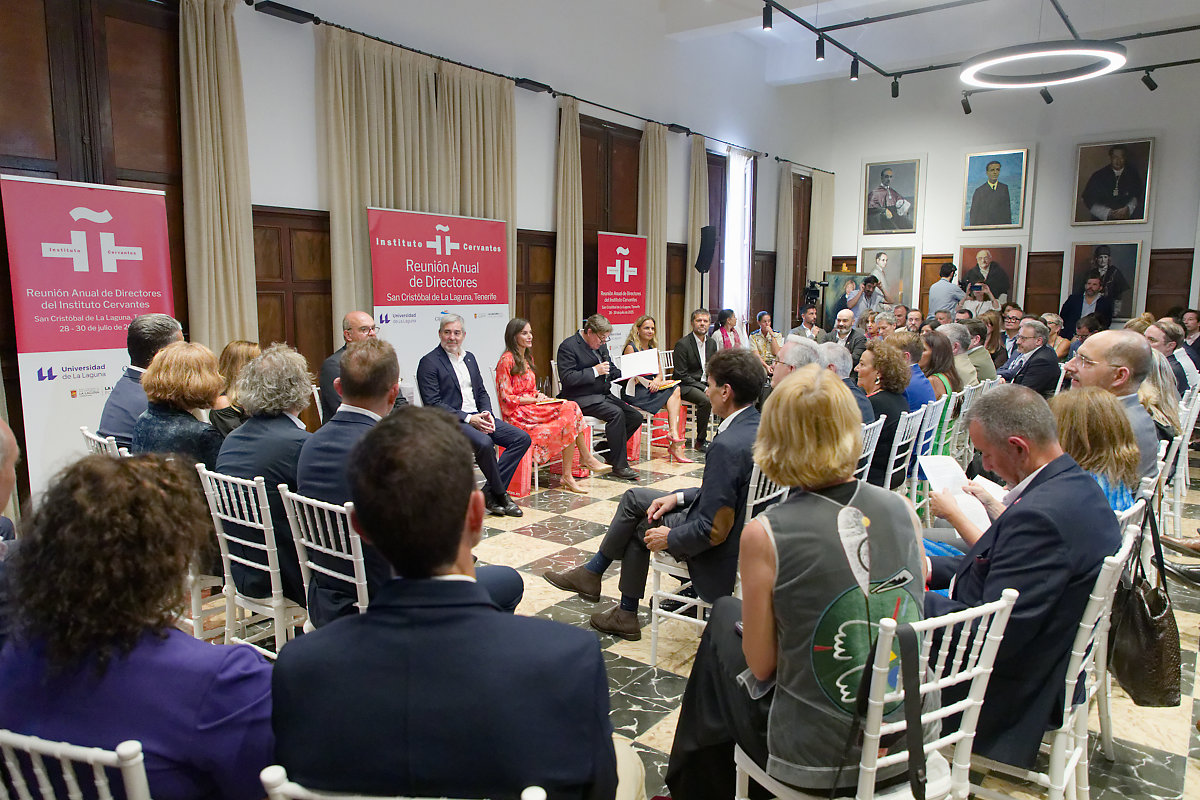
The Queen participated in one of the working sessions.
In a brief closing statement after the first session, which focused on the situation of Spanish in various countries such as the United States and Brazil, the Queen thanked all the directors of centers for their work "for continuing to believe" that Spanish is a language and culture that serves for understanding, harmony and communication.
«Ultimately, it’s a tool of seduction,» Letizia added, also indicating that she hopes her next two state visits after the summer will include institutional activities related to the Cervantes Institute. «We must continue to focus on ensuring that Spanish society remains aware of the significance of an institution like the Cervantes Institute and the work that everyone does at each center.».
Queen Letizia addressed the attendees, acknowledging their work. "Thank you for your patience and effort in going to each of the centers every day, opening them, and managing countless unimaginable problems, pulling off solutions beyond your capabilities," she emphasized.
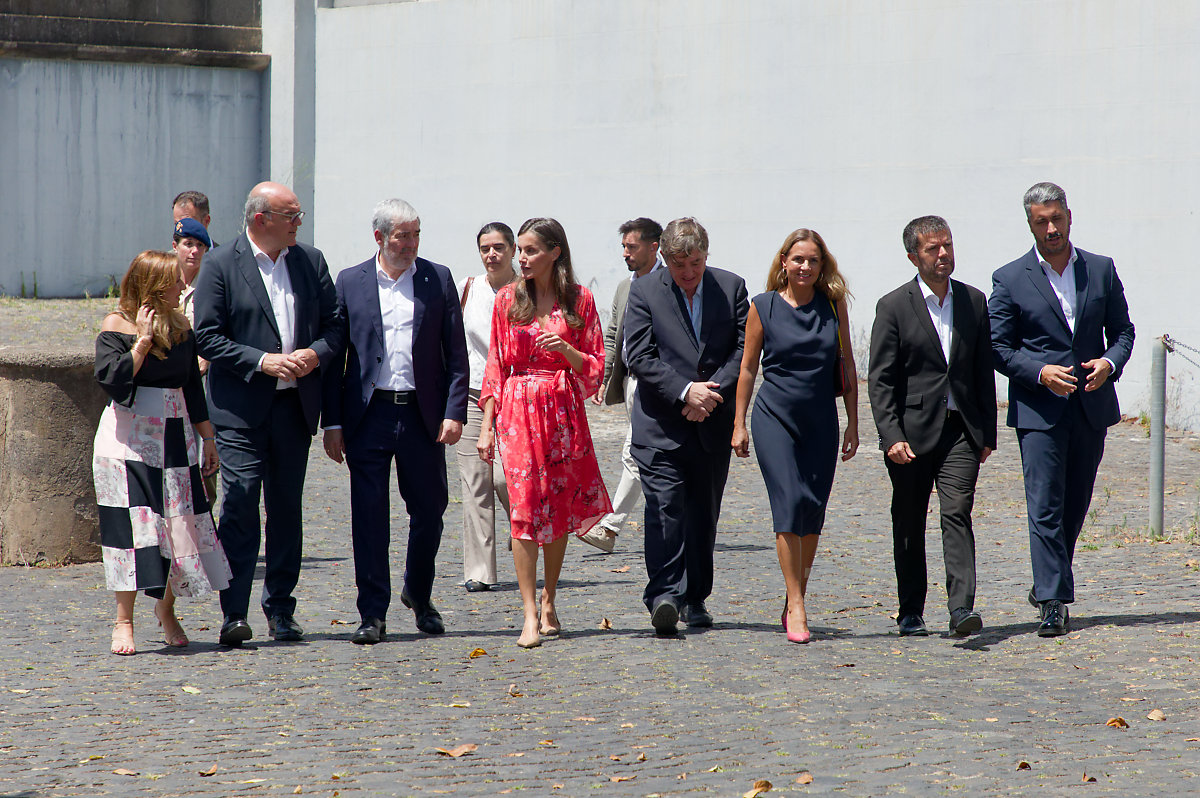 In this closed-door meeting, among the authorities who accompanied Queen Letizia, in addition to the director of the Cervantes Institute, Luis García Montero, were the President of the Government of the Canary Islands, Fernando Clavijo, and the Secretary of State for Ibero-America and the Caribbean and Spanish in the world, Susana Sumelzo.
Previously, the opening ceremony took place in the Paraninfo of the University of La Laguna, in which the director of the Institute, Luis García Montero; the Minister of Foreign Affairs, European Union and Cooperation, José Manuel Albares (via telematics); the president of CIDOB (Barcelona Centre for International Affairs) and former Minister of Foreign Affairs, European Union and Cooperation, Josep Borrell; and the rector of the University of La Laguna, Francisco Javier García, participated.
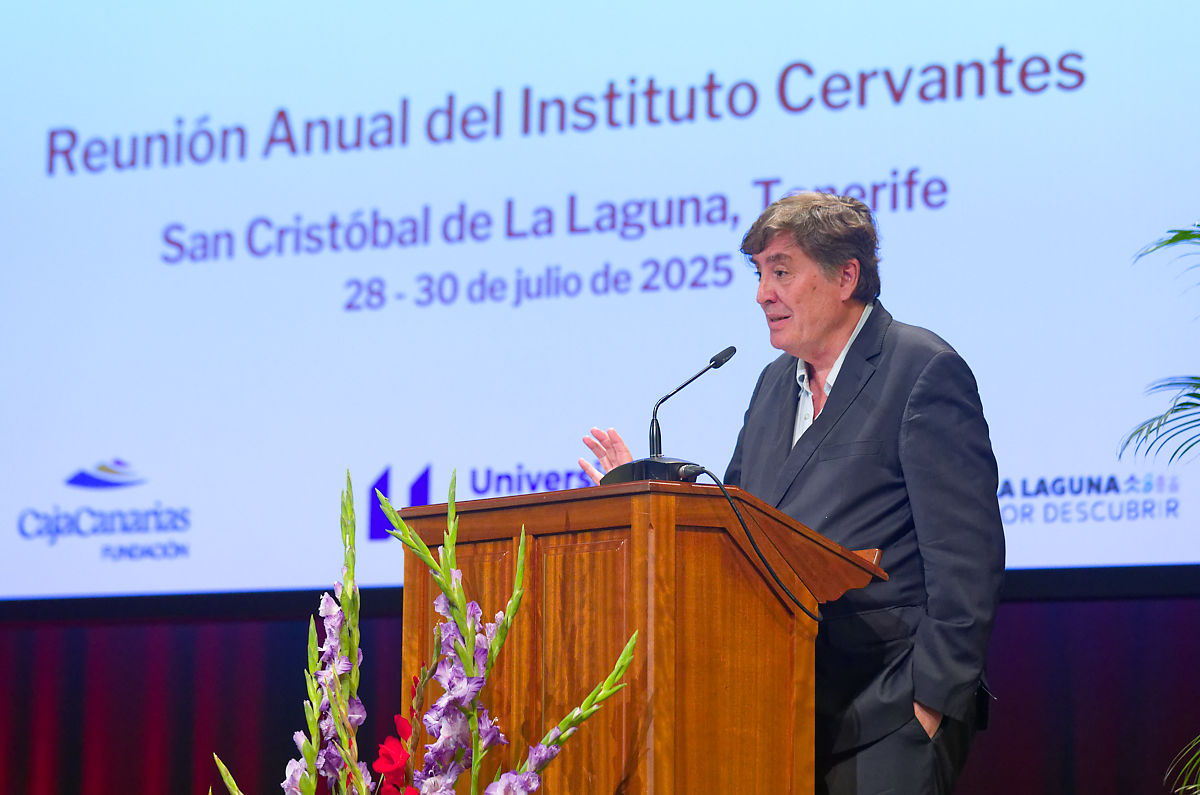
Luis García Montero.
The director of the Cervantes Institute explained during his speech that the objective of this meeting is to analyze what has been done so far, but also future "hope and projects", paying special attention to the importance of some words that are important today, such as "freedom, canoe, genocide or miscegenation".
For his part, the university's rector, Francisco Javier García, defended the choice of this academic institution to host this meeting, due to its "commitment to contributing to understanding" in both Latin America and Africa.
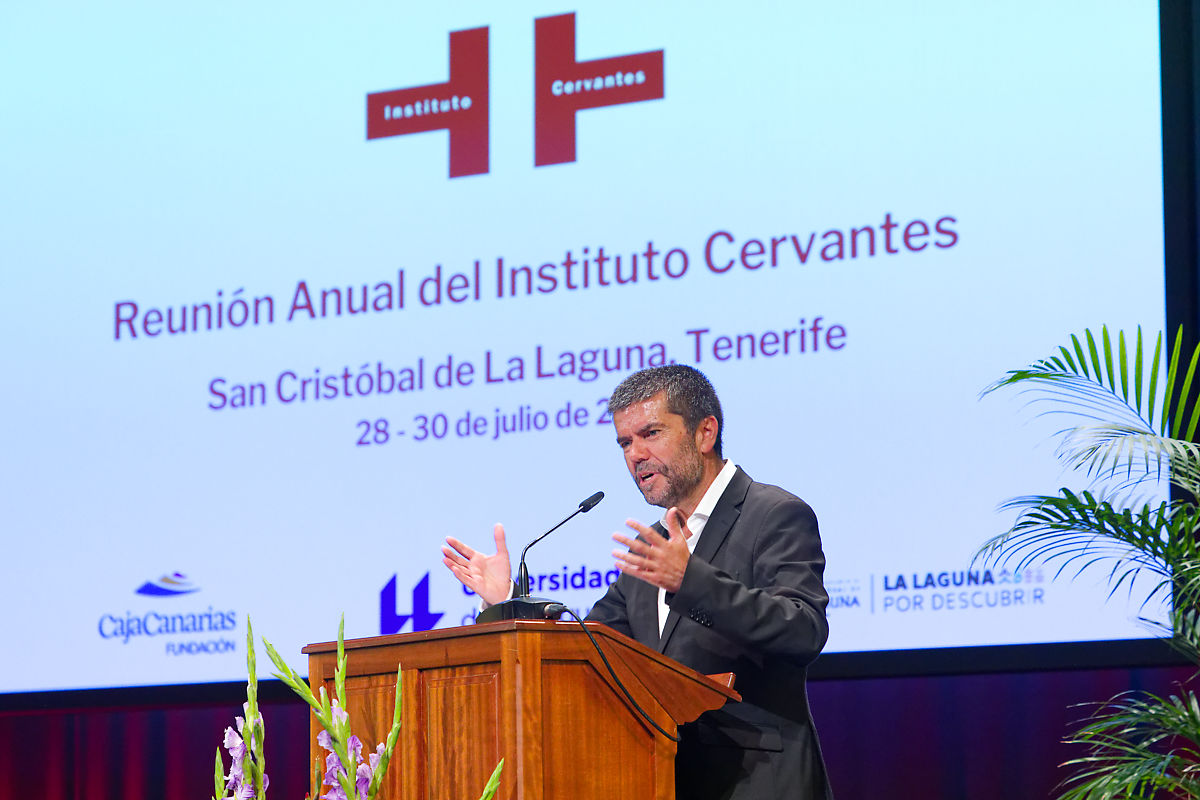
Francisco J. García
«"When we talk about language, it goes beyond a set of signs and techniques for transmitting messages. It is cultural and academic diplomacy, but also a powerful tool for connecting with other cultures, positioning ourselves as a country, and breaking down barriers—something so necessary in a polarized and tense world," he asserted.
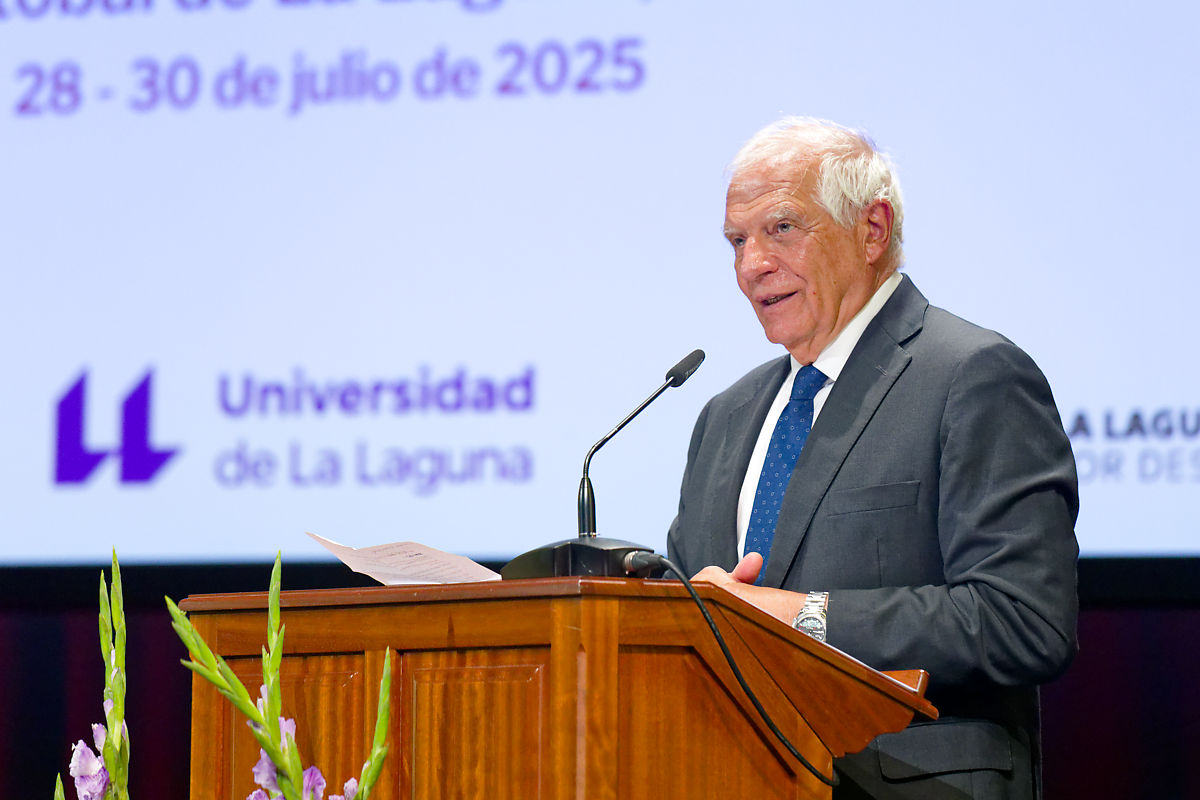
Josep Borrell.
Former minister Josep Borrell highlighted some of the Cervantes Institute's progress over the last five years, from the opening of new centers in Dakar, Los Angeles, and Seoul to a "profound" technological transformation. "You are looking to the future with the same enthusiasm as years ago, but you have grown and reshaped yourselves with a more universal and practical approach: Spanish is an enormous asset that we must cherish and promote," he explained.
Finally, the event was closed by the Minister of Foreign Affairs, José Manuel Albares, with a televised address in which he sent a message of thanks to the workers of the Cervantes Institute.
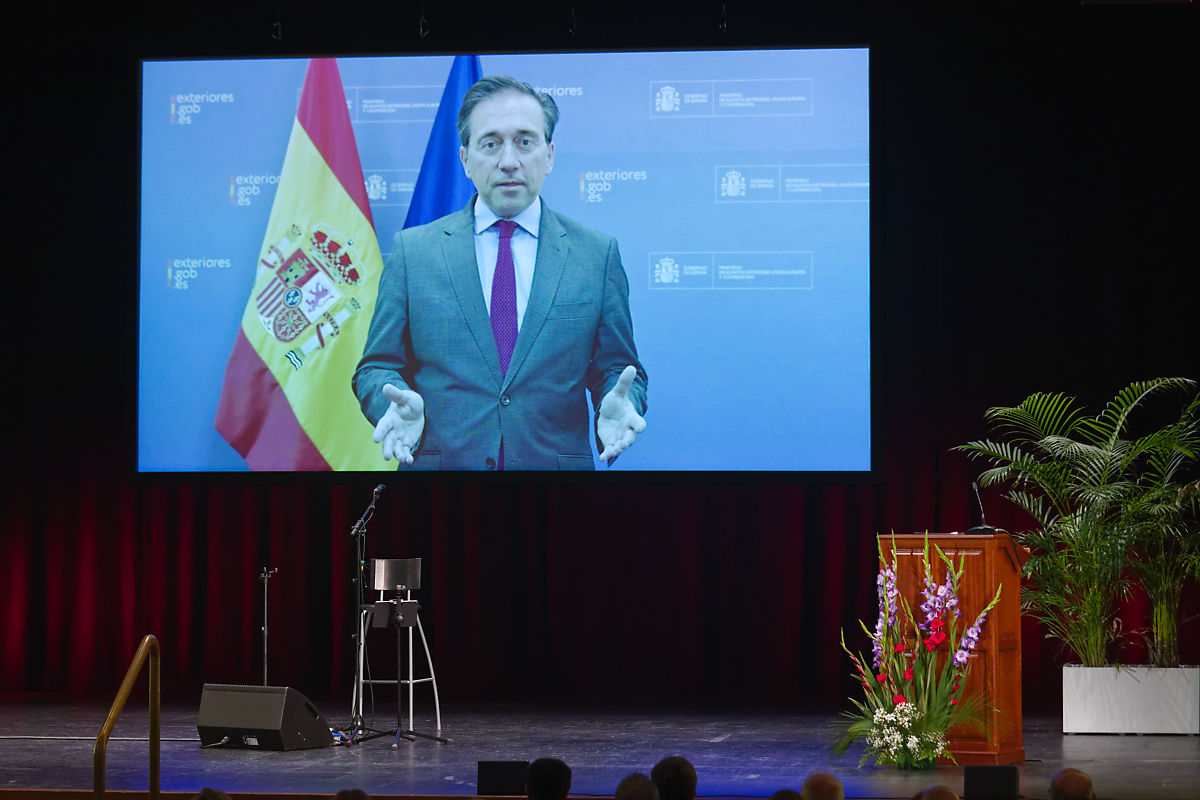
José Manuel Albares
«"It is a task that goes beyond teaching the language, since it fosters mutual understanding and makes Spanish a tool at the service of global dialogue: today's foreign policy is also built thanks to your work," he pointed out.
Future challenges
Before this inauguration ceremony, which concluded with a performance by singer-songwriter Pedro Guerra, García Montero addressed the attending directors along with the Secretary General of the Institute, Carmen Noguero.
In this speech, he summarized some of the institution's achievements, such as the opening of Cervantes Chairs in Edinburgh (United Kingdom), Virginia (USA) or Havana (Cuba); the increase in science-related events in Cervantes programs by 32%; and the growth of women's presence in Cervantes activities, now representing 50.2% of the total.
He also alluded to future challenges, with projects for next year such as the launch of a Dictionary of Iberianisms related to Spanish-Portuguese relations, the preparation for the autumn of a Vargas Llosa Dictionary, and a poetry anthology by Oswaldo Chanove. For García Montero, the assessment speaks to the institution's "strength," at a complicated time, with particular attention to "budgetary limitations.".
«"Spanish as a border language"»
In the first working session, which the Queen attended, several directors participated, addressing Spanish as a border language in relation to the countries where their centers are located and contrasting this language "as a good remedy to the discourses of closed identities that are dominating the world.".
The participants in this colloquium were the director of the Global Observatory of Spanish, Francisco Moreno; the director of the Harvard Observatory, Francisco Pueyo; the director of the Cervantes Institute in Brasilia, Raquel Romero; the director of the Cervantes Institute in Dakar, Concha Barceló; and the director of the Institute in New Delhi, María Gil Bürmann.
Francisco Moreno opened the session by stating that the Spanish language lives in spaces where it "evolves, adapts and enriches itself," so linguistic diversity in these border areas "is not a weakness, but a strength and a driving force for creativity.".
Meanwhile, Francisco Pueyo addressed the situation of Spanish in the United States following the arrival of the Trump administration. The director of the Harvard Observatory asserted that this language "is not a foreign language or a language of immigration on American soil, but a historical language" that, today, is used by 60 million people in the United States and will be used by more than 100 million in a few years.
For her part, Raquel Romero reviewed the evolution of the law passed in Brazil in 2005 by Lula to make Spanish mandatory in the Brazilian education system, a law that was later repealed and then partially reinstated. "Given this situation," she said, "Spain's response must be unified, and actions and spaces must be created to redirect a situation that is currently unfavorable.".
Concha Barceló focused her presentation on the "competition" between French and Spanish to increase the number of speakers on the African continent. According to the director of the Dakar center, Spanish arrived in Africa differently than French, establishing itself as a friendly and approachable language, as evidenced by the fact that there are already more than two million students of Spanish in Sub-Saharan Africa.
Finally, María Gil highlighted the "growing enthusiasm" for Spanish in India, with more than 33 university departments offering programs in Spanish and at least a dozen of them offering bachelor's, master's, and doctoral degrees. "Spanish is not declining in India; it's an academic and professional opportunity, and companies see it as a language that opens doors.".
The opening conference, given by the director of Casa África, José Segura, also took place today. In it, he warned about the current state of relations between Africa and the EU. "Europe is very preoccupied with looking north, seeing enemies, but they are forgetting the south, and political and military movements are slipping in there that will not benefit us at all," he concluded.
The Canary Islands host the Annual Directors' Meeting for the first time
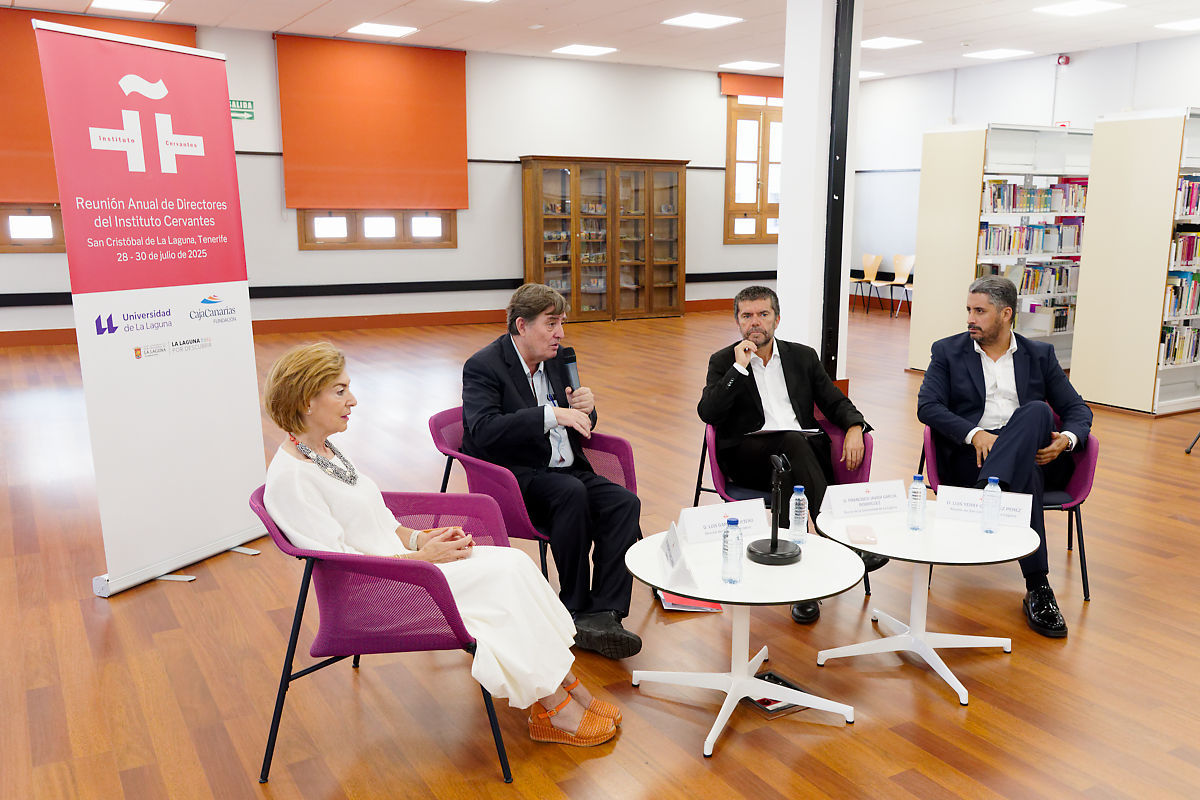
Press conference prior to the event with Margarita Ramos, Luis García Montero, Francisco García and Luis Yeray Gutiérrez.
As a preliminary step to this Annual Meeting of Directors, the director of the Cervantes Institute signed a collaboration agreement on March 28 with the three island institutions that collaborate in the organization and celebration of this meeting (the aforementioned University of La Laguna, the San Cristóbal de La Laguna City Council and the CajaCanarias Foundation), which includes among its clauses the ability to develop joint activities and projects that allow the cultural richness and diversity of the Canary Islands Autonomous Community to be showcased in the headquarters and centers of the Cervantes Institute abroad.
Since 2005 (except in 2020 due to the pandemic), the Cervantes Institute has held annual meetings with the directors of its centers abroad and their entire management team, in which they discuss their lines of action for the international promotion of the Spanish language and culture.
This is the first time it has been held in the Canary Islands. To date, eleven autonomous communities have hosted these sessions: Andalusia, Catalonia, Castile and León, Castile-La Mancha, Madrid, Cantabria, Extremadura, La Rioja, Galicia, the Basque Country, the Valencian Community, the Principality of Asturias, and Catalonia.
(Note provided by the Cervantes Institute)

 Spanish
 English
 French