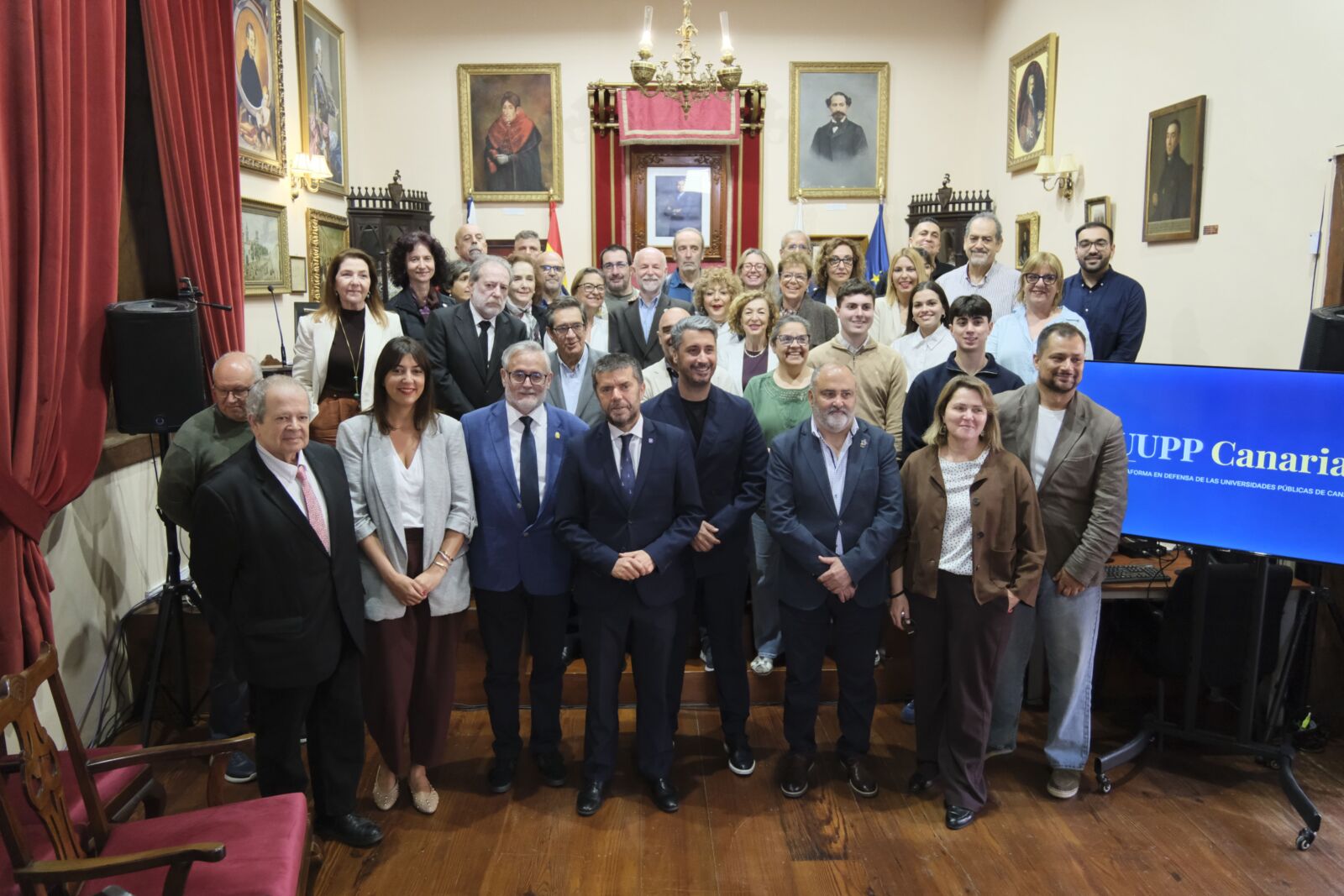
Professors José Luis Rivero (ULL) and José Suay (ULPGC) have spearheaded a social initiative demanding the defense of and commitment to the present and future of the Canary Islands' public universities: the University of La Laguna and the University of Las Palmas de Gran Canaria. With the collaboration of the Royal Economic Societies of Friends of the Country of Tenerife and Gran Canaria, a citizens' platform Today, May 5th, at two different locations, a manifesto was presented calling for "a social and political pact that protects our public universities, providing them with sufficient and stable funding.".
The underlying issue, the proponents pointed out, is the "palpable inertia" of "disinterest" towards these higher education institutions in the archipelago, which are increasingly underfunded and underserved.
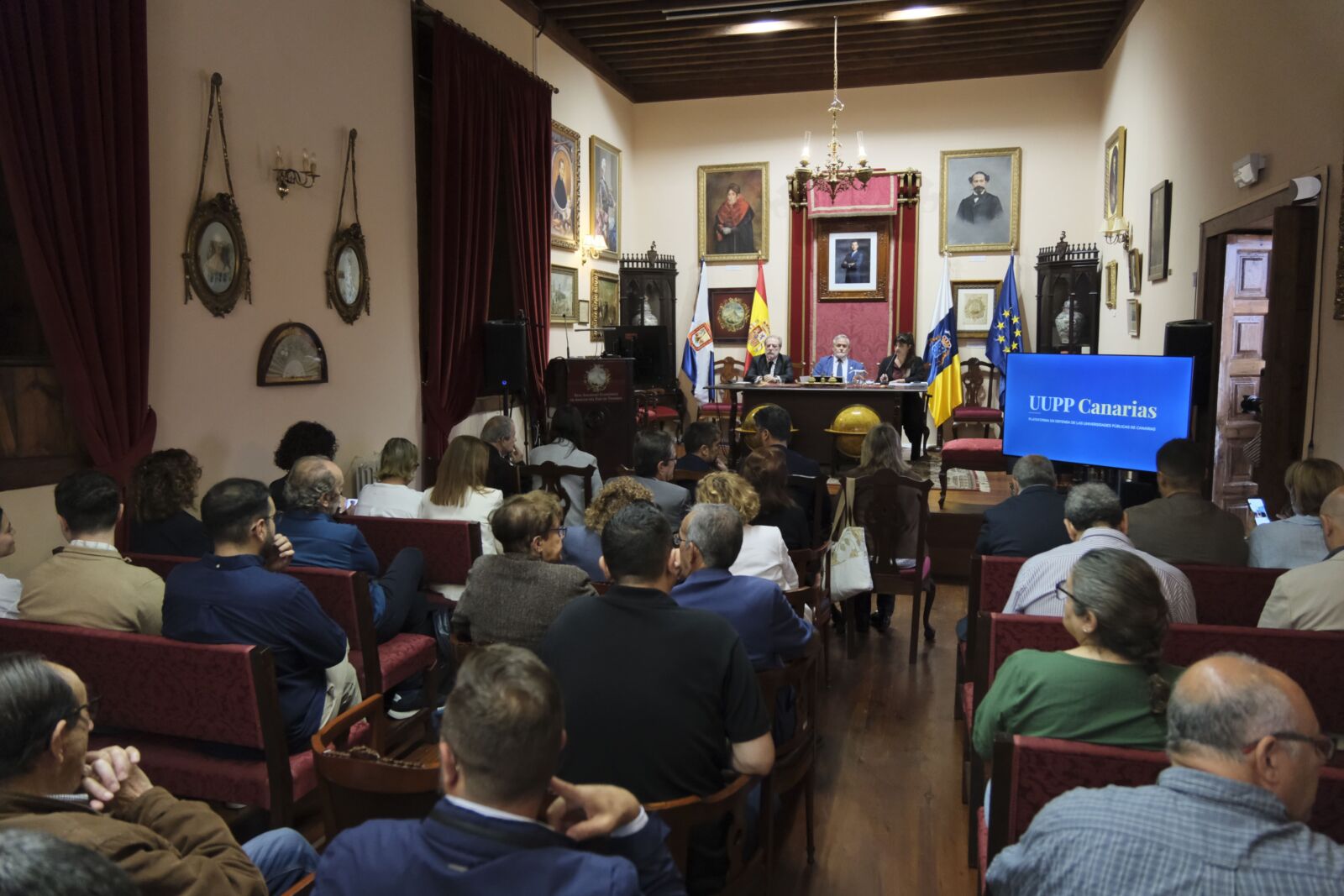
A moment from the event at the Royal Economic Society of Friends of the Country of Tenerife.
In response, a group of voices from the world of science and culture have risen up to warn of the dangerous drift of this situation, which risks affecting the very economic and intellectual growth of the islands and jeopardizing the future of thousands of young people.
During the reading of the manifesto in defense of universities, testimonies were heard that endorsed the importance of the public higher education system, such as that of Dolores Corbella, Professor of Spanish Language at the University of La Laguna and a member of the Royal Spanish Academy (RAE). “I know perfectly well where I come from and the opportunities that the public university offered me, when we were among the first generations in democracy to access higher education. It is what has guided me on the path to excellence.”.
The director of the Canary Islands Institute of Astrophysics and professor at the University of La Laguna, Valentín Martínez Pillet, also spoke, noting that decades of collaboration between the two institutions to advance cutting-edge science is commonplace. “We create research teams
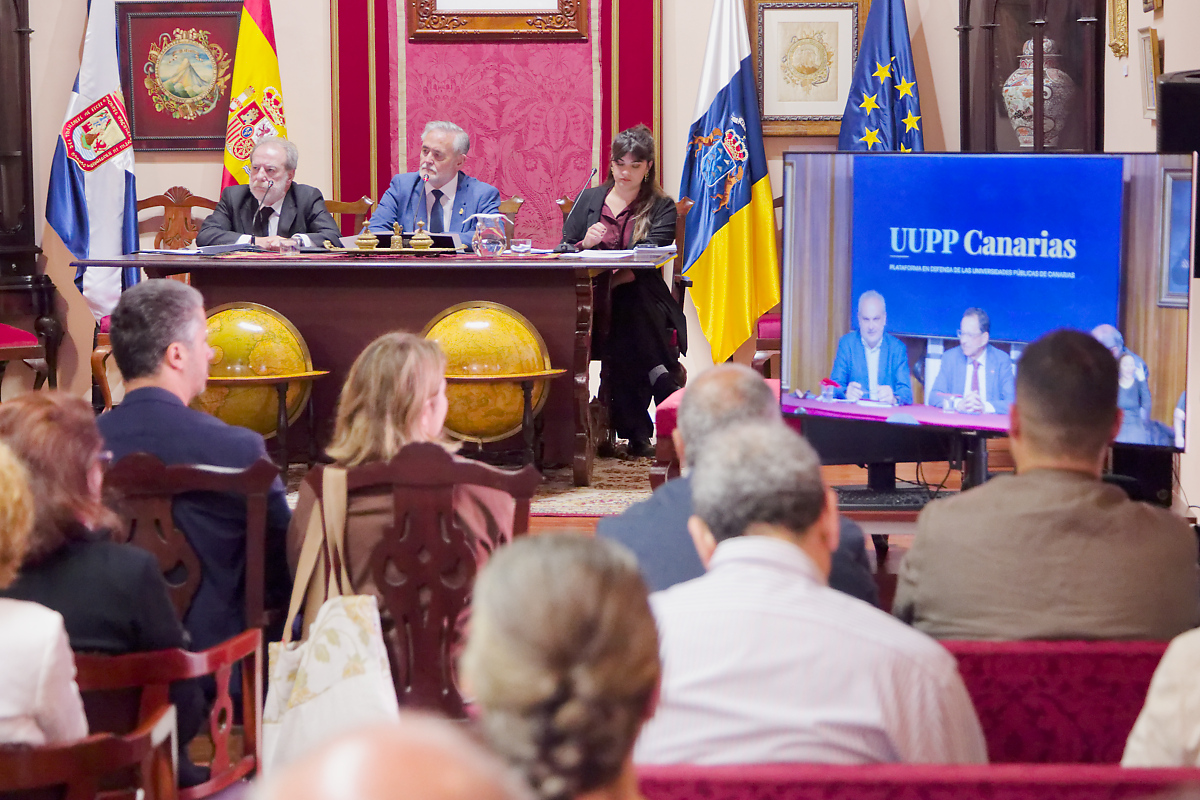
The event was held simultaneously at both RSEAP headquarters.
distributed all over the world, and that is only possible through the public sector.”.
The president of the Royal Academy of Exact, Physical and Natural Sciences, Ana Crespo, speaking from the Madrid headquarters, asserted that public universities “are the most important social engine we have, a treasure that must be cherished, and an irreplaceable tool for achieving ambition.” Luis García Montero, director of the Cervantes Institute, also participated with a video message warning of what he called “reactionary thinking” that “attempts to dismantle our social contract, which is fundamentally educational in nature. Defending public education is defending the future.”.
The rectors of both universities, Lluís Serra and Francisco García, expressed their support for this event, which was also attended by a large group of social, academic, political, and business representatives. Both emphasized the urgent need for stable and sufficient funding to effectively plan for major challenges such as new academic programs tailored to the evolving needs of the job market, attracting top researchers, and expanding the range of micro-credentials to provide customized training for many professionals, among other strategic initiatives.
Francisco García and Lluís Serra thus joined the demands of the manifesto, which has revolved around two fundamental axes: the public universities of the Canary Islands are “a powerful social elevator, training generations of Canarians, who have been highly qualified professionals at the service of society”; and, as a consequence of this social value in the archipelago, a firm commitment is demanded from the public administrations, whose legal mandate in matters of financing must be “to allocate, at least, 11% of the regional GDP to public university education before the year 2030”, as stated in the LOSU.
Following the initial endorsement by the two professors José Suay and José Luis Rivero, the presidents of the Royal Economic Societies and the two rectors signed the Manifesto, which was also
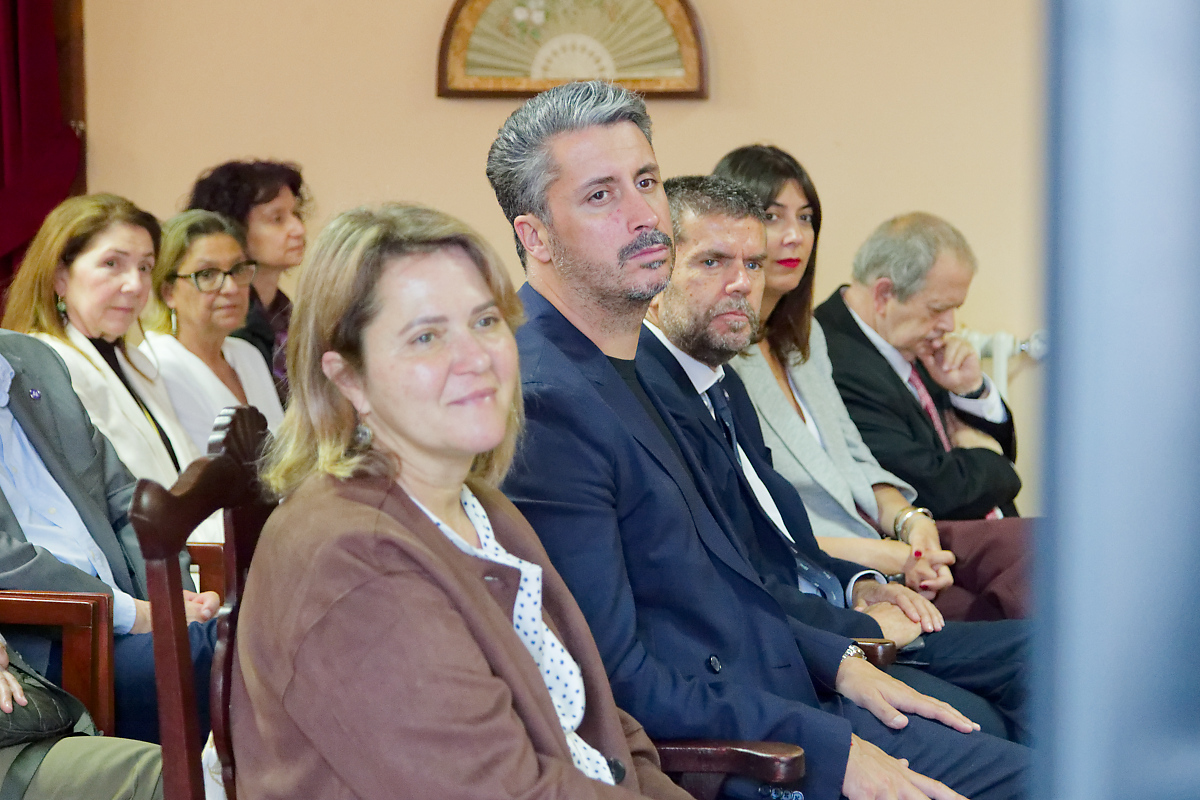
The mayor of La Laguna, among other authorities.
seconded, in this same act, by public authorities such as the mayors of Las Palmas de Gran Canaria and La Laguna, among others.
The citizens' platform has created a website that will be active for several months to accommodate all the individual and collective endorsements of the Manifesto, which aims to defend public universities in the face of a "worrying climate of disrepute, both nationally and internationally, where the value of these institutions is questioned, wrongly labeling them as superfluous spending," and demanding a path of stable growth in their budgets. "What's at stake isn't the budget of two institutions. It's the right of future generations to be educated here, to do research here, to build their lives here," concluded one student.

 Spanish
 English
 French